Blister Packaging and Cartoning Lines

Start with loose tablets or capsules for a new blister and cartoning line, or feed sealed cards from an existing blister machine.

Comwin matches both starting points to the number of cards and leaflets in the retail carton. On a retrofit, the current card discharge determines how we bring cards into the cartoner.

    Two sealed tablet blister cards beside a folded leaflet and a closed retail carton
    A retail carton, its blister cards and an insert. The required card count and leaflet determine how the cartoner receives the group. Packaging illustration.

    Where should your blister line start?

    Set the incoming product, finished card dimensions and carton contents before choosing the transfer.

    What you need to packFinished resultEquipment to assessWhat changes the choice
    Loose tablet or capsule batchSealed blister cards in a retail cartonIntegrated blister line with stacker and cartonerApproved material, card pattern and count per box
    Existing sealed cards arriving in a consistent orientationCorrect blister stack inside the retail cartonCartoner with a matched card feedCard thickness, discharge and leaflet
    Cards and cartons run on different schedulesCartons made from an agreed card bufferIndependent or buffered feed to cartonerBatch identity, storage/handling and restart plan

    Form, fill, seal and carton on one line

    For a job that starts with loose tablets or capsules and ends with closed retail cartons.

    1. Form the cavities
    2. Feed and inspect units
    3. Seal and cut cards
    4. Stack cards and carton

    Specify the approved forming and lidding material, pocket layout and product feed before setting the tool. Transfer accepted cards to a stacker and send each count to the cartoner. This keeps the card count and carton in sequence while they move.

    For a product with an approved opaque forming material, confirm that the tooling and inspection method suit it. Check the largest stack and leaflet in the finished carton.

    Explore the blister packaging machine when the primary packaging machine is your starting point.
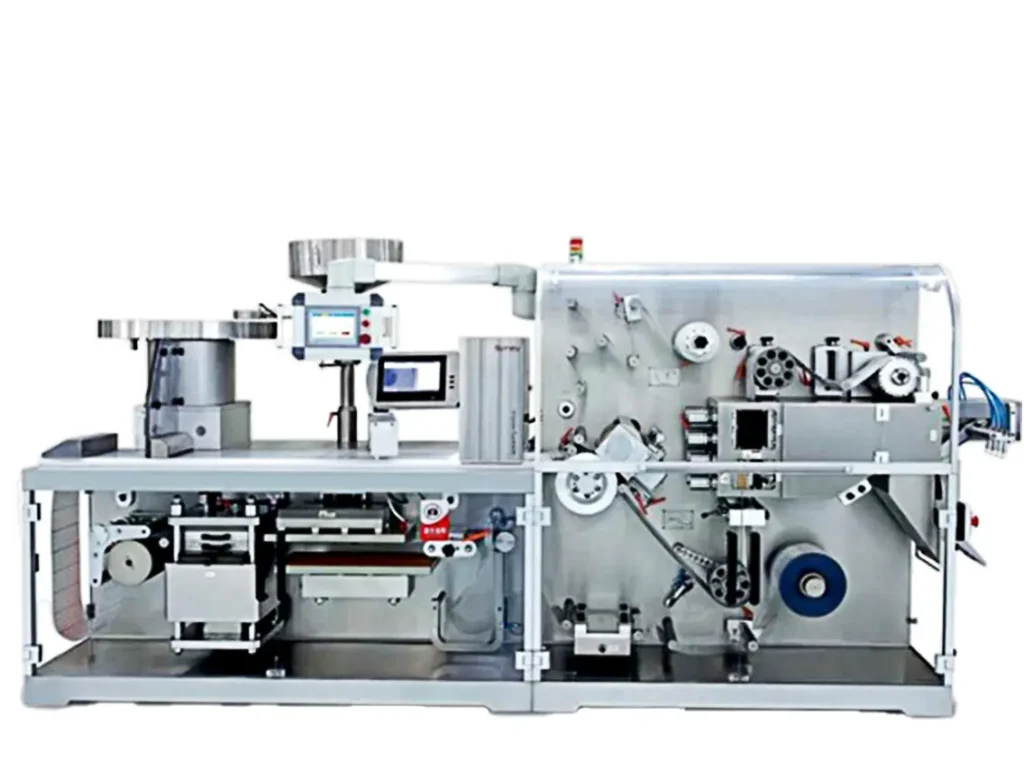
    Blister packaging platform with forming and lidding material reels
    Blister machine platform with material paths for forming and lidding. Select the feed and tools for the approved card.

    Start with sealed blister cards

    For a plant that already forms and seals blister cards and needs a cartoner or blister cartoner retrofit.

    1. Receive and orient cards
    2. Make the required stack
    3. Add leaflet if specified
    4. Insert and close carton

    Bring the existing card in at a known pitch and orientation. Where batch schedules differ, an approved buffer or a separate feed can let the cartoner handle a short stop or a change in carton format.

    Thin or bowed cards can overlap at discharge. Trial a rejected card and a stop partway through a stack. Check how the missing card is replaced or the partial stack is held, then open the first released carton to verify the count and leaflet.

    For packaging other solid retail packs, see cartoning and case packing lines.

    At discharge

    Check card direction and spacing as cards leave the blister machine.

    At the stacker

    Build the specified count from accepted cards.

    At loading

    Present one complete stack, add the specified leaflet and close the carton.

    Card-to-carton transfer. Process illustration.
    Side-loading paperboard cartoner platform with guarded stations
    Cartoner platform for the retail box stage. A dedicated blister stack feed and leaflet handling are selected for the finished carton.

    Keep cards and cartons in step

    A full blister card can still become an incomplete retail pack. Inspect the card before stacking and check the completed carton against its own requirements.

    Catalog arrangement of blister and cartoning modules connected in line
    Catalog layout for a connected blister line. Confirm the transfer, inspection and leaflet stations for your pack.
    Opaque blister cards compared with clear tablet cavities
    Clear and opaque pocket materials change how you form and inspect a card. Packaging illustration.
    Keep incomplete cards out of the stack
    Show how the selected inspection checks the intended defects and what happens to a bad card. Test that the correct card is withheld before the stack forms.
    Keep the right count after a stop
    Use the required cards per carton to relate card rate to carton rate. Verify the first closed cartons after a pause and a format change.
    Choose tools from the approved pack
    The forming material, flange and pocket dimensions determine the tooling. Compare clearance with the largest stack and leaflet.

    Choose direct transfer or a separate feed

    Use an agreed buffer and line clearance method when card production and cartoning run at different rates or times.

    Production setupWhat operators doChangeover and interfacesWhat to prove in a run
    Direct blister transferReplenish forming/lid materials, cartons and leaflets.Align pitch, inspection rejects and buffer controls.Check correct cards and inserts at good-carton rate, including restart.
    Existing card feed into cartonerStage approved card batches and replenish cartons.Set card feeder, guides and stack count for each format.Confirm no doubles, short stacks or incorrect leaflets in the first run after changeover.

    Compare proposals at the same carton output

    Agree the actual primary pack and retail pack before comparing complete lines or a standalone cartoner.

    CompareWhat to agree with ComwinWhat to match in other offers
    Supply scopeFor a new line, compare supply from loose product feed to closed cartons. For a retrofit, show where supply starts at the existing card exit and whether a buffer, stacker and leaflet feeder are included.Confirm who provides each station, tooling and controls.
    OutputState good cards and good cartons per hour with the agreed count per box.Compare the same blister layout and carton contents.
    Change formatsList forming dies, cutting tools, stack guides and leaflet options.Check the work needed to clear and change materials.
    SupportSet training, cleaning access and service responsibilities.Confirm who supports the card transfer and reject logic.
    DeliveryAgree line clearance needs, interface height and trial materials.Compare run acceptance and which site tasks are included.

    Blister line questions

    Can a new cartoner use my existing blister cards?

    Send sealed cards, the filled-carton drawing and the discharge layout. We assess whether the card can transfer directly or needs a separate feed and buffer.

    Can the same blank hold a larger blister stack?

    Check the stack and leaflet inside the real carton. The loaded height and clearance through the opening determine guides, carton dimensions and the loading method.

    Plan a new line or connect your cartoner

    Include your target finished cartons per minute if you have one. A sketch or an existing pack can show the carton and leaflet layout.

    New line starting with loose tablets or capsules

    Send first
    Send a dose sample or its dimensions, the planned number of doses per card and the cards per carton. Attach a card, carton or leaflet drawing if available.
    What Comwin checks
    Product feed, pocket layout and tooling, then how the finished cards stack and enter the carton.

    Cartoner for an existing blister machine

    Send first
    Send a sealed card or its drawing and the number of cards per carton. A short outfeed video with the card direction and normal cards per minute helps us review the transfer.
    What Comwin checks
    Whether cards can feed the cartoner directly or need separate feeding, stacking or buffering.