Counting and Bottling Lines for Tablets and Capsules

Count the specified number of tablets or capsules into each bottle, then close and check the finished pack.

Comwin matches the counter, bottle handling and cap station to your dosage form and closure. The finished bottle specification tells us where to add sealing, an insert or a label.

    Capped bottles with tablets and hard capsules shown separately in front
    Tablet and capsule bottle formats. Piece shape and bottle neck help determine the feed and discharge. Packaging illustration.

    Configure the count, then choose the closure

    Bring the smallest or hardest-to-handle dosage form as well as your usual sample. Both have to reach the counter in a stable way.

    What you need to packFinished resultEquipment to assessWhat changes the choice
    Round tablets in a screw-cap bottleBottle with the specified count and fitted capCounter, bottle feed and cap stationDust, feed spacing, neck and closure
    Hard capsules in small-mouth bottlesCounted capsules without pieces trapped at the neckProduct-specific channels, sensing and guided dischargeOrientation, transparency and neck clearance
    Bottle with a specified induction-sealed linerSeal bonded at the bottle rimInduction sealing matched to bottle and capApproved foil liner, neck finish and cap

    Count into bottles and apply the cap

    For the basic line that receives loose solid doses and delivers capped bottles.

    1. Orient empty bottle
    2. Separate dosage forms
    3. Count into bottle
    4. Apply and check cap

    Specify the count per bottle and select channels, sensing and discharge around product shape and bottle-mouth opening. Provide a positive bottle-in-position signal so the counter releases into the correct neck.

    Dusty tablets, light or transparent capsules, and pieces that touch or bounce deserve separate trials. For shared tablet and capsule runs, agree how operators clear the feed and verify the new recipe.

    Compare counting machine and feeding options if you are specifying the counting module separately.

    Solid-dose counting platform with a feed tray, dispensing outlets and bottle conveyor
    A solid-dose counter with bottle handling below the dispensing outlets. Test the actual product in the feed and discharge.

    Induction seal at the bottle rim

    For a bottle specified with an induction-sealed foil liner.

    1. Check liner and bottle finish
    2. Apply the cap
    3. Induction seal the liner
    4. Verify the seal

    Match the compatible liner, cap and bottle finish. After capping and sealing, open samples and inspect the foil bond at the rim.

    Check count and seal on the same run, including after a restart. Open bottles to count the contents and inspect the foil seal separately.

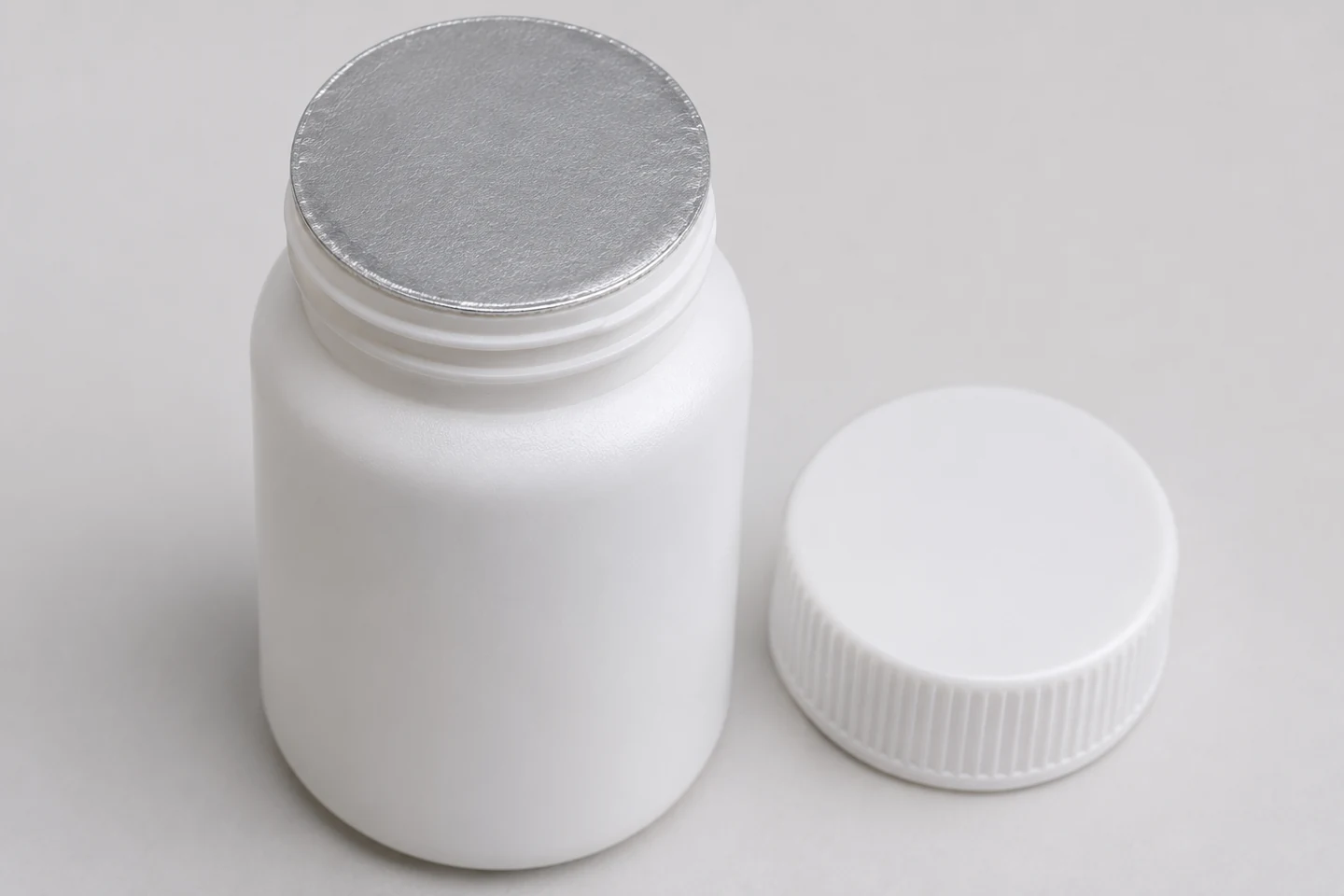
    Screw-cap bottle with the cap removed and intact foil flat across the mouth
    With the cap removed, the foil liner and its seal around the rim are visible. Packaging illustration.

    When the bottle needs an insert or a label

    What to send for an insert, label or code.

    Insert inside the bottle
    If the pack calls for a desiccant or another approved loose insert, place it at the specified stage before closure. Check its presence separately from the tablet or capsule count.
    External label or code
    Set the label face and mark position from the finished bottle. Allow the bottle to settle or orient before labeling where the print or bottle shape requires it.

    Keep the right count when the line changes pace

    One missed release or a bottle moved out of position creates recheck and rework. Trial both the product path and the receiving bottle.

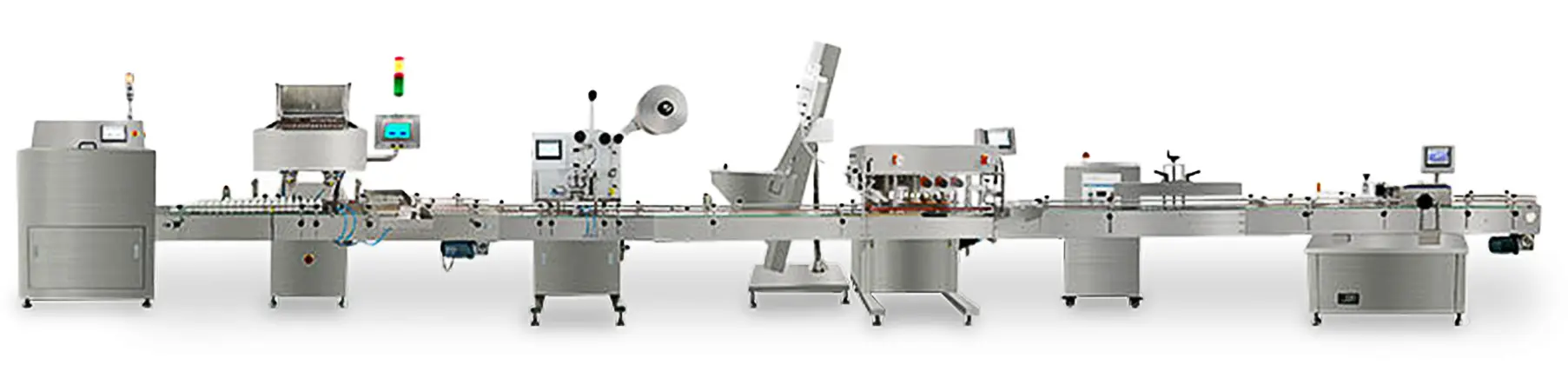
    Catalog solid-dose bottle line with several connected stations
    Solid-dose bottle line arrangement. Agree which stations are needed for the bottle and closure shown in your specification.
    Watch start-up and recovery
    Verify the first bottles after a refill, a controlled stop and a format change. A repeatable count on an uninterrupted run is only one part of acceptance.
    Use a direct count check
    Open sample bottles and count the contents. Weight can support screening where the difference is detectable against bottle, cap and piece variation.
    Protect changeover time
    Check how the operator empties the feed path, reaches contact parts and confirms the next format before restarting.

    Match the counter to your bottle line

    Define the steps you already perform and the stations that must share a stop or restart.

    Production setupWhat operators doChangeover and interfacesWhat to prove in a run
    Counter into an existing bottle conveyorAttend product replenishment and record the check sample.Agree neck presentation, stop signals and clearance access.Use manual counts on sample bottles, including the first bottles after a restart.
    Connected counting and bottlingReplenish bottles, product, closures and any specified materials.Change guides, feed settings and cap tooling together.Check accepted bottles per hour, count and closure on each selected format.

    Compare proposals for the same bottle and count

    Set one test pack and product group for a complete line or a counter retrofit.

    CompareWhat to agree with ComwinWhat to match in other offers
    Supply scopeList bottle feed, counting, capping, induction sealing, insert feeding and labeling by station. Mark which stations form part of your proposal.Compare who supplies guides, controls and optional equipment.
    OutputSpecify good bottles per hour for the count per bottle.Use the same dosage form, count and closure in a running trial.
    Change formatsName product-contact, bottle and cap parts and cleaning access.Review emptying procedures, access and any change tools.
    SupportAssign operator training and support across interfaces.Check the response to feed or bottle faults and spare-part scope.
    DeliveryAgree drawings, utilities and the test materials and protocol.Set site acceptance and commissioning scope before comparing.

    Solid-dose bottling questions

    Can a counter run tablets and capsules on the same line?

    It may be possible with suitable product paths and sensing. Test both with the actual bottles, and include the changeover and line-clearance work in the comparison.

    How does going from 30 to 90 pieces per bottle affect output?

    At the same bottle rate, 90 pieces per bottle requires three times the counting throughput of 30. Trial each count with the actual tablets or capsules and bottles. Measure accepted bottles per minute through capping to see whether the count, bottle handling or cap station limits the line.

    Send the bottle and the count for your setup

    Include the products and counts you actually plan to run, together with your target good bottles per minute if known.

    Count tablets or capsules and fit the cap

    Send first
    Send a dose sample or its dimensions, the count per bottle and your bottle and cap. If you are keeping the capper or conveyor, show where bottles reach that equipment.
    What Comwin checks
    Product feed, bottle presentation and the output to check at the specified count and through closure.

    Add an induction seal beneath the cap

    Send first
    Send your bottle and cap, the approved foil liner or its specification, and the seal check your pack must pass.
    What Comwin checks
    Fit between the liner and the bottle finish and how to check the foil bond after sealing.

    Add a bottle insert, label or code

    Send first
    For an insert, send the actual piece and show where it goes. For a label or code, send the artwork or message and mark its position on a bottle.
    What Comwin checks
    Where to add the insert or mark and where to check the result before the bottle leaves the line.