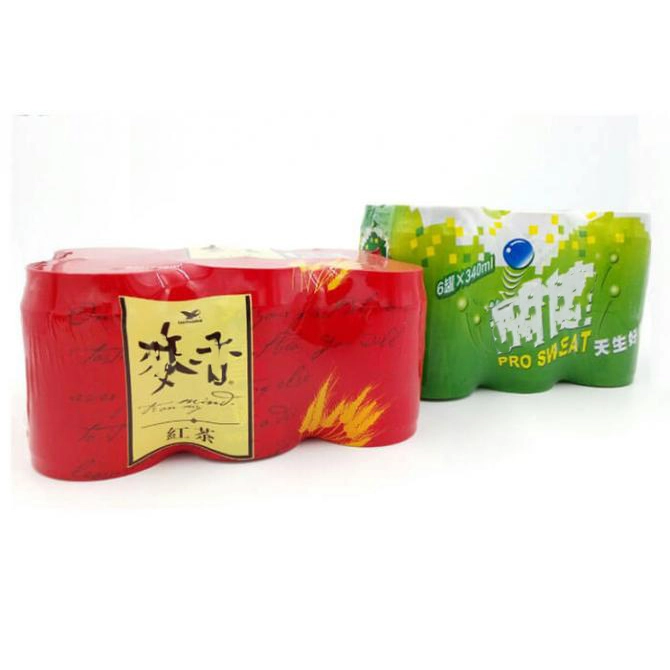
Buy printed film or pouches when the whole design has to be reproduced. For dates and batch numbers, fit a coder where the film or bag is supported and its position is repeatable. A TTO printer can follow a compatible film path on the bagger. An offline station needs its own pouch feed and support.
Indicative coding equipment budgets are US$1,000–4,000 for a compact thermal inkjet coder, US$2,500–8,000 for a TTO printer with ordinary bagger integration and US$6,000–20,000 for offline pouch feeding and coding. Full pouch artwork printing is a separate purchase.

Choose the printing task first
| What must be printed | Equipment or sourcing starting point | Main selection inputs |
|---|---|---|
| Full-colour brand design over the film/pouch | Printed packaging from a converter, or an assessed flexo/gravure/digital printing workflow | Artwork changes, order size, substrate, colours, print width and finishing |
| Lot, packing date or other changing text on roll film | TTO or suitable inkjet coding integrated with the bagger | Print area, film motion, surface, message and trigger |
| Changing information on empty supplied pouches | Offline pouch feeder/transport with a suitable printer, or an inline position before filling | Pouch separation, flat support and code location |
| Code on a filled pouch | Suitable non-contact coding with controlled pack presentation | Surface movement, wrinkles, stand-off and ink/substrate performance |
A thermal transfer overprinter (TTO) prints through a ribbon onto supported film. Inkjet systems print without that contact. Test the selected ribbon or ink on your actual film coating to check whether the print adheres.
If you need the complete printed pouch design
Compare buying printed film or pouches from a converter with printing and finishing the packaging in-house. Creating the artwork is only the design step. A printing press needs a specification for web width, colours, substrate, inks and drying; the packaging may also require lamination, slitting and pouch making.
Order size, artwork changes and finishing requirements affect this decision. Include prepress, operators, material waste and the cost of ready-to-use packaging in the comparison. Comwin can coordinate batch/date coding with packing equipment; full-colour packaging production needs a separately defined converting project.
Locate the code on the finished pouch
Mark the required area on a filled pouch, clear of folds, seals, tear notches and the product bulge. Allow room for the complete message and any required barcode quiet zones. Trace that panel back to the position where printing will take place.
For a vertical packing machine, map the panel onto the flat film before choosing the mounting point. Record the film motion there, the available support and access for consumable changes.
The coding sequence is: select the approved message → track the film or pouch → print → inspect → apply the agreed stop or reject response.
Choose the coding position along the packing process
Print on roll film before the pouch is formed
The flat web provides a defined printing area when it has suitable support. Locate that area from the finished pack so the code stays clear of folds and seals. TTO needs a printer mode and backing arrangement that suit whether the film stops for printing or moves continuously.
Print on supplied empty pouches
An offline feeder can separate coding from the filler and suit short runs, but it adds pouch loading and collection. Printing inline can remove that handling where the packing machine has a suitable supported, accessible position. Compare the actual pouch feed, including doubles and misaligned bags.
Print after filling
Keep the filled pouch steady as it passes a suitable non-contact printer. Bulges and wrinkles can change the distance from the printhead and move the code out of position. Check those effects, along with ink adhesion, using filled production packs.
Avoid illegible codes, wrong batches and extra pouch handling
| Production problem | Recommended equipment or change | How it helps | Where it applies |
|---|---|---|---|
| Clear print rubs off during handling | Ink or ribbon matched to the actual pouch surface and use conditions | Makes adhesion and durability part of printer selection | Printed production film tested after the required handling/storage |
| Print blurs or shifts as the bagger changes speed | Mounting, film support and triggering/encoder control matched to the motion | Keeps the printing action coordinated with the moving or stopped film | Roll-film baggers; inspect codes during steady running and restart |
| A code disappears into a fold or product bulge | A reserved code panel located from the finished pack back to the printing station | Places the message where it remains readable after forming and filling | New pouch artwork or changed pack sizes; inspect complete filled packs |
| The wrong batch or date is printed cleanly | Controlled message selection plus the required code inspection and stop/reject action | Checks the data as well as whether a mark exists | Frequent SKU or batch changes; demonstrate the wrong-message response |
| Offline coding adds repeated loading and collection work | Single-pouch feeding/collection, or inline coding at a suitable accessible position | Matches pouch presentation to the chosen production workflow | Supplied empty pouches; compare handling time and reliable single feeding |
Decide what inspection must check: whether a mark exists, whether it is readable, whether the message is correct or whether a machine-readable code meets the required quality. A presence check alone cannot confirm the date. Specify how a failed check stops the machine or removes the affected pack.
Pouch coding budgets
For preliminary budgeting of new equipment supplied from China, use the following coding ranges. They assume one print zone and an agreed substrate/message; mounting and integration need to be listed in the offer.
| Coding arrangement | Indicative equipment budget | Scope of the estimate |
|---|---|---|
| Compact thermal inkjet (TIJ) coder | US$1,000 to 4,000 | Straightforward mounting and triggering on a suitable application |
| TTO printer with bagger integration | US$2,500 to 8,000 | Selected printer and ordinary integration for the required film motion |
| Offline pouch feeding and coding station | US$6,000 to 20,000 | Pouch transport/presentation and the selected coder |
Large print areas, advanced branded systems, cameras, automatic rejection and data-management integration can change the budget. Freight, taxes and overseas installation are excluded; the final quote follows the printing trial and agreed integration.
The ranges above apply to variable-data coding. They do not price the full-colour artwork workflow described earlier.
Decide what happens when a code fails inspection
At a product change, the operator or connected data system selects the approved message. Confirm the job, print position and trigger before releasing packs. Keep responsibility for changing the data clear even when the printer receives it from another controller.
Assign a response to each failed inspection: stop the packer, reject the affected pouch or hold the affected batch for review. The packs involved must remain identifiable after the response. Include a deliberately wrong message and a stop/restart in the application trial.
In the packaging automation system, agree who supplies the message and print trigger, which device receives the failure signal and how rejected packs are handled.
Compare running cost on the same readable message
Compare ink or ribbon consumption per accepted pack using the same pouch material, message size and production pattern. Include printhead servicing and replenishment time, plus the cost of unreadable packs and extra handling.
List the printer, mount, any pouch feeder, inspection and reject equipment separately. Comwin can plan the packing-machine connections and support around the chosen print position and data source.
Comwin offers free sample testing, a two-year machine warranty and a three-year warranty for core components. Remote support responds within 24 hours. Training, installation and spare-part responsibilities are agreed in the proposal.
Show the pouch and the information that changes
Send Comwin the pouch or film sample, a marked code position and an example message. Add the packing rate and a photo or short video of the printing location.
Comwin can recommend the coder and how to fit it to the packing operation. For the proposal, also provide the data source, film motion, inspection and rejection requirements, mounting space, utilities and destination.