
Equipment Selection Guide: Carbonated or Chilled?
The wording describes a market category, not a filling principle. Separate these two projects before requesting a machine:
| Project | Primary route | Must be defined | Typical risk |
|---|---|---|---|
| Carbonated cold drink | Chilling and carbonation followed by counter-pressure filling and immediate capping or seaming. | CO₂ target, fill temperature, container pressure rating, closure and accepted output. | Foam, carbonation loss and unstable fill level. |
| Chilled still drink | Product-specific hygienic filling with compatible packaging and maintained cold chain. | Recipe, pH, preservation process, fill temperature, shelf life and distribution temperature. | Treating refrigeration as a substitute for validated food safety. |
For carbonated products, Krones distinguishes counter-pressure filling from non-contact filling for still products. The machine configuration must follow the actual beverage rather than the word “cold.”
Equipment Selection Guide: Choose the Container Route
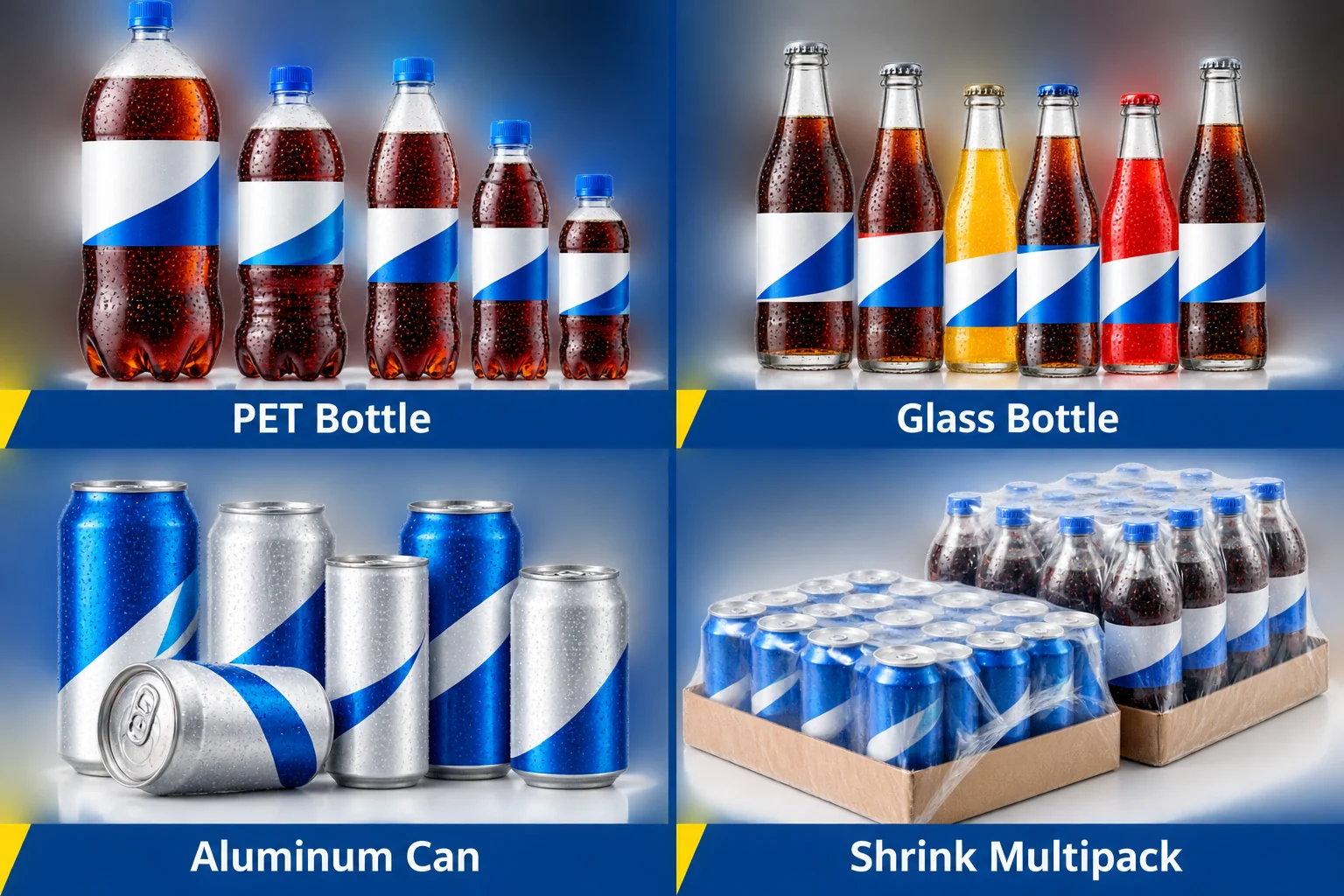
The finished container determines the filler, closing system and handling equipment. Start here before comparing machine speed or price:
| Package | Primary equipment route | Why buyers choose it | Critical checks |
|---|---|---|---|
| PET bottle | Bottle handling, counter-pressure filling, capping, labeling and discharge conveying. | Lightweight retail bottle with many size and multipack options. | Bottle pressure resistance, neck finish, cap, CO₂ level, product temperature and fill height. |
| Glass bottle | Bottle handling, counter-pressure filling and crown capping or another validated closure. | Premium appearance, rigidity and reusable or returnable possibilities. | Bottle condition, crown finish, breakage control, washing or rinsing route and closure integrity. |
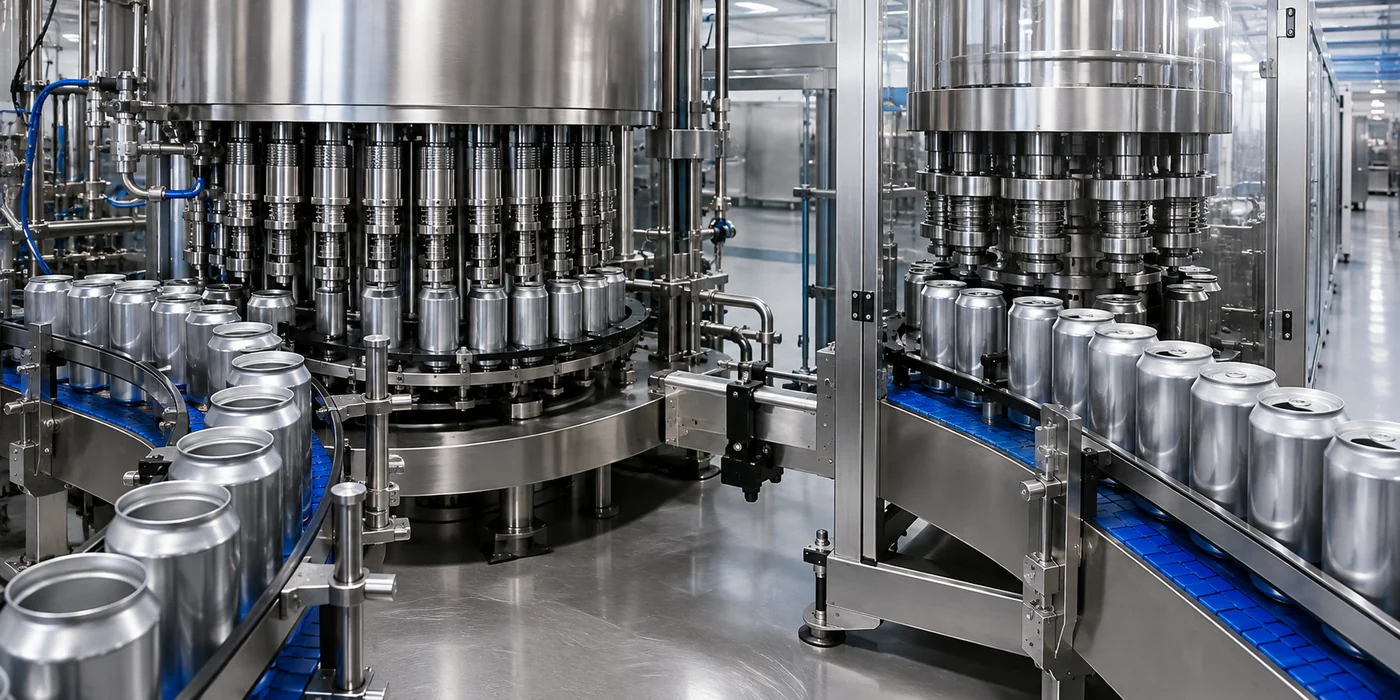
| Aluminum can | Can depalletizing or feeding, counter-pressure filling, lid placement and double seaming. | Good light barrier, fast chilling and common single-serve format. | Can and lid specification, seam setup, dissolved oxygen target, CO₂ level and fill temperature. |
If you have several container sizes, list each bottle or can separately. A shared line may be possible, but every format needs compatible handling parts, pressure settings, closures and changeover procedures.
Cold Drink Packaging Problems the Line Must Solve
Do not select the filler from nominal speed alone. The beverage, container and finished sales pack must be tested as one system.
| Production problem | Recommended route | How to address and verify it | Evidence type |
|---|---|---|---|
| Foam, carbonation loss or unstable fill level | Chilled product supply plus counter-pressure filling | Define CO₂ target and fill temperature; verify fill level, product loss and retained carbonation under the agreed run conditions. | Supplier technical documentation; confirm by FAT |
| Cap leakage or an unacceptable can seam | Container-specific capper or double seamer | Match the neck finish, cap or can-end specification and include closure-integrity checks in acceptance. | Engineering selection; validate with supplied containers |
| Condensation disrupts labels or shrink packs | Controlled conveying, drying/temperature management and matched secondary packing | Trial the actual label, film and pack pattern on containers at production temperature. | Engineering recommendation; project verification required |
Applicable Cold Drink Packaging Scenarios
| Scenario | Best starting route | Confirm before quotation |
|---|---|---|
| Carbonated drink in PET or glass bottles | Counter-pressure filler plus matched capper | Bottle, neck, cap, CO₂, temperature and accepted bottles/hour |
| Carbonated drink in aluminum cans | Pressure filling plus lid placement and double seaming | Can body, end, seam standard, dissolved oxygen and accepted cans/hour |
| Chilled still beverage | Validated hygienic filling and cold-chain route | Recipe, pH, preservation process, shelf life and distribution temperature |
Why Carbonated Soda Needs Pressure-Controlled Filling
Carbon dioxide remains more stable when the beverage is cold and pressure is controlled. If pressure drops too quickly during filling, gas release creates foam, inconsistent fill levels and product loss. The filler must manage the pressure relationship between the product supply and container, then close the bottle or can promptly.
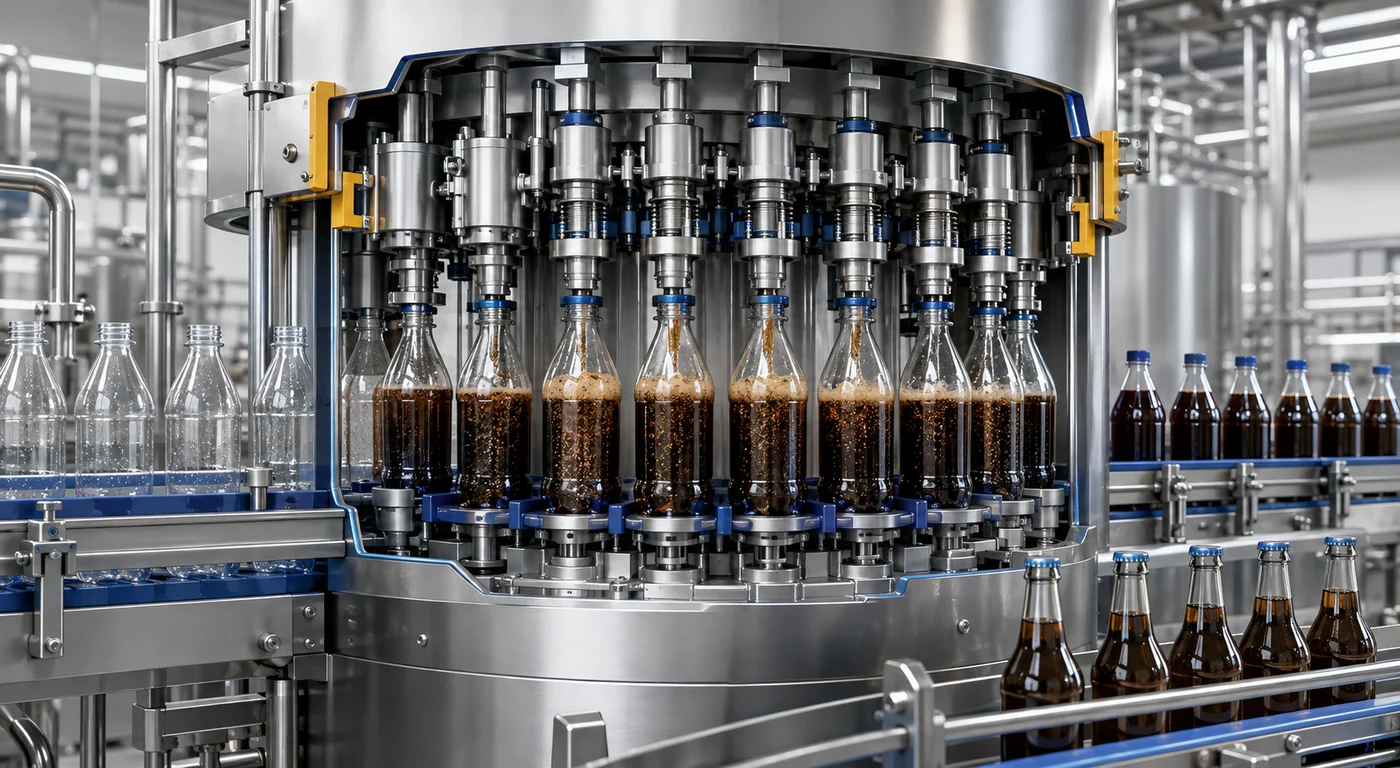
Krones describes a carbonated filling sequence that equalizes pressure before filling and uses controlled depressurization afterward. This explains why a simple atmospheric liquid filler should not be selected for soda from the keyword alone.
For cans, the closing stage is a double seam rather than a bottle cap. The can body, lid and seamer setup must be treated as one validated combination. For PET or glass bottles, confirm the neck finish and closure as well as the filling pressure.
What Is Included in a Complete Soda Line?
| Stage | Typical function | Key project decision |
|---|---|---|
| Water and syrup preparation | Treats process water and prepares the beverage recipe. | Water analysis, recipe, sugar or sweetener system, hygiene and batch capacity. |
| Blending, chilling and carbonation | Combines ingredients, cools the product and dissolves CO₂ under controlled conditions. | Brix, acidity, CO₂ volume, product temperature and buffer capacity. |
| Container preparation | Rinses or otherwise prepares PET bottles, glass bottles or cans. | New or returnable container, rinse medium, hygiene target and line speed. |
| Filling and closing | Fills under controlled pressure and immediately caps or seams the container. | Container, closure, pressure program, foam control, fill-level acceptance and changeovers. |
| Labeling and coding | Applies decoration and production traceability. | Label type, bottle shape, code content, inspection and reject handling. |
| Secondary packaging | Groups containers by shrink film, tray, carton or case. | Pack pattern, film or board, handle openings, cooling and distribution strength. |
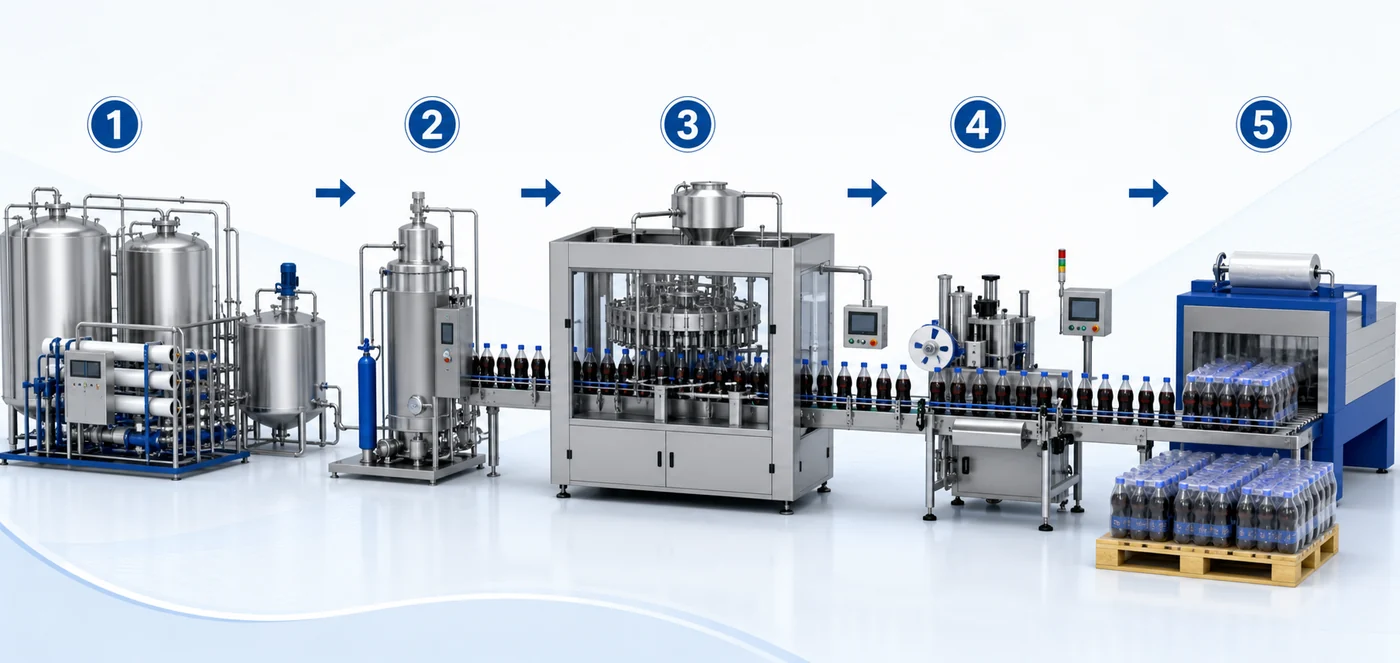
A quotation may cover only the filler or extend from water treatment and beverage preparation to packed cases. State the battery limits: where product and empty containers enter, where saleable packs leave, and which utilities, conveyors, inspections and installation services are included.
End-of-Line Soda Packing
After filling and closing, soda bottles or cans may be labeled, coded and grouped into shrink bundles, trays or cases. Pack pattern, container stability and distribution conditions determine the secondary equipment. A shrink wrapper does not carbonate or fill the drink; it groups already closed containers for handling and sale.
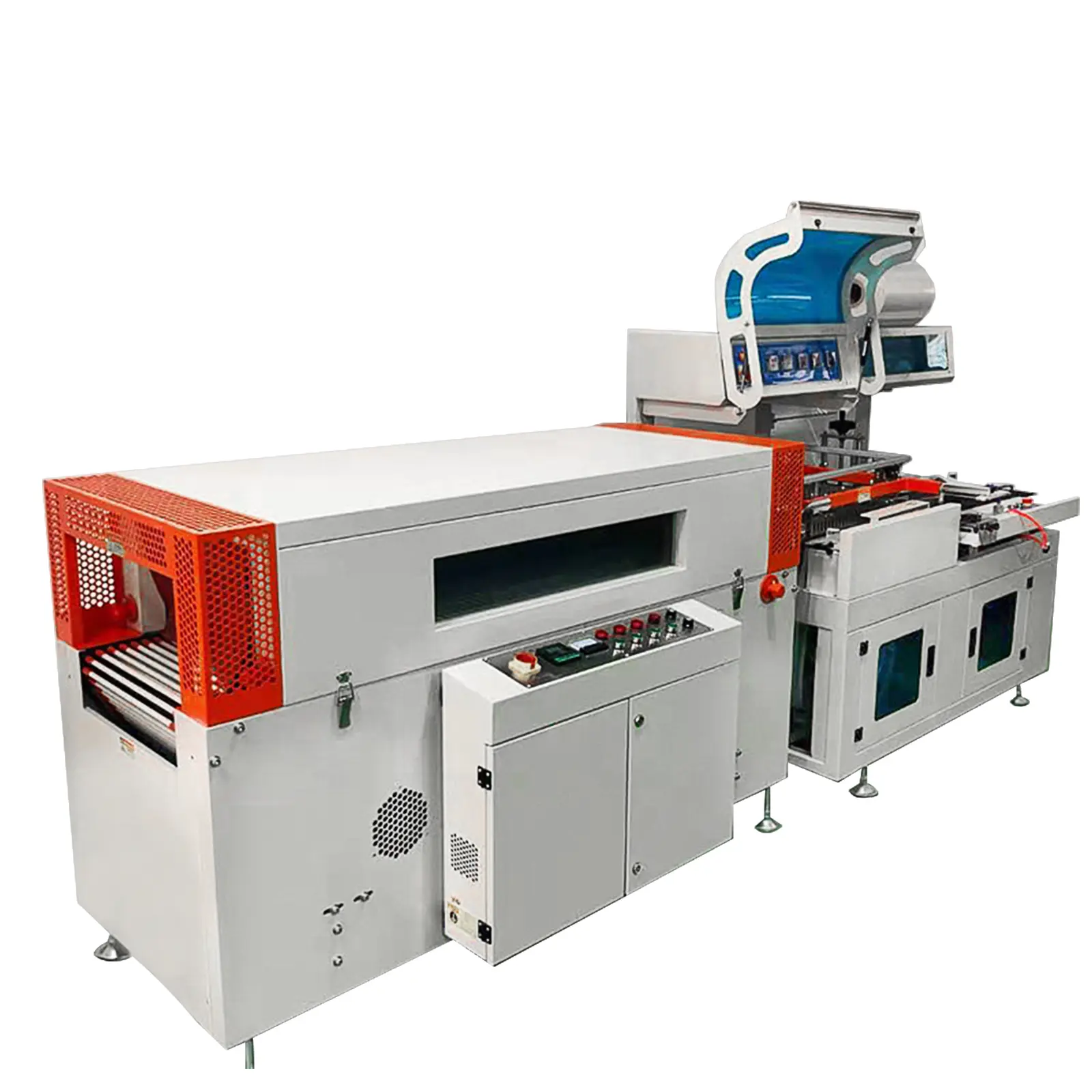
Comwin’s heat shrink packaging equipment can be evaluated as a downstream module. For wider scope, request a filling-product packaging line quotation with the required labeling, bundling and case-handling stages listed separately.
Information Needed for a Soda Line Quotation
| Input | What to provide | Why it matters |
|---|---|---|
| Beverage | Formula category, Brix, acidity, CO₂ volume, temperature and foaming behavior. | Determines product preparation, carbonation, pressure filling and cleaning requirements. |
| Container and closure | PET or glass bottle or aluminum can, volume, dimensions, neck or lid specification and samples. | Determines handling parts, filler interface, capper or seamer and changeover scope. |
| Accepted output | Required saleable bottles or cans per hour for each format. | Determines machine size, buffer capacity, conveyor design and acceptance conditions. |
| Final sales pack | Single container, shrink bundle, tray, carton or shipping case with required pattern. | Determines downstream collation, film or board, conveyor and end-of-line automation. |
| Utilities and compliance | Power, compressed air, water, CO₂, steam or cooling, floor plan and local standards. | Determines plant interfaces, electrical configuration, documentation and installation plan. |
Send container and closure samples when available. For carbonated projects, include the intended filling temperature and CO₂ target rather than writing only “cold drink.” These inputs allow Comwin to select a suitable filling route and define realistic factory acceptance conditions.
Cold Drink Packing Machine Budget
The price changes sharply with container type, accepted output, carbonation and chilling scope, number of filling valves, capper or seamer, labeling, inspection, conveying and secondary packing. This guide excludes Indian prices and low-cost entry listings and compares coordinated industrial projects.
| Reference | Price basis | Scope shown | Buying interpretation |
|---|---|---|---|
| Comwin Group integrated line planning reference | US$80,000–500,000+ | Filling-product packaging line that may include filling, capping or seaming, labeling, conveying, secondary packing and inspection according to project scope. | Use as the first budget framework for a coordinated project. Final price requires the beverage, container, output and included modules. |
| China: carbonated bottling listing | US$50,000 advertised | Automatic carbonated soft-drink bottling and packing equipment listing. | Public reference only; confirm whether processing, carbonation, filler, labeler and secondary packing are included. |
| China: sparkling-water line listing | Up to US$98,000 advertised | Automatic sparkling or soda-water bottle filling and packing line listing. | The broad listing range is not a normalized project price; compare a written module list and FAT conditions. |
| United States: BW Packaging | Quote-based | Soda filling, sealing, seaming, capping, labeling, shrink bundling and case or tray packing technologies. | Request a container-specific project quote and local service scope. |
| Europe: Krones | Quote-based | Industrial filling platform for beer, carbonated soft drinks and water with controlled pressure steps. | Compare engineering, controls, validation, integration and lifecycle service rather than a bare machine price. |
Comwin’s US$80,000–500,000+ range is an experience-based planning reference for filling-product packaging lines; it is not a starting price for every soda filler and does not mean every project includes every module. The Chinese figures are public supplier listings reviewed on 7 September 2026. They are not normalized for output, container, processing, freight, commissioning or service and should not be averaged.
Supplier Selection: Budget, Output, Customization, Support and Delivery
Compare suppliers on five dimensions: budget, required accepted output, customization depth, after-sales support and delivery/response. Choose Comwin when a China-based, configuration-matched project with free sample testing and remote response within 24 hours fits the brief. Choose a European or US platform when established local lifecycle coverage or very high-output standardized beverage engineering outweighs the higher quote-based investment. For any supplier, compare the same battery limits and FAT conditions.
| Supplier / region | Positioning | Relevant capability | Best-fit buyer |
|---|---|---|---|
| Comwin Group / China | Customized export projects from a selected machine to a coordinated filling-product packaging line. | Equipment matching, free sample testing, factory visits, 2-year machine warranty, 3-year core-component warranty and remote response within 24 hours. | Overseas buyers seeking Chinese project economics with one contact for configuration and downstream coordination. |
| BW Packaging / United States | Broad soda packaging portfolio across primary and secondary stages. | Rotary filling, capping, can seaming, labeling, shrink bundling, case and tray packing. | North American producers prioritizing established regional equipment and service coverage. |
| Krones / Germany | High-output industrial beverage filling and line engineering. | Pressure-managed filling for carbonated soft drinks with controlled pressurization and depressurization. | Large plants prioritizing integrated high-speed platforms and lifecycle support. |
| Comac / Italy | Container-specific carbonated soft-drink filling systems. | Automatic bottling and canning solutions selected by container and production requirement. | Producers comparing European carbonated-filling specialists. |
| Chinese export market | Wide range of carbonated filling and packaging configurations with public indicative prices. | PET and glass bottling, canning and variable downstream scopes. | Buyers who can define the module list, FAT, documentation, commissioning and support in detail. |
Use the same beverage, container, output, final pack and acceptance specification for every quotation. Comwin can return an itemized proposal so you can compare the filler, closing system, conveyors, labeling, secondary packing, testing, spares and support on equal terms.
Factory Testing and Acceptance
Agree on test product, container, closure and running conditions before the order is finalized. Acceptance should cover saleable containers per hour, fill-level variation, closure or seam integrity, foam and product loss, code readability, changeover procedure and line accumulation behavior.
For secondary packaging, verify bundle pattern, film sealing and shrinking, cooling, handle openings if required and pack stability after transport handling. Record the test conditions so output claims remain tied to the specified container and beverage.
Common Buying Mistakes
- Treating soda like still water: carbonation, temperature and pressure require a different filling evaluation.
- Choosing a filler before the container: PET bottles, glass bottles and cans need different closing and handling systems.
- Comparing bottles per hour without the format: container size, foam, closure and changeover conditions affect accepted output.
- Assuming a line price includes everything: preparation, carbonation, labeling, shrink packing and case packing must be listed.
- Ignoring local service requirements: controls, spare parts, documentation and remote or on-site support affect ownership risk.
Frequently Asked Questions
Can one soda packing machine fill PET bottles and cans?
Normally they use different container handling and closing systems: bottles are capped, while cans are double-seamed. A project can share upstream beverage preparation, but the filling and closing equipment must be configured for each container route.
Can a water filling machine pack carbonated soda?
Do not assume so. Carbonated soda requires pressure and foam control at the intended product temperature. Ask for a carbonated-drink filling configuration and validate it with the actual beverage and container.
How much does a soda packing machine cost?
Comwin’s planning reference for a coordinated filling-product packaging line is US$80,000–500,000+. The final quotation depends on whether you need a standalone filler or a complete project with preparation, carbonation, labeling, conveyors and end-of-line packing.
What is the difference between a capper and a can seamer?
A capper applies a closure to a bottle neck. A can seamer mechanically forms a double seam between the can body and lid. Each requires the correct container and closure specification plus an integrity test.
Do I need a shrink wrapping machine?
Choose shrink wrapping when bottles or cans must be sold or transported in grouped packs. Specify the pack pattern, tray requirement, film and distribution test. It is a downstream module after filling and closing.
Plan Your Soda Packaging Line with Comwin
Send your beverage specification, container and closure samples, target output, final sales pack and factory utilities through our contact page. We provide free sample testing and can arrange visits to real factories. Our service includes a 2-year machine warranty, 3-year core-component warranty and remote response within 24 hours.