
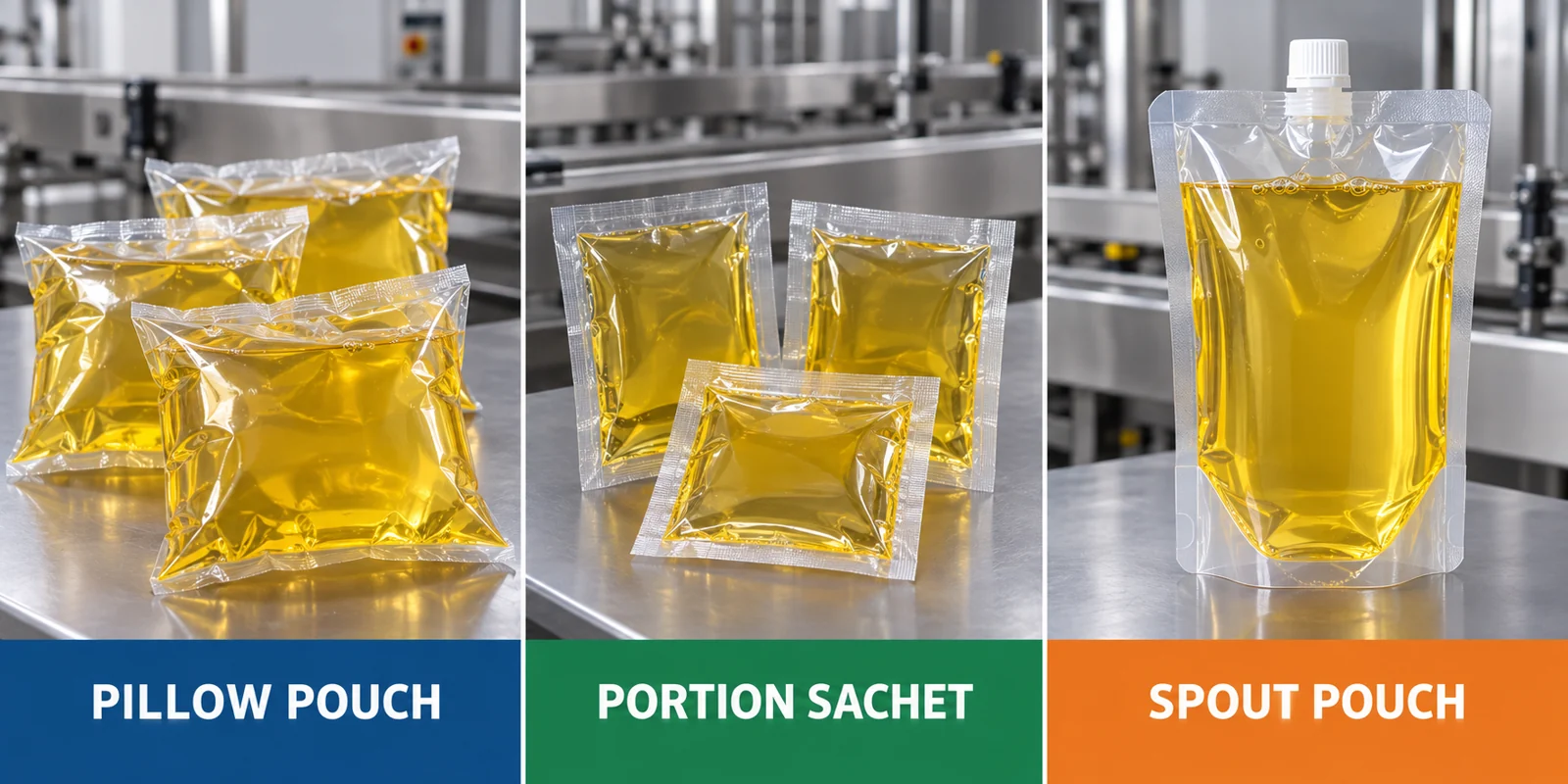
Choose the finished pouch before choosing the machine
“Automatic oil pouch packing” covers more than one machine platform. Rollstock VFFS forms a tube around a forming collar, makes the longitudinal seal, doses the oil, then closes and cuts the cross seals. Three- or four-side-seal sachet systems create flat portion packs, often on multiple lanes. Premade spout-pouch machines receive an already converted pouch and fill through its fitment. The package supplier, filling opening and closure decide which route is practical.
| Finished pack | Machine route | Best fit | Primary risk to control |
|---|---|---|---|
| Pillow pouch | Liquid VFFS from rollstock | Economical retail or foodservice packs | Oil entering longitudinal or cross-seal areas |
| Three- or four-side sachet | Flat sachet FFS, single or multilane | Portion packs and samples | Lane-to-lane dose and seal consistency |
| Premade spout pouch | Pouch indexing, filling and capping | Resealable pouring and shelf presentation | Spout position, cap torque and pouch tolerance |
| Case-packed pouches | Inspection followed by secondary packing | Distribution-ready groups | Rejecting leaks before oil reaches the case |
The broader cooking oil packaging guide compares bottles, tins and pouches. This page goes deeper into flexible-pack dosing, clean seals and acceptance. For alternative premade-bag platforms, see our bagged packaging machine options and the wider bagged packaging solution.
How an automatic rollstock oil pouch machine works
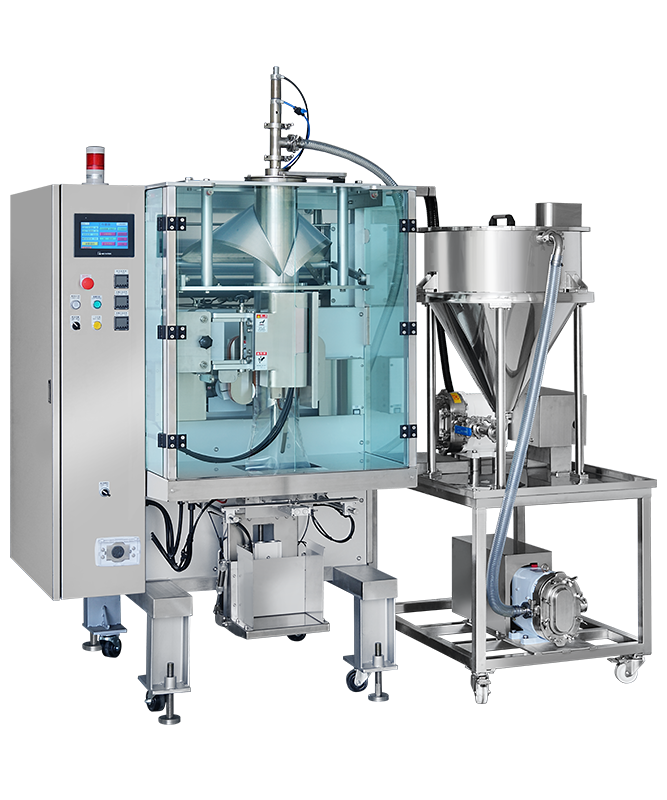
- Film unwinding and registration: the machine controls web tension and aligns printed artwork.
- Bag forming: rollstock passes over the forming collar and becomes a tube.
- Longitudinal sealing: heat and pressure close the back or fin seal.
- Metered filling: a liquid pump delivers oil through a nozzle positioned to keep product away from the seal zone.
- Cross sealing and cutting: jaws close the top of one pouch and bottom of the next, then separate finished packs.
- Inspection and discharge: accepted pouches continue to collection or case packing; suspect packs enter a controlled reject process.
“Fully automatic” should describe the agreed boundary. Film forming, dosing, sealing and cutting may be automatic while oil supply, roll change, finished-pouch collection and case loading remain separate. Ask the supplier to draw the line boundary instead of relying on the label.
Rollstock VFFS or premade spout pouch?
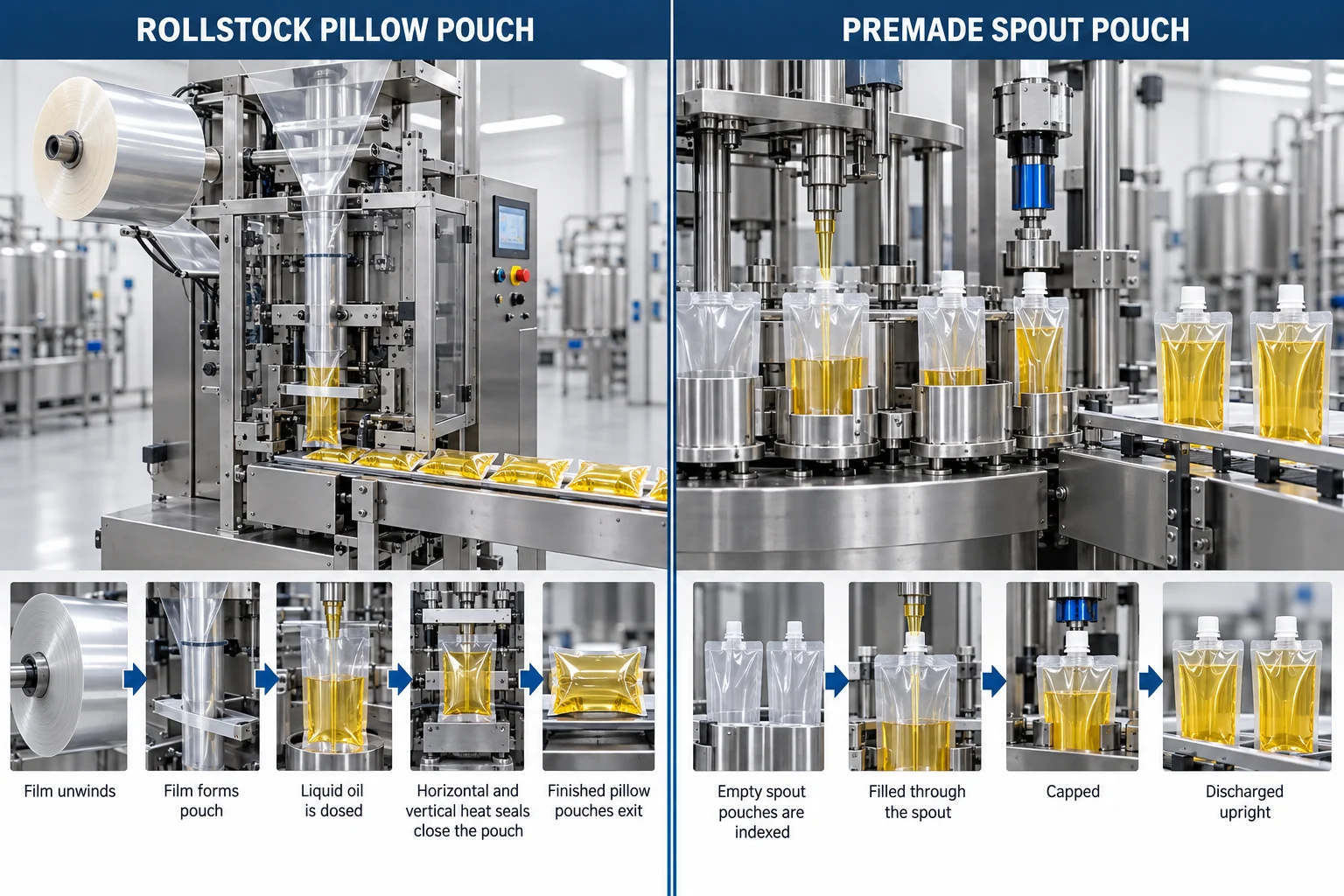
| Buying factor | Rollstock pillow or sachet | Premade spout pouch |
|---|---|---|
| Empty package | Printed roll film | Converted pouch with spout and matching cap |
| Closing method | Longitudinal and cross heat seals | Spout cap; pouch body is already converted |
| Material economics | Typically lower empty-pack cost at comparable scale | Higher converted-package cost with stronger convenience |
| Presentation | Simple flexible pack or portion sachet | Resealable, controlled pouring and stand-up display |
| Changeover focus | Former, film width, registration and jaw settings | Pouch guides, spout position, fill nozzle and cap tooling |
| Acceptance focus | Seal strength, channel leaks, dose and cut position | Spout weld, cap torque, squeeze leakage and drop handling |
Choose rollstock when package cost and simple formats lead the decision. Choose a premade spout pouch when resealability, pouring and shelf presence justify the converted package. Comwin can match either route after reviewing the real package and oil.
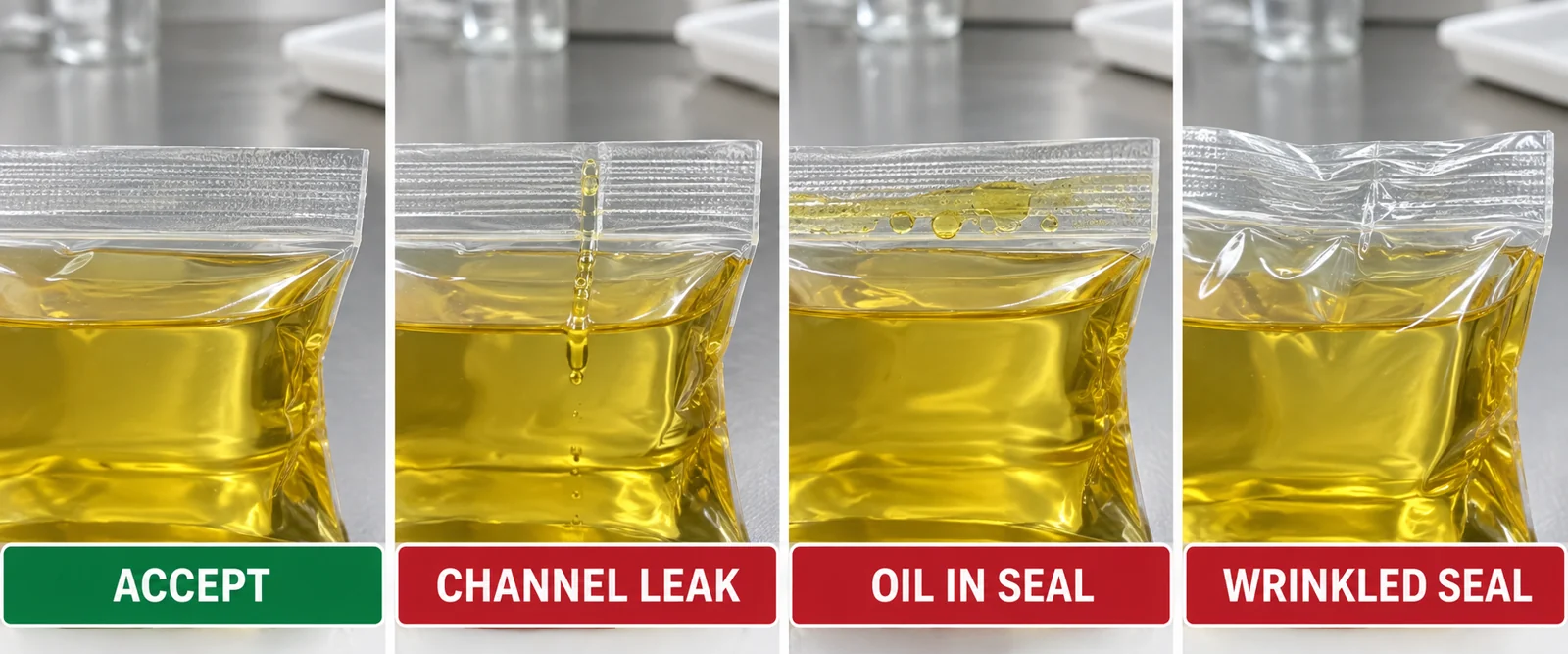
The critical engineering issue: keep oil out of the seal
Edible oil in the sealing area can create a leak path even when the jaws appear to close. The solution is a coordinated product path: controlled tank head or pump pressure, a nozzle with positive shutoff, enough settling time before the jaws close, and film whose sealing window suits the actual production speed. Oil temperature matters because it changes flow and drip behavior.
| Control | Set or inspect | Acceptance evidence |
|---|---|---|
| Dose shutoff | Nozzle close timing, suck-back or anti-drip function | No trailing oil reaches the next cross-seal zone |
| Seal recipe | Temperature, pressure and dwell for the approved laminate | Stable seal across the validated operating window |
| Film tracking | Registration mark, web tension and cut position | Print and cut remain within approved tolerances |
| Seal cleanliness | Cross seal and longitudinal seal surfaces | No oil, wrinkles or continuous channel across the seal |
| Leak test | Method, sample frequency and handling condition | Pass/fail result recorded against the agreed method |
| Fill quantity | Target, tolerance and measurement method | Accepted net quantity under production conditions |
Oil pouch packing machine price: compare the same supply boundary
The following USD figures are planning references, not fixed offers. Comwin ranges use the company price reference updated for this content program on September 9, 2026. Final quotations should state the approved pouch, oil, output condition, dosing system, coding, inspection, spare parts, freight, installation and commissioning.
| Reference | Price basis | Scope and useful comparison |
|---|---|---|
| Comwin liquid VFFS | US$5,000–30,000 planning range | Rollstock forming, liquid dosing and heat sealing; final pump, coder, film handling and discharge depend on configuration |
| Comwin premade-pouch equipment | US$10,000–45,000 planning range | Pouch handling with selected liquid filling and spout capping or compatible closing scope |
| Comwin filling-product packaging line | US$80,000–500,000+ project range | Configured primary packing, conveying, inspection and downstream automation; not a single-machine starting price |
| Omag liquid packaging / Europe | Quote-based | Supplier describes roll-film liquid sachet systems and non-drip control to protect the seal area |
| Matrix MVC-300L / US | Quote-based | Published liquid VFFS reference with up to 100 bags/min; actual oil, pouch and film trials govern usable output |
| Landpack premade oil pouch machine / China | Quote-based | Supplier lists premade liquid-pouch handling, 5–2500 g range and 25–60 bags/min, dependent on product and pouch |
What makes the price move?
The biggest drivers are filling range, number of lanes or nozzles, laminate type, printed-film registration, pouch size range, pump and hopper design, contact-part specification, cleaning access, code printing, leak or checkweigh inspection, discharge and case packing. Compare each quotation station by station. A wider numerical range is useful only when its scope is clear.
A FAT checklist for edible oil pouches
This checklist is the key purchasing handoff for this page. Complete it with the supplier before the factory acceptance test. Numerical tolerances should come from your product specification, legal requirements and sample trials; they should not be invented from a generic machine page.
| Item | Test condition | Record before approval |
|---|---|---|
| Oil and temperature | Run the intended oil at minimum and maximum normal filling temperature | Viscosity behavior, pump setting and drip observation |
| Approved packaging | Use production laminate or converted pouches, not substitute film | Supplier, structure, thickness, dimensions and print registration |
| Fill quantity | Measure the agreed sample size at sustained operation | Target, tolerance, rejects and measuring instrument |
| Seal integrity | Test start-up, steady run, restart and approved speed range | Seal recipe, visual defects and leak-test results |
| Changeover | Change between the agreed minimum and maximum packs | Parts used, time, adjustments and first accepted pack |
| Automatic boundary | Run infeed, packing, coding, inspection and discharge in the supplied scope | Accepted packs per hour, stops, rejects and operator interventions |
| Cleaning and recovery | Stop after oil production and follow the proposed cleaning procedure | Drain points, retained product, dismantling steps and restart condition |
If pouches must enter shipping cases automatically, define the bag orientation, count and leak-reject point before adding an automatic case packer. For a coordinated project, review the complete filling-product packaging line rather than multiplying individual catalog speeds.
Information to send for a reliable quotation
| Input | Required detail | Why it changes the offer |
|---|---|---|
| Edible oil | Type, temperature range, viscosity and any particles | Selects pump, nozzle, product path and cleaning |
| Finished pack | Pillow, three/four-side sachet or premade spout pouch | Selects the machine platform |
| Samples | Production film roll or converted pouch, spout and cap | Confirms sealability, former, guides and tolerances |
| Fill range | Minimum and maximum weight or volume | Sets dosing range and cycle time |
| Accepted output | Good pouches per hour for each size | Links speed to seal and dose acceptance |
| Quality method | Fill tolerance, leak test, seal check and coding position | Defines FAT and inspection scope |
| Factory and service | Layout, utilities, destination, standards and commissioning need | Defines controls, guarding, documents and delivery scope |
Why buyers consider Comwin
We match the pouch route to your oil, packaging material, output and budget. Send representative oil and film or premade pouches for sample testing, or inspect the factory by live video or in person. Standard service includes a two-year machine warranty, three years for core components and remote response within 24 hours.
Frequently asked questions
Which oil pouch packing machine is best for economical retail packs?
Start with liquid VFFS and rollstock pillow pouches when empty-package cost and a simple heat-sealed format lead the decision. Confirm the laminate, filling temperature and clean-seal result with production samples before fixing speed.
When should I choose a premade spout pouch?
Choose it when resealable pouring and shelf presentation justify the converted pouch and cap. Send actual pouches, spouts and caps so the supplier can confirm indexing, nozzle engagement, torque and leakage.
Does automatic oil pouch packing include case packing?
Only when it is listed in the supply boundary. Primary pouch forming, filling and sealing may be automatic while pouch collection and case loading remain manual. Request a station list and accepted line output.
How do I compare edible oil pouch packing machine prices?
Compare the same pouch, fill range, good-output condition, dosing system, coding, inspection, change parts, testing and service. Separate rollstock VFFS, premade-pouch equipment and complete lines before comparing totals.
Get a scope-based oil pouch proposal
Send your oil, pouch or film samples, fill range, target output, quality method and destination to contact our packaging team. We will recommend the suitable filling, sealing and downstream configuration and prepare a quotation.