
Choose a honey packing machine around the finished pack: jars and bottles need filling and capping; roll-film portions need forming, dosing and sealing; purchased pouches need matched pouch handling and closure. Small batches can start with an operator-assisted filler. Repeated bottle runs can use coordinated feeding, filling and capping. A preformed portion cup needs its own cup support and lidding equipment.
Comwin develops honey packaging solutions from a single filling machine to a coordinated production line. We match the product-contact path, pack handling and automation to your honey, factory and output. For initial planning, allow US$2,000–$8,000 for a small operator-assisted jar filler. Comwin’s broader bottle filling/capping category reference is US$12,000–$50,000; these are different equipment scopes. The selected honey configuration and included modules determine the quotation.
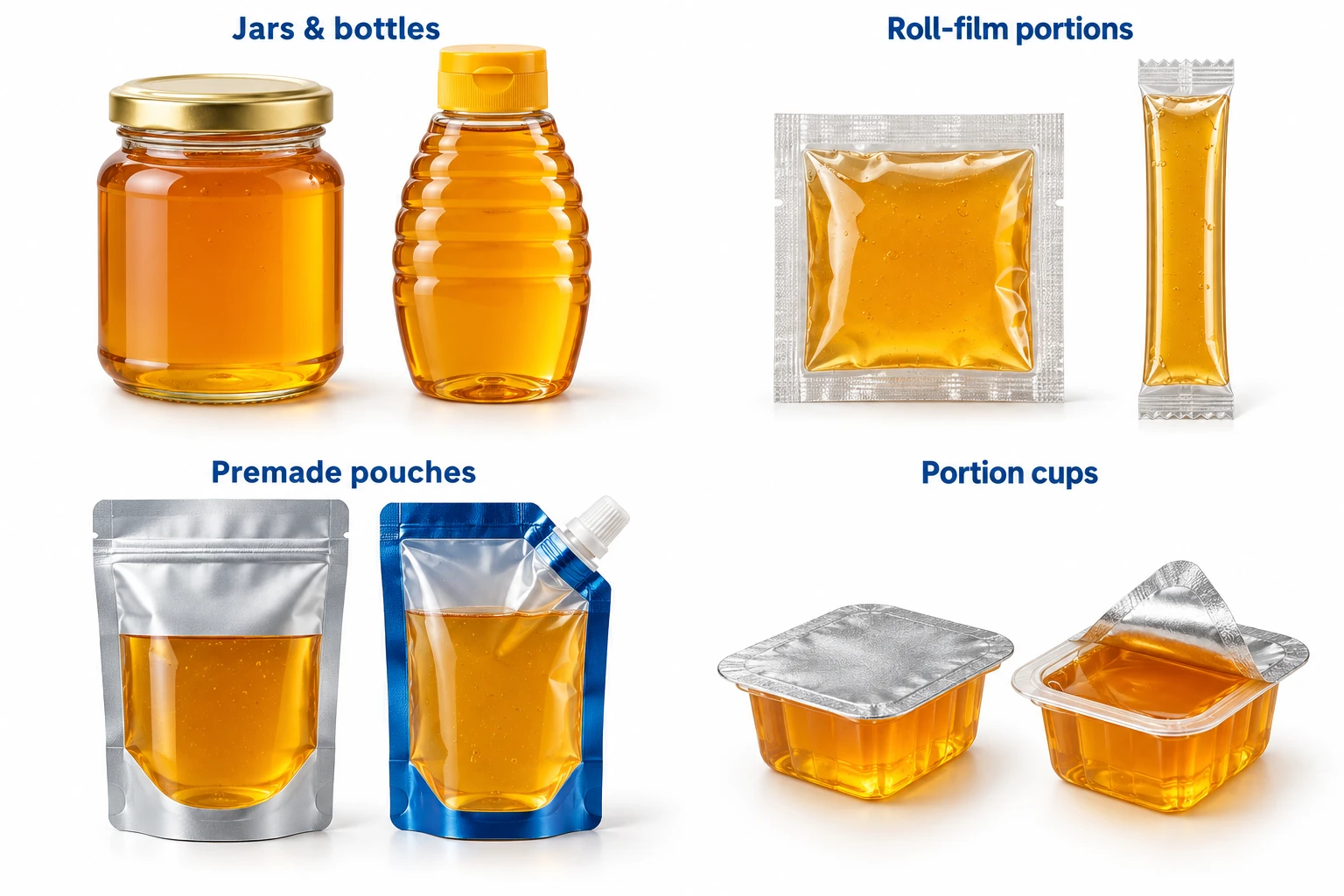
Select a honey packaging machine by how the pack is made and closed
Start with the package you intend to sell, then identify what limits the job: product flow, filling accuracy, closing, changeovers or handling. We use those conditions to recommend the equipment.
| Finished honey pack | Recommended starting equipment | What changes the choice |
|---|---|---|
| Jars or squeeze bottles | Honey-compatible filler with a clean-cutoff nozzle, container support and a capper matched to the closure. Connect feeding/filling/capping when manual handling limits repeated runs. | Honey condition, neck and cap, SKU mix, operator work and required accepted closed packs. |
| Flat sachets or flexible stick packs | Roll-film portion machine with the correct flat-sachet or narrow stick-pack forming/sealing layout and matched dosing. | Seal drawing, dose, film and opening feature; use measured accepted output to select lanes. |
| Purchased open-top stand-up pouches | Pouch presentation/opening, honey dosing and top heat sealing, with support for the filled pouch. | Pouch mouth, gusset/zipper, film seal layer, dose and filled-pouch stability. |
| Purchased spouted refill pouches | Spout presentation/support, honey dosing through the specified opening and cap application, where filling through the spout is required. | Spout bore/position, cap fit, filling access, honey flow and closure test. An open-top fill before final sealing is another specified process. |
| Preformed honey portion cups | Cup placement/support, portion dosing and matched foil-lid sealing with the rim kept clean. | Cup flange, lid material, headspace, opening and seal/leak checks. |
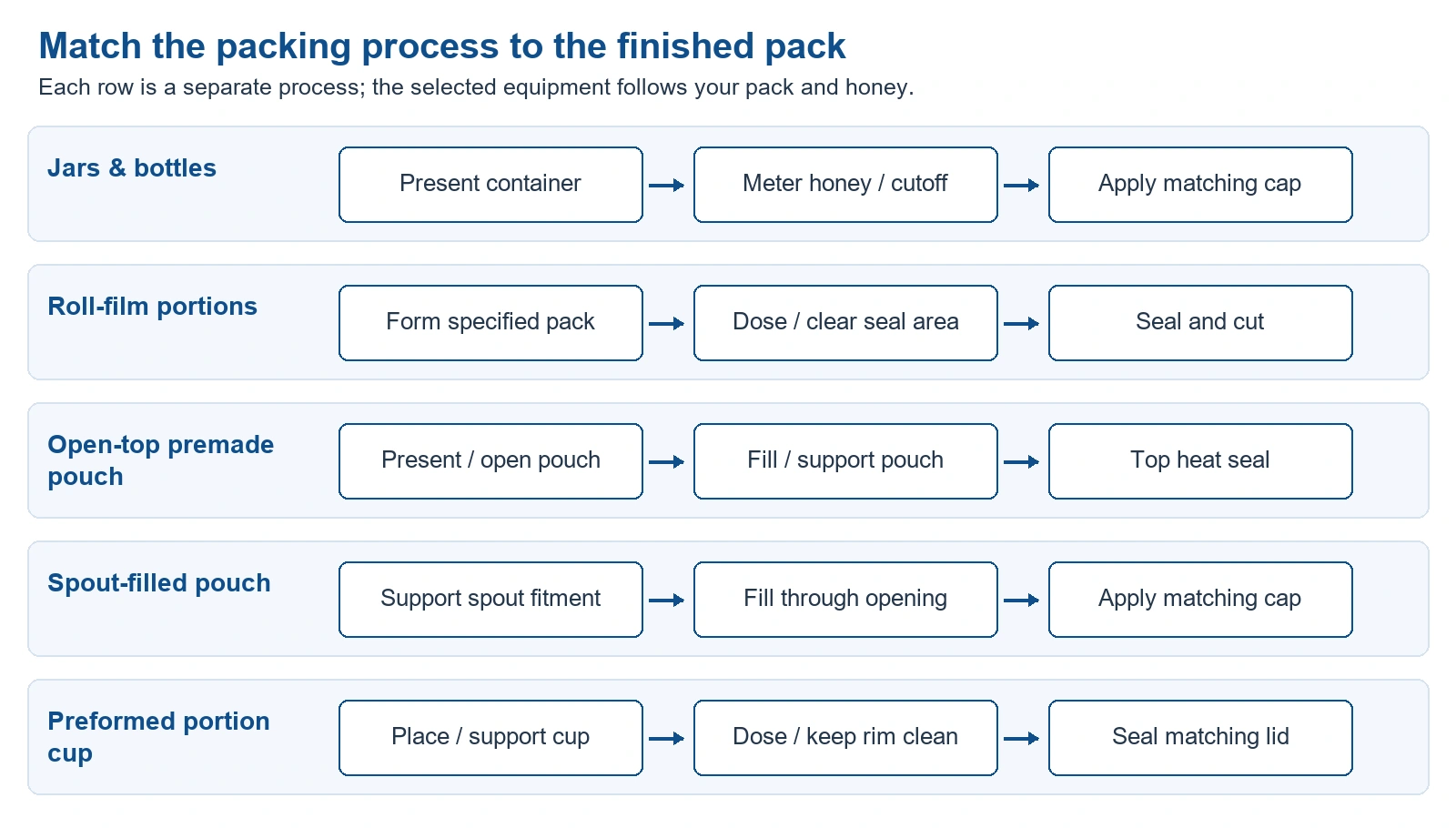
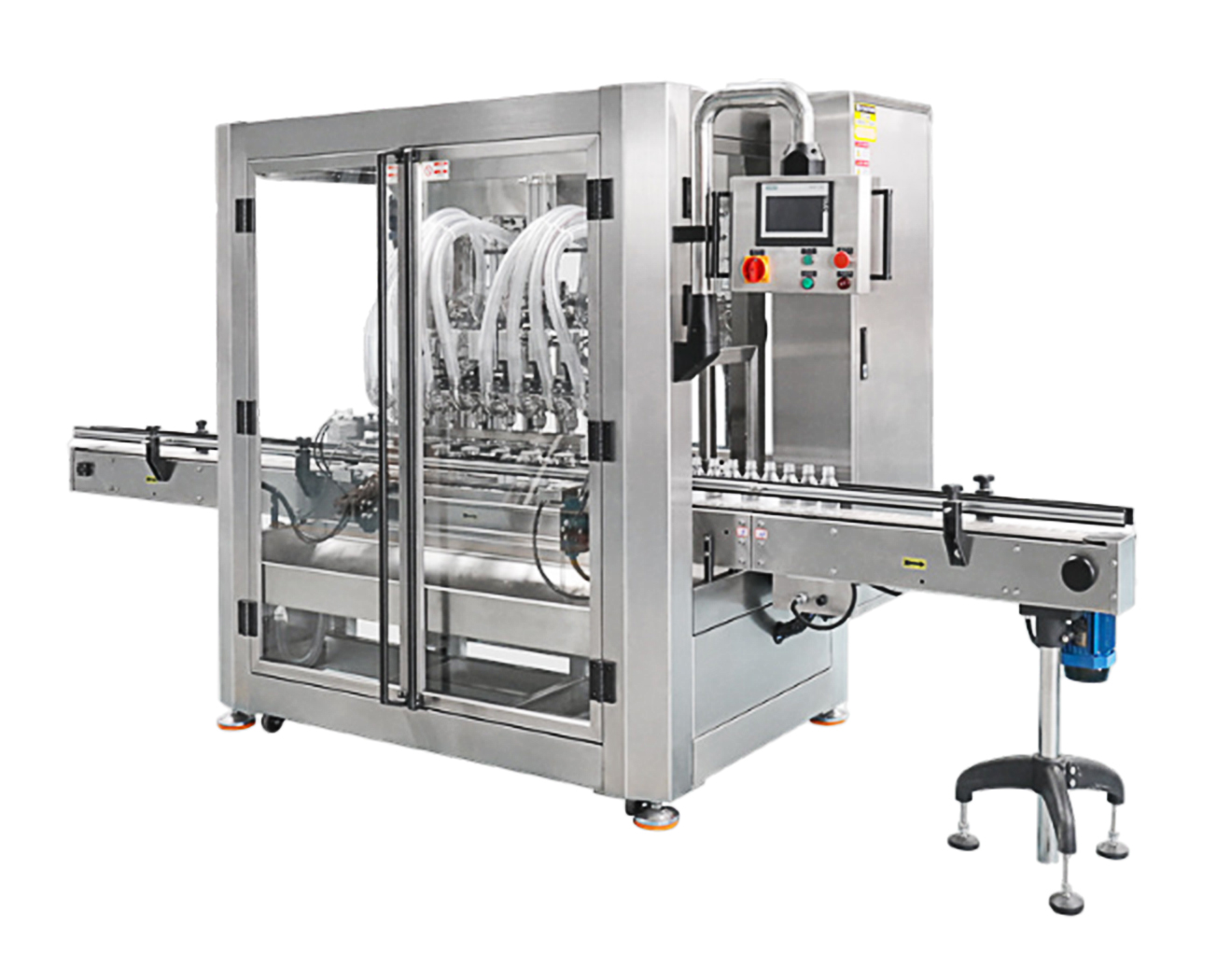
Jar and bottle filling: automate the limiting task
A small honey filling machine fits short campaigns when operators can present containers and complete closing within the schedule. Start with an accessible product path, calibrated metering and clean cutoff. For repeated approved jars/caps, an automatic honey filling machine with coordinated container feed and capping addresses handling or closing bottlenecks.
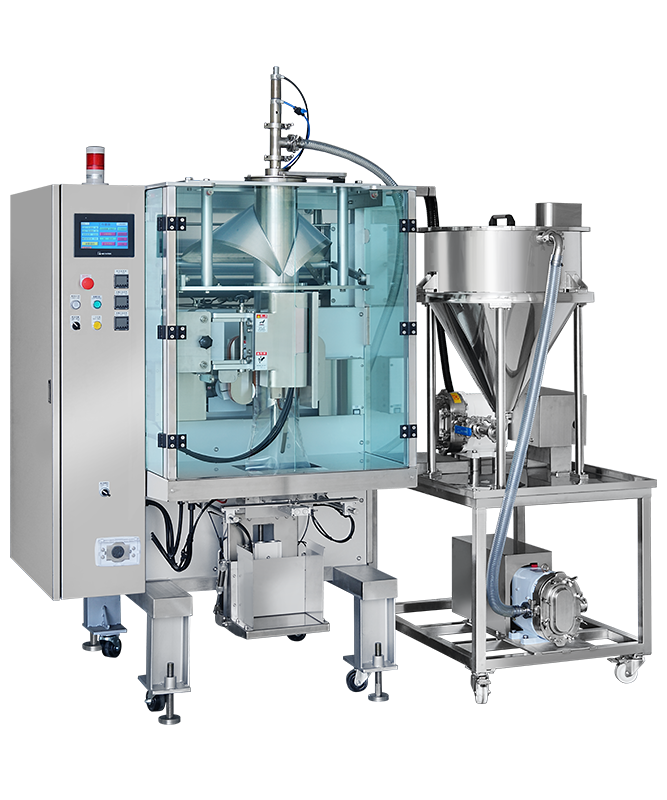
Film portions: choose the pack structure before the number of lanes
For a wide flat portion, use the honey sachet machine guide. For a narrow flexible pack, use the honey stick-pack guide. Both form their packs from film, but their seal layouts and tooling can differ. A rigid honey straw requires a dedicated empty-tube filling/end-sealing route.
Honey pouch packing machine: open-top and spout filling are different jobs
For purchased open-top bags, start with the premade-pouch equipment route and a suitable honey filler/top sealer. For filling through a spout, match the fitment holder, filling nozzle and cap system. A pouch photo alone does not define the process: send an empty pouch and its closure so we can choose the opening, dosing and closing configuration. Vacuum equipment is not a default honey requirement.
Portion cups: select the cup and lid together
When hospitality customers require cups, choose cup filling and lidding equipment around the flange and actual lid stock. Product clearance below the rim and a clean sealing surface matter alongside the dose. The cup route is distinct from bottle capping and flexible-film forming.
Match honey-packing problems to a specific equipment response
| Problem and affected product | Recommended configuration response | Check and tradeoff |
|---|---|---|
| Honey drips or strings onto jar necks, pouch openings or seals. | Product-selected metering and shutoff nozzle: coordinate cutoff, nozzle position and the next closing step for the chosen package. | Check the actual opening/seal area and leakage; clearance time can affect output. |
| Fill weights vary across warmer/cooler batches. | Stable product feed and calibrated dosing: select a suitable metering path and agreed operating conditions. Add temperature handling only within the approved product process. | Check representative honey at the permitted conditions, not just one convenient trial batch. |
| Creamed honey or crystals restrict product flow. | Passage, valve and nozzle matching: trial the most demanding expected material before choosing fill heads or lane count. | Flow, cutoff and cleaning may require a different product path or an approved process change. |
| Operators cannot supply caps or move containers fast enough. | Coordinated bottle feeding/filling/capping: automate the limiting transfer or closing step and balance it with dosing. | Measure accepted closed packs and operator work; additional heads alone do not establish line output. |
| Pouches leak or cups fail at the closure. | Pack-specific support and closing tools: match pouch heat seals or spout caps, or cup flange/lid tooling, to the actual materials. | Inspect contamination and filled-pack leakage after agreed handling; change parts and tooling are part of the scope. |
| Frequent honey and pack changes consume the shift. | Changeover-focused configuration: accessible contact parts, repeatable settings and defined guides/format parts for each SKU. | Demonstrate clean/change/restart, record time and include startup rejects. |
Find a honey product and production situation like yours
Weights and pack counts below are illustrative planning inputs.
| Project situation | Start with | Decisive information |
|---|---|---|
| Seasonal apiary: 250 g/500 g glass jars, several honey varieties and short batches. | Operator-assisted jar filler with matched independent capping. | Cleaning, jar support, cap tools and complete-workflow output. |
| Retail brand: repeated runs of one squeeze-bottle/cap combination. | Coordinated container feed, honey filling and capping. | Product supply, cap feeding, closed-pack output and any included labeling. |
| Foodservice: repeat orders for 10 g flat sachets or flexible sticks. | Pack-specific roll-film portion machine; one or multiple lanes as justified. | Seal drawing, actual honey/film trial and collected accepted portions. |
| Refill brand: 500 g purchased stand-up or spouted honey pouch. | Open-top fill/top seal or spout fill/cap, matching the selected process. | Opening, closure, pouch support, filled shape and leakage. |
| Hospitality: preformed single-serve honey cups. | Cup filling and foil-lid sealing. | Cup/lid samples, dose/headspace, rim cleanliness and opening. |
Example: 250 g and 500 g jars for a seasonal apiary
We would start with a matched dosing unit, clean-cutoff nozzle, adjustable jar support and appropriate capper. Operators place jars and transfer them to closing. This puts cleaning and variety changes ahead of unnecessary transport automation. Upgrade the limiting handling/closing step when the measured complete workflow cannot meet accepted demand.
Example: a refill brand choosing an open-top or spouted pouch
If consumers need reclosure and controlled pouring, select the spout and cap, then match the filling access and fitment support. If the approved pack is filled through an open top, match bag opening, dosing and final top sealing. These processes require different closure arrangements; compare pouch cost, filling access, seal/cap checks and change parts using your own samples.
Compare an operator-assisted filler with a connected honey line
| Production factor | Operator-assisted jar station | Connected filling/capping |
|---|---|---|
| Production mode | Short/varied campaigns and a manageable container-closing workload. | Repeated approved containers/caps where handling or closing limits output. |
| Operator work | Present containers, start the agreed filling cycle and move packs to closing. | Replenish product/caps, monitor stations and manage exceptions; supplied handling is coordinated. |
| Changeover work | Dose, nozzle/support height and cap tools, with contact-path cleaning. | Filler, guides, capper and any included downstream settings/change parts. |
| Acceptance | Weights, clean necks, cap fit and repeatable complete-job output. | The same results at the last included station, plus line stops and operator count. |
Illustrative calculation: 6,000 accepted jars in 300 available production minutes require 20 accepted jars/minute. Use the complete filling-and-closing job to judge the configuration. If manual capping is the constraint, adding filling heads alone does not meet this target. This is a demand calculation, not a machine specification.
Honey filling and packaging equipment budgets
The Comwin equipment-category references come from our September 2026 table. The small-filler, spout-pouch and cup rows give preliminary equipment budgets for ordinary pourable honey, one approved container/closure, matched dosing and specified controls. All values are in US dollars. The exact pack handling, tooling and included functions determine the scope and final quotation.
| Equipment category | Early reference | Scope and application limit |
|---|---|---|
| Bottle filling and capping | US$12,000–$50,000 | Selected filling/closing configuration. Heads, product path, feed and cap handling change the offer. This is not the minimum price of every small standalone filler. |
| General VFFS roll-film machine | US$5,000–$30,000 | Single-machine category reference. Dedicated flat-sachet or multi-lane stick platforms need a matched quotation; this range is not a universal ceiling. |
| Premade-pouch equipment | US$10,000–$45,000 | Broad purchased-bag category reference. Honey dosing, opening/closure, spout handling and automation are selected separately. Vacuum and ordinary sealing are different configurations. |
| Comprehensive filling-product packaging line | US$80,000–$500,000+ | Broad reference for a substantially integrated project covering filling and specified labeling/coding/secondary packing/inspection stages. It is not the floor price for a simple filler-and-capper combination. |
| Small operator-assisted honey jar filler | US$2,000–$8,000; early planning allowance. | One dosing station, matched nozzle, container support and basic controls. Operators present/transfer jars; capper, conveyor and automatic feed are separate. |
| Automatic purchased spout-pouch filling/capping | US$15,000–$50,000; early planning allowance. | One approved spout/cap, pouch presentation/support, matched honey fill and cap application. Specify pouch/cap feeding and change parts. |
| Preformed honey cup filling/foil-lidding | US$15,000–$60,000; early planning allowance. | One cup/lid format, cup support/presentation, honey fill and foil-lid application/sealing. Specify cup feed, lid stock and tooling; cup manufacture is outside this scope. |
Specify freight, taxes, trade terms, tooling, overseas installation, training and spare parts in the quotation; they are not uniformly included in the category references. The additional equipment budgets assume China export supply and exclude freight/taxes, overseas installation/training, packaging materials, upstream honey conditioning/transfer pumps, advanced inspection and downstream cartoning/case packing. Extra formats or handling can exceed these allowances. When comparing a honey filling machine for sale, request the same product, pack, included stations and accepted-output test in every offer.
Add retail cartoning when portions are sold as a counted box
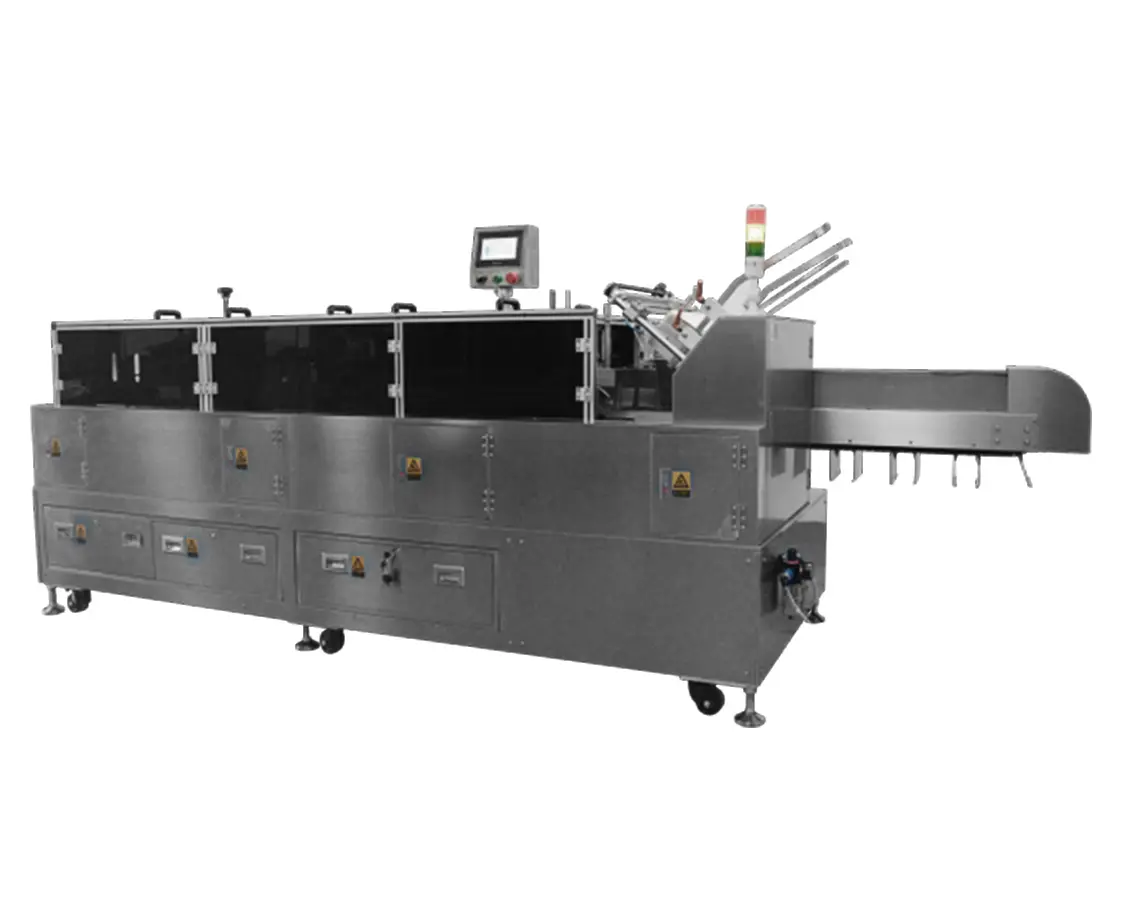
For retail cartons of sealed sachets or sticks, Comwin can match collection/counting → grouping/loading → carton closing to the required sales unit. Operator loading can serve shorter runs; repeated output can justify automatic loading. These are separately specified downstream stages.
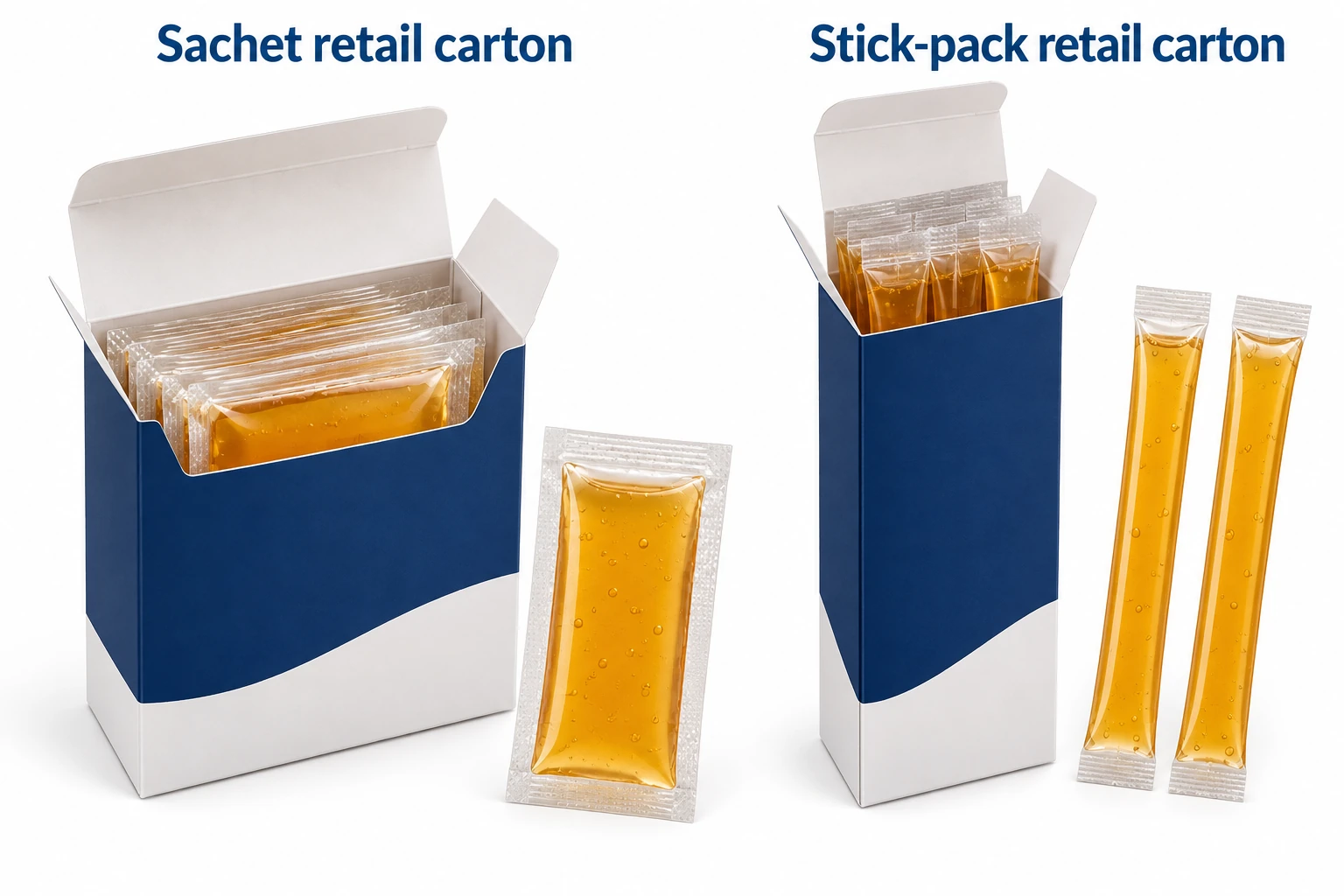
Paperboard retail cartons and corrugated shipping cases serve different tasks. The cartons shown contain already sealed portions; the illustration does not prescribe a pack count or imply that cartoning belongs to every filling-machine purchase.
Compare honey packaging suppliers on five practical points
| Decision | Comwin proposal focus | Compare across offers |
|---|---|---|
| Budget and scope | Matched single-machine or line configuration, with essential equipment and options itemized. | The same dose, closure, handling, format parts and installation boundary. |
| Production scale | Required accepted output with the normal SKU mix and operator workload. | Real-honey performance at the last included station, not filling speed alone. |
| Customization | Product path, pack tools and interfaces selected for your product and factory. | Samples, drawings, change parts and who owns interface engineering. |
| Support | Sample test, operating/cleaning guidance, spare parts and service scope. | Written response commitments and responsibility for each module. |
| Delivery | Configuration approval, acceptance and handover milestones. | Confirmed timetable for the actual scope and destination. |
Approve the finished honey pack and the complete workflow
Our free sample-testing service uses your honey and package materials to help select the configuration. Agree product conditions, fill tolerance, closure/leak checks, test duration, operator count and the output boundary.
- Jars/bottles: weight, clean necks, cap fit, closing result and accepted closed packs.
- Film portions: weights, lane consistency, seal cleanliness, cut/opening and collected accepted portions.
- Purchased pouches: filled shape, opening/support, heat seal or spout closure, leakage and changeover.
- Cups: dose/headspace, clean rim, compatible lid, seal and opening.
- Every route: contact-path access, clean/change/restart and the workload at included stages.
Honey packing machine FAQ
Should I start with a small honey filler or an automatic line?
For shorter runs that operators can fill and close within the schedule, start with a matched operator-assisted station. When repeated runs outgrow manual feeding/closing, automate the limiting task and balance the connected stages.
Can the same dosing system handle different honey varieties?
If the varieties suit the same product path, plan calibrated settings and demonstrated cleaning. For more difficult crystals, inclusions or flow behavior, change the path or permitted operating conditions after trials rather than assuming all varieties are interchangeable.
Can we change from jars to purchased pouches?
When both are required, assess any shareable dosing module, then specify different pack handling and closing tools. Jar support/capping and pouch opening/sealing are separate operations until the proposed changeover is demonstrated.
Which pouch machine do I need?
If the pack is formed from film, choose the matching roll-film platform. For purchased open-top bags, specify presentation/opening, fill and top seal. For spout filling, match the fitment and cap equipment to that process.
Does honey always need warming?
If your quality process permits conditioning, assess controlled temperature handling using the product. If ambient filling is required, select and test the filler at the real ambient conditions; use no universal warming setpoint.
What does the line price include?
For a line offer, require a station-by-station equipment list, interface responsibilities and accepted-output boundary. A simple filler/capper and a project including secondary packing, labeling and inspection have different scopes.
Get a honey packaging recommendation and itemized quotation
- Product: honey varieties and condition, crystals/inclusions, normal filling temperature, feed and cleaning.
- Package: filled/empty sample, dimensions, neck/spout/flange, cap/lid or film and every planned SKU.
- Fill: weight/volume, acceptable variation and headspace.
- Closure: seal drawing or cap/lid sample, opening, coding and agreed leakage/closure checks.
- Production: accepted packs per shift, available time, operators, SKU changes and any counted-carton requirement.
- Factory: layout, utilities, existing equipment and installation location.
We will propose the equipment route, reasons for the selected modules, scope/options, sample-test criteria and itemized quote. Comwin offers a two-year machine warranty, three years for core components and remote response within 24 hours; the quotation defines coverage, installation and training responsibilities.