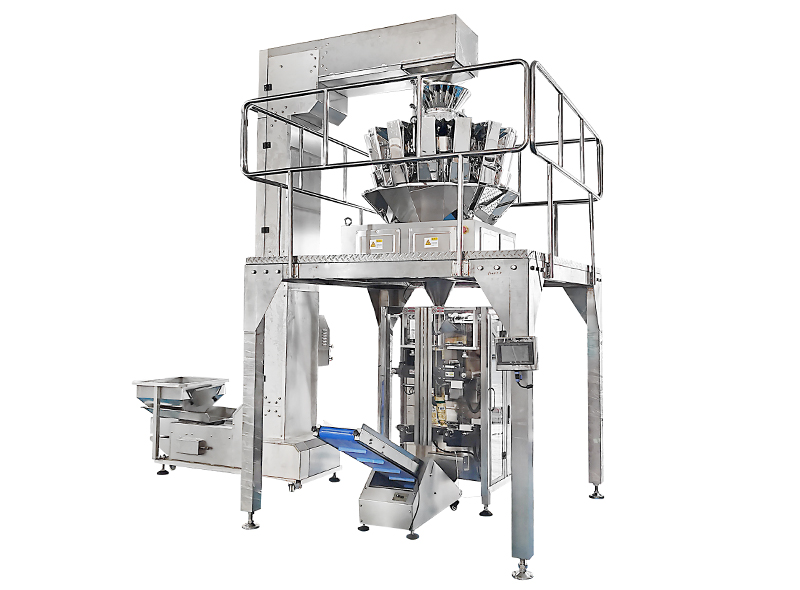
A fertilizer packing machine feeds and weighs the product, fills the bag and closes it. Small retail bags may use vertical form fill seal. Larger open-mouth sacks need support at the filling spout and a sewing or heat-closing station suited to the bag. Material flow and filled-bag weight determine the arrangement.
A small-bag VFFS platform has a reference range of USD 5,000 to 30,000; product-specific feeding and weighing still need to be specified. For hand-applied sack weighing and closing, allow USD 8,000 to 25,000. One automatic open-mouth bag format has an indicative range of USD 35,000 to 100,000. Comwin assesses fertilizer samples, bags and available production time to specify the equipment.
Select the weighing and bagging route by load and flow
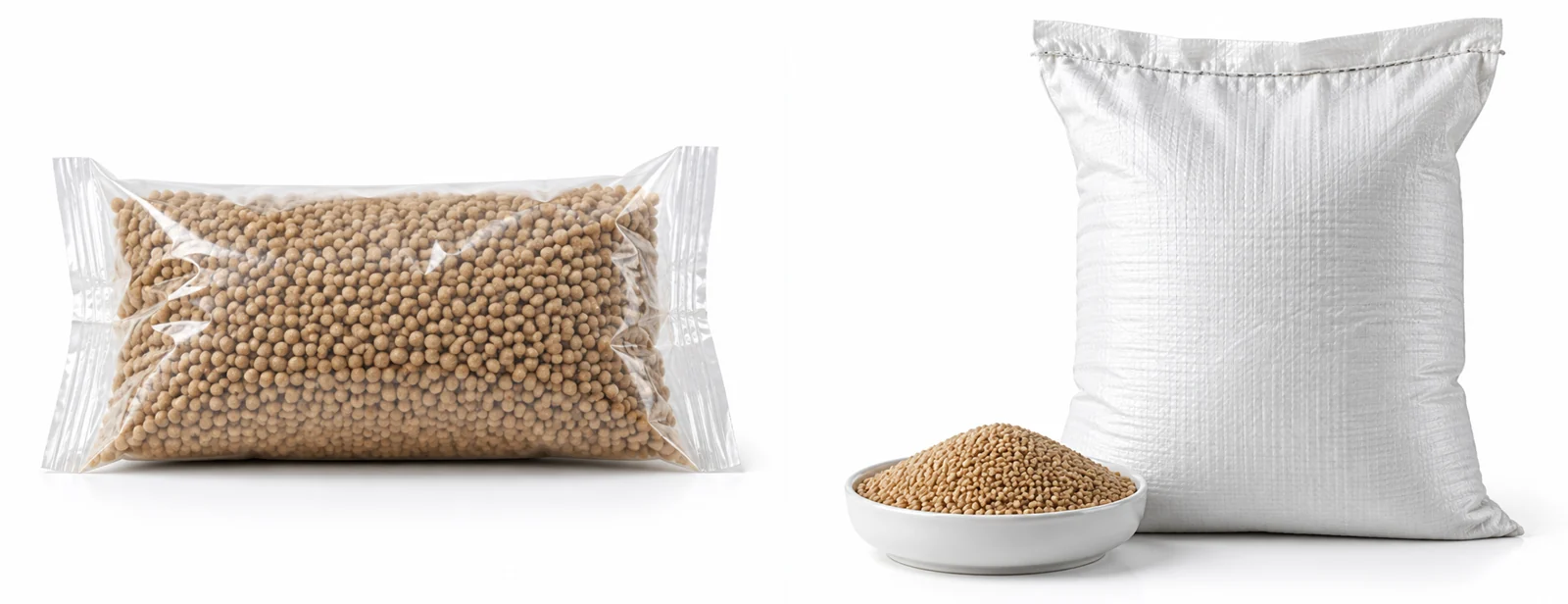
For a compatible small rollstock bag, quote the vertical bagger, feeder, scale and any needed extraction as separate items. For a heavy sack, test how the actual filled bag stays supported up to the closing point. Compare closure and handling with the largest agreed load.
Small fertilizer bags made from roll film
A weighing system releases a batch into the vertical bagger, which forms the film and makes the longitudinal and end seals. Select feeding from the fertilizer condition: free-flowing pellets behave differently from moist, irregular organic material.
This route suits a stable bag format and repeated small-pack orders. Check the heaviest pack, seal cleanliness and bag strength after handling. The price of a bare VFFS platform does not include every elevator, scale, dust-control connection or corrosion-related change.
Open-mouth fertilizer sacks
For larger sacks, a weighed batch is discharged through a filling spout while the bag is clamped and supported. An operator can apply the bag, or an automatic bag-handling arrangement can be selected. The filled sack then moves to the specified closing station.
Woven sacks, paper bags and plastic bags open and close differently. For a lined sack, specify how both the liner and outer sack will close. Assess automatic bag placement when handling repeats frequently and the empty bags open consistently.
Control material flow, weighing and sack closure
| Packing problem | Matched equipment or configuration | How it responds and what to check | Applicable product |
|---|---|---|---|
| Material bridges above the weigh point | Feed matched to real flow and moisture | Trial representative stored product rather than freshly screened granules only. | Hygroscopic or irregular fertilizer |
| Fine feed overshoots the target | Coarse/fine feed and stable weighing support | Review fill distribution through the range of supply levels and target weights. | Granular NPK, DAP and urea |
| Dust reaches the bag closure | Controlled discharge and assessed extraction interface | Inspect bag mouths and closure after repeated fills; define dust collection responsibility. | Fertilizer with fines |
| Contact parts wear or corrode | Documented materials and accessible wear parts | Assess the actual formulation and maintenance access before choosing construction. | Abrasive or corrosive products |
Retail granule bags and open-mouth fertilizer sacks
| Production situation | Finished pack | Starting route | Configuration inputs |
|---|---|---|---|
| Retail packs of stable granules | Heat-sealed film bag | Feed, weigh and VFFS | Granule dimensions, bulk density and bag mass Review a dedicated powder feed if fines dominate. |
| Several larger sack weights in shorter runs | Closed open-mouth sack | Hand-applied bag weighing and closing station | Bag construction, load support and operator work Automate application after validating the actual empty bag. |
| Long runs of one sack format | Closed open-mouth sack | Automatic bag placement, filling and closing | Bag consistency and good bags per available shift Automate application after validating the actual empty bag. |
Bag application, replenishment and changeovers
| Production mode | Operator work | Changeover implications | Acceptance focus |
|---|---|---|---|
| Hand-applied sack station | Operator applies bags and manages closing transfer | Flexible bag sizes; manual workload must be measured | Good closed sacks including bag application |
| Automatic small-bag packing | Operator supplies film and product | Film, former and weighing recipe follow the format | Weight distribution, seal and bag handling |
| Automatic sack filling and closing | Operator replenishes bag magazine and clears exceptions | Bag opening and closing settings are format-specific | Bag pickup failures, full-load handling and restart |
Fertilizer formulation, stored condition and sack construction
NPK descriptions such as 15-15-15 or 20-20-20 describe the product formulation; they do not establish a machine specification. Supply the granule-size distribution, bulk density, moisture, dust level and storage behaviour for the actual product. A weighing bagger portions a prepared mixture; it does not create or verify the fertilizer blend ratio.
Assess organic pellets, compost and wet digestate separately because their feeding behaviour differs. For microbial formulations, obtain the product supplier’s handling and temperature limits before specifying transfer or storage above the bagger. Any shared food and fertilizer equipment needs a segregation and cleanout assessment. Powder fertilizer also requires dust and dosing review. Specify heat-sealable plastic, paper or woven sacks with liners so the closing method follows the bag construction.
Fertilizer bagging machine prices
These planning ranges concern new equipment supplied from China for a defined product and format. Product preparation, extra formats, freight, taxes, overseas installation and site work are excluded unless expressly listed. Equipment additions and commercial terms are settled in the formal quotation. Special product-contact, safety or environmental requirements can change the scope.
| Equipment scope | Planning budget | Range applies to | Items to define separately |
|---|---|---|---|
| Small-bag VFFS platform | USD 5,000 to 30,000 | Defined film and bag format on the selected platform | Feeder, scale, extraction and material-specific construction |
| Hand-applied sack weighing and closing | USD 8,000 to 25,000 | One product and sack family, supported filling and basic closing | Automatic bag placement and upstream bulk transfer |
| Automatic open-mouth sack configuration | USD 35,000 to 100,000 | One bag format with application, filling and specified closure | Palletising, unusual dust hazards and extensive site works |
Translate tonnes per shift into bag intervals
For an illustrative requirement of 10 tonnes in 400 available minutes using 25 kg sacks, the order contains 400 sacks and requires 1 good sack per minute. At a buyer-specified 500 to 600 bags per hour, the bag interval would instead be 7.2 to 6 seconds. Those are different workloads, with different demands on bag application, weighing and closing. Neither is a Comwin rating.
Trial the intended bag weight and product supply. Record missed bag pickups, over/underweight bags, closure rejects and material spillage. Compare cost per acceptable tonne using labour, packaging, rejected material and maintenance under the same workload. Fertilizer manufacture, blending and drying stay outside the packaging scope unless separately specified.
Compare proposals on the same product and pack
| Dimension | Evidence to compare |
|---|---|
| Budget and scope | The equipment operations, product and formats represented by each price. |
| Output | Compare acceptable closed sacks at the target mass, with the real fertilizer and empty bags. |
| Product and format fit | Actual fertilizer, particle distribution, moisture and bulk density; Empty bag samples including liners and closure specification. |
| Support | Training, contact parts, spares and the responsibilities for commissioning and support. |
| Delivery | Samples, format confirmation, layout, documentation and acceptance milestones. |
Questions to settle before ordering
Can one bagger handle urea, DAP and NPK?
If flow, particle size and chemical compatibility fit the selected construction, configurations may share equipment. Trial each actual product and define cleanout to avoid unintended mixing.
Can wet organic fertilizer use the same feed?
If it bridges, smears or varies substantially in moisture, a different feeding arrangement may be needed. Send stored samples and moisture information before choosing a weighing system.
Does the machine set the NPK mixing ratio?
If a prepared blend reaches the bagger, it portions that blend. Ingredient proportioning and blend verification are separate upstream tasks.
Which bag materials can be closed?
For heat-sealable film, assess a thermal closure. For a woven or paper sack, specify its liner and construction before selecting sewing or another closing method.
Request a fertilizer and sack trial
Send fertilizer and finished-bag photos or samples, the fill or count, and the output you need. Include these details for the proposal:
- Actual fertilizer, particle distribution, moisture and bulk density
- Target bag weights and permitted mass variation
- Empty bag samples including liners and closure specification
- Tonnes or acceptable bags per available shift
- Product supply, dust collection and cleaning requirements
- Layout, utilities, destination and required handling operations
Comwin will recommend feeding, weighing and sack or film handling for the samples, explain the configuration and trial, and quote the agreed scope.
Comwin provides free sample testing and can arrange real factory visits. Small-equipment support includes video tutorials and remote video calls. The whole-machine warranty is two years, with three years for core components and remote response within 24 hours. Support and installation responsibilities are specified for the project.
Arrange free sample testing · Send your packing requirements