Frozen food packaging depends on the condition of the food at packing. Free-flowing IQF peas or pieces usually need feeding and weighing before bag sealing. An intact frozen burrito needs supported horizontal transfer and flow wrapping. Premade pouches suit packs requiring that purchased-bag structure or reclosure.
The VFFS platform reference is USD 5,000 to 30,000. A specified IQF feeding, weighing and bagging configuration has an indicative budget of USD 20,000 to 60,000. Premade-pouch platforms are USD 10,000 to 45,000 and flow wrappers USD 5,000 to 25,000 before product-specific handling is settled. Comwin assesses frozen samples, packaging and the operating area together.

Separate loose IQF portions from individual frozen products
Weighed IQF portions in roll-film bags
A feeder supplies separated frozen pieces to a weighing system, which releases each batch into the vertical bagger. Product fall, bag support and seal clearance are selected for the pieces and target mass. Free-flowing peas and fragile breaded food need different handling trials.
Roll-film packing suits repeating retail bags. Trial food from normal production and storage, including frost, broken pieces and clusters. These can disrupt feeding and contaminate seals even when a dry demonstration runs cleanly.
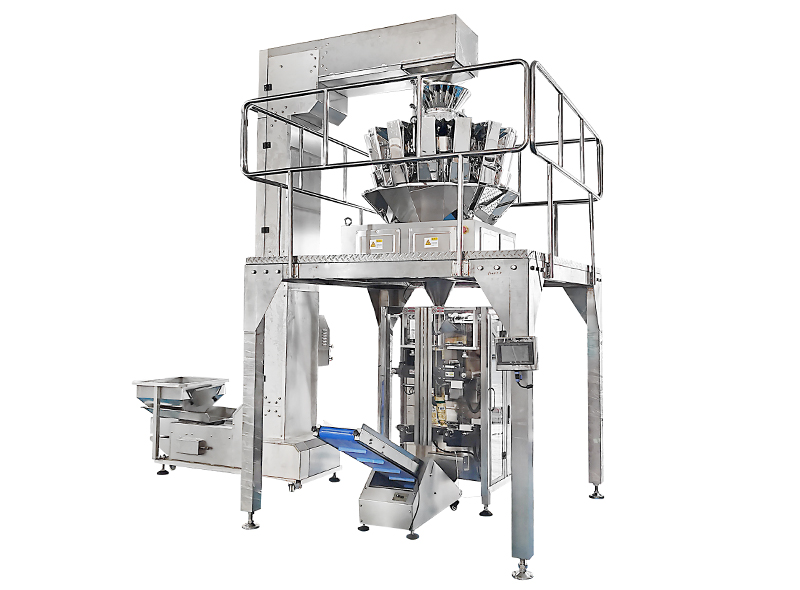
Individual frozen products in flow wrap
For a single frozen burrito or similarly stable item, a horizontal conveyor supports the product while film is formed and sealed around it. Select guides and transfer clearances from the real product geometry, including variation after freezing.
Supported transfer keeps the intact item out of a batch-weighing drop. Check wrapper cleanliness, seal clearance and the product surface under normal packing conditions. If a tray or other support is needed, trial it as part of that format.
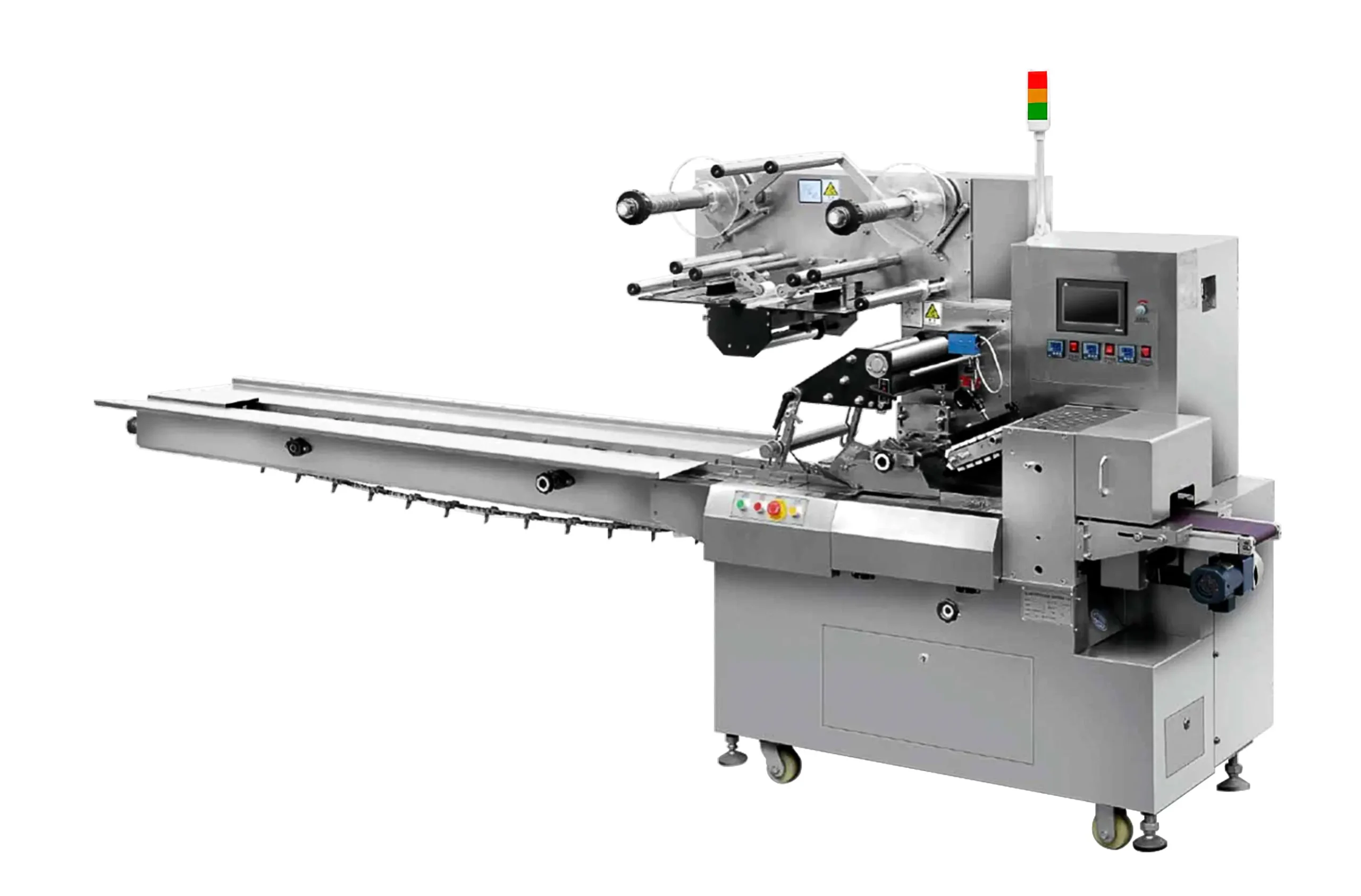
Frozen food in premade pouches
Choose a premade-pouch route when the sales pack needs a selected stand-up structure, zipper or other purchased-bag feature. The machine opens each pouch, receives a weighed batch and closes the specified top seal. The filling opening must admit the largest piece without bridging.
Trial the cold pouch material, product drop and closure after handling. A zipper below the top seal still needs a sound initial heat seal. Specify pouch supply, opening, dosing and discharge together so each operation is included in the quotation.
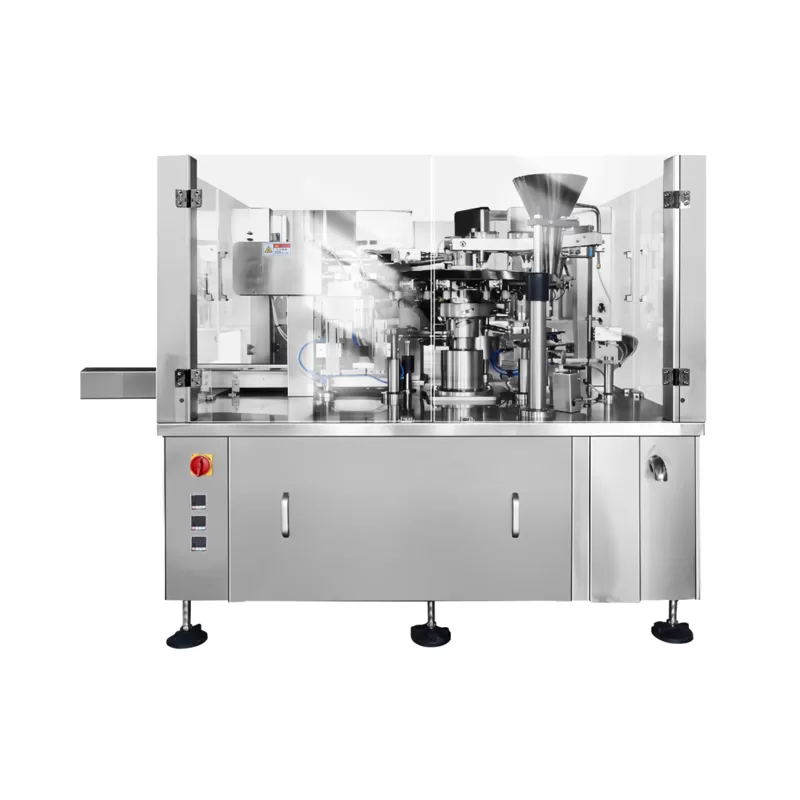
Control frost, product damage and cold-handled seals
| Packing problem | Matched equipment or configuration | How it responds and what to check | Applicable product |
|---|---|---|---|
| Frost and fragments enter the seal | Controlled discharge and suitable seal-area clearance | Inspect seals during normal product supply and after pauses. | IQF vegetables and breaded pieces |
| Frozen clusters bridge above dosing | Feed arrangement matched to actual product condition | Test stored product and define how oversize clusters are handled. | Agglomerated frozen pieces |
| Coating breaks during transfer | Reduced drop and matched contact surfaces | Compare acceptable product condition before and after packing. | Breaded frozen foods |
| Condensation complicates cleaning and restart | Construction and access selected for the operating area | Define washdown, drying and restart responsibilities. | Cold or wet packing areas |
IQF bags, reclosable berry pouches and wrapped burritos
| Production situation | Finished pack | Starting route | Configuration inputs |
|---|---|---|---|
| Loose free-flowing frozen peas | Weighed pillow bag | IQF feed, weighing and VFFS | Frost, piece flow and target bag mass Change feed when frost or clusters prevent reliable flow. |
| Frozen berries sold in a reclosable retail pouch | Sealed premade stand-up pouch | Weigh and fill purchased pouches | Pouch opening, drop height and zipper clearance Confirm cold material and pouch opening before ordering. |
| One frozen burrito per pack | Individual pillow bag | Supported horizontal flow wrapper | Product dimensions and incoming spacing Check geometry variation and end-seal clearance. |
Replenishment and cleaning during frozen-food packing
| Production mode | Operator work | Changeover implications | Acceptance focus |
|---|---|---|---|
| Manual portioning and powered sealing | Operator portions and supplies bags | Flexible small batches; cold-product exposure remains part of work | Net mass and sound cold-handled seals |
| Automatic IQF weighing and bagging | Operator replenishes film/product and manages rejects | Weighing settings and contact parts follow the food | Good sealed bags with normal frost and fragments |
| Integrated frozen-food packaging | Agreed feed connects preparation and packing | Buffer, cleaning access and stop controls need coordination | Whole-line usable output and product condition |
Frozen product condition and the packing environment
Specify food temperature, piece-size distribution, frost and whether pieces normally arrive separated. Include ambient humidity, cleaning and drainage. Document the required washdown and cold-area construction; a stainless appearance or general bagger photo does not establish those ratings.
Confirm whether the food arrives frozen or enters freezing after packing. Freezing is a separate operation from the packaging equipment. Assess film and seals after the intended frozen handling and storage. Shelf-life extension and freezer-burn performance need product and package validation.
Frozen food packing machine prices
These planning ranges concern new equipment supplied from China for a defined product and format. Product preparation, extra formats, freight, taxes, overseas installation and site work are excluded unless expressly listed. Equipment additions and commercial terms are settled in the formal quotation. Special product-contact, safety or environmental requirements can change the scope.
| Equipment scope | Planning budget | Range applies to | Items to define separately |
|---|---|---|---|
| VFFS bagging platform | USD 5,000 to 30,000 | Selected film format and bagger platform | Complete IQF feeding/weighing and cold-area changes |
| Defined IQF weigh-and-bag configuration | USD 20,000 to 60,000 | One specified free-flowing frozen product and bag | Freezing, special washdown requirements and extensive line integration |
| Premade-pouch platform | USD 10,000 to 45,000 | Selected pouch-handling and closure scope | Weighing, special frozen-product transfer and extra formats |
| Individual flow-wrapping platform | USD 5,000 to 25,000 | One specified stable frozen item and film | Automatic upstream feeding and special environmental construction |
Size product supply for the required bag output
For an illustrative order of 3,000 bags at 500 g in 300 available minutes, the target is 10 good bags per minute and 5 kg of food per minute. Use that workload to compare product supply, weighing, sealing and operator replenishment. It is not the machine’s rated speed.
Run normal frozen stock, including the expected fragments and frost. Check weight distribution, seal contamination, product breakage and stoppage recovery. Preserve the agreed cold-chain conditions during testing; do not thaw a difficult product merely to obtain a better feeding demonstration. Compare acceptable packs per shift after cleaning and changeovers.
Compare proposals on the same product and pack
| Dimension | Evidence to compare |
|---|---|
| Budget and scope | The equipment operations, product and formats represented by each price. |
| Output | Require representative frozen stock and the intended environment in the acceptance assumptions. |
| Product and format fit | Actual frozen food, piece dimensions, fragility and frost condition; Target mass or count and selected finished-pack sample. |
| Support | Training, contact parts, spares and the responsibilities for commissioning and support. |
| Delivery | Samples, format confirmation, layout, documentation and acceptance milestones. |
Questions to settle before ordering
Can the same bagger pack peas and breaded pieces?
If the weighing and product-transfer paths preserve both products, formats may share a platform. Fragile coating, piece dimensions and frost need separate trials.
Does frozen-food packaging require vacuum?
If the selected food and sales specification call for it, assess that separate package process. Ordinary IQF bagging and single-item flow wrapping do not automatically require vacuum.
Can the machine work in a cold room?
For a defined temperature, humidity and cleaning regime, select and document the appropriate construction. A general machine image or industry label does not establish the environmental limits.
Does a frozen food packing machine include the freezer?
For the scopes here, freezing is an upstream or downstream process. Its timing and transfer interface should be specified separately from the packaging equipment.
Arrange a trial with your frozen food
Send frozen-food and finished-pack photos or samples, the fill or count, and your required output. For the proposal, include:
- Actual frozen food, piece dimensions, fragility and frost condition
- Temperature at packing and ambient operating conditions
- Target mass or count and selected finished-pack sample
- Required good output and available time
- Cleaning, drainage, product supply and freezer interface
- Film or purchased pouches, format range and utilities
Comwin will specify the feeding, weighing or supported transfer and sealing needed for your food, explain the sample trial, and quote the agreed scope.
Comwin provides free sample testing and can arrange real factory visits. Small-equipment support includes video tutorials and remote video calls. The whole-machine warranty is two years, with three years for core components and remote response within 24 hours. Support and installation responsibilities are specified for the project.
Arrange free sample testing · Send your packing requirements