Automated Bagging Lines

Build the bagging line around the pack you sell. For portions of loose product in pillow bags, start with vertical rollstock bagging.

For individual solid products or groups that need support, use horizontal flow wrapping. A supplied pouch needs its own handling. We match the line to the finished pack first.

    Clear retail film bags protecting weighed portions of dry rice and mixed nuts
    Dry products packed in retail film bags. A stable dose and a clear seal area are two parts of the same good pack. Packaging illustration.

    Choose how the product will enter the bag

    Start with the product and the empty pack. Loose portions drop into a vertical bagger. Solid items and groups that need support travel through a flow wrapper. If the pouch arrives already made, specify how it will be picked up and opened.

    What you need to packFinished resultEquipment to assessWhat changes the choice
    Portions of snacks or dry granulesWeighed pillow bagWeigher and VFFSFilm, dose volume and drop
    Bar or aligned groupSupported film wrapBelt-fed flow wrapperGroup stability and end-seal clearance
    Zipper or other supplied pouchFilled stand-up pouchPremade pouch platform and dosingPouch stiffness, mouth and seal zone

    Weighed portions in rollstock pillow bags

    For dry granules or free-flowing snacks sold by weight, where the finished bag can be made from film rollstock.

    1. Feed loose product
    2. Prepare portion
    3. Form and seal bag
    4. Guide bag to outfeed

    Use a suitable weigher above a vertical form-fill-seal bagger. Product can fall into the bag while the machine forms and seals each pack from film. This removes empty bag handling and keeps a steady supply for a repeat format.

    For fragile pieces, test the longest drop and inspect breakage through transfer. A dose must finish falling before the jaws close, especially after replenishment or a stop.

    Compare vertical packing machine configurations for the forming and dosing stage.
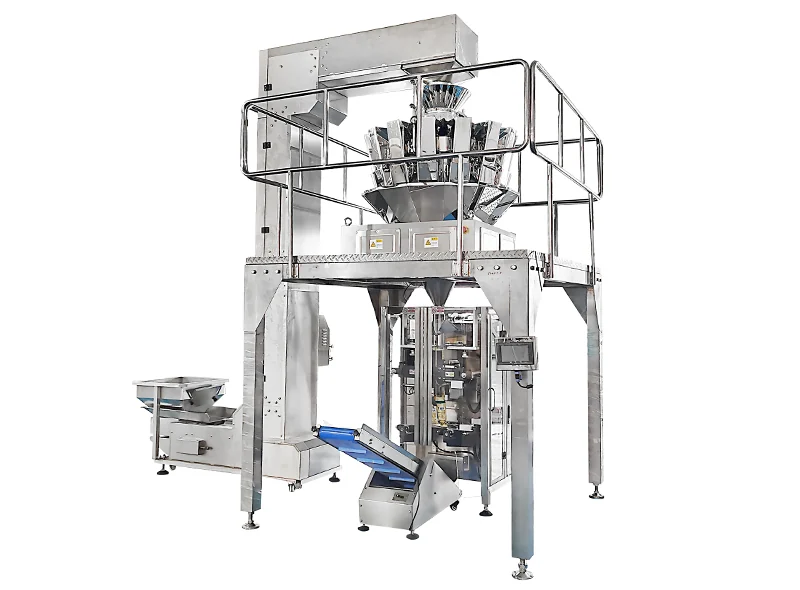
    Combination weigher above a vertical rollstock bagger
    A weigher delivers the portion into a vertical rollstock bagger. Test the drop with the actual product.

    Solid items or groups in a horizontal flow wrap

    For a bar, biscuit group or tray whose shape or orientation needs support.

    1. Space each pack load
    2. Support through former
    3. Seal film ends
    4. Check wrap and discharge

    Keep items on a belt through film forming. The infeed holds the group together and lets the retailer see a consistent pack, while film can be selected for the intended display or protection.

    If the group spreads at speed, test guides or a tray before asking for faster feed. Keep both end seals clear of the product at the widest normal pack.

    See horizontal flow wrapping machines for supported products.

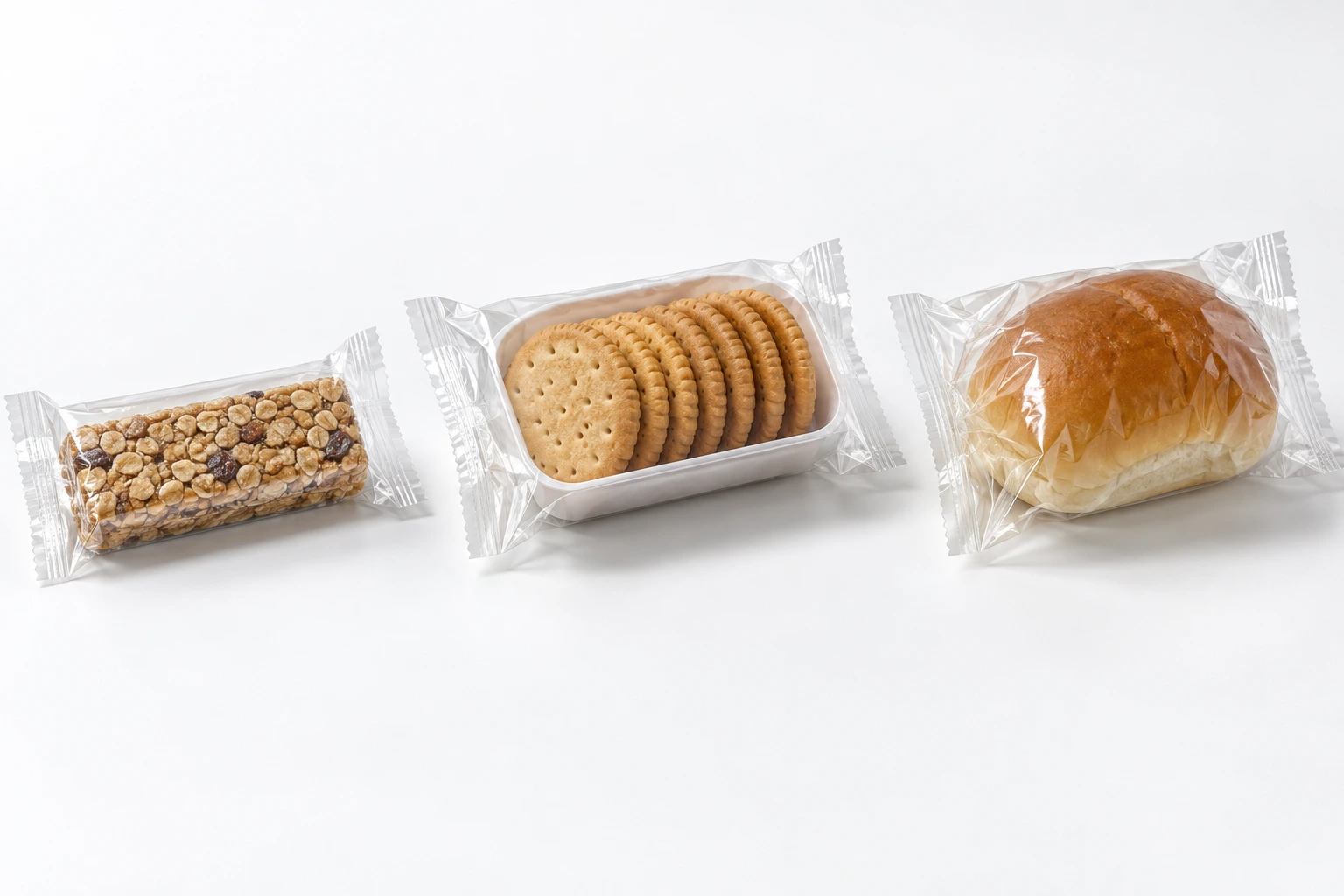
    A wrapped bar, wrapped cookies and a clear wrapped bun
    Supported single items or groups can travel through a horizontal wrapper. Packaging illustration.
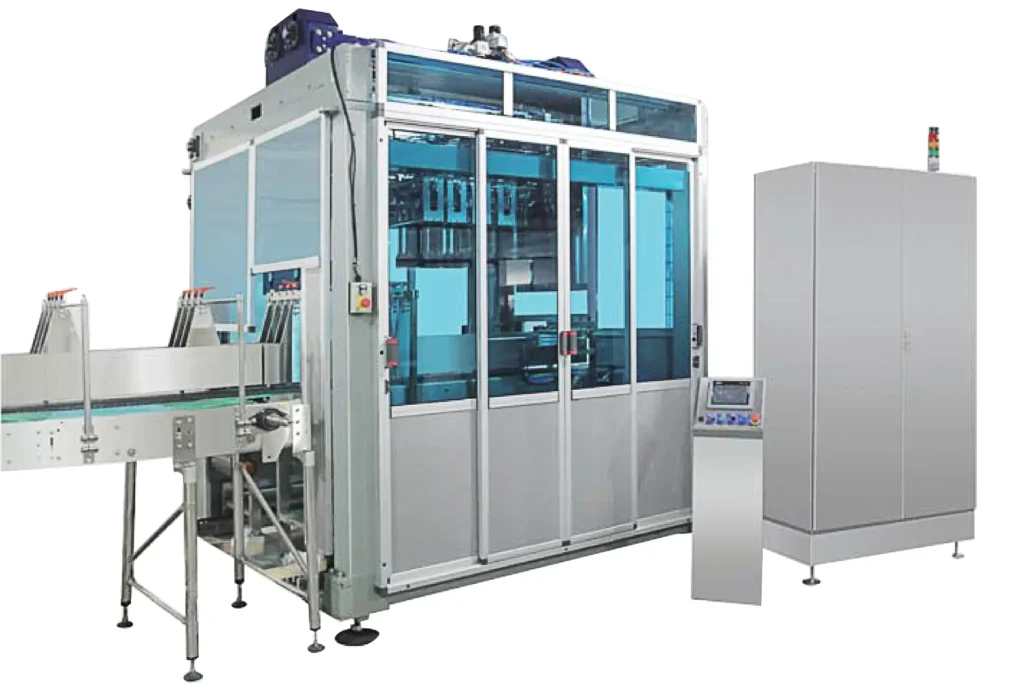
    Horizontal wrapper with a long belt infeed and film forming section
    The horizontal infeed holds the solid product on the way into the wrap.

    Supplied stand-up or zipper pouches

    For an agreed retail pouch that arrives made up and has to open before filling.

    1. Pick empty pouch
    2. Open and locate mouth
    3. Dose product
    4. Seal above zipper

    Use a premade-pouch platform with a filler sized for the open mouth. It preserves the supplied pouch features and lets you validate the retail look with the actual pouch material.

    Run the stiffest and softest bags from real lots. Check the bottom opening and keep the dose from getting into the zipper or top seal.

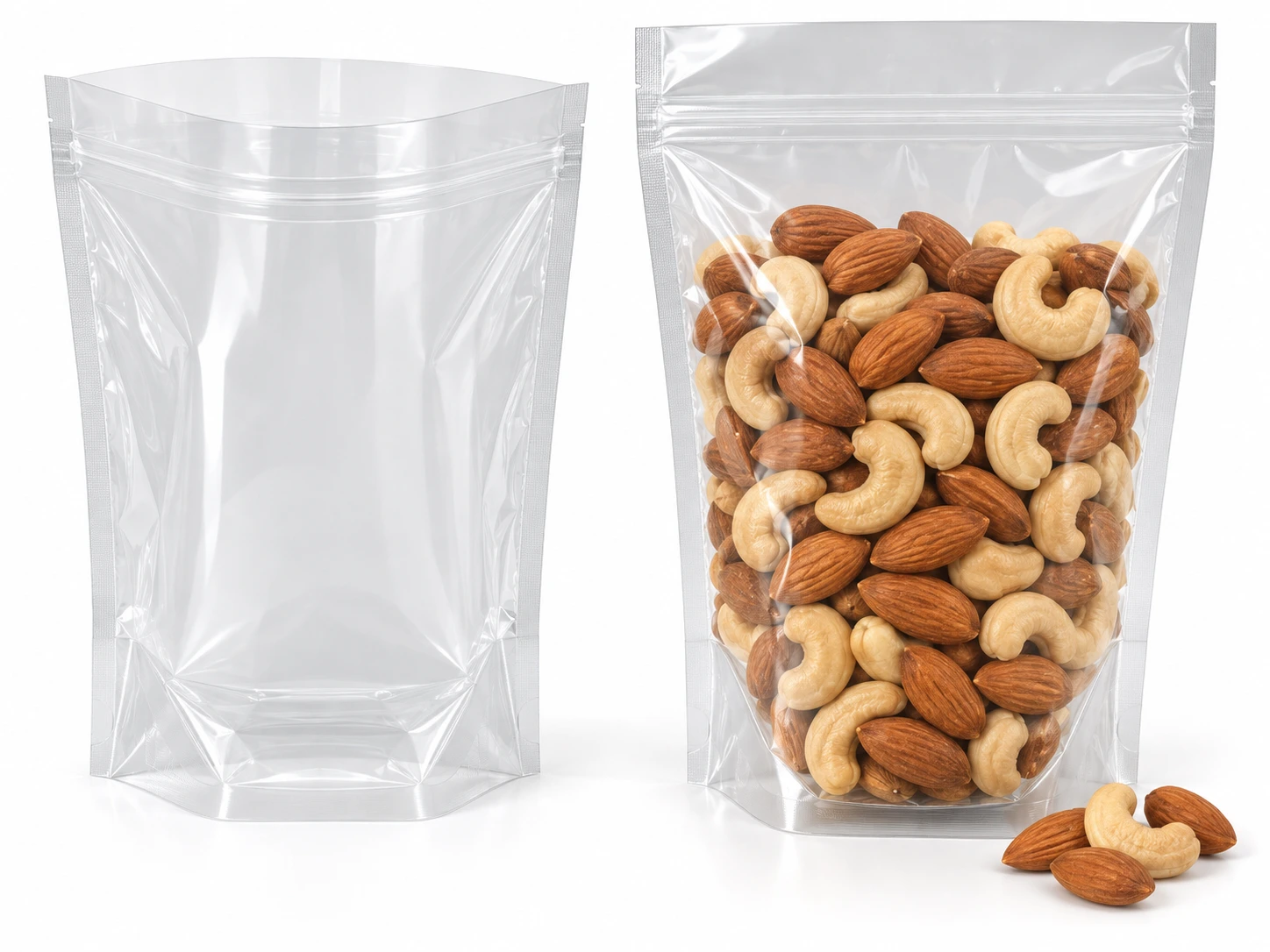
    Empty zipper pouch and filled stand-up pouch of mixed nuts
    The pouch is supplied with its zipper and base formed. Leave clean film above the zipper for the top seal. Packaging illustration.
    Rotary premade-pouch gripper platform behind a guard
    The grippers present and hold a supplied pouch. Dosing and handling are matched to the product.

    Protect the product from dosing to dispatch

    The bag must protect loose product through handling and make the portion easy to sell. Select film and equipment from the same real pack.

    Keep material out of the seal
    Test the full dose at production speed. A short drop and a well-timed discharge can keep crumbs away from the jaws.
    Remove repeated handling at the right step
    If operators already make consistent bags, start from the outfeed. A grouper needs bags that hold their shape and arrive at a rate it can handle, including after a film change.

    Do the finished bags also need case packing?

    Specify the number of bags per case and the loading pattern after the primary pack has been tested.

    Ship the finished bags in corrugated cases

    Add the case stage when the buyer specifies a count and pattern for shipping.

    1. Settle finished bags
    2. Count and arrange
    3. Load into open case
    4. Hand off for closing

    Check the shape of the closed bag before setting the loading pattern. A short buffer or a counted group allows one case to be filled at a time and keeps the primary packer from having to stop with every case change.

    Use supported loading if bags slide or easily deform. Check the heaviest filled case and upper flaps before selecting the closer.

    See the automatic case packer for the outer-case stage.

    Several closed retail pillow bags grouped in an open corrugated case
    Agree the bag orientation and count per case after checking the filled bags. Packaging illustration.
    Guarded case packing equipment with conveyor
    Case-packer platform for an agreed case pattern and approved product handling.

    Separate bag-making output from case output

    Watch good bags per minute and good cases per hour separately. Test what the bagger does while the downstream stage is paused.

    Production setupWhat operators doChangeover and interfacesWhat to prove in a run
    Standalone baggerReplenish film or pouches and collect closed bags.Agree required tooling, settings and cleaning for each SKU.Check seal, net weight and waste after restart.
    Bagger and inspectionReplenish and clear reject bins as assigned.Set transfer height, gap and reject response.Verify the correct pack is removed without a queue into the bagger.
    Connected case packingLoad cases and monitor pack pattern, labeling and supply.Set bag count, pattern, case sizes and buffer behavior.Run through a case change and check the first complete case.

    What a bagging line proposal should show

    Compare suppliers on the exact order of operations and on who takes responsibility for the finished pack.

    CompareWhat to agree with ComwinWhat to match in other offers
    Supply scopeIdentify feed, dosing, bag forming or opening, outfeed and any case stages.Read each included or separately sourced station.
    OutputList accepted bags per minute, bags per case and the sustained rate the case stage can accept. Agree where bags can wait during a short case change.Separate machine cycles from good packs.
    Format changesList film widths, forming parts, bag guides and recipes.Compare sample changes and cleanout tasks.
    SupportDefine line controls, jam recovery and operator training.Confirm who handles a fault at a handoff.
    DeliveryAgree access, hopper height and samples for the run.Verify utilities, commissioning and inspection scope.

    Bagging line questions

    Can I supply my own empty pouches?

    Yes, if the pouch can be picked up, opened and held reliably. Send the empty pouch and the product going into it so we can check mouth opening, fill clearance and where the top seals.

    Can you add case packing to my existing bagging line?

    Send a filled, sealed bag, show how it comes off the line and give the number you need per case. We check how to count and group the bags and whether the discharge can feed the case loader directly.

    Can rollstock form a zipper pouch?

    Some zipper styles can be made from film on a compatible machine. Show the finished pouch and zipper position so we can check how the film, base and zipper would be formed.

    What to send for your bagging line

    If you already have a rate in mind, include your target bags per minute or the normal discharge rate of the existing machine.

    Loose product packed from rollstock

    Send first
    Send a product sample, the target weight per bag, and a finished bag or its dimensions.
    What Comwin checks
    Dosing method, drop height and vertical bagger layout.

    Solid items or groups for flow wrapping

    Send first
    Send the item or one arranged group, the intended film pack, and a photo of the orientation needed at infeed.
    What Comwin checks
    Support and spacing at the infeed, with enough clearance for both end seals.

    Empty pouches ready to fill

    Send first
    Send an actual empty pouch, the product and the fill weight or volume. Keep any zipper or gusset on the sample.
    What Comwin checks
    Pickup, opening, fill clearance and seal position relative to the zipper.

    Filled bags going into cases

    Send first
    Send a filled, sealed bag, the number per case and a photo or sketch of the loading pattern. If the line already runs, show its discharge in a short clip.
    What Comwin checks
    How to group the bags and whether the discharge needs a buffer before case loading.