Comwin develops dry pet-food bagging arrangements around your kibble, package and production target. A 10 kg bag also needs the filling volume and loaded-bag handling checked; the weight printed on the bag is only one selection input.
Rollstock bags or supplied zipper pouches?
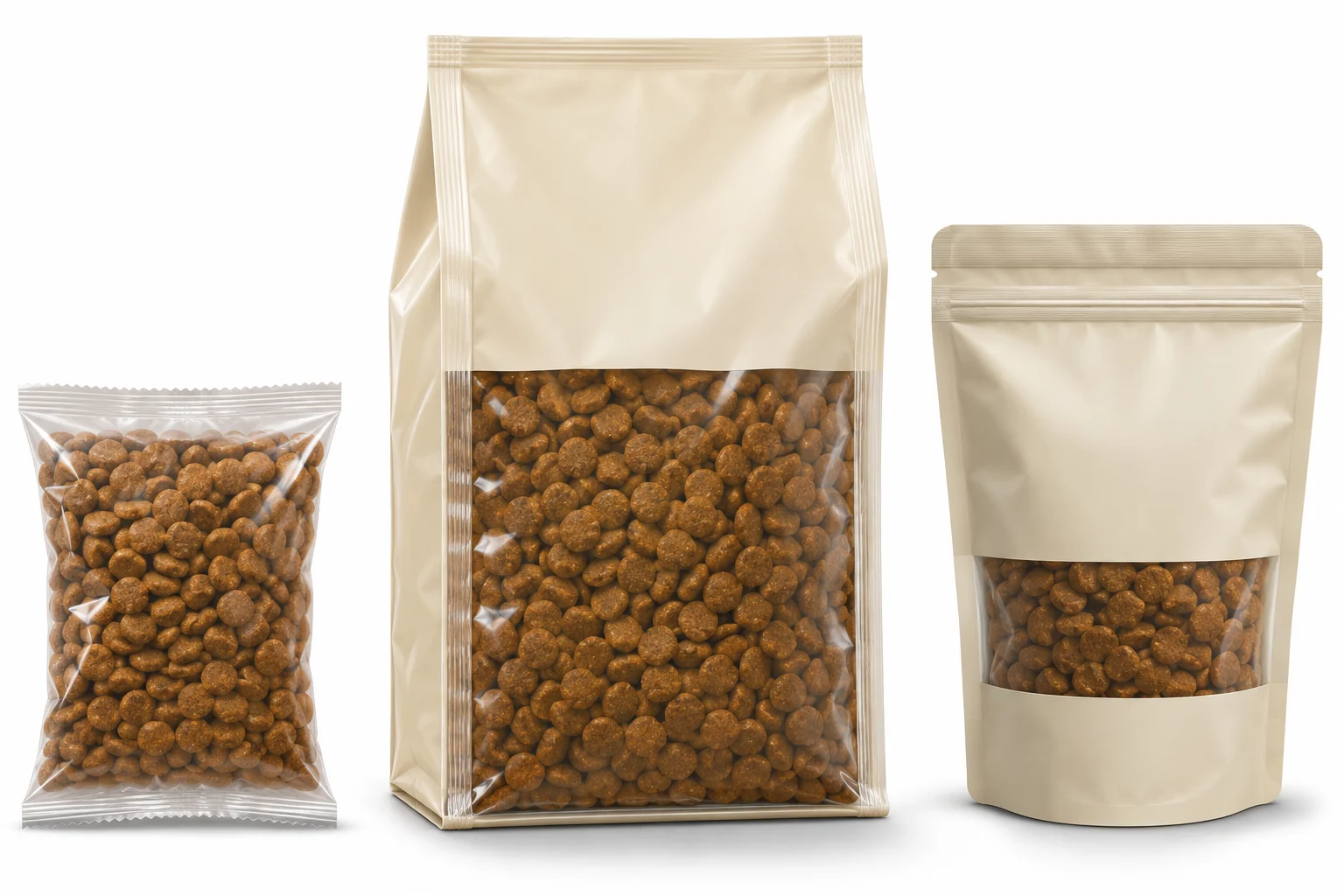
| Pack requirement | Starting route | Selection condition |
|---|---|---|
| A repeated pillow or compatible gusseted bag | Product feeding and weighing above a rollstock VFFS bagger. | Match film width, filled volume, product clearance and the sealing cycle. |
| A quad-seal retail bag | A compatible rollstock forming and corner-sealing configuration, or a supplied quad-style bag. | Confirm how the chosen equipment creates or handles that exact bag. Four corner seals are an additional format requirement. |
| A supplied shaped or zipper pouch | Pouch picking, opening, weighing, filling and top sealing. | Trial zipper opening, bottom-gusset expansion, product drop and clean top-seal clearance. |
VFFS forms the bag from film
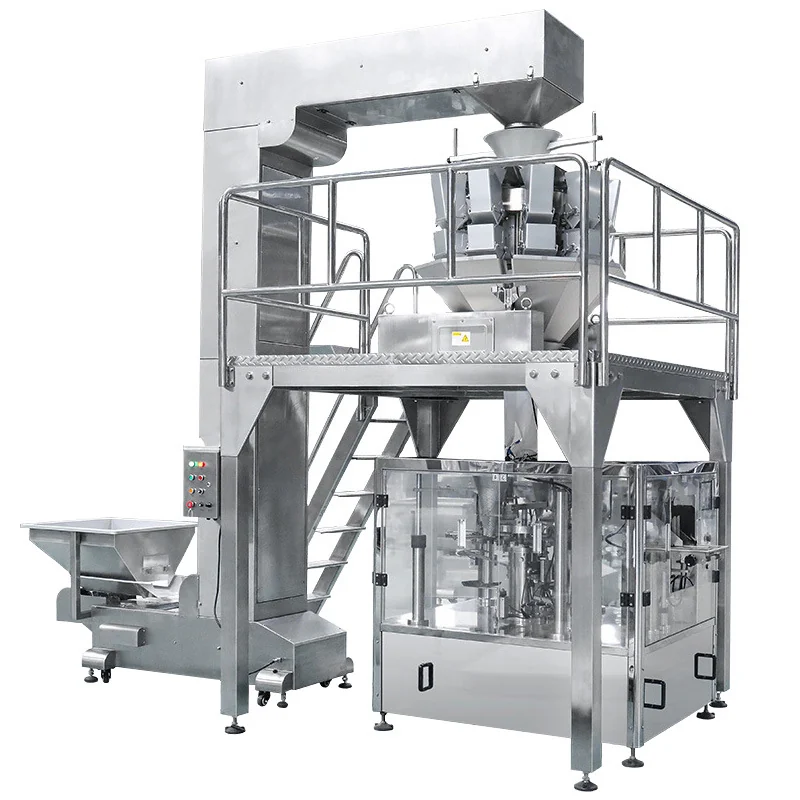
A vertical form fill seal machine forms rollstock around the filling tube. The selected doser releases kibble into the bag before the next closure. Compare the entire feed path, including how the product enters and leaves the weighing hoppers.
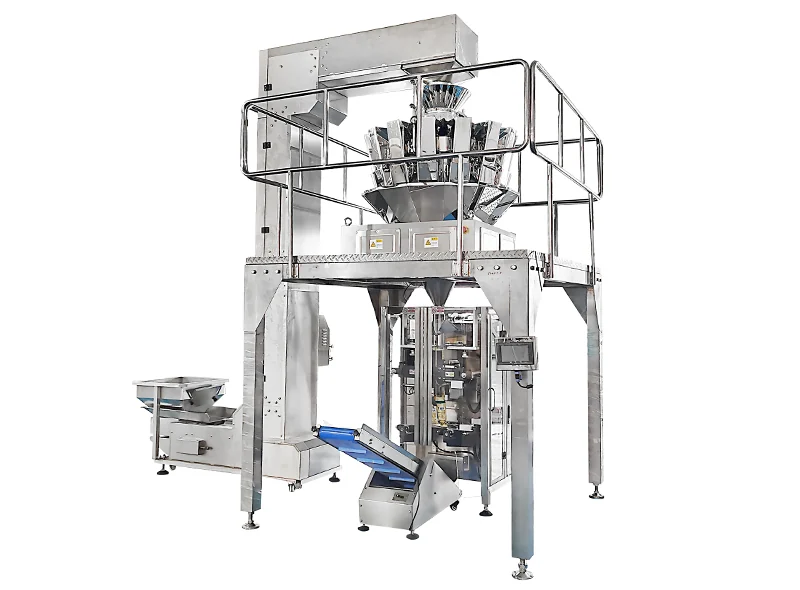
Check dusty or oily normal batches as well as clean demonstration material. Retained crumbs can affect product release and the sealing area. Excessive drops can also damage friable pieces, so inspect the product after it reaches the bag.
A premade-pouch machine handles a supplied bag
A premade-pouch filling and sealing arrangement starts with a bag already made by the packaging supplier. It must pick and open that pouch, support it during filling and close the top. Ordinary filling and sealing does not automatically include vacuum equipment.
If consumers need reclosure, confirm the supplied zipper and how the packaging machine opens it for filling. Keep the permanent top seal above the closure clear of kibble and dust. A zipper alone is not the original unopened pack seal.
Mixed pet food: pack weight and recipe ratio are different checks
If a controlled blend arrives already mixed, evaluate whether transfer and dosing keep that blend sufficiently uniform. Pieces with different sizes or flow behaviour can distribute unevenly through the feed path. Sample finished packs across a run using the product owner’s recipe-check method.
If each ingredient must be metered separately, define its target proportion and how it will be checked. A weigher that reaches the correct total pack weight has not, by that result alone, demonstrated the required ingredient ratio. Separate ingredient feeders or dosing stages become a distinct configuration task.
What changes for a 10 kg pet-food bag?
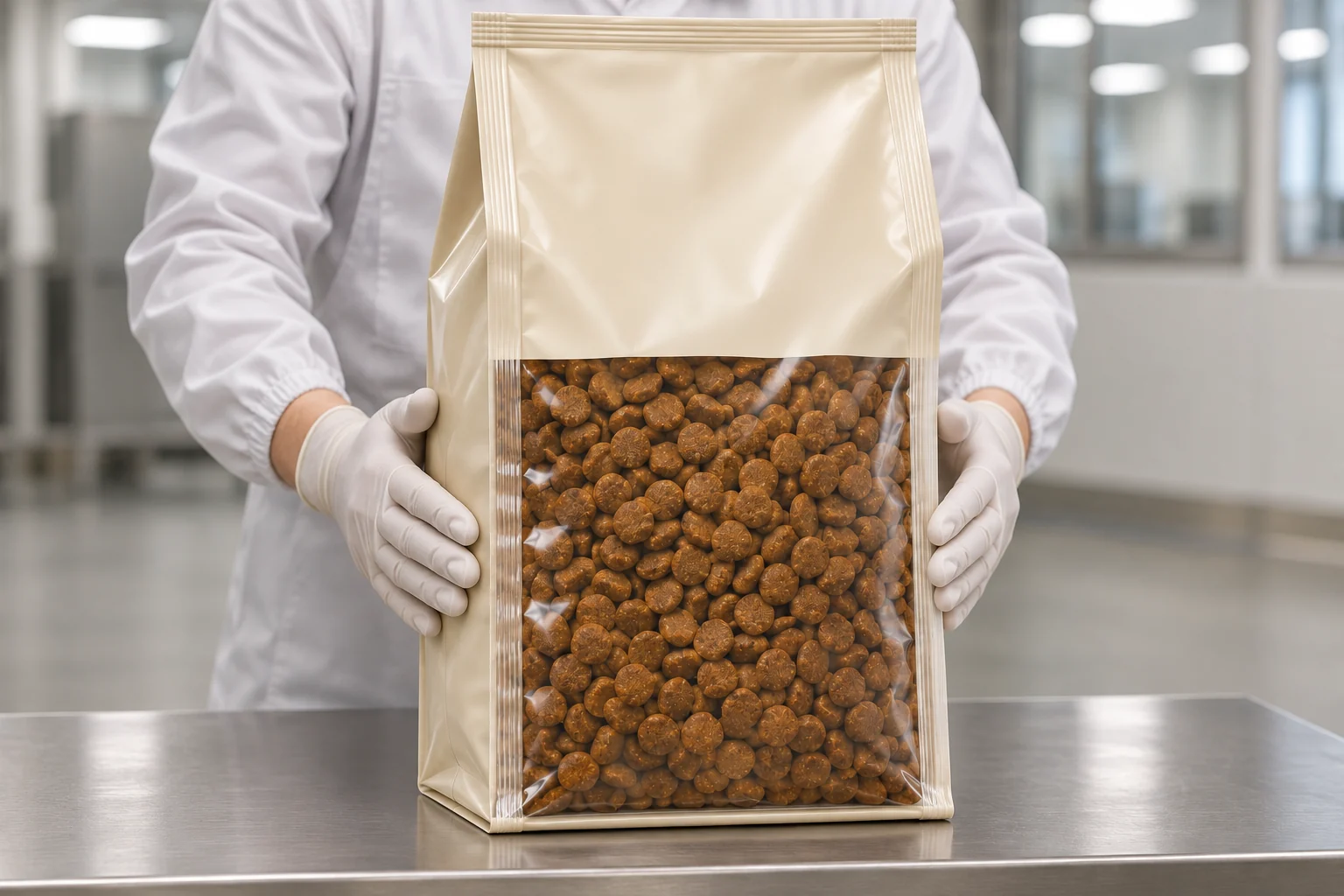
Provide a filled-bag sample and the product’s measured bulk density. Two products at the same weight can occupy different volumes. Check the forming-tube passage, usable bag length and room for the dose to settle before sealing.
Plan support beneath the bag during filling and a controlled transfer after sealing. The fresh seal should not carry an unsupported heavy pack unless the arrangement has been designed and proven for that load. Check conveyor width, drop height and how the bag reaches the next handling operation.
Where each layout earns its place
One small retail kibble bag
Feed the supplied kibble → weigh → discharge into the formed bag → seal and transfer.
Focus the trial on steady feeding, clean seals and film changeover. Compare accepted output over the normal replenishment cycle.
A larger family-size bag
Prepare the larger dose → support the bag during filling → allow product to clear → seal → transfer the loaded bag.
Bag support and discharge can set the pace. Include them when comparing a 10 kg system with a smaller retail machine.
Measure the complete accepted-pack rate
Specify pack weight, bag dimensions and accepted bags per hour together. A larger dose may need a different weighing cycle, and the bag needs time and space to receive it. Record feed interruptions, film or pouch replenishment and seal rejects during a sustained run.
Agree how an incomplete dose, unopened pouch or line stop is handled. Test changeover between the actual products, including removal of retained kibble. Label and recipe settings should remain identifiable when products change.
Pet food packing machine price: early equipment budgets
| Defined cell | Indicative USD budget | Assumed scope |
|---|---|---|
| Ordinary retail pillow-bag cell for free-flowing dry kibble | US$18,000 to US$60,000 | Compatible feeder, weighing, platform, VFFS bagger and simple discharge for one agreed format. |
| A 10 kg rollstock bagging cell | US$35,000 to US$95,000 | Larger-format dosing, a compatible bagger, supported filling and discharge for one defined dry-kibble bag. Actual volume and clearances determine suitability. |
| Supplied zipper-pouch filling cell | US$25,000 to US$80,000 | Compatible feeding, weighing, pouch handling and top sealing for one defined supplied pouch. |
These are conditional planning budgets for new equipment supplied from China, not project quotations. Quad-seal upgrades, multi-ingredient recipe dosing, special inspection and additional formats need separate pricing. Extrusion, drying, mixing, case packing, palletizing, freight, taxes, overseas installation and production consumables are excluded.
To compare manufacturers or factory offers, request the same station list, bag sample and accepted output target. A base bagger price excludes work that a full feeding-and-weighing cell may include.
Wet food cans and vacuum packs are separate tasks
Wet pet food in metal cans involves filling, can seaming and an appropriate preservation process. Vacuum packs also need a product-specific assessment of the pressure, pack and storage requirements. Those projects should be specified independently of the dry-kibble bagging cell described here.
Use the difficult normal batch in the trial
- Run the intended kibble shapes, dose sizes and bag formats, including normal dust and surface oil.
- Check product damage, finished-pack weight and any required blend-composition evidence separately.
- Inspect the complete closure and loaded-bag support through discharge and handling.
- Demonstrate product changeover, cleaning access and restart, with operator tasks recorded.
Send a filled bag and your kibble sample
Provide the product, weight range, measured filled volume or bulk density, bag material and dimensions, required bags per hour and intended opening. Explain whether ingredients arrive premixed or require separate proportioning. Comwin can then recommend a bagging route and a sample-run scope around the actual job.
Comwin offers free sample testing, a two-year machine warranty and a three-year warranty for core components. Remote support responds within 24 hours. Training, installation and spare-part responsibilities are agreed in the proposal.