
Dear Customer,
Hello! Thank you for choosing our post-harvest fruit processing solutions. To help you maximize equipment performance and achieve efficient, low-loss, high-quality fruit commercialization, we’ve prepared this guidance manual. It systematically covers the full workflow from grading to packaging, key devices, operation best practices, and decision logic for equipment selection, helping you boost competitiveness in the industry.
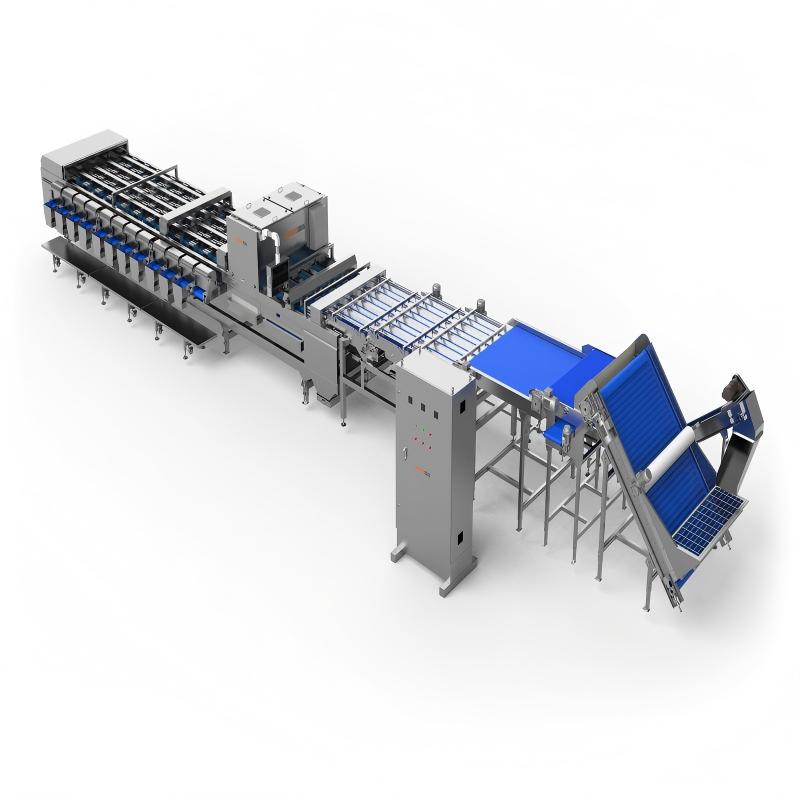
0) Core Technologies and Pain Points We Address
- High-precision, multi-parameter sorting: Combining weight, size, color, and surface defect detection to maximize grade accuracy and minimize waste.
- Adaptive automation: Modular, scalable solutions that can be deployed as a standalone unit or integrated into end-to-end lines (grading → packaging → palletizing) with minimal retooling.
- Robust performance in challenging environments: Vision systems and sensors designed to operate under varying lighting, dust, and humidity, ensuring stable accuracy.
- Data-driven decision support: Real-time yield tracking, traceability, and easy MES/ERP integration for production optimization.
- Low total cost of ownership: Energy-efficient hardware, durable materials, readily available spare parts, and remote support to reduce downtime.
- Non-standard customization: Flexible design to accommodate diverse fruit types, packaging formats, and regulatory requirements.
1) Core Process Overview: Standardization from Field to Market
A complete fruit commercialization line aims to improve external quality and added value. The standard workflow typically includes: manual pre-sorting → washing → air drying → grading → (waxing) → packaging.
- Washing and air drying: Use an air bubble washing system combined with spraying to gently remove surface dirt, followed by a dryer to prepare for subsequent steps.
- Grading: The critical step that determines fruit value and market segmentation. Grading not only standardizes size and appearance but also enables premium pricing to meet the needs of different channels (premium retail, general wholesale, processing).
- Packaging: The final step, packaging directly influences shelf life, brand image, and transport safety.
This manual focuses in-depth on the devices and technologies for the two core stages: grading and packaging.
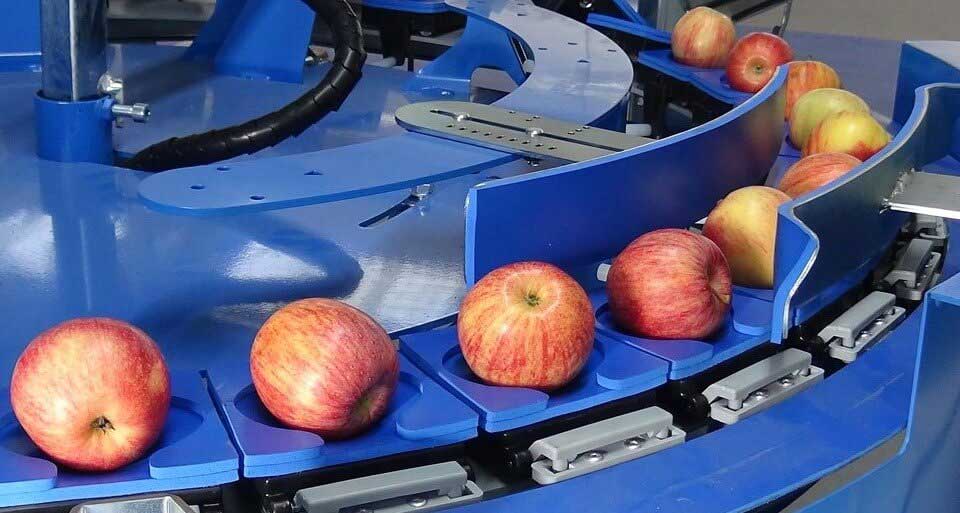
2) Fruit Grading Machine: Precise Sorting, Value-Added Multiplier
Grading is the core driver of added value for fruit. Modern graders have evolved from simple size-based sorting to intelligent systems that combine weight, color, and surface defect detection.
2.1 Mainstream grading technology principles
- Mechanical (drum/roller-type): Gradually increasing gaps between rollers cause fruits of different sizes to drop at corresponding positions. Pros: simple structure, lower cost, easy maintenance; suitable for spherical fruits and vegetables like apples, citrus, potatoes. For example, citrus sorting machines use this principle with typical sorting accuracy around ±2 grams.
- Electronic weighing: Uses high-precision sensors to weigh each fruit and route it to different grade channels. High precision (up to ±0.5 g), multi-grade sorting, good adaptability to irregular shapes.
- Machine vision: The most advanced technology. Cameras capture images and algorithms analyze size, color, shape, and surface defects (e.g., damage, brown spots). In research settings, online repeatability for apple size sorting can reach about 93%, defect detection repeatability around 86%, approaching human-grade performance, with efficiency and consistency far surpassing manual sorting.
2.2 Selection and operation guidance
- Define sorting criteria clearly: Do you need purely size/weight, or a combined quality control approach including color and defects? This decision largely determines whether a mechanical or AI-vision-based system is appropriate.
- Key parameters to consider:
- Sorting speed: Typically measured in tons per hour or fruits per hour; should match your production capacity.
- Sorting accuracy: Weight tolerance (e.g., ±2 g) or size intervals (millimeter-level).
- Bruise rate: High-quality equipment minimizes mechanical damage, ideally below 0.5% and even around 0.1%.
- Operational tips: Ensure front-end washing and drying are thorough to avoid water droplets affecting weighing or vision; regularly calibrate sensors and vision systems; fine-tune grading parameters based on fruit variety and seasonal changes.
3) Fruit Packaging Machine: Efficient Packaging, Freshness Preservation
After grading, fruits should be packaged promptly to extend shelf life and enhance brand image. Packaging machines vary widely; choose based on product form and market positioning.
3.1 Main packaging machine types for downstream integration
- Automatic single-fruit bagging (bag) machine: The most common type, used to bag each fruit with film or netting. Machines typically handle bag making, bagging, and sealing automatically. Examples include models like the FC-series single-fruit bagging machines. Benefits include labor savings (efficiency often seven to eight times that of manual work), reduced film usage with precise cut lines, and improved freshness preservation and product grade.
- Modified atmosphere packaging (MAP) machines: A higher-end freshness solution. By replacing the air inside the packaging with gases (e.g., increased nitrogen or CO2), respiration is significantly slowed, extending shelf life by 1–2x.
- E-commerce small-packaging / gift-box packaging lines: For community group buying and premium gift markets, these lines should integrate with upstream weighing and grading systems to enable “weight-based pricing and automatic boxing,” improving packaging aesthetics and automation.
3.2 Packaging equipment selection guidelines
- Matching capacity and automation level: Choose models that align with daily output. For large-scale production (e.g., >100 tons/day), prioritize fully automatic, high-speed lines that seamlessly integrate with grading.
- Core configuration:
- Control system: Prefer PLC-based machines with touch screens for ease of use, adjustable parameters, and stable operation.
- Key components: Brand and quality of servo motors, sensors, and heat/sealing control systems—these drive long-term stability and precision.
- Materials: Food-contact parts should be food-grade stainless steel (304) to ensure hygiene.
- Supplier capabilities:
- R&D and customization: Can the manufacturer tailor solutions for specific fruits (e.g., passion fruit, kiwifruit) and packaging formats?
- After-sales network: Packaging lines require quick response and service; prioritize suppliers offering on-site installation, operator training, and strong after-sales support.
- Total cost of ownership: Consider long-term costs including energy consumption, film/material usage, maintenance, and potential production losses due to downtime. A high-quality, stable system may lower overall life-cycle costs.
3.3 Best 8 Fruit Grading and Packaging Machine Solutions: Quick Reference Table
The following table highlights suitable packaging schemes for fruits, with indicative capacities, packaging forms, key features, and ideal scenarios. Click the links to view detailed product specifications.
| Packaging Solution | Packaging Form | Typical Capacity | Key Features | Best Use Case / Ideal Scenarios | Product Link |
|---|---|---|---|---|---|
| Bagging Vacuum Packaging Machine | Vacuum bag | 20–60 packs/min | Vacuum sealing for moisture control; extended shelf life; good for compact packaging | Small fruits or pre-processed fruit portions; suitable for berries, peeled fruit kits, prepared fruit packs | View product |
| Pillow-Type Packaging Machine | Pillow bag | 30–180 packs/min | Fast sealing with flexible bag shapes; good for lightweight or segmented fruit portions | Small fruits, fruit segments, or multi-pack units; scenarios requiring strong surface protection | View product |
| Heat Shrink Packaging Machine | Heat-shrunk film around tray/basket | 15–60 packs/min | Secure wrap with compact presentation; strong branding with shrink-tunnel integration | Packaged fruit clusters, ready-to-sell trays, premium gift sets; ideal for branded retail packaging | View product |
| Automatic Boxing/Cartoning Machine | Cardboard carton | 5–30 cycles/min (depending on carton size and product) | In-line carton forming, filling, sealing; strong for bulk shipping | Bulk fruit shipments in cartons; suitable for apples, citrus, stone fruits in consumer cartons | View product |
| Automatic Case Packer | Cartons (case packing) | 10–60 cases/min | Automated case packing and pallet-ready packaging; high throughput | High-volume fruit lines needing seamless handoff to palletizing | View product |
| Automatic Box Sealing Machine | Sealed carton | 20–80 boxes/min | Reliable sealing with tape or hot-melt; integrated with downstream logistics | End-of-line carton sealing for large fruit lines | View product |
| Boxed Product Packaging Production Line | Boxed product packaging line | 20–80 boxes/min | End-to-end line including packing, labeling, and case/carton preparation | Branded boxed fruit products; mid-to-large scale packaging | View product |
| Bagged Product Packaging Production Line | Bagged products | 20–100 bags/min | Integrated weighing, bagging, sealing, and downstream packaging | Multi-pack fruit products for e-commerce and retail channels | View product |
3.4 Why multiple schemes? A Quick Comparison
To help you choose, here is a concise comparison:
| Scheme | Best For | Typical Throughput | Key Advantage | Typical Fruit Types |
|---|---|---|---|---|
| Vacuum Bagging | Small fruits or prepared packs | Medium | Moisture control, shelf-life extension | Berries, peeled/fresh-cut fruit |
| Pillow Bagging | Multi-pack or segment packaging | Medium-High | Flexible bag shapes, strong seals | Small fruits, segments |
| Heat Shrink Packaging | Branded shrink-wrapped packs | Medium | Premium presentation, strong protection | Branded trays or clusters |
| Boxing/Cartoning | Bulk shipping in cartons | Medium-High | Efficient palletizing and logistics | Large fruit lots (e.g., apples, citrus) |
4) Applicable Scenarios and Product Examples
Below are typical scenarios and concrete product examples to help you map the right packaging solution to your fruit products.
- For consumer retail, consider Pillow-Type Packaging for consumer-ready bags or Heat Shrink for premium branded packs. View Pillow Pack | View Heat Shrink
- Pillow-Type Packaging or Vacuum Bagging for berries or small assortments; Heat Shrink for premium packs. View Pillow Pack | View Vacuum Pack | View Heat Shrink
- Heat Shrink or Boxing Line for aesthetically appealing gift packs and cartons for retail or e-commerce. View Boxing Machine
- Automatic Case Packer and Automatic Box Sealer for high-throughput cartonized fruit. View Auto Case Packer | View Box Sealer
5) Integrated Line Solutions and Future Trends
For large production bases, the best approach is to work with a supplier who can provide an end-to-end solution covering grading to palletizing. This ensures seamless cross-linking of equipment, reduces interconnection losses, and enables unified digital management (for example, MES integration to monitor production data).
Looking ahead, fruit packaging is moving toward:
- More intelligent sorting (AI vision-based), greener packaging materials (biodegradable films), and greater transparency (traceable packaging information).
- Partnerships with suppliers that invest in ongoing R&D and can deliver future-ready solutions.
We hope this guide provides clear direction. Our professional team is ready to offer more specific proposals, equipment demonstrations, and after-sales support. Let’s collaborate to empower agriculture with technology and maximize the value of every fruit.
6) Technical Specifications and Customization Capabilities
- Non-standard customization: We offer customized packaging lines and end-to-end integration to meet non-standard fruit shapes, packaging formats, and regulatory requirements.
- Bag styles and materials: Options include stand-up pouches, flat bags, gusseted bags, with varied film materials (polyethylene, polypropylene, laminated films) and barrier properties.
- Machine body materials: Food-contact surfaces use 304 stainless steel; non-contact components may use aluminum or coated steels for light-weight designs.
- Gas flushing and perforation devices: For MAP or modified atmosphere packaging, integrated gas flushing (e.g., N2/CO2) and controlled perforation for breathability where needed.
- Punching/perforation devices: Custom perforation for venting in breathable packaging where appropriate.
- Labeling and date/lot printing: Integrated date/lot printers, variable data printing, and labeling on packaging or primary containers.
- Other capabilities: Integration with unboxing, sealing, labeling lines; end-to-end traceability and digital monitoring across packaging stages.
7) Why Choose Us
We combine deep industry experience with a broad portfolio of packaging solutions to match your exact needs, helping you reduce costs while ensuring quality. Our value proposition includes:
- Extensive industry experience and tailored solution matching to save costs and ensure quality.
- Free sample testing and the option to visit real factories to observe machine performance.
- Collaborative engineering to minimize risk and maximize yield across your packaging line.
8) Installation, Training, and After-Sales Support
For small equipment, we offer video tutorials and remote video calls to reduce costs while delivering fast problem resolution. Our standard warranty covers the entire system for 2 years, with core components covered for 3 years. We provide 24/7 remote response to critical issues.