
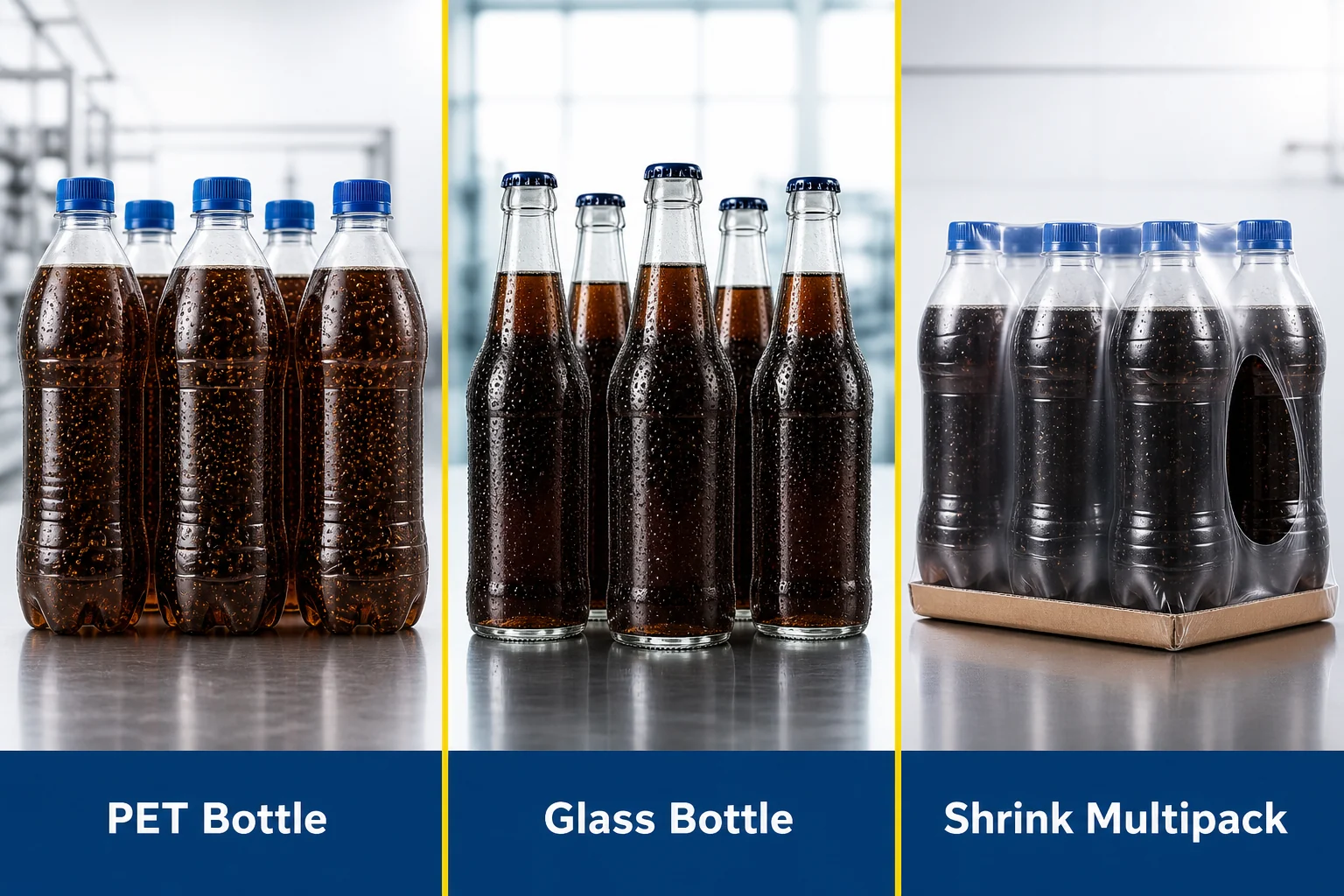
Choose the Equipment Route
| Buyer condition | Recommended configuration | Best-fit product or pack | Confirm with a sample |
|---|---|---|---|
| Carbonated drink in PET | Counter-pressure filling + pressure-compatible PET bottle and screw cap | Resealable retail soda in lightweight bottles | CO₂ retention, cap torque, foaming and warm-storage stability |
| Carbonated drink in glass | Counter-pressure filling + glass handling and a matched crown or other approved closure | Premium or returnable-bottle programs | Bottle integrity, crown seal, washing/return flow and line breakage |
| Only secondary packing is needed | Keep the existing filled-bottle line; configure label, grouping, shrink or case packing | Buyer already has a qualified filler and closure | Bottle pitch, accumulation, group pattern and accepted downstream output |
For the equipment family behind this selection, review our packaging automation equipment and production lines.
Why These Configurations Solve Production Problems
| Production pain | Likely cause | Configuration response | Applicable product |
|---|---|---|---|
| Foam at fill | CO₂ breakout during transfer | Pressure-compatible filling and temperature control | Filled PET or glass soda; compare foam and fill-height rejection |
| Flat drink or leakage | CO₂ loss at the cap or bottle interface | Match capper, closure and bottle finish; measure seal quality | Capped carbonated bottles after handling and storage |
| End-of-line stops | Shrinker or case packer cannot accept filler output | Match accumulation and grouping to accepted bottle rate | Multi-SKU bottling lines with shrink bundles or cases |
Applications and Finished-Pack Examples
| Buyer scenario | Finished pack | Starting route | Decision check |
|---|---|---|---|
| 500 mL PET cola-style drink | PET + screw cap + retail label + shrink multipack | Complete carbonated PET line | Cap torque, CO₂ retention and bundle stability |
| Glass soda for restaurants | Glass bottle + crown closure + crate/case | Glass handling and filling route | Breakage, wash/return requirements and case pattern |
| Existing filler needs shipping cases | Filled bottles from a qualified line | Downstream case packing only | Actual discharge pitch, count and line integration |
For the adjacent equipment route, use the beverage packaging equipment and production lines.
Choose PET or Glass Before Selecting the Machine
The bottle material and closure determine the filling block, capper, conveyors and change parts. They also affect bottle preparation, breakage or deformation risk and the downstream pack.
| Bottle route | Filling and closing equipment | Best fit | Confirm before quotation |
|---|---|---|---|
| PET bottle + plastic screw cap | Bottle rinsing, counter-pressure filling and screw capping, commonly arranged as a monoblock. | Lightweight retail bottles, multiple sizes and shrink multipacks. | CSD-rated bottle design, neck finish, cap, CO₂ target, fill temperature and accepted BPH. |
| Glass bottle + crown cap | Bottle rinsing, counter-pressure filling and crown capping, with glass-safe conveying. | Premium presentation and returnable or one-way glass formats. | Bottle condition, crown finish, breakage control, washer or rinser scope and closure integrity. |
| Filled bottles + secondary packing | Labeling and coding followed by shrink bundling, tray packing or case packing. | Retail multipacks and distribution-ready bottles. | Pack pattern, tray, film or board, cooling, handle openings and transport test. |
Why Soda Bottles Need Counter-Pressure Filling
Cold carbonated beverages release gas and foam when pressure falls too quickly. A suitable filler first manages the pressure relationship between the bottle and product supply, fills under controlled conditions and then depressurizes before the bottle is transferred for immediate closing. A normal atmospheric water filler should not be assumed suitable.
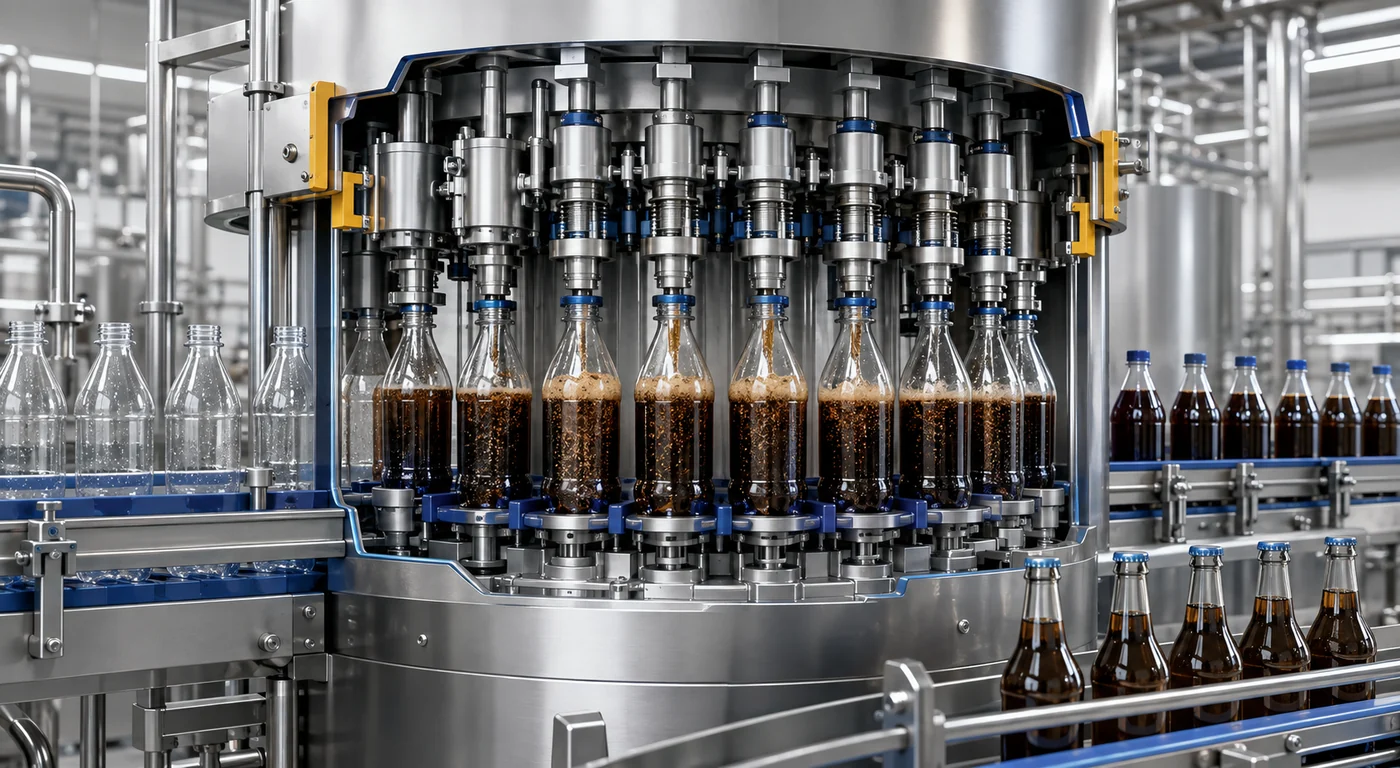
For carbonated PET soda, specify the recipe, CO₂ condition, filling temperature and bottle behavior together. A nominal bottle size alone cannot define the filling and closure configuration.
Plastic Screw Cap or Crown Cap?
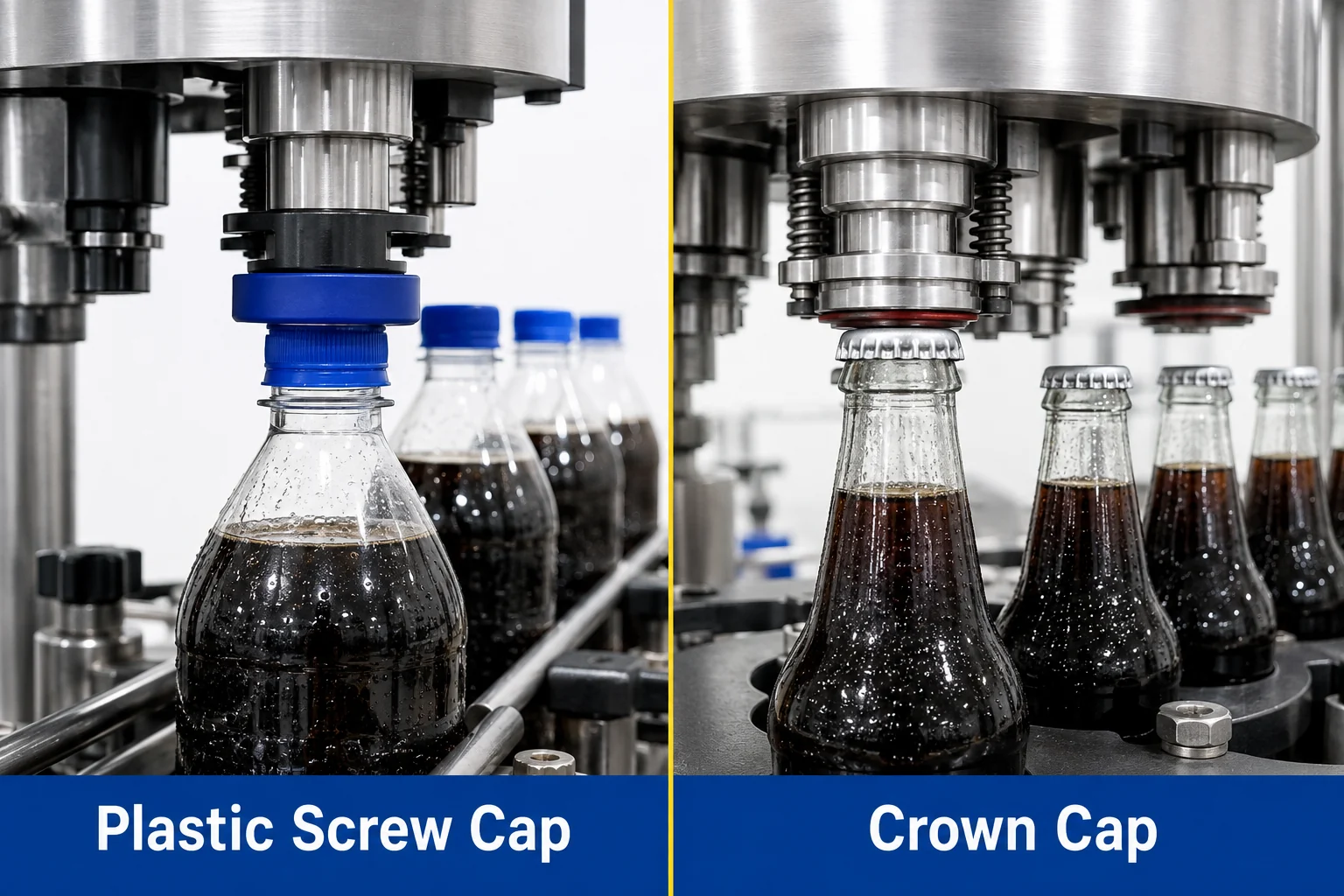
A plastic screw cap is common for PET bottles and must match the neck finish, cap feed and applied torque. A metal crown cap is formed onto a compatible glass-bottle finish. It requires crown-specific tooling and an integrity check; it is not interchangeable with a PET screw capper.
What Is Included in a Complete Soda Bottle Line?
| Stage | Typical function | Main buying decision |
|---|---|---|
| Water and syrup preparation | Treats process water and prepares the beverage recipe. | Water analysis, recipe, hygiene method and batch capacity. |
| Chilling and carbonation | Cools the drink and dissolves CO₂ before filling. | Brix, acidity, CO₂ volume, product temperature and buffer capacity. |
| Bottle supply | Blows PET bottles from preforms or receives prepared PET or glass bottles. | Buy empty bottles or include PET blowing; new or returnable glass. |
| Rinsing, filling and capping | Prepares bottles, fills under controlled pressure and immediately closes them. | Bottle and closure format, pressure program, foam control and changeovers. |
| Warming, drying and labeling | Controls condensation and prepares a dry bottle surface for labels and codes. | Whether cold-filled bottles require warming or air drying; label type and code inspection. |
| Secondary packing | Groups closed bottles in shrink film, trays or cases. | Pack pattern, film or board, conveyor and pallet interface. |
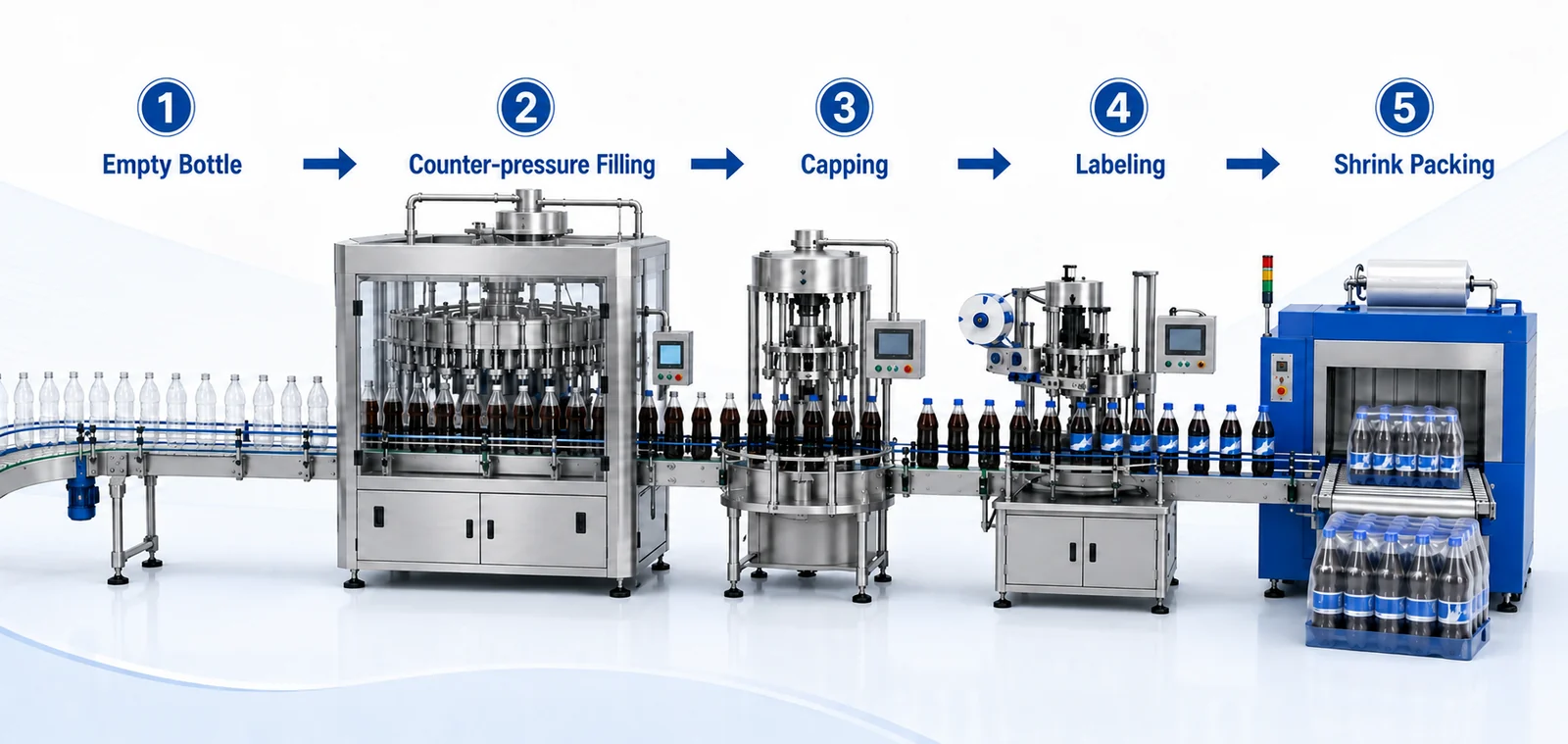
Define the project boundary in writing. A supplier may quote only the rinsing-filling-capping block, while another includes water treatment, syrup preparation, PET blowing, bottle warming, drying, labeling, conveyors, shrink packing and pallet handling.
End-of-Line Packing for Soda Bottles
After filling and closing, bottles can be labeled, coded and grouped in film-only bundles, tray-and-film packs or shipping cases. Bottle stability, pack pattern and distribution conditions determine the collating and wrapping system.
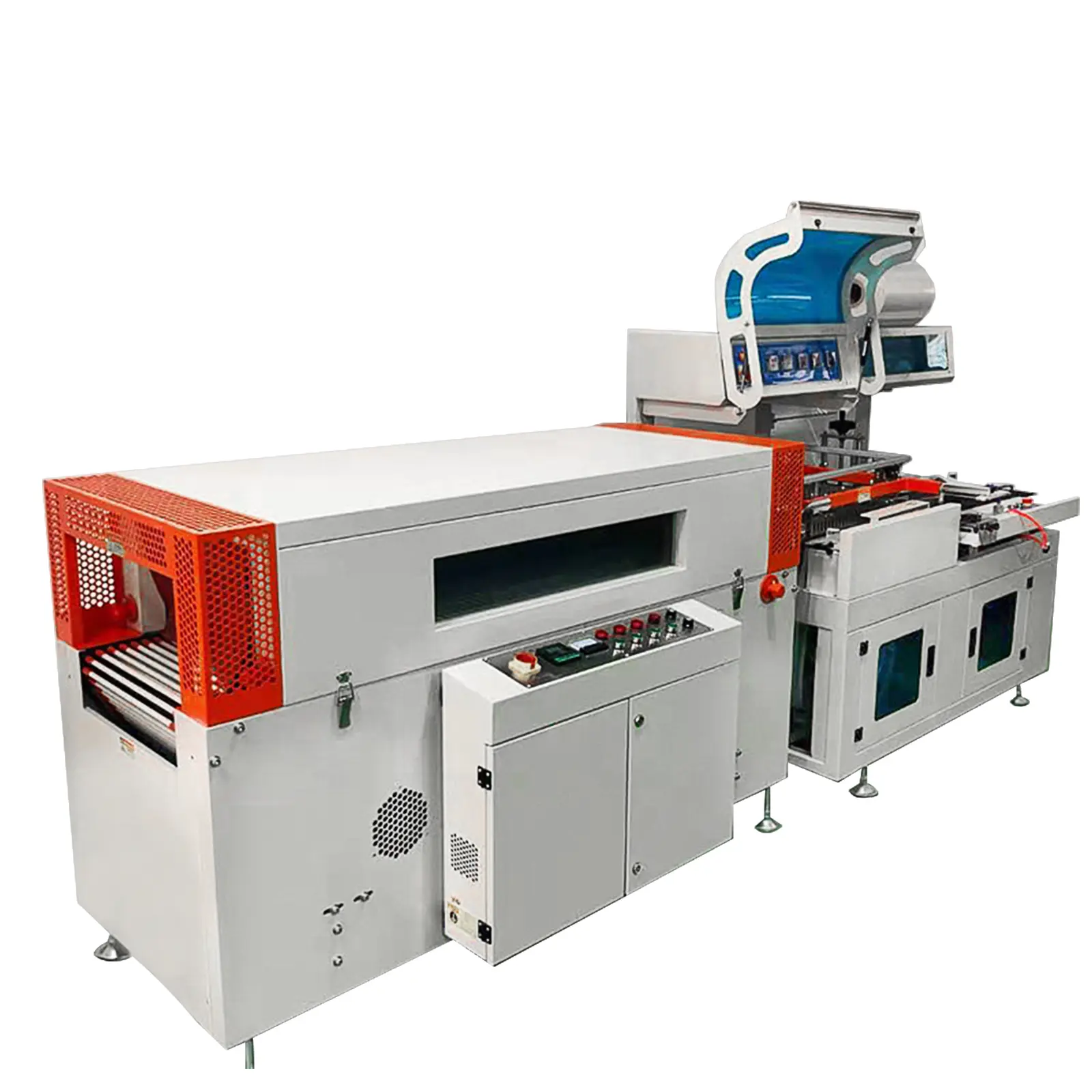
Evaluate Comwin’s heat shrink packaging machine as a downstream module, or request a coordinated filling-product packaging line.
Information Needed for an Accurate Quotation
| Input | What to provide | Why it changes the equipment |
|---|---|---|
| Drink | Recipe category, Brix, acidity, target CO₂, filling temperature and foaming behavior. | Sets carbonation, cooling, product-path and pressure-filling requirements. |
| Bottle and cap | PET or glass, volume, dimensions, neck finish, cap specification and physical samples. | Sets handling parts, valves, capper and changeover scope. |
| Accepted output | Required saleable bottles per hour for every format. | Sets filler size, buffers, conveyors and FAT conditions. |
| Final pack | Single bottles, shrink bundle, tray or case and the pack pattern. | Sets collation, film or board and end-of-line modules. |
| Factory conditions | Floor plan, utilities, local electrical standard and desired installation support. | Sets layout, interfaces, documentation and project boundary. |
Send representative bottle and cap samples when available. For carbonated projects, include the target filling temperature and CO₂ level. Comwin can then define the machine route and a meaningful factory acceptance test.
Soda Bottle Packing Machine Price and Quotation Scope
| Project scope | USD planning reference | Quotation boundary |
|---|---|---|
| Bottle filling and capping | US$12,000–50,000 | Machine/set reference; confirm carbonated-product compatibility, bottle and closure |
| Shrink packing | US$5,000–20,000 | Separate downstream equipment reference |
| Coordinated beverage line | US$80,000–500,000+ | Project reference; scope and accepted output change the proposal |
Comwin planning references dated 2026-09-04. These are starting budget ranges for the named equipment family or line, not a tested output or a project quote. Submit the actual product, finished pack, accepted output and site scope for an itemized proposal.
How to Compare Packaging Equipment Suppliers
| Selection factor | Comwin project approach | What to compare in every offer |
|---|---|---|
| Budget and project scope | One specified machine or a coordinated system with an itemized boundary | Ask every supplier to quote the same process, package, upstream/downstream and installation scope |
| Production scale | Configure for accepted packs per hour across the actual SKU mix | Check a timed test, rejects, stoppages and changeover loss instead of brochure cycles |
| Customization | Match product contact, film/container, closure and control interfaces | Use real product and packaging samples to identify required changes |
| Support | Define documentation, spares, training and remote/site response in the proposal | Compare the written support scope and local operating capability |
| Delivery and acceptance | Define FAT evidence, shipment, commissioning and handover | Compare milestones and pass criteria on the same contract boundary |
Comwin matches and customizes single machines through complete packaging lines around your product and finished pack. Request the same acceptance criteria from every bidder so the commercial comparison reflects the equipment you will actually receive.
Factory Acceptance Checks
Run the agreed beverage, bottle and closure under the documented filling temperature and carbonation conditions. Verify accepted bottles per hour, fill level, foam and loss, cap torque or crown integrity, label and code quality, changeover steps and conveyor accumulation. For shrink packs, inspect seal strength, shrink appearance, cooling and pack stability.
Common Buying Mistakes
- Using a still-water specification: soda requires pressure and foam control.
- Quoting without the cap: the neck finish and closure determine the capper or crowner.
- Comparing BPH without bottle size: format and operating conditions change accepted output.
- Assuming “complete line” has one meaning: list every upstream and downstream module.
- Buying the filler before defining the multipack: conveyors and accumulation should suit the final packaging route.
Frequently Asked Questions
Can the same soda bottle packing machine run PET and glass bottles?
Sometimes a project can share beverage preparation, but bottle handling and closing requirements differ. Confirm every PET and glass format, neck finish, closure and change part before assuming one filler block can run both.
Can a water bottling machine fill soda?
Only if it is specifically configured and validated for carbonated drinks. Request counter-pressure filling, foam control and testing at the intended product temperature and CO₂ target.
Do I need bottle blowing equipment?
Include PET blowing when you plan to buy preforms and make bottles in-house. If you buy finished bottles, define bottle receiving, storage and feeding instead. Glass bottles follow a separate supply and preparation route.
How much does a soda bottle packing machine cost?
Comwin’s planning reference for a coordinated filling-product packaging line is US$80,000–500,000+. A standalone block and a turnkey plant are not comparable, so request an itemized module list.
Should I choose shrink film or cartons?
Use shrink bundles for visible grouped bottles and efficient material use; choose trays or cases when handling strength and distribution protection require them. Confirm the pack pattern and transport test.
Plan Your Soda Bottle Line with Comwin
Send your beverage specification, PET or glass bottle samples, caps, target output, final pack and factory utilities through our contact page. We provide free sample testing and can arrange visits to real factories. Service includes a 2-year machine warranty, 3-year core-component warranty and remote response within 24 hours.