Mehndi packing machines need different equipment for dry henna powder and paste cones. Powder sachets require powder metering, bag forming and sealing. Paste is filled through the wide end of an application cone, whose tail is then closed by the method specified for its material.
For initial budgeting, a compatible powder VFFS configuration is USD 5,000 to 30,000. A single-station filler for preformed paste cones has an indicative range of USD 8,000 to 25,000. Comwin assesses the product, pack and closing method before recommending the equipment.
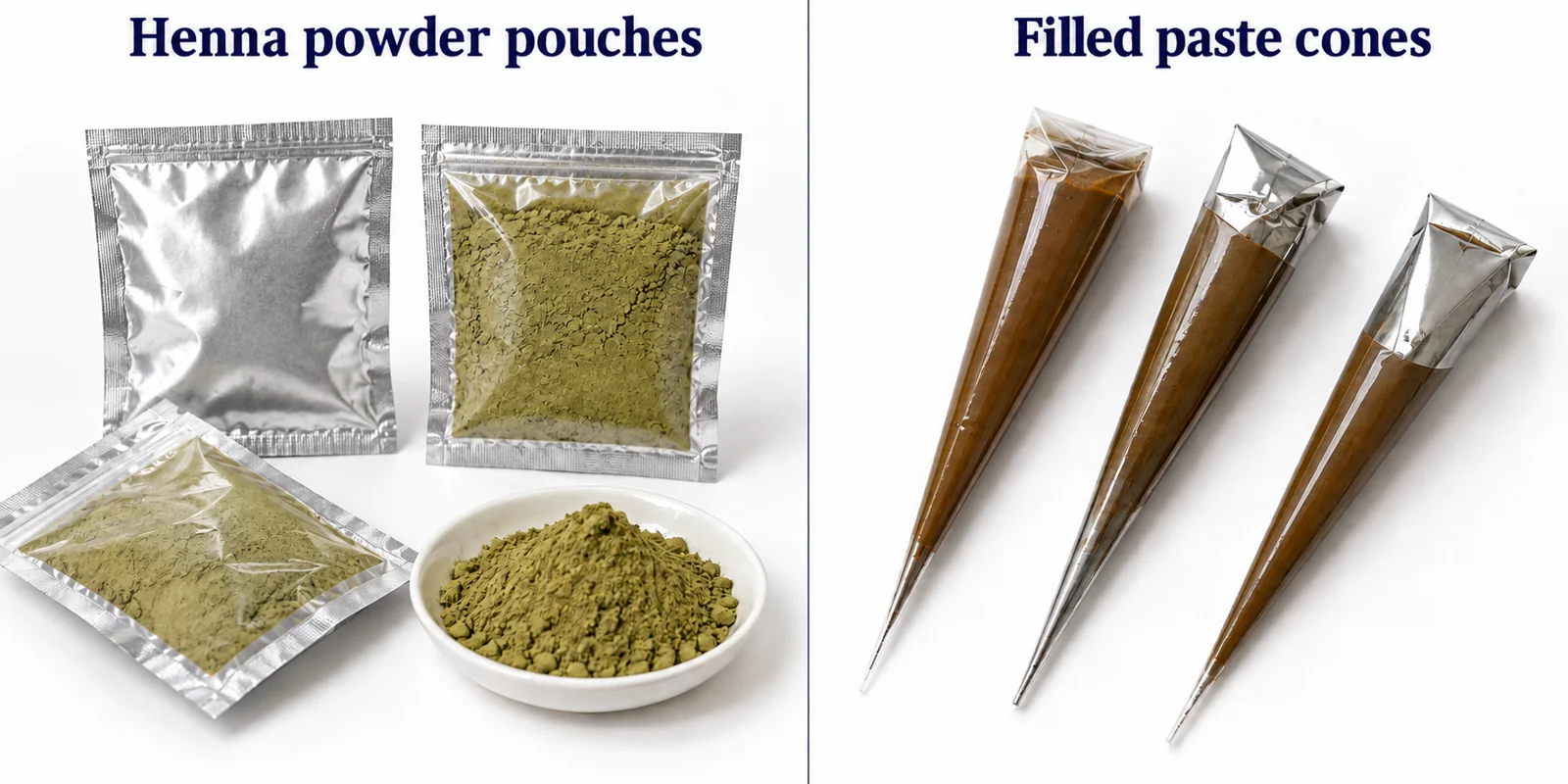
Choose powder-pouch packing or paste-cone filling
For dry powder, specify the metering, rollstock former and dust control together. The cone station supports and fills a supplied cone. Ask how the cone is loaded and whether the operator still closes the tail.
Dry henna powder in sealed sachets
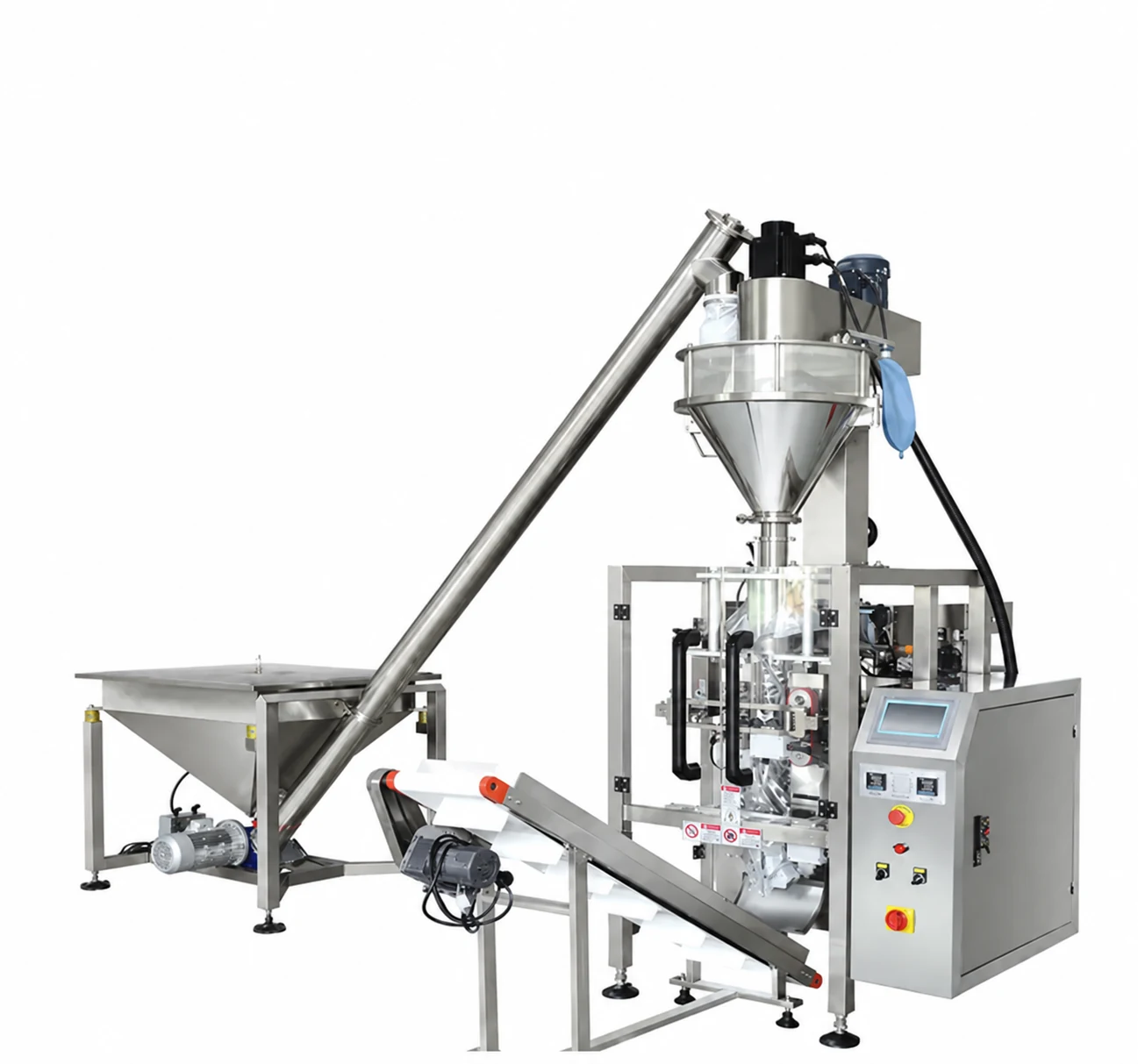
Select powder metering from the actual henna flow, particle condition, bulk density and net fill. A matched VFFS unit forms the sachet from roll film, receives the dose and closes the bag. Powder handling and seal clearance are part of the configuration.
Dry portions sold for later mixing can use this arrangement. Fine or poorly flowing henna needs a different dosing assessment from coarse, freely flowing powder. Trial several batches at the smallest fill and check density changes as the hopper is replenished.
Henna paste in preformed application cones
Hold each preformed cone tip-down in a fitted support and fill through the open wide end. Keep the application tip protected and leave clean material at the tail for the selected closure. Comwin matches the dosing outlet, fill cutoff and support to the paste and cone.
After dosing, close the tail using the fold, seal or closure specified for that cone material. Check net fill, tail security and leakage after the intended handling. The proposal identifies whether operators or equipment load the cones and close them; cone forming is a separate operation when empty cones are not supplied.
Solve powder and paste filling problems separately
| Packing problem | Matched equipment or configuration | How it responds and what to check | Applicable product |
|---|---|---|---|
| Powder doses fluctuate after replenishment | Selected auger or suitable powder-metering arrangement | Assess powder flow and density, then weigh finished sachets through several hopper levels. | Dry henna portions |
| Powder remains in the seal area | Controlled powder drop and matched bagger timing | Set the dosing path and settling interval so the selected sachet closes on a clear seal area. | Fine powder sachets |
| Paste leaves gaps or contaminates the cone tail | Controlled paste delivery with cone support | Fill through the wide opening, keep room for the closing operation and inspect net fill and tail condition. | Preformed henna paste cones |
| A filled cone leaks after closing | Cone material and closure matched to the paste | Trial the agreed fold/seal/closure, application tip and packed-product handling. | Filled application cones |
Powder sachets and paste cones in production
| Production situation | Finished pack | Starting route | Configuration inputs |
|---|---|---|---|
| Dry henna powder sold in small repeated portions | Sealed powder sachet | Powder metering plus VFFS | Density, minimum dose, powder carryover and laminate Select metering from flow and bulk density. |
| Ready-to-use paste with supplied empty cones | Filled and closed application cone | Paste dosing, support fixture and defined tail close | Paste behaviour, cone dimensions and closure method Define cone supply and tail closure before pricing automation. |
| A producer changing cone sizes in small batches | Several cone formats | Assisted cone loading with matched dosing | Fixture changes, operator loading and closure time Define cone supply and tail closure before pricing automation. |
Loading and closing work at each automation level
| Production mode | Operator work | Changeover implications | Acceptance focus |
|---|---|---|---|
| Assisted cone filling | Operator loads cones and handles selected closing steps | Fixture and dose changes are relatively separate | Check filled weight, clean tail area and final closure |
| Automatic powder sachet packing | Operator supplies powder and film | Powder cleanout and sachet-format settings change | Verify dose and sealing through start/stop conditions |
| Extended cone handling | Cone loading, filling or tail handling are coordinated as specified | More cone-specific tooling and transfer requirements | Evaluate the full filled-and-closed cone, including rejected units |
Henna condition, holding time and pack material
Describe the henna as it reaches packing. Dry powder, fresh paste and paste held in a hopper can behave differently. Supply normal holding time, filling temperature and cleaning requirements for the sample assessment. Formula preparation, colour performance and skin claims are outside this equipment specification.
For powder packs, confirm the film seal layer and required handling test. For cones, supply the actual laminate or preformed cone, tip condition, dimensions and closing method. A material used in one product pack is not evidence of compatibility with every henna formulation.
Henna powder and cone-filling machine prices
These planning ranges concern new equipment supplied from China for a defined product and format. Product preparation, extra formats, freight, taxes, overseas installation and site work are excluded unless expressly listed. Equipment additions and commercial terms are settled in the formal quotation. Special product-contact, safety or environmental requirements can change the scope.
| Equipment scope | Planning budget | Range applies to | Items to define separately |
|---|---|---|---|
| Compatible powder VFFS configuration | USD 5,000 to 30,000 | One defined powder, dose and roll-film sachet | Selected metering, feed and dust-handling scope must be listed |
| Defined single-station preformed-cone filling scope | USD 8,000 to 25,000 | Indicative budget for a paste doser and cone support; operators load cones and close tails manually | Paste preparation, cone manufacture, automatic cone feeding, extra tooling and powered tail-closing equipment excluded |
Measure powder demand and the complete cone cycle
For an illustrative powder order at 25 g and 40 acceptable sachets per minute, the feed demand is 60 kg per hour. For cones, measure the complete load-fill-close cycle and the number of operators involved. The filler stroke time alone will overstate finished-cone output if loading or closing takes longer.
Compare proposals on the same product and pack
| Dimension | Evidence to compare |
|---|---|
| Budget and scope | The equipment operations, product and formats represented by each price. |
| Output | Ask for powder or paste trials matching your actual product state. For a cone proposal, require an explicit list of cone making, loading, dosing and tail-closing responsibilities. |
| Product and format fit | State whether the product is dry powder or ready-to-fill paste; Minimum, normal and maximum net fill. |
| Support | Training, contact parts, spares and the responsibilities for commissioning and support. |
| Delivery | Samples, format confirmation, layout, documentation and acceptance milestones. |
Questions to settle before ordering
Can the powder machine fill henna paste cones?
A powder sachet system meters dry powder and forms a film bag. Paste-cone filling uses a liquid/paste delivery and cone-support arrangement. Select the route from the supplied product state and finished pack.
Does a cone filler make the empty cones?
If you supply preformed cones, the filling scope can begin at cone loading. If you want cone forming from material, that is a separate operation to include and assess before quotation.
Is sealing the cone tail included?
Specify the tail closure so the proposal can show whether it is manual, separately powered or integrated. A filling-machine price covers a complete cone line only when the other operations are explicitly included.
What should I send for a useful trial?
For powder, send a representative batch and sachet film. For paste, send the normal filling product, empty cones and a finished closed sample. Include the target fill and the required daily output.
Request a powder-pouch or paste-cone trial
Send henna and finished-pack photos or samples, the fill or count, and your required output. For the proposal, include:
- State whether the product is dry powder or ready-to-fill paste
- Representative material with density/flow or viscosity/temperature information
- Minimum, normal and maximum net fill
- Film or preformed cone samples and the intended closing method
- Required acceptable finished packs per shift and available operators
- Cleaning, product holding time, utility and destination requirements
Comwin will recommend the dosing and closing operations, explain the configuration and sample trial, and quote the agreed equipment scope.
Comwin provides free sample testing and can arrange real factory visits. Small-equipment support includes video tutorials and remote video calls. The whole-machine warranty is two years, with three years for core components and remote response within 24 hours. Support and installation responsibilities are specified for the project.
Arrange free sample testing · Send your packing requirements