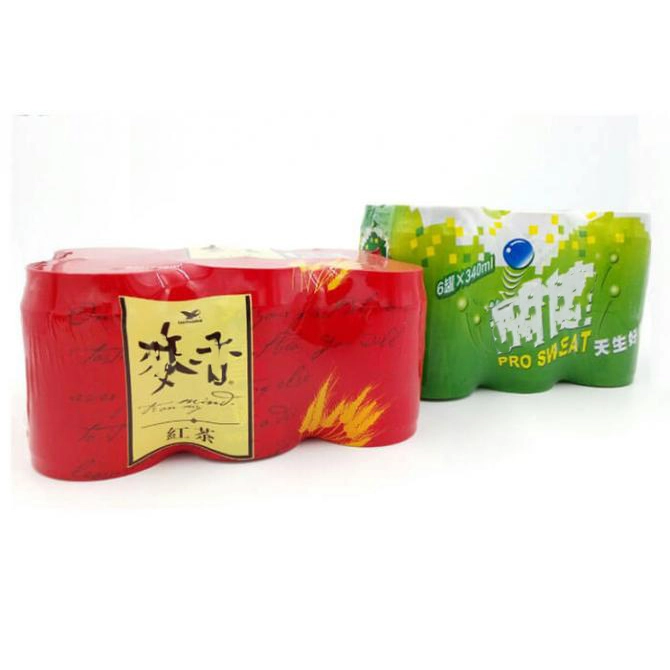
Medical device packs and process control
Medical Device Packaging Machines: Packs, Controls and Price
Medical device packaging machines are selected around the device, package materials, barrier requirement and production process. Comwin coordinates the required forming, loading, sealing, inspection and downstream handling with the technical documents agreed for your project.
Start with the device and its package requirement
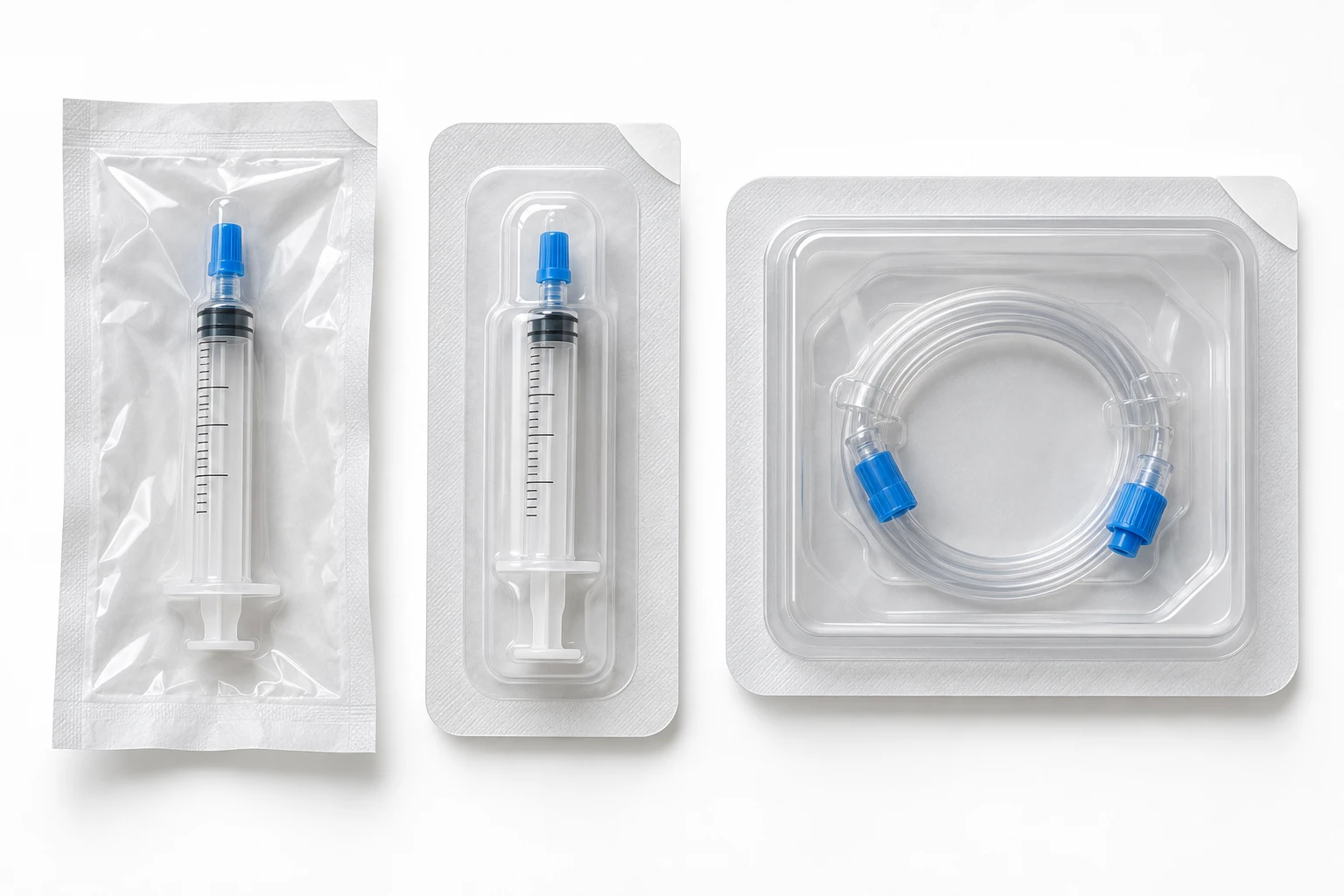
A flexible peel pouch, a roll-formed medical blister and a preformed tray need different tooling and loading arrangements. If the device is to be supplied sterile, establish the sterile barrier, sterilization compatibility and validation requirements before fixing the machine specification.
Peel pouches, formed cavities or preformed trays
Premade medical peel pouches
Present pouch → load and position device → clear seal area → seal under controlled conditions → inspect and record.
Premade pouches can suit batches handled by operators. Match the sealer, support and seal length to the device and material, including loading and positioning work in the output assessment.
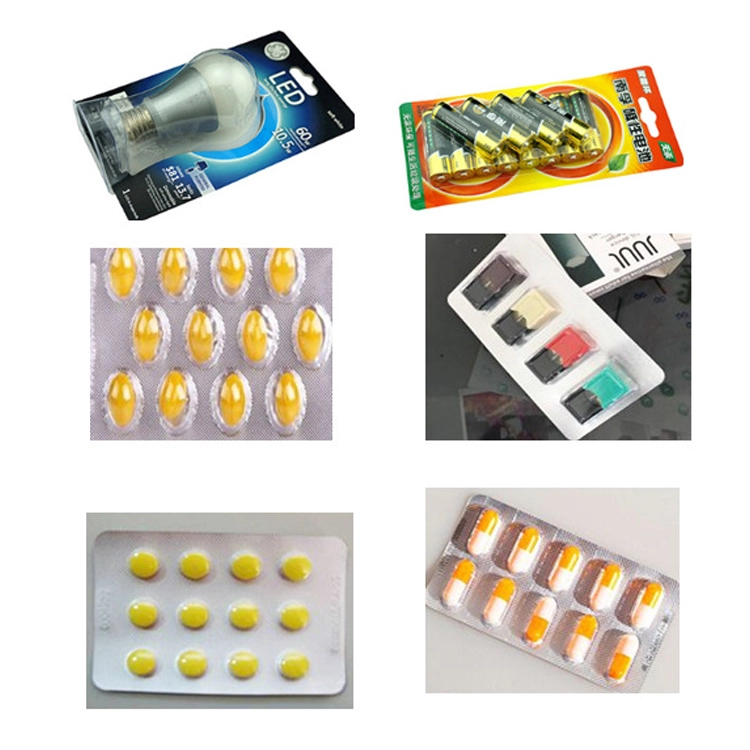
Formed medical blister or flexible cavity packs
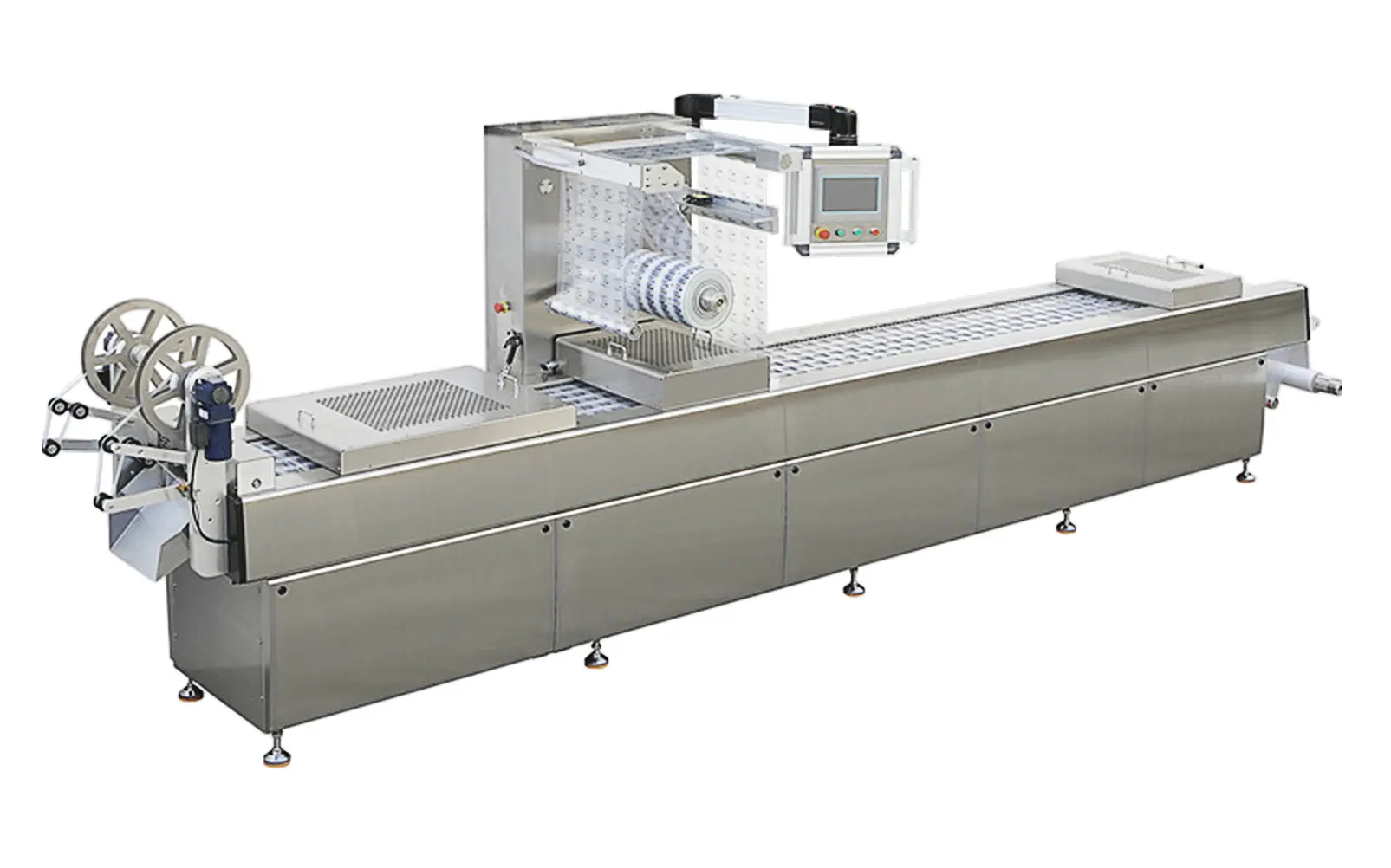
Form lower web → load device → present lid web → seal → cut → inspect and reject.
Choose the cavity and loading arrangement around the product. Specify web registration, seal control, cutting clearance and the required print and inspection functions.
Preformed rigid trays with peelable lids
Present formed tray → load and restrain product → apply lid → seal → inspect.
A preformed tray can provide shaped support or depth for a device. Specify die-cut or roll-fed lids, then confirm tray loading, support and discharge.
Check device geometry before selecting the cavity or pouch
Provide the finished device in every size and configuration. Identify projecting points, caps, flanges, flexible tubing and parts that can move during transport. Establish the space needed around the product and the seal. Check that the loading method holds the device clear of the sealing and cutting tools.
For a disposable syringe, include the actual barrel, plunger position, tip cap and any needle or protective assembly. Assess orientation, retention and the package opening method with those samples. Packaging an empty finished syringe and handling a prefilled drug-delivery product have different product and process requirements.
For tubing or a multi-component kit, define the coil, component count and orientation. Use pockets or an appropriate restraint where needed. An acceptable seal cannot compensate for a device corner repeatedly rubbing through the package.
Dedicated foil-packed products, such as condoms, require their own assessment of rolled-product feeding, any lubricant dosing and foil sealing. Specify those feed and closure functions as a dedicated application.
Match the sterile barrier to the complete process
For terminally sterilized devices, the package must support the selected sterilization route and maintain the required barrier through storage until the intended opening. Specify the actual lower film, porous paper or nonwoven lid, coating and sealant combination. Review compatibility with the device, sterilization exposure and intended opening method.
ISO 11607-1 addresses materials and sterile-barrier and packaging systems for terminally sterilized medical devices. ISO 11607-2 addresses validation of forming, sealing and assembly processes. Use the applicable editions and amendments in the project’s quality plan; these references do not cover every requirement of aseptically manufactured products.
ISO 11607-3:2026 addresses process development for heat-sealed packaging for terminally sterilized medical devices, before process validation. Review its applicability alongside the project’s packaging and validation requirements.
Specify the complete material combination, coating side and supplier processing guidance. Porous lids and impermeable foil laminates serve different functions. Assess the intended combination on the proposed tools for the chosen process.
For nonsterile medical supplies or large medical equipment, define the required physical, moisture or transport protection. Protective wrapping and cartons serve a different purpose from a sterile barrier. Avoid treating every medical product as the same packaging application.
Specify control, monitoring and records separately
List the critical process variables for the selected forming and sealing technology. The machine offer should identify how they are set, measured, monitored and verified, and what happens when a value leaves its accepted range.
| Function | What to define | Evidence to request |
|---|---|---|
| Forming | Material, heating, forming conditions, depth and thickness distribution | Actual cavity samples, relevant settings and dimensional checks |
| Sealing | Temperature, contact pressure and time, or transport speed for the selected design | Controlled working window, measurement locations and calibration access |
| Fault response | Out-of-range conditions, alarms, machine stops and reject handling | Demonstrated response and identification of affected packs |
| Recipes and records | Access rights, format settings, batch data, export and retention needs | Agreed record fields, sample exports and retrieval procedure; distinguish measured values from setpoints |
| Loading and inspection | Product presence, orientation, seal clearance, code and label checks | Challenge samples and documented limits of each detection function |
For an impulse sealer, review heating and cooling stages as applicable. For continuous sealing, consider transport speed and contact conditions. A vacuum function should be specified only where the package and device require it.
A cleanroom-compatible design must be assessed against the intended environment, cleaning method and utility routing. Stainless steel, a data port or a supplier’s quality certificate alone does not establish that the actual packaging process is qualified.
Seal strength, package integrity and opening answer different questions
Seal strength assesses the mechanical behavior of the seal under a defined test. Package integrity addresses breaches that could compromise the barrier. Opening checks assess whether the user can access and present the device as intended. For peel-open packs, set acceptance criteria for both seal strength and the intended opening behavior.
Inspect the whole package, including corners, formed walls, seams and the peel area. Wrinkles, trapped product, damaged lid material or cutting damage may create problems even when a seal-strength result is acceptable. A vision system detects the faults included in its configured and challenged inspection scope.
In its medical device sterilization town hall transcript, FDA discusses packaging performance after sterilization and distribution conditions, along with stability over the proposed shelf life. It gives examples of inspection and test methods rather than one universal test list. The device and quality team should select suitable methods and acceptance criteria for the actual packaging system.
Agree qualification and validation responsibilities
For a machine described as validatable, list the capabilities supporting the intended process. Calibration confirms measurements; packaging-process validation still needs its own work. Distinguish the factory demonstration and acceptance run from the site’s approved process.
| Work | Practical purpose | Define before ordering |
|---|---|---|
| Equipment installation and qualification support | Document the installed configuration, utilities, instruments and required functions | Drawings, manuals, calibration information and support included |
| Operating-window work | Assess relevant process settings and their limits with specified materials and packs | Protocol ownership, challenge conditions, testing and approval |
| Production performance qualification | Demonstrate repeatable performance under the agreed production conditions | Product/material lots, personnel, sampling, records and responsibility |
| Packaging system performance and stability | Evaluate the final packaged product through sterilization, distribution and intended storage | Laboratory work, aging programme, acceptance criteria and approval owner |
The quality plan may use IQ, OQ and PQ for the qualification activities. List the supplier’s exact deliverables and the customer’s remaining work. Agree how material, format, software or equipment changes will be assessed and documented.
Calculate output in accepted packs
For thermoforming, state cavities per cycle, products per cavity and cycle rate. Product placement, lidding, cutting, inspection and downstream transfer can limit the result. Compare accepted packs over a defined run, including replenishment and routine interruptions.
Illustrative capacity calculation
At an assumed 10 cycles/min with six individually packed devices per cycle, the theoretical result is 60 packs/min. A manual loading arrangement supplying only 45 correctly positioned devices/min limits output to 45 packs/min before additional losses. These numbers illustrate the calculation, not a Comwin rating.
Medical packaging equipment price
These USD allowances support early comparison of selected new equipment supplied from China, one finished device and one agreed package material and format. List the loading arrangement, controls, calibration information, records and technical documents included in each offer.
| Scope | Planning allowance | Boundary to confirm |
|---|---|---|
| Selected monitored bench pouch sealer | US$3,000 to 12,000 | Actual pouch, manual loading, seal control and required records |
| Selected medical rotary pouch sealer | US$4,000 to 15,000 | Material compatibility, monitoring, transport and documentation |
| Selected semi-automatic preformed-tray sealer | US$15,000 to 40,000 | One tray/lid tool, operator loading and listed control functions |
| Selected roll-fed thermoformer configured for the agreed device pack | US$60,000 to 180,000 | One forming/sealing format, manual or assisted loading and specified controls/documentation |
These are planning budgets subject to a quotation, rather than verified market averages. Large formats, complex feeding, extra tools, inspection or data requirements can exceed the ranges.
Unless listed, exclude cleanroom construction and qualification, sterilization equipment and services, product sterility validation, regulatory submissions, full packaging performance and aging programmes, plant services, freight, taxes and overseas installation. Request separate prices for additional formats and validation support.
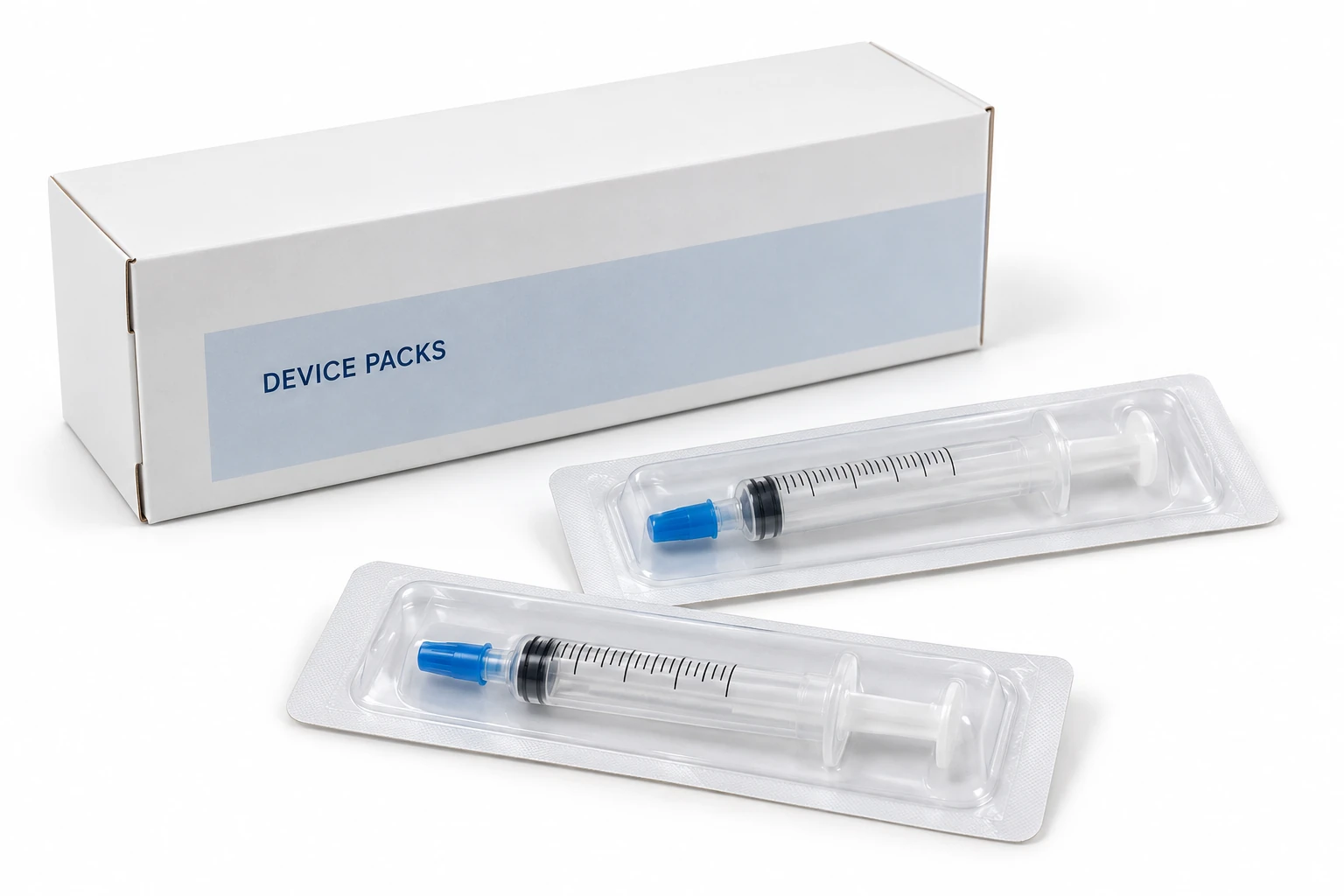
Add secondary cartoning around the sealed pack
When a carton is required, define pack count, insert or leaflet, orientation, code checks and protection against crushing or puncture. Confirm carton loading does not damage the primary pack. A selected retail cartoner may be budgeted at US$25,000 to 80,000; feeding and inspection scope must be stated.
Prepare device samples and agree trial checks
Send representative devices, package drawings, material specifications and samples. State the intended sterilization route where applicable, barrier and protective-pack requirements, opening method, output, format range and production environment. Identify who approves the packaging design and validation plan.
Retain packs from startup, stable running, replenishment, stops and changeovers. Record relevant settings, product position, seal and cavity checks, rejects, staffing and recovery work. Agree the inspection challenges and the scope of later testing on final packaged devices.
Discuss your device pack with Comwin
Comwin coordinates the selected equipment, interfaces and agreed technical documents around your device, pack and output. Free sample testing and factory visits are available. Send your device and packaging requirements for a configuration proposal.