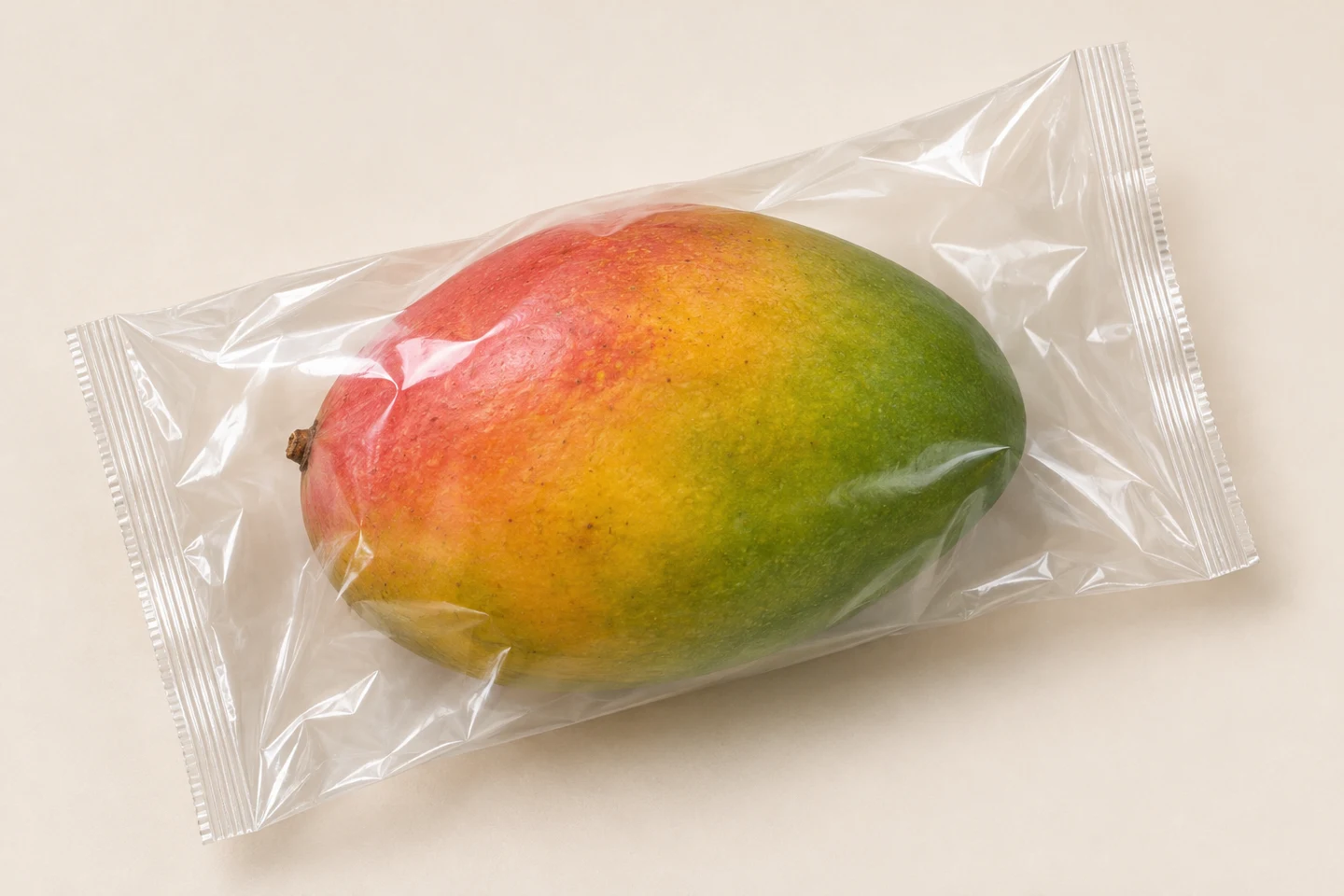
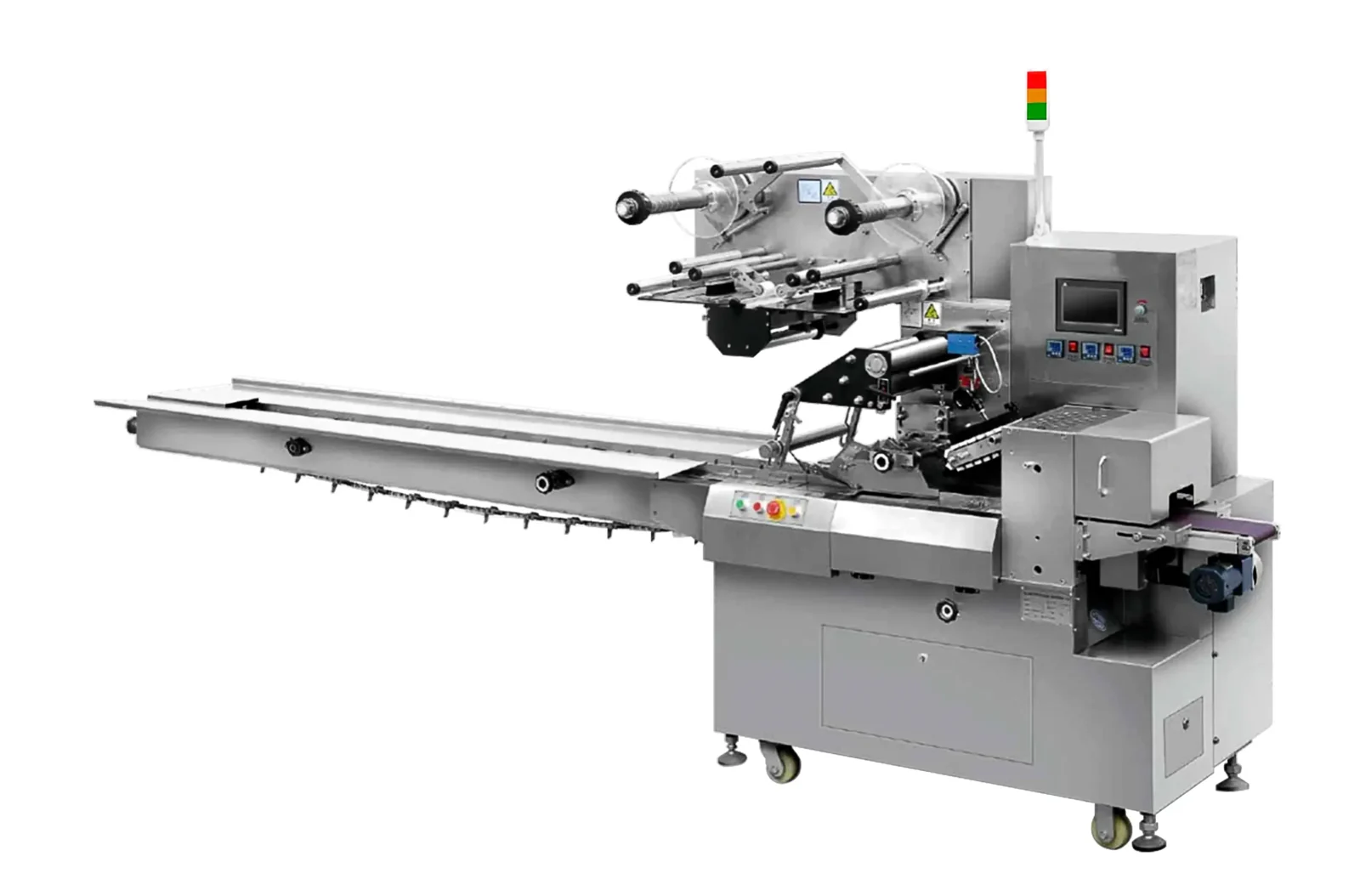
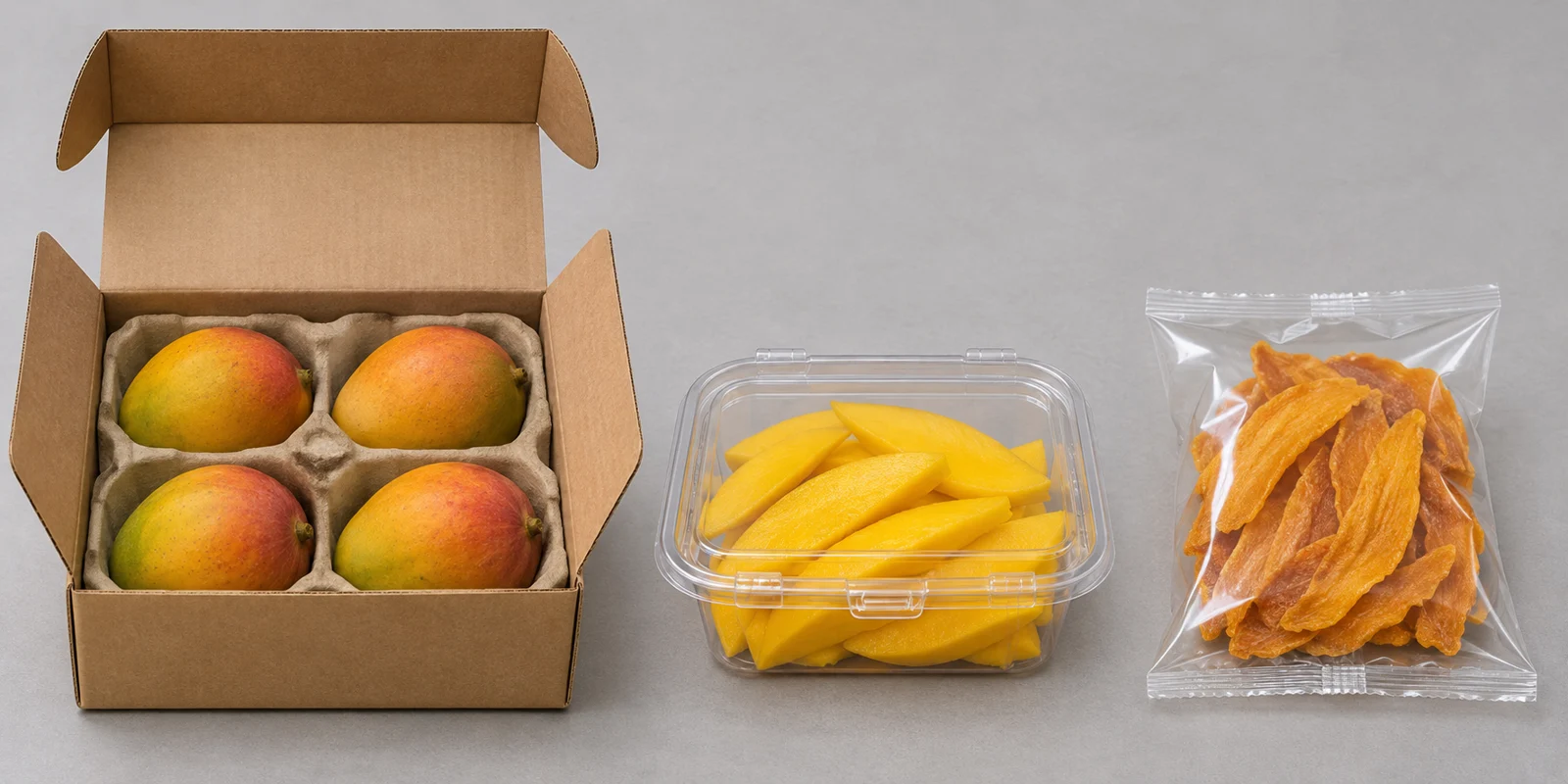
For a retail pack with one whole mango, guide the fruit lengthwise through a horizontal flow wrapper and seal it in its own pillow pack without a tray. Wholesale fruit can go directly into divided cases. Pack fresh slices in the approved retail tray and weigh dried strips into a bag on a vertical machine. Test the stickiest dried strips through the full drop before setting the feed and seal timing.
Choose the pack for whole mangoes, fresh slices and dried strips
| Incoming product | First configuration to assess | What would change it |
|---|---|---|
| One whole mango in a trayless pillow pack | Guide and space the fruit on a supported infeed to a horizontal flow wrapper. | Check whether the smallest mango rotates and whether the largest fruit clears the former and both end seals. |
| Dried slices and strips | Use a feeder and weigher suited to the release behavior, discharging into a rollstock pillow bag. | Switch the feed or discharge geometry if strips form ropes, carry over between doses or reach the jaws late. |
| Graded whole mangoes going into transport cases | Gentle infeed with indexed case placement into a divider or molded insert. | If fruit crosses pocket boundaries or rests above the rim, check the grade spread and case depth before automating placement. |
| Chilled fresh slices | Portion into a rigid tray and engage its snap lid. Specify a different tray and film if the customer requires a heat-sealed rim. | Juice at the rim or fruit above the closure plane calls for a different portion, transfer or container. |
Wrap one whole mango at a time without a tray
Set the mango lengthwise on a supported infeed so its broad shoulder stays in position as the film forms around it. A horizontal pillow packaging machine closes the film along its length and seals both ends beyond the fruit. This pack removes the tray and the tray-loading step. Feed one mango per cycle, with enough space to close the jaws between fruits.
Check the smallest fruit for rotation and the widest for guide and former clearance. Use the softest fruit you pack to check for pressure marks at each transfer. If the grader delivers loose mangoes, test how the infeed separates and spaces them. Confirm the required film and ventilation with your produce team before running a representative packing trial.
Run the tackiest dried slices through the full drop
If the strips arrive as a rope, trial the feeder and short discharge chute before altering the bagger. If a cleanly released strip reaches the jaws late, check the drop timing and seal clearance. Compare the spread in portion weights and the number of trapped strips using the stickiest normal batch.
A dried mango pillow bag can be made on a vertical form-fill-seal machine. Film forms a tube, the weigher releases the portion, and the jaws close after the last strip clears the seal area. Choose a forming tube around the longest pieces in the batch. A narrow throat can catch a strip across the opening even when the target portion fits comfortably inside the bag.
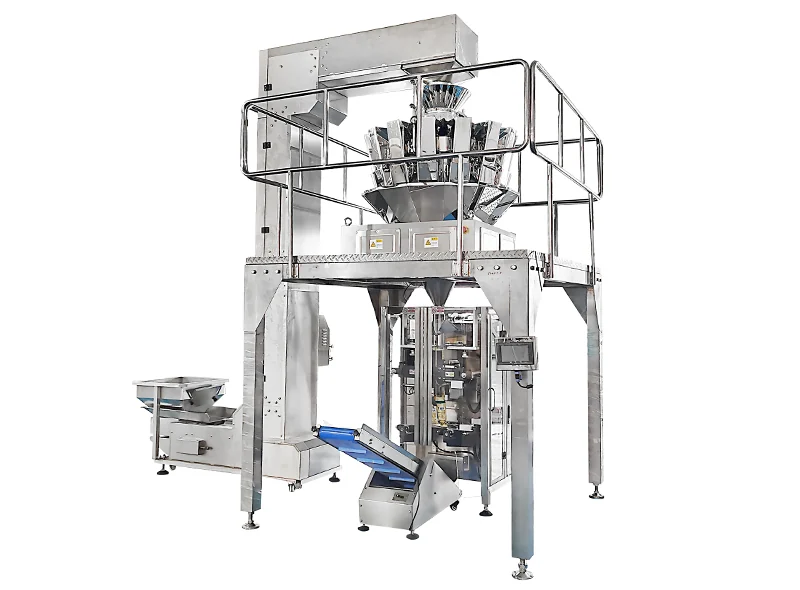
Try a belt or a product-compatible vibratory feed on the stickiest normal batch. Weigh consecutive packs and look at the chute after a pause. A low pack followed by a heavy pack can point to one strip staying behind and dropping with the next portion. Check the late release at the hopper and discharge before raising the target weight. If the piece distribution changes after storage, include that variation in the trial.
Fresh slices need a closure that stays clear of juice and fruit
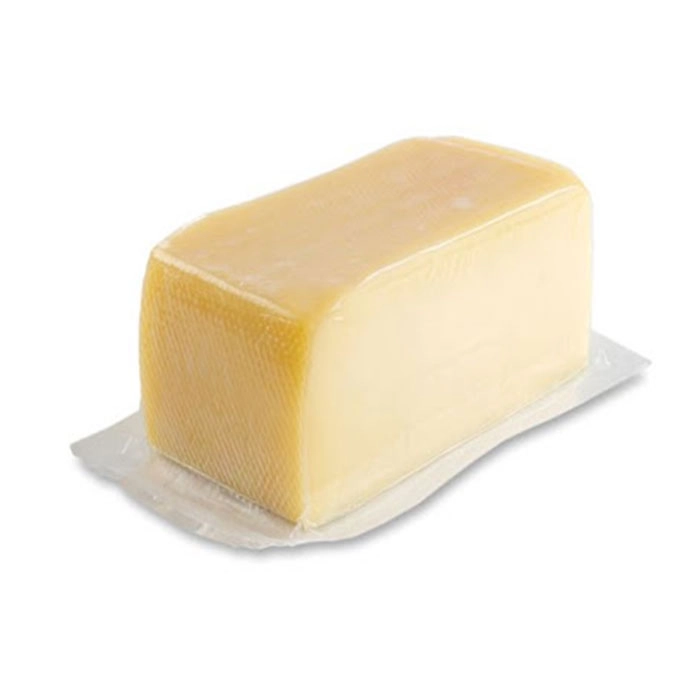
If you already buy an approved snap-lid container, keep that pack as the starting point and assess the closing station around it. Staff can continue arranging the slices while the station supports the tray and engages its lid. A retailer requiring a film-sealed top needs a tray with a compatible heat-sealing flange and matching lidding film. That change affects the container, tooling and rim-cleanliness check. The snap-lid sample above illustrates the first route.
Run ripe pieces from more than one batch. Look for bruises where the chute turns or the slices land, then inspect the rim as the container leaves the filler. Have your produce team specify the approved container, ventilation and distribution conditions before a closing tool is ordered. A successful machine trial checks handling and closure, with shelf life assessed separately by the producer.
Case loading starts where the grader releases the fruit
At the grader outlet, establish each lane’s actual peak rate and the fruit’s resting orientation. At lower rates an operator can place mangoes into the insert while the line advances cases. Repeatable grades and a fixed pocket pattern give a better basis for a supported automatic placement trial. Check orientation and fruit condition after loading the fullest case. If a lane runs short, agree how a partial case is held or diverted.
- Whole fruit for transport
Grade outlet → orient → place in divided case - Fresh slices
Portion gently → clear rim → close the tray - Dried strips
Weigh → verify release → form and seal bag
Send the mango size range and the finished pack
Send a finished pack photo and your target count or weight and output. For whole mangoes, include the smallest and largest fruit, the firmest and softest grades you pack, and whether they arrive loose or already spaced. For slices or dried strips, include the ripest slices or the tackiest dried batch you normally run. Comwin can use those details to propose the feed, pack support and closure sequence and plan a representative sample test. Discuss your mango packaging project.