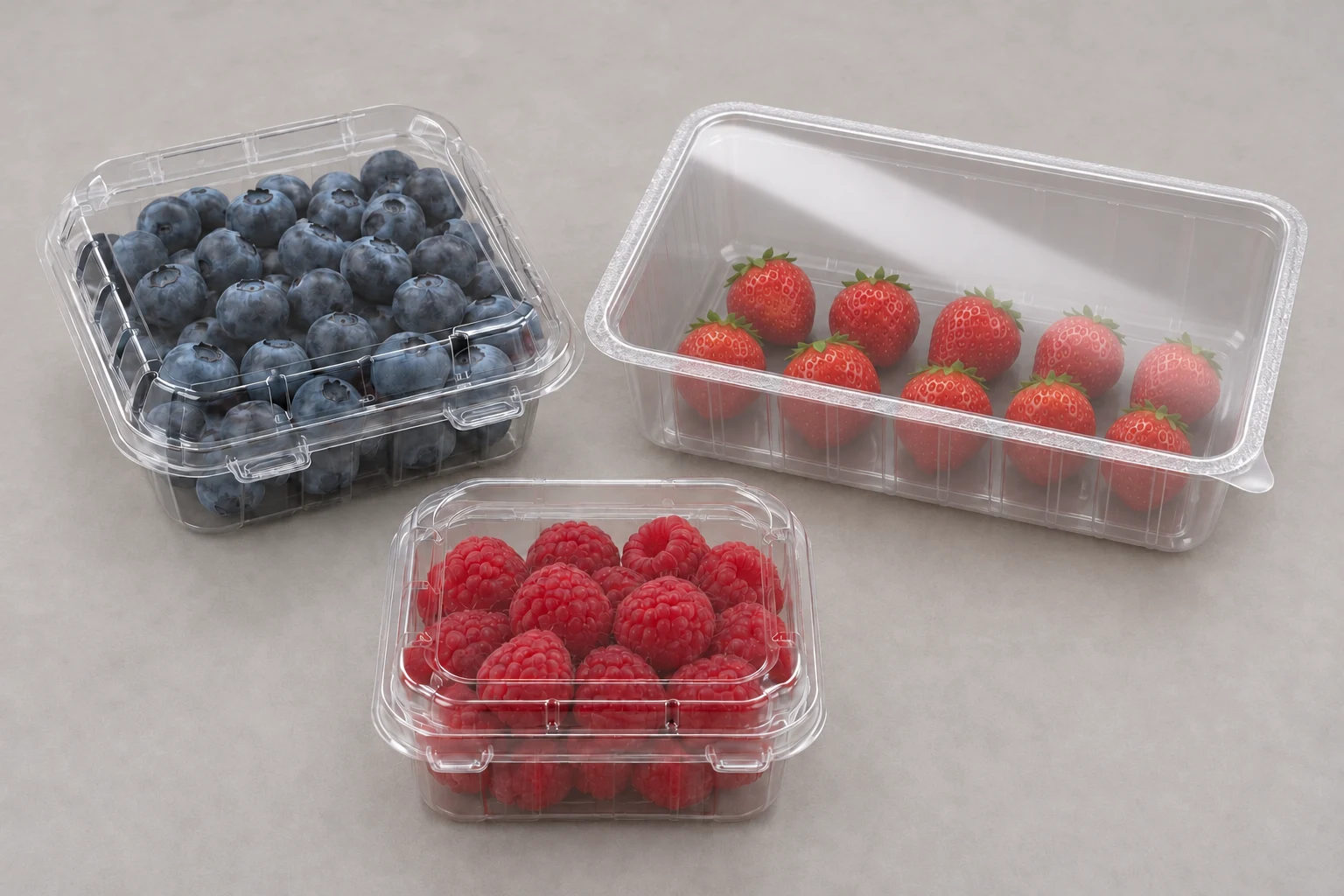
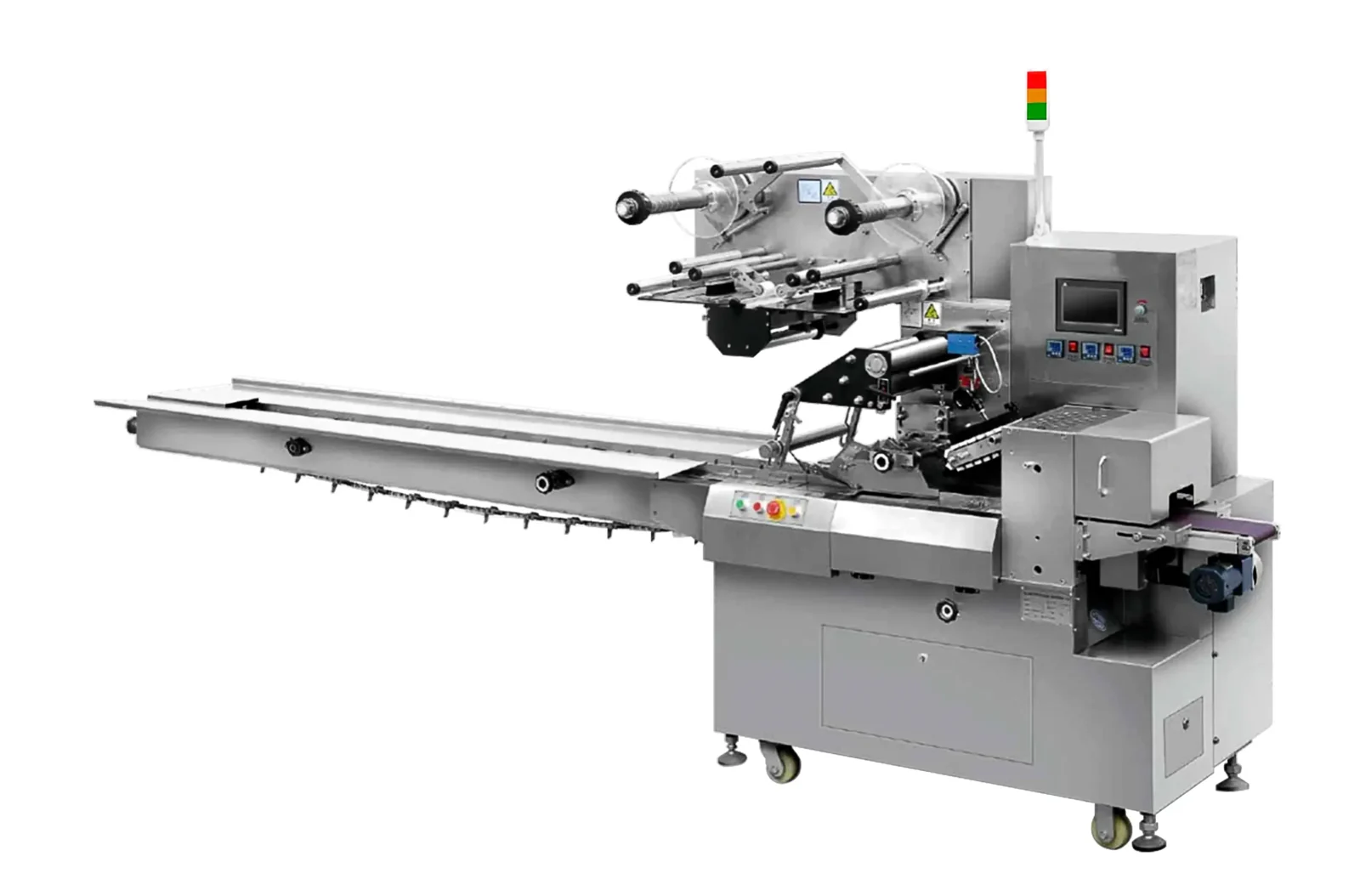
For strawberries sold in a film-wrapped tray, put the filled tray through a horizontal flow wrapper. The tray supports the berries while the film seals around the entire pack. A top sealer fits trays sold with film sealed to the rim. Weighed blueberries often go into a hinged clamshell, where fruit on the rim can keep the lid from closing.
For one already-filled strawberry tray format, budget US$5,000–25,000 for a compatible hand-fed horizontal flow wrapper or US$8,000–25,000 for a semi-automatic top sealer with one basic tool. A blueberry fill-and-close line is quoted to suit the container, weighing and lid closure.
Match the dose and closure to the fruit
| Fruit and sale format | Route to assess | What changes the choice |
|---|---|---|
| Strawberries or raspberries in a flow-wrapped tray | Guide the filled tray into a compatible horizontal flow wrapper. The roll film closes around the whole tray. | Check tray support, fruit height above the rim and clearance at both film seals. |
| Blueberries in hinged clamshells | Gentle weight dosing, container presentation and lid closing. | Check berries on the rim, closure engagement and weight spread. |
| Strawberries in a top-sealed tray | Place and settle the fruit below the flange, then seal a compatible lid film. | Inspect fruit height, flange contamination and lid clearance. Decide which orientation the retailer requires. |
| Raspberries in shallow lidded punnets | Keep the transfer short and support the portion while placing and closing the pack. | Check damaged or leaking fruit after the agreed hold as well as directly at discharge. |
Blueberries: weigh → fill clamshell → close and inspect rim
Strawberries: place → check fruit height → seal lid film
Flow wrapping a filled strawberry tray

Fresh strawberries can sit in a shallow tray that travels through the wrapper as one unit. Select a belt and guides that support the base without squeezing the fruit. Measure the tallest filled tray and leave enough film beyond both ends for the sealing jaws. On the sample run, check for bruising, film punctures and trays that shift during a stop or restart.
A shallow raspberry tray can use the same closing method if the filled tray stays level on the infeed. Check fruit at the edges for contact with the film and inspect for crushed or leaking berries after handling.
Agree the film ventilation and storage conditions with the produce team. A film bag sealed around the tray and a lid sealed to its rim have different air paths and require different checks.
Agree what to inspect after the pack leaves the machine
Use normal ripe fruit from more than one size band. Count and weigh samples before packing. Repeat the inspection after the agreed handling and hold period to distinguish incoming damage from new marks, leakage and compression. If damage rises with higher fill levels, trial the portion and tray depth before replacing the closer.
For weight dosing, measure both giveaway and underweight rejection at the intended pack rate. A closure check should also catch fruit left on the rim. Ask the supplier to show what happens during a short supply gap or after the container magazine is refilled. Confirm the approved pack’s ventilation and storage requirements with your produce and film teams.
Ready-filled trays and blueberry clamshell lines
Ready-filled strawberry trays with an existing loading step
If staff already arrange the fruit with the presentation the retailer wants, retain that work. A flow wrapper takes the trays from a loading belt with enough space between them for the end seals. For a rim-sealed pack, assess a semi-automatic top sealer. The operator checks fruit height and the clear flange, places the filled tray in its matching tool and starts the guarded sealing cycle. The station draws the specified lid film over the tray, seals and trims it; the operator removes the closed tray and checks the seal.
Ready-filled tray route
- 1 → Existing preparation.Staff fill and arrange the tray; fruit and leaves stay below the sealing flange.
- 2 → Operator loads.Check the flange and locate the tray in its matched sealing tool.
- 3 → Machine closes.Present compatible lidding film, seal to the rim and trim the film under the selected controls.
- 4 → Operator unloads.Remove and inspect the closed tray; move it to the existing case or collection point.
In either case, include staff time for fruit weighing, placement and tray loading. A semi-automatic top sealer also leaves unloading with the operator.
Loose blueberries: coordinate container supply, dosing and closing
For a repeated clamshell format, assess an integrated sequence from empty container to closed pack. It needs suitable fruit feeding and weighing, stable container presentation and a closer matched to the hinged lid. A gentle dose is only useful if the container is in position and the rim stays clear.
Blueberry fill-and-close route
- 1 → Present the container.Separate nested empty clamshells and locate each open pack beneath the filling position.
- 2 → Weigh and fill.Meter the actual blueberry size range and release with limited drop and controlled spread.
- 3 → Inspect and close.Check the rim; fold and engage the hinged lid. Define how unsuitable packs are stopped or rejected.
- 4 → Transfer the pack.Move closed packs to the agreed outfeed. Staff replenish fruit and containers, clear faults and check samples.
Comwin can define the station interfaces and remaining operator jobs with the packaging line configuration. Where fruit orientation still needs manual correction, retain that task explicitly rather than counting it as automatic output.
Strawberry packing machine price and blueberry line scope
A compatible hand-fed horizontal flow wrapper supplied from China can be budgeted at US$5,000–25,000 for one filled-tray format. Quote automatic tray spacing, supported conveyor transfers and any inspection equipment separately.
For initial budgeting, a compatible new single-format semi-automatic tray top-sealing station supplied from China may be scoped at US$8,000–25,000, assuming ready-filled trays, one basic tool and an operator loading the station. A blueberry fill-and-close line needs a separate quote for denesting, gentle weighing, inspection, lid closing and transfer. Freight, installation, process validation and additional tray tools are separate. Compare offers at the same accepted throughput, tray specification and operator workload.
Can a blueberry line also pack fresh cranberries?
Evaluate the actual size, surface behaviour and intended closure. If fresh cranberries use the same clamshell, trial the dose and rim condition. If the required pack is a bag, scope bagging separately. Dried cranberries are a different material and need their own dosing trial.
Start with your fruit and retail pack
Send fruit and pack photos, the target weight, required good packs per hour and the steps your staff already perform. Comwin can propose either a closing station for filled trays or the feeding, dosing and closing scope for a linked system. We then check fruit-height variation, container drawings and sample-run conditions. Discuss a berry packing trial with Comwin.