If the retailer accepts film around the entire cherry tray, start with a horizontal wrapper that supports the loaded tray at a repeatable pitch. The wrapper seals the outer film beyond the tray ends. Check stem height and film clearance. Specify a clamshell closer or a flange sealer when the approved container calls for those closures.

Choose the closure your cherry pack needs
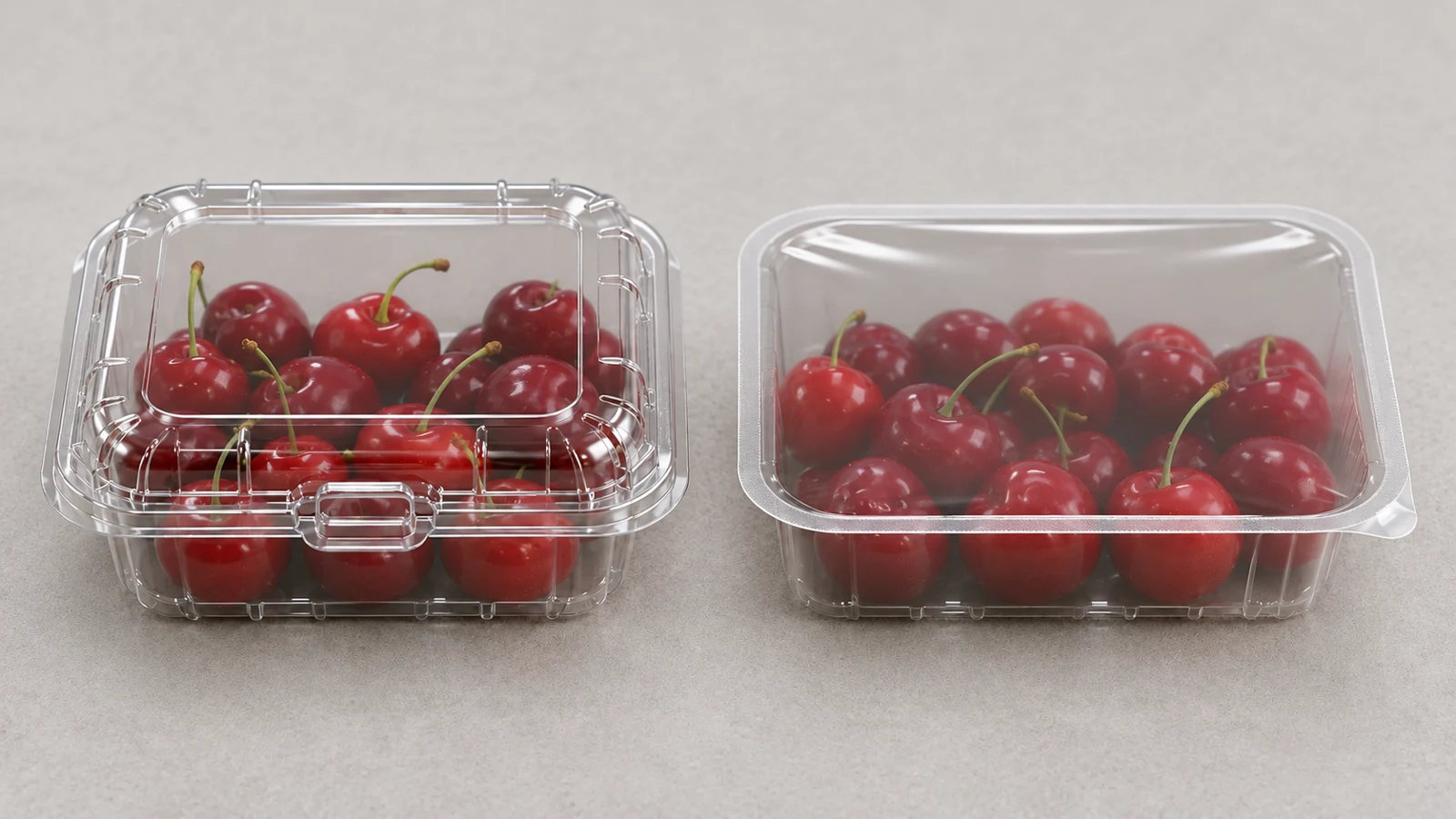
| Finished pack | What the machine closes | What to compare |
|---|---|---|
| Whole tray inside a pillow wrap | Support the loaded tray through a horizontal flow wrapper and seal the film at the pack ends and along its length. | Compare loaded tray height, film width, product spacing and room for stems inside the wrap. No rim-sealing tool is used for this closure. |
| Hinged clamshell | Fold the rigid lid and engage the latch while supporting the container. | Retain an approved clamshell format; check lid guidance, fruit height and stems near the latch. |
| Tray with top-sealed film | Locate the tray in a matching tool and heat-seal compatible lidding film around its flange. | The tray must have a suitable sealing flange; compare tray/film supply, tool changes and rim clearance. |
Follow the longest stems through the weighing gates
Cherries in a paired cluster can bridge a narrow discharge or stay in a gate after the rest of the portion drops. Run the normal variation in fruit size and stem length, including clusters you expect to keep. Check gate release, the number of loose stems, and whether the portion spreads across the tray or piles up against one wall. If short weights alternate with heavy packs, watch for carry-over between weigh cycles.
Use a supported transfer or reduce drop where the trial shows fruit strikes a hard surface. Check cherry condition at entry, after the filler and after the agreed handling period. That makes it possible to trace damage to a specific contact rather than changing several settings at once. Keep stem cutting, sorting and conditioning outside the packer scope unless the line includes those steps explicitly.
Keep the tray and stems inside the pillow wrap
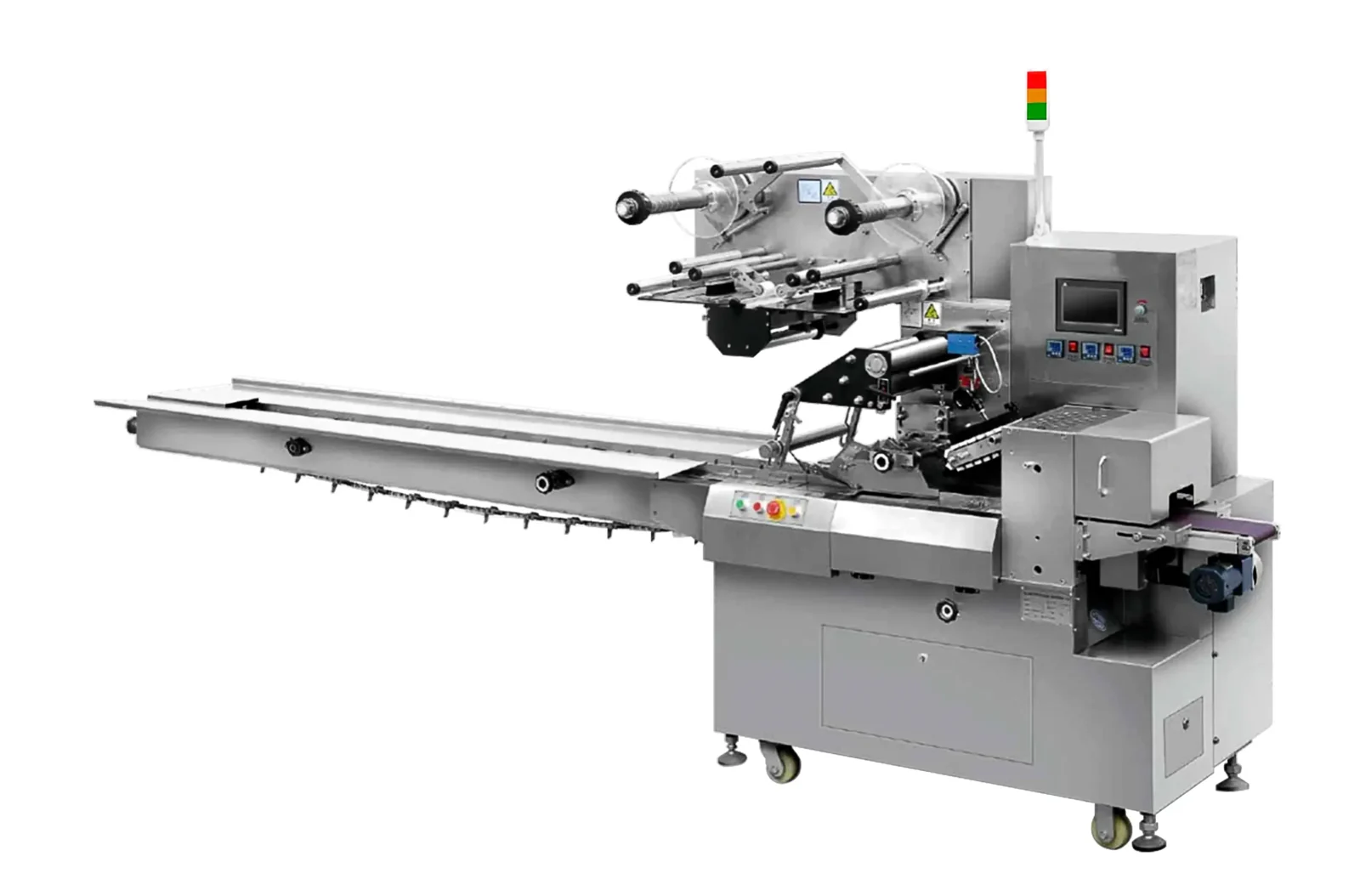
For a customer requesting a wrapped punnet, a horizontal flow wrapper encloses the whole loaded tray. Test the tallest normal fill and the longest stems. The film must clear the contents, and the tray must stay stable as it passes the forming section. Leave space beyond both tray ends for sealing. A flimsy or distorted tray needs attention before higher speed is considered.
Add filling only when it is part of the project
For the same approved tray, compare a wrapper supplied with filled trays against a line receiving loose cherries. The first scope starts at tray transfer. The second adds empty tray presentation, portioning and a controlled fill. Compare accepted packs and fruit damage for the same tray, fruit grade and output.
The amount of automation is a separate choice from the closure. Keep the same container and finished pack when comparing these two equipment scopes.
| What reaches the equipment | Equipment scope | Work to assign |
|---|---|---|
| Containers already filled by staff | Support and convey to the selected clamshell closer, top sealer or flow wrapper. | Staff portion and arrange cherries. Confirm container spacing, replenishment, closed-pack removal and checks. |
| Loose cherries and empty containers | Add container presentation, portion weighing and controlled filling ahead of the selected closing/wrapping step. | Define empty-container supply, missing-container response, fruit/stem inspection and recovery after a stop. |
A filler must hold its dose when the container is missing. A clamshell lid arriving out of position needs an agreed stop or rejection response; it should not pass through unchecked. Run a container shortage and restart during the trial to see where cherries and packs accumulate. Comwin can define these interfaces when proposing linked packaging equipment.
Approve the filled pack before approving speed
Take consecutive packs at the target rate. Check their weights, the applicable latch or film seals, and whether stems or berries reach the closing area. On a pillow pack, include both end seals and the longitudinal seal. If the film must be perforated or the container vented, use the approved specification for the fruit and its distribution. Machine trials establish repeatability and closure. The produce team assesses storage and shelf life with the finished pack.
Send cherry samples with the pack drawing
Start with the variety, size and stem range, a photo of the closed pack, target net weight and good packs per hour. Tell Comwin whether staff will keep portioning or the line receives loose fruit. We can propose the fill and closure scope and set a sample trial around those conditions. Discuss your cherry packing project.