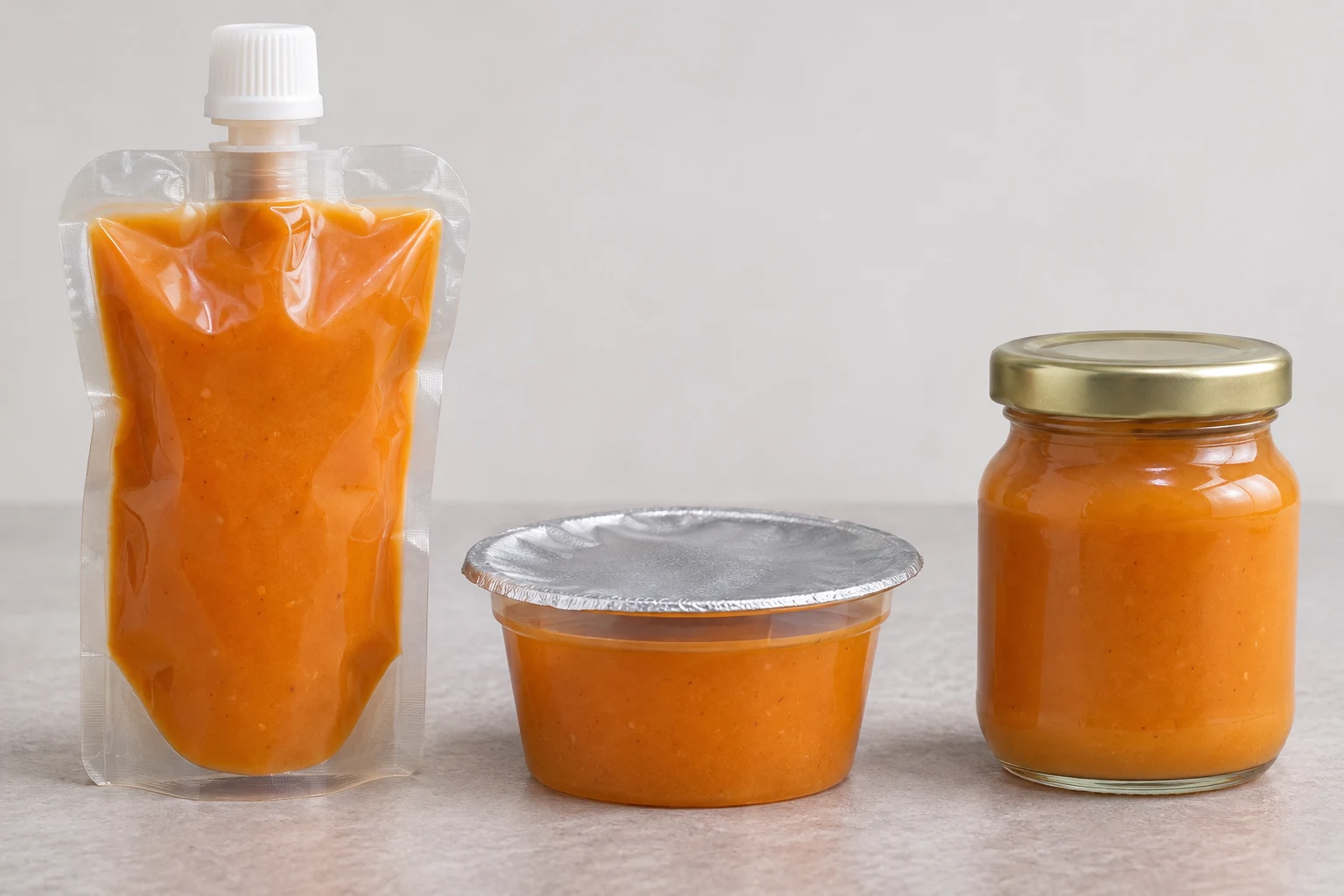
Select the pack around the approved baby food process. A specified reclosable pouch needs a filler that can deliver the puree through the smallest spout. A single-serving cup needs a clean rim for lidding. For a jar, use the approved closure and confirm how filled jars are supported through closing.
US$12,000–50,000 is an equipment reference for an approved application using a conventional mechanical jar or bottle filler and closer. For a baby food project, price the actual process, cleanable product path, filling and closure arrangement after those requirements are established.
Let the established food process define the machine requirements
For a chilled product, identify the permitted product conditions, cleanable contact path and transfer to the existing chilled operation. If the established process requires hot filling, the dosing system, seals, container support and closure must be suitable for that specified filling condition. If closed packs go to a later treatment, the pack and closure must suit it and the equipment scope must define that handoff. An aseptic process requires its own validated filling environment; a conventional filler cannot be assumed to provide it.
For example, a producer with an approved hot-filled puree pouch needs a pump and product path suited to that recipe at its specified filling temperature, fitment support, and controlled cap application. A successful room-temperature dose trial alone would leave that configuration unresolved. The producer and process authority establish the process; Comwin uses those requirements to select the mechanical scope.
Match the filler to the package and the approved process
| Finished pack | Packaging route | What to prove before purchase |
|---|---|---|
| Resealable puree pouch | Hold the premade pouch by its fitment, fill through the spout, then apply and check the cap. | Test the narrowest spout with the thickest approved recipe. Agree how the cap is fed and how an unseated cap is detected. |
| Single-serve cup | Denest a cup, dispense puree and seal a compatible lid to the rim. | Use the actual lid and cup flange. Check residual puree on the rim after a normal stop and restart. |
| Glass jar or rigid bottle | Feed containers to a filling and closing station with guides suited to the container. | Check stable transfer, neck clearance and closure condition with the agreed headspace. |
Pouches: present by fitment → dose → apply cap
Cups or jars: support container → dose → seal lid or apply cap
What the pouch and cup stations actually do

Two different closing tasks
- 1 → Spouted pouch.The holder locates the fitment below the nozzle. After dosing, the cap is presented and tightened; pouch presence and cap condition are checked by the selected controls.
- 2 → Cup.A nest supports the cup while it is dosed. A lid is placed or drawn from compatible stock, then sealed against the flange. Cup support and sealing tools match the actual rim.
An operator can present containers for small batches. A continuous system adds coordinated empty-pack and closure supply. Choose that work division around the required output and the pack’s handling stability.
Run the difficult recipe through the full product path
Send viscosity information at the intended filling condition and describe any particles or fibres. Have the supplier run the recipe from hopper to nozzle, through a planned stop and back to production. Weigh filled packs in sequence. Include packs produced directly after restart. Look at where the dose tails or splashes and whether it reaches the closure surface.
Separate the dosing trial from the process validation. The food producer and its process authority determine the approved process, product conditions and closure checks for the intended market. For example, under the U.S. rules for applicable shelf-stable low-acid foods, container and process requirements affect equipment selection. Review the scope with the process authority before ordering. FDA process filing overview.
Jar filling and cap application
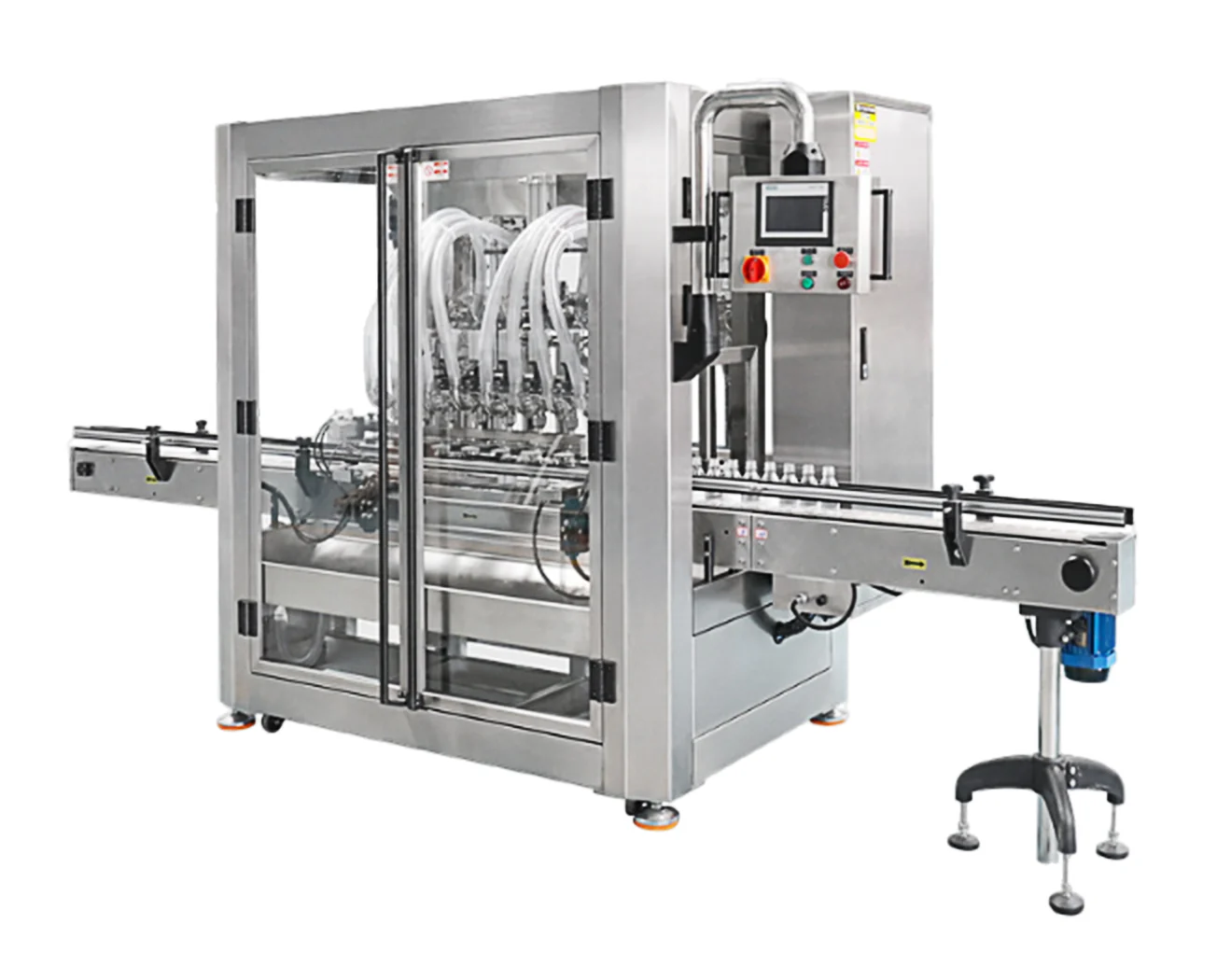
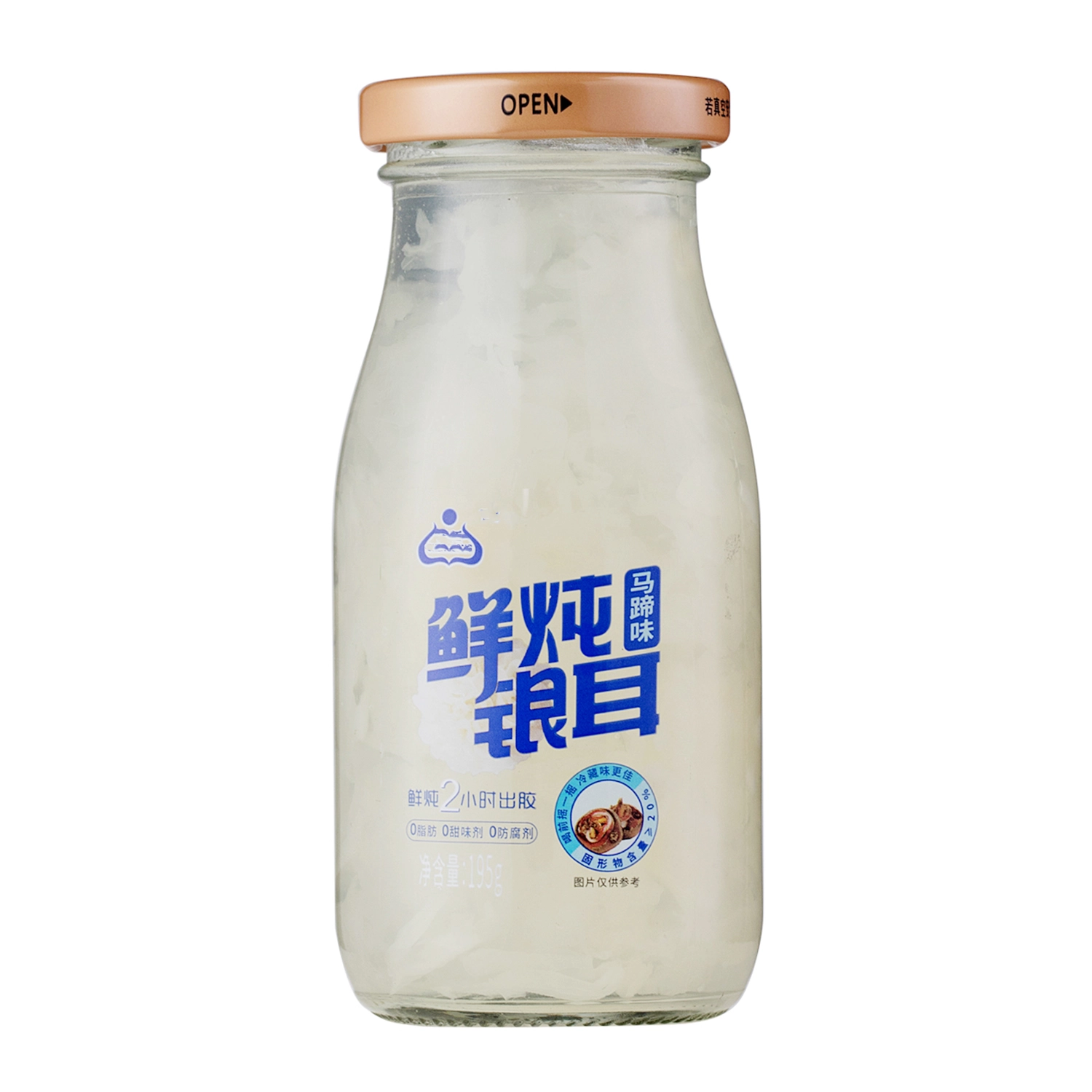
The bottle-filling platform shown is a reference for rigid-container positioning and dosing. A jar project also needs an appropriate cap feed and closing station. Product-contact parts, cap engagement, cleaning access and the established food process are checked for the proposed configuration.
Compare small batches with a linked filler
For pilot batches, check the operator’s work at pouch loading or cup denesting, closure placement and cleaning. For sustained production, ask for a controlled supply of empty packs and a way to stop dosing when a pack is absent. Agree how packs are segregated after a closure fault. Request a documented changeover between the smallest and largest formats and a walk-through of all product-contact surfaces.
Compare a defined filling and closing scope
For an approved jar or bottle application that fits a conventional mechanical filler and closer, US$12,000–50,000 is a preliminary base-equipment reference. It does not establish suitability for a baby-food process. Hygiene provisions, recipe transfer, cleaning, inspection and process interfaces must be specified before it becomes a usable project budget.
| Route | State the core scope | Keep separate in the quotation |
|---|---|---|
| Premade spouted pouch | Fitment presentation, dosing, cap feed and cap application | Pack supply automation, inspection, cleaning and additional formats; obtain a quotation for this configuration |
| Puree cup | Cup support or denesting, dosing, lid supply and flange sealing | Tray/cup tools, inspection, cleaning and established-process interfaces; obtain a quotation for this configuration |
| Jar or bottle | Container handling, compatible dosing and a specified closing station | Product-contact and cleaning upgrades, cap inspection, further tools, process integration and installation |
Compare the same dose, recipe range and operator tasks in each offer. Packaging materials, freight, import charges and site work should be listed explicitly rather than assumed to be included.
Can the same filler handle cups, pouches and jars?
A dosing system may be reusable if the same recipe and dose range are proven, but container handling and closures are separate decisions. Ask for a supply list showing which stations and tools would change with each format and which cleaning steps are required.
Start with your puree and the pack you want
Send a product and pack photo, the intended portion, target output and storage or distribution conditions. Comwin can propose the handling, filling and closing sequence and identify the inputs needed from your process team. Package drawings, closure specifications and validation requirements follow during configuration review. Discuss your baby food packaging requirements.