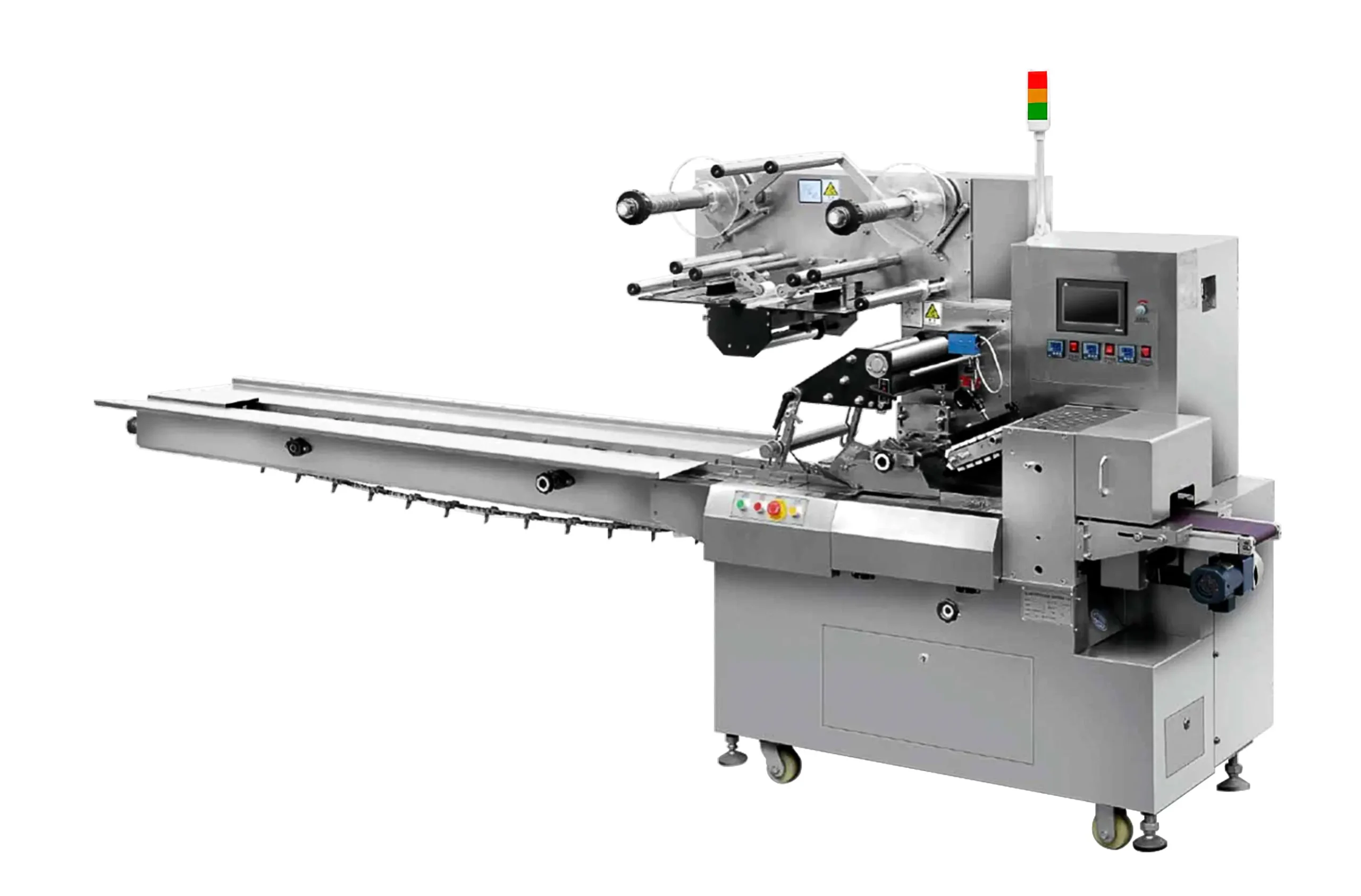
A cutlery packing machine wraps finished forks, spoons, knives and any napkin into individual kits. If those items already arrive as a complete kit, a horizontal flow wrapper can wrap them. Repeating kit combinations may justify automatic utensil feeding and napkin insertion.
Budget USD 5,000 to 25,000 for a suitable flow-wrapping platform. Automatic kit feeding and wrapping has an indicative range of USD 25,000 to 75,000, with the utensils and prefolded-napkin handling specified in the quote. Comwin selects those operations from the contents of your finished kit.
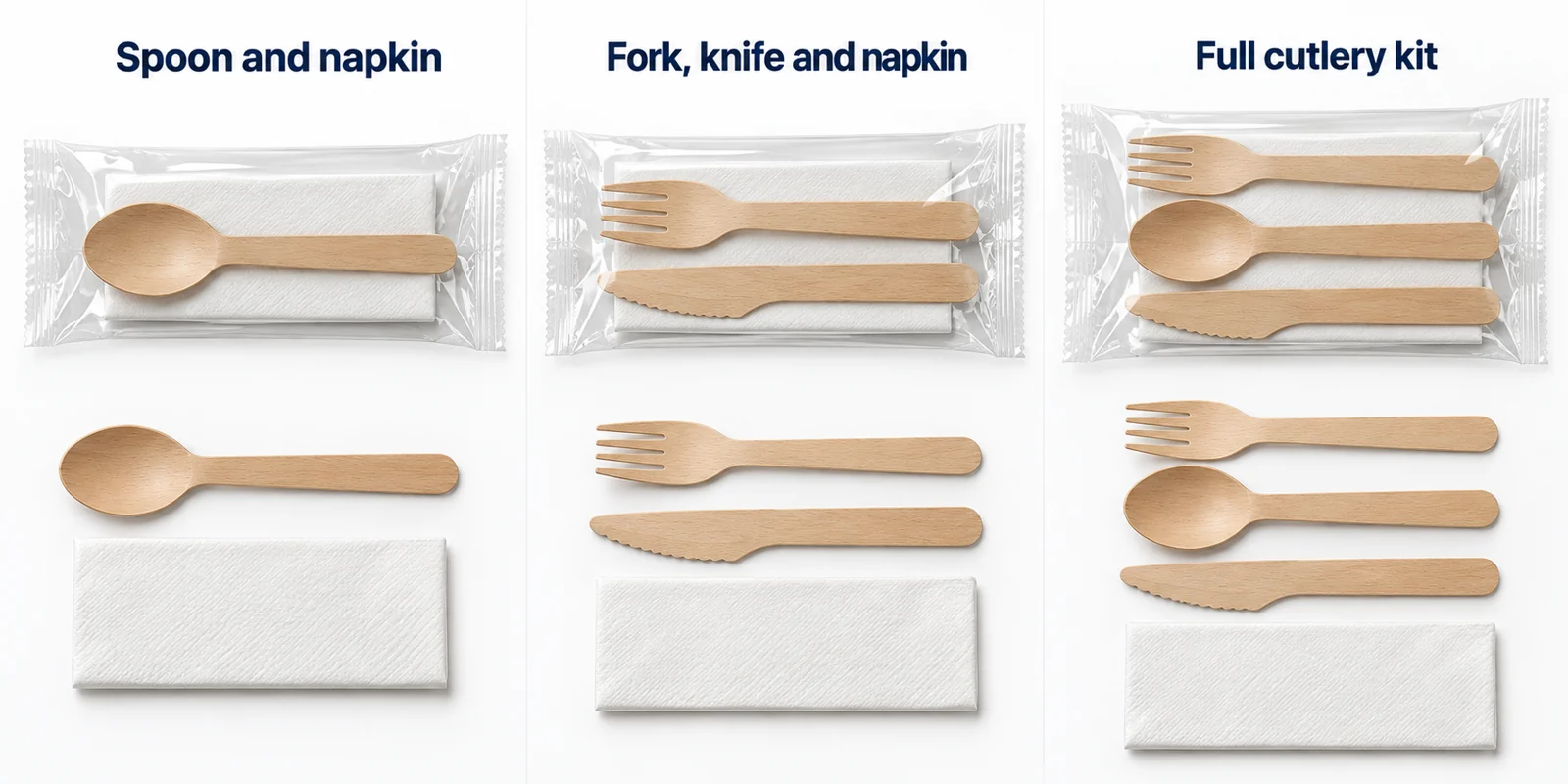
Start with how the complete kit reaches the wrapper
For a quote, identify which items arrive already grouped and whether the napkin is supplied folded. Preassembled kits need a supported transfer into the wrapper. Loose utensils need collation and count verification before that same wrapping step.
Preassembled cutlery kits with flow wrapping
An operator or an existing station places a complete kit into the wrapper infeed. The machine forms film around it, makes the longitudinal seal, and closes the two ends. This fits short runs, several kit recipes or products whose shapes are difficult to sort automatically.
Check the longest utensil and the combined kit thickness. The napkin should remain within the seal clearance throughout transfer. Film length and product spacing are selected together so that the end seal closes on film clear of the items.
Automatic utensil feeding and kit formation
Separate feeders present the required fork, spoon and knife to a common transport path. The selected arrangement aligns the items before wrapping. It suits repeated kit recipes when manual assembly is the bottleneck.
Nested utensils, handle shape and surface friction affect feeding. A wooden spoon may need a different feeder from a light moulded plastic spoon. Trial the exact combination together; running one utensil successfully does not establish complete-kit output.
Cutlery kits with napkin insertion
Napkin handling can fold or insert the napkin required by the finished pack. Specify whether napkins arrive prefolded or need folding on the equipment. Their size and thickness determine kit height and affect transfer.
Choose this configuration when the same napkin-and-utensil pack repeats in volume. For frequent napkin changes or small promotional batches, manual napkin placement can remain a useful part of the workflow.
Keep the complete cutlery kit aligned through sealing
| Packing problem | Matched equipment or configuration | How it responds and what to check | Applicable product |
|---|---|---|---|
| Utensils overlap or arrive out of position | Matched utensil feeders and guided transport | Guide the specified shapes into a repeatable kit position before film forming; test different item batches. | Nested spoons and mixed fork/knife kits |
| The napkin reaches the end seal | Napkin positioning and timed wrapper infeed | Keep the folded napkin inside the product envelope and coordinate product spacing with bag length. | Cutlery-and-napkin packs |
| One item is missing from a complete kit | Feed-completion checks suited to the selected items | Define what confirms a complete kit and how an incomplete feed is stopped or rejected. | Several utensils combined in one bag |
| New kit recipes need lengthy adjustment | Accessible guides and stored wrapper settings | Separate changes to feeding, napkin position and film format; run the first complete packs after each change. | Multiple catering or takeaway kit recipes |
Cutlery packing for short runs and repeating kits
| Production situation | Finished pack | Starting route | Configuration inputs |
|---|---|---|---|
| Restaurant supplier with several short kit runs | Spoon and napkin pillow pack | Manual kit placement plus flow wrapper | Longest item, napkin fold and bag dimensions Keep manual placement for varied short runs. |
| Takeaway distributor with a repeating fork-and-knife kit | One sealed kit per bag | Dedicated feeds plus wrapper | Utensil nesting and kit-completion check Upgrade when repeat kit assembly constrains output. |
| Catering producer with a fixed full kit | Fork, spoon, knife and napkin bag | Coordinated utensil and napkin handling | Complete-kit output, replenishment and recipe-change needs Specify napkin supply and folding as separate operations. |
Operator tasks after adding automatic feeding
| Production mode | Operator work | Changeover implications | Acceptance focus |
|---|---|---|---|
| Manual kit assembly | Operators select all items and place the kit | Low feeder change burden; assembly labour remains | Check the full kit and seal during normal operator handling |
| Automatic utensil feeding | Operators replenish and clear the selected feeds | Guides or feed parts may change with item design | Verify kit completeness and recovery after an empty feeder |
| Integrated napkin and kit feeding | Operators replenish utensils, napkins and film | Napkin format adds folding and registration changes | Trial the full combination and recipe change |
Kit dimensions, film and sealing requirements
Select the wrapper from the complete kit dimensions, film specification and required seal. Clear film makes the contents visible; printed film adds registration requirements. For a paper-based wrapper, the actual sealing layer and stiffness need a trial. A paper appearance alone does not establish whether a material will run or seal on the selected machine.
These machines pack finished utensils; utensil manufacturing takes place upstream. Specify the food-contact or destination documents required for the contact materials and supplied equipment. A stainless-steel appearance alone does not establish compliance.
Budget for the selected equipment scope
These planning ranges concern new equipment supplied from China for a defined product and format. Product preparation, extra formats, freight, taxes, overseas installation and site work are excluded unless expressly listed. Equipment additions and commercial terms are settled in the formal quotation. Special product-contact, safety or environmental requirements can change the scope.
| Equipment scope | Planning budget | Range applies to | Items to define separately |
|---|---|---|---|
| Wrapper for preassembled kits | USD 5,000 to 25,000 | Defined kit dimensions, one film format and selected feed arrangement | Automatic utensil sorting and napkin insertion are not assumed |
| Defined automatic kit feeding and wrapping | USD 25,000 to 75,000 | Indicative budget for one kit recipe, up to three selected utensil feeds, prefolded-napkin placement and wrapping | Napkin manufacture/folding, extra tooling, custom inspections and downstream boxing excluded |
Calculate complete-kit demand before wrapper speed
For an illustrative order of 18,000 kits in 6 available packing hours, the production requirement is 3,000 acceptable kits per hour, or 50 per minute. If four items go into each kit, the supply arrangements collectively handle 200 items per minute. The packing proposal must address that assembly work as well as the wrapper cycle.
Compare proposals on the same product and pack
| Dimension | Evidence to compare |
|---|---|
| Budget and scope | The equipment operations, product and formats represented by each price. |
| Output | Compare complete-kit output using the actual fork, spoon, knife and napkin. Check feeder replenishment, item change parts and how incomplete kits are handled. |
| Product and format fit | A complete cutlery-and-napkin sample for every kit recipe; Napkin size, thickness and whether it is supplied folded. |
| Support | Training, contact parts, spares and the responsibilities for commissioning and support. |
| Delivery | Samples, format confirmation, layout, documentation and acceptance milestones. |
Questions to settle before ordering
Can a normal flow wrapper automatically assemble the kit?
If the kit arrives preassembled, the wrapper can focus on film forming and sealing. Automatic selection and grouping require matched feeders and controls in addition to the wrapper.
Can wooden and plastic cutlery share one machine?
When their dimensions and feeding behaviour suit the selected setup, the wrapper may be shared with appropriate guide changes. Trial both item families before deciding which feeder tooling is common.
Is napkin folding included?
If you require unfolded napkins to enter the equipment, specify a folding operation. If you supply folded napkins, the proposal can focus on placement and insertion. These scopes affect price and changeover.
What information gives a useful first quotation?
Send a photo of the complete finished kit, the dimensions of every item and the required good-kit output. Comwin can then identify whether preassembly, dedicated feeding or napkin handling is the sensible starting point.
Request a cutlery-kit packing proposal
Send a finished-kit photo or sample, the fill or count, and the good-kit output you need. Include these details for the equipment proposal:
- A complete cutlery-and-napkin sample for every kit recipe
- Utensil material, dimensions, weight and nesting behaviour
- Napkin size, thickness and whether it is supplied folded
- Finished bag dimensions, film type and print-registration requirement
- Required acceptable kits per minute and daily SKU changes
- Existing assembly process, available space and destination
Comwin will recommend the feeding and wrapping operations, explain the configuration and sample trial, and quote the agreed scope.
Comwin provides free sample testing and can arrange real factory visits. Small-equipment support includes video tutorials and remote video calls. The whole-machine warranty is two years, with three years for core components and remote response within 24 hours. Support and installation responsibilities are specified for the project.
Arrange free sample testing · Send your packing requirements