Granule packing machines

Measured bags of rice, seeds, nuts and snacks.

Comwin combines product feeding, portion measurement and bagging for your granules. The equipment choice starts with how the product flows, how easily it breaks and the pack weight you need.

  • Cup dosing, direct weighing and combination weighing
  • Handling selected for fragile or sticky products
  • Retail bags, resealable pouches and single portions
Rice and mixed nuts in sealed pillow bags
Rice and nuts in sealed bags. Product handling and dosing are selected separately from the bag format.

Choose the pack for the way the product is sold

A bulk ingredient, a resealable retail pouch and a single serving create different packing tasks.

Retail bags made from film
Measured rice, sugar or seeds for sale by weight, and snack bags for a serving or sharing size. The machine makes and seals each bag from a reel.
Resealable premade pouches
Nuts and similar products that customers use over several occasions. A supplied pouch provides the chosen base, zipper and shelf presentation.
Small sachets and sticks
Sugar or salt ready to add to a drink or meal. The portion and pack width determine the small-dose filling parts.

For fragile nuts and snacks, examine the entire transfer path and the filled pack. Film barrier, seal quality and any supporting packaging determine the protection available in storage and distribution. See the wider bag packaging range.

Compare granule dosing methods

Compare what the system measures, then check whether its complete dosing cycle can keep pace with bagging.

Cups: set a volume

Fill a fixed space → release the contents. The delivered weight varies with bulk density.

Direct weighing: build one dose

Feed a weigh hopper → reach the weight target → discharge.

Multihead: combine portions

Weigh several small portions → select a combination → release the selected hoppers.

Dosing methodA useful starting pointWhen to reassess it
Volumetric cupsFree-flowing products such as rice or sugar, when the resulting pack weights meet the requirement.Compare weights across supply batches. Density changes can alter the weight delivered by the same cup volume.
Direct weighingA portion controlled by weight, with a feed and weighing cycle that can supply the bagger.Include feeding and settling in the cycle. Check whether the required completed-pack output is sustained.
Multihead combination weighingProducts and outputs that benefit from combining several weighed portions, especially where control of excess fill matters.Check sticking, piece size and discharge. Total weight alone does not establish ingredient proportions.

A multihead weigher controls total portion weight. A specified recipe mix can also require separate ingredient feeds. For fixed piece counts, use a counting arrangement suited to the product.

When the product changes the weighing choice

Mixed nuts with a specified recipe

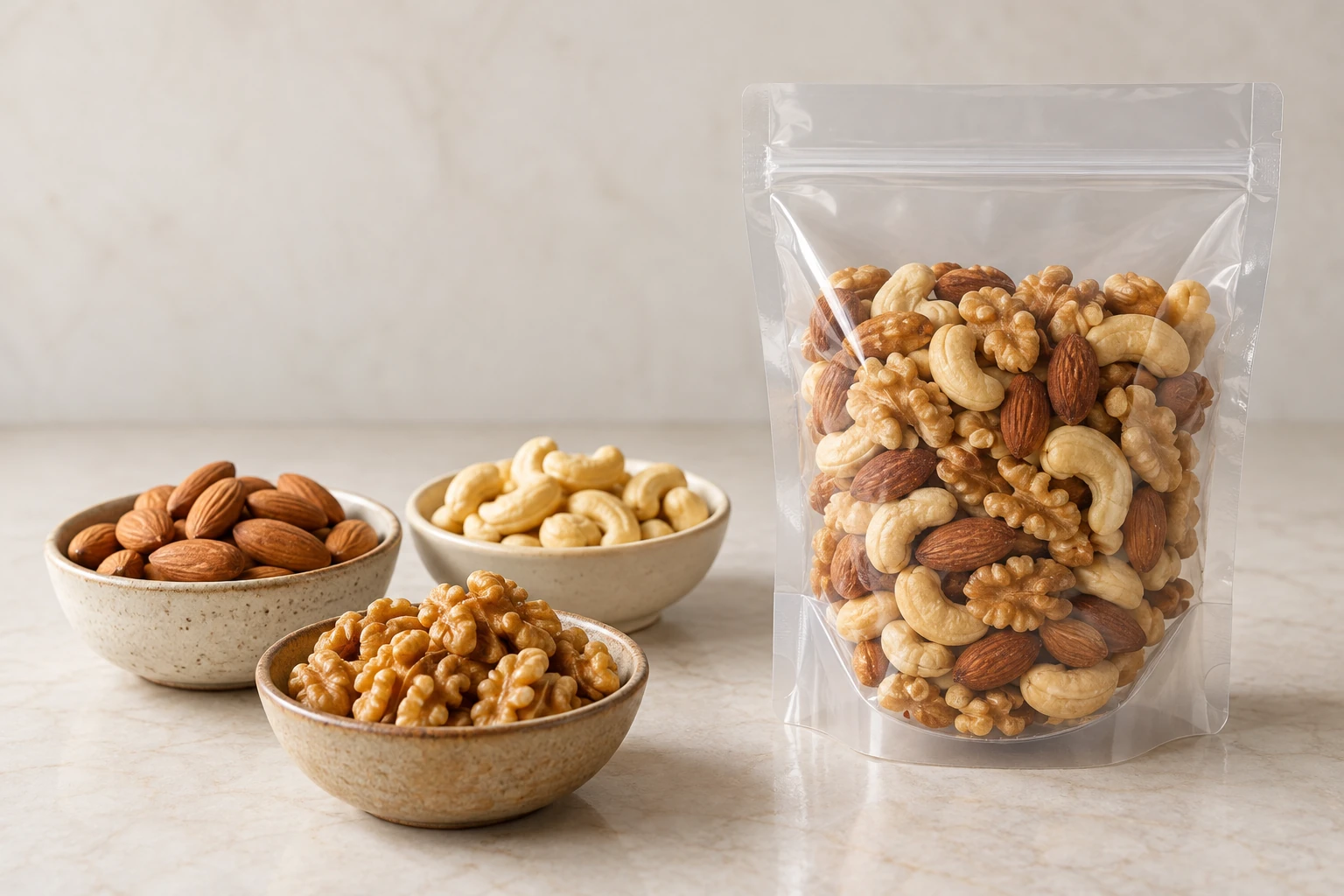
Separate almonds, cashews and walnuts beside a sealed pouch of their mixture
Separate ingredients and a finished mixed-nut pouch.

A mixed-nut pack may need a defined share of each ingredient as well as a target net weight.

  1. Define the recipe per pack
  2. Choose mixed or separate feeds
  3. Check composition and weight

Start with the acceptable share of almonds, cashews and other ingredients in each pack. If a premix separates during feeding, correct total bag weight can still hide the wrong ingredient proportions. Separate ingredient feeds and recipe dosing can address that task.

Check the proportions in individual packs as well as total net weight. Compare kernel condition before feeding and after bagging.

A new rice batch changes the cup result

Volumetric cup dosing unit beneath a feed hopper
A cup filler meters a volume. Check its resulting weights when the product supply changes.

The target weight stays the same, but bulk density can vary between rice batches.

  1. Keep cup volume unchanged
  2. Run the different batches
  3. Compare actual weights

Keep the cup setting unchanged while comparing representative batches, then measure the actual net weights. A repeatable batch difference may need a new cup setting. Variation within a batch can make direct weighing a better choice.

Use the resulting weight spread and required output to compare the methods. A fixed cup volume does not guarantee a fixed portion weight.

Combine dosing with the bag you need

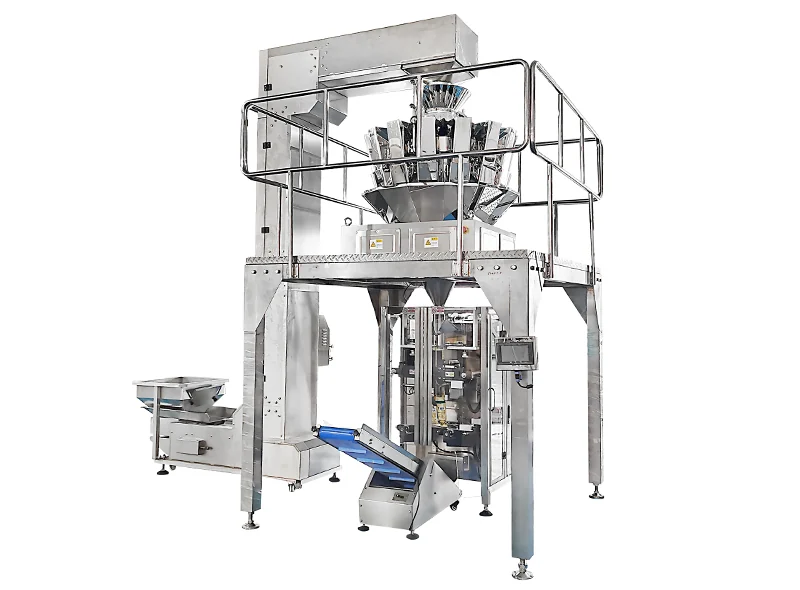
Elevator and multihead weighing above vertical bag forming and sealing equipment
Multihead weighing above a vertical bagger, with feeding and pack discharge.

Weighing and vertical bagging for retail packs

Rice, seeds, nuts and snacks in sealed bags made from roll film.

  1. Elevate the product
  2. Prepare a weighed portion
  3. Form and fill the bag
  4. Seal and discharge

The shown configuration uses an elevator, multihead weigher, support platform and vertical bagger. Product reaches the weighing hoppers, a selected portion drops through the forming tube, and the bagger closes the film around it. The discharge timing must leave the sealing area clear.

Cup dosing or direct weighing can feed a suitable vertical bagger too. Large pieces, fragile kernels and a heavier fill change the hopper outlets, drop path and bag support required.

See vertical bagging equipment
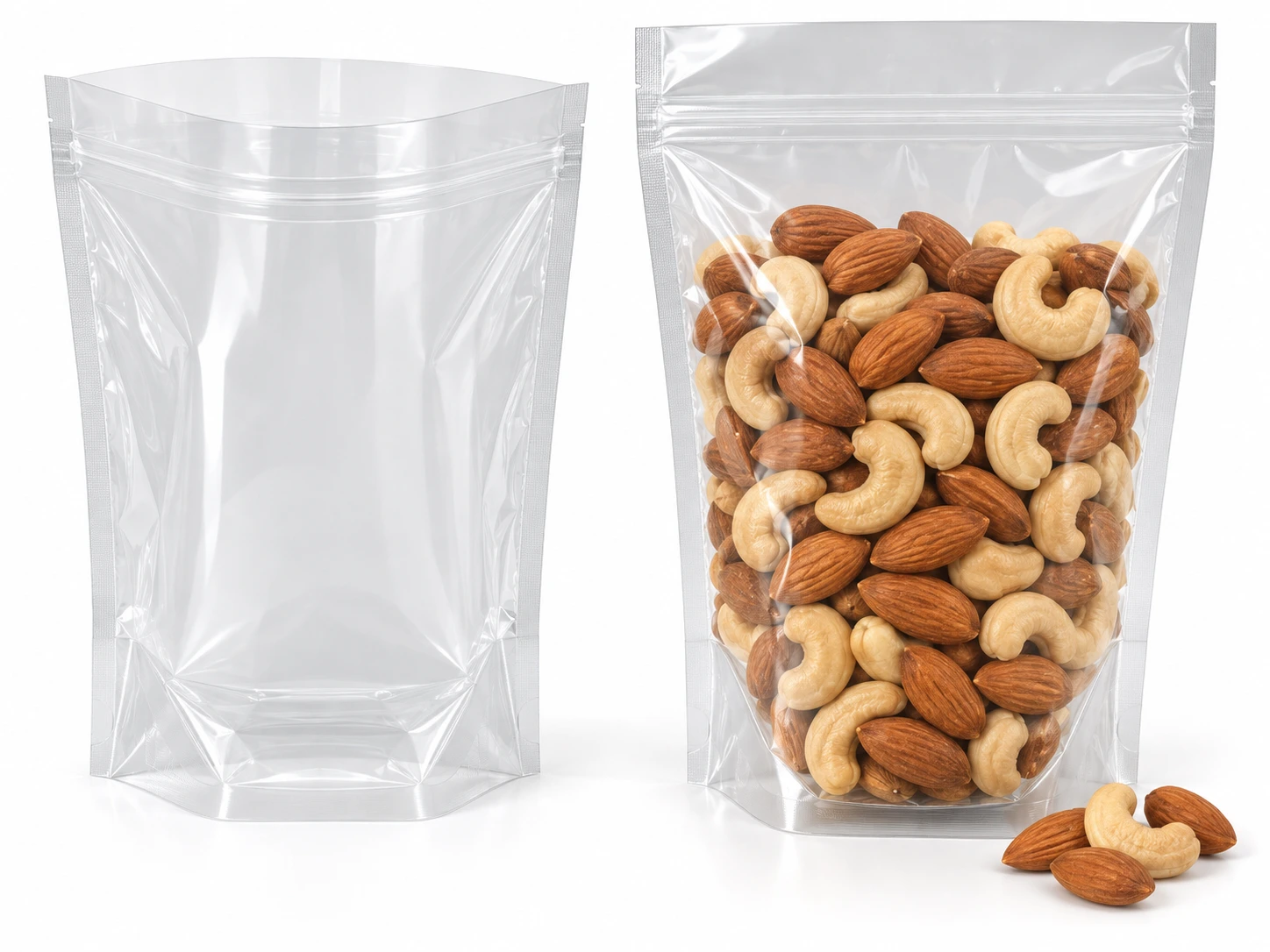
An empty supplied pouch and a filled resealable nuts pouch
A supplied standing pouch and the filled, top-sealed nuts pack.
Rotary pouch machine with gripper stations and a filling hopper
A rotary premade-pouch platform. The weighing unit is selected separately.

Granules in premade resealable pouches

For nuts and similar products using supplied standing or zipper pouches.

  1. Pick and open pouch
  2. Weigh the portion
  3. Fill through the pouch mouth
  4. Top seal

The weigher prepares a portion while the pouch machine takes and opens a supplied bag. A funnel guides the portion through the mouth; the pouch is supported while the product settles, then heat-sealed above the zipper.

Check the largest pieces against the open pouch mouth and funnel. Pouch dimensions, opening tools and seal clearance limit the formats that can share one setup.

Compare retail rice bags and pouches

Granules in single-portion sachets and sticks

Granulated sugar in flat sachets and narrow sealed stick packs
Flat sugar sachets and narrow sticks for single portions.

A cup or other suitable small-dose feeder supplies granulated sugar or salt to each forming lane. The sachet or stick machine forms the film, fills the portion and seals and cuts the pack.

For several lanes, compare the individual portions as well as total output. Feed distribution and product in the seal can differ between lanes. Read our sugar sachet and stick-pack guide for the format choices.

Protect the granules as they move through the machine

Product problemHow the configuration respondsWhat we compare in a trial
Nuts or snacks break during transferReview feeder action, hopper discharge, drop heights and restrictions at the filling tube.Product condition before feeding and in the finished pack.
Sticky products hang in hoppersSelect contact surfaces and discharge arrangements for the real product.Repeated releases and product left in the path.
Granules enter the sealing areaMatch portion discharge, settling time and usable bag volume.Filled bags and seals over a sustained run.

Match automation to the way you run the product

Production arrangementOperator workChangeover workHow to compare output
Dosing into operator-presented packsPresent and support each pack, move it to sealing and replenish product.Dosing settings, supports and cleaning between products.Include filling, handling and closure in the cycle.
Automatic weighing and baggingReplenish product and packaging, monitor the transfer and carry out checks.Contact parts where needed, bag tooling and first-pack approval.Count sealed packs that meet weight and product-condition limits.
Connected feeding and packingManage supply, machine stops and pack transfer across the connected equipment.Coordinate feeders, weigher, bagger and transfer settings.Measure sustained output with refills and normal interruptions included.

When lifting, feeding or moving finished packs is the constraint, we include those tasks in the packaging equipment and production-line plan. The bagger and weighing system are sized together.

From your sample to a working specification

Comwin turns your product and finished-pack requirements into an equipment recommendation. The proposal identifies the filling parts, package handling and output to be checked with your materials.

What we work throughWhat you receive
Product and packaging reviewA recommended equipment arrangement, with the required format parts and product-contact components.
Sample trialAgreed checks for fill quantity, pack condition and sustained output, with the test material and operating conditions identified.
Installation and changeoversA layout, utilities and access requirements, plus the parts and cleaning work involved in changing products.

Use our free sample-testing service to work through the product and packaging together. You can also arrange a factory visit to see equipment running.

Comwin provides a two-year machine warranty and a three-year warranty for core components, with remote response within 24 hours. Training, parts and installation responsibilities are set out in the proposal.

Granule packing questions

Do all granule packing machines need a multihead weigher?

No. Cup dosing or direct weighing may meet the product and output requirement. Combination weighing is selected when its dosing cycle and product handling suit the task.

Does a cup filler fill retail cups?

Here, a volumetric cup filler measures granules using a metering cup inside the dosing unit. A machine that fills and seals a retail cup container performs a different packaging task.

Does a linear weigher always use direct weighing?

Linear describes the equipment layout. Some linear systems use combination weighing. Compare how the stated machine measures and releases each portion.

Can one system pack rice and sticky nuts?

It may be possible with the appropriate feed, contact parts and settings. We assess release, breakage, cleaning and bag requirements for both products before defining the shared configuration.

Can a net-weight check confirm the mix ratio?

It confirms the combined weight. The ingredient proportions need their own acceptance check; some products require separate ingredient dosing.

What determines the granule packing machine price?

The dosing method, product handling, bag format, output and included equipment determine the quotation. An offer for a cup dosing unit has a different scope from a complete weighing and bagging system.

Can you assess heavy sacks or industrial granules?

Send the material and sack specifications. We review the feed, bag support, closing method and any special process requirements as a separate configuration.

Tell us what granules you need to pack

Send representative product, a finished-pack sample or photo, the target net weight and required output. We will recommend the dosing and bagging equipment, including the handling needed to protect the product.

Product

Particle size, flow, fragility, sticking and the products to share the equipment.

Pack

Bag or film sample, dimensions, closure and required presentation.

Portion

Net weight and tolerance, or a defined piece count; any ingredient ratio requirement.

Quality

Acceptable breakage, seal quality and checks needed.

Production

Output per minute or shift, batch sizes and changes between products.

Factory

Space and available height, utilities, hygiene needs and existing equipment.