Case Erecting, Sealing and Labeling Lines

Start with what arrives at the first station: a flat blank, a filled case with open flaps, or a closed case ready for its label.

Comwin matches opening, closing and labeling to the condition of the incoming case. Show us where your current equipment or operators load the case so we can plan the handoff.

    A flat corrugated blank, one open square case and a sealed case with a side label
    Flat blank, erected empty case, and labeled sealed case. Packaging illustration.

    Start at the point where cases enter your line

    A regular supply of flat blanks and a stream of filled cases call for different equipment.

    What you need to packFinished resultEquipment to assessWhat changes the choice
    Flat corrugated blanks in a repeat sizeSquared, bottom-closed empty caseCase erector and transfer to loadingScore quality and bottom closure
    Filled case with open top flapsSealed caseCase sealerFilled weight, size sequence, flap and tape condition
    Closed case ready for labelingCorrect label in the agreed positionOrientation, labeler and any required verificationFixed or variable data, flat face and failure action

    Flat blanks: erect and present empty cases

    For flat corrugated blanks that need to reach the loading station square and ready to fill.

    1. Pick flat blank
    2. Open and square case
    3. Close case bottom
    4. Present case to loader

    A case erector removes repeated lifting and folding from the packing station. For regular case sizes, set the magazine, guides and bottom closure so the case can be supported while the product is lowered or inserted.

    Trial blanks from production stock. Bowed blanks and weak scores can change how cases square and can interrupt loading. Specify who loads the contents at the next station.

    See automatic case erectors for the flat-blank stage.
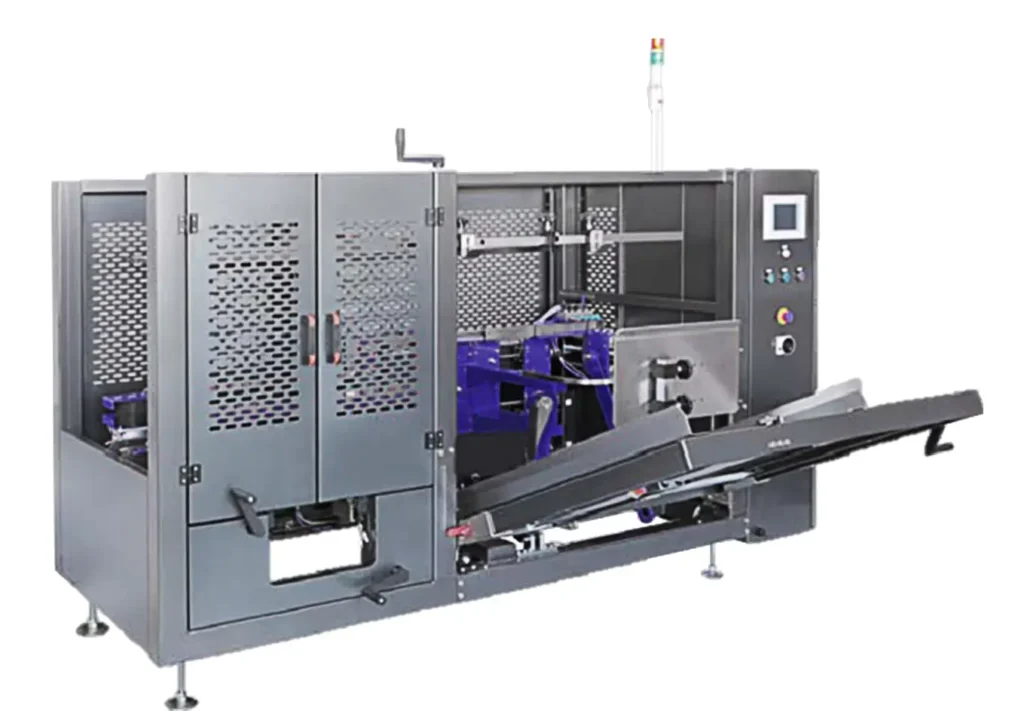
    Guarded case erector with a corrugated blank feed magazine
    A case erector presents flat blanks one at a time for opening and bottom closure.

    Filled cases with open flaps: seal the top

    For loaded cases that reach the station with the top still open.

    1. Receive loaded case
    2. Square and guide the flaps
    3. Close and seal the top
    4. Pass the closed case downstream

    Size the case sealer for the filled weight and flap condition. Support the case as it passes through the closing section so the top flaps align before tape is applied.

    A batch of one size can use a repeat setup. Test a configuration intended for mixed heights with the real order of cases and the shortest gap. Agree how the station adjusts between cases.

    Compare automatic case sealing machines for the full-case stage.

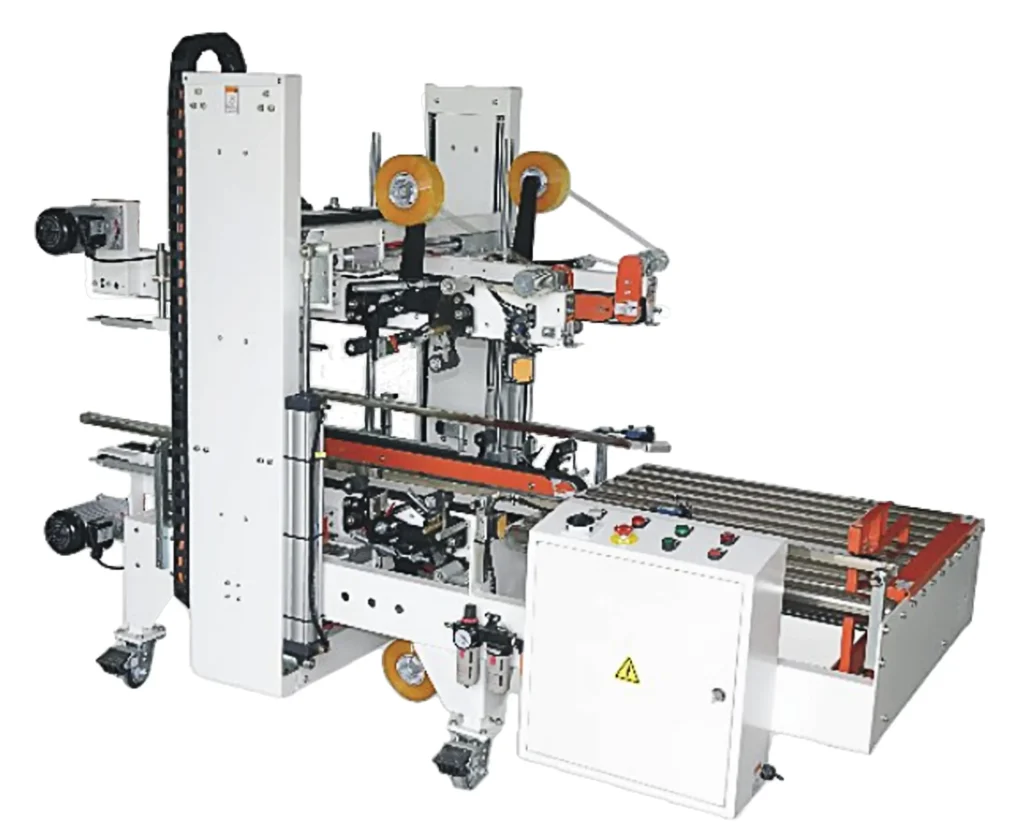
    Case sealing platform with drive belts and a tape head
    Case sealer platform. Trial the heaviest case and the upper flap geometry before choosing the closing tools.

    Closed cases: apply and check the label

    For a sealed case that needs a fixed or variable label on a defined face.

    1. Identify case recipe
    2. Apply correct label
    3. Read from agreed face
    4. Release or hold case

    Choose a fixed location with enough flat area for the label. A preprinted label can work for one message. Variable shipment data may need print-and-apply with the job data handed over from the line or site system.

    Show what happens on a missing label, wrong case identity or unreadable symbol. Agree whether a failed case is held, diverted or stops the line.

    Use inline barcode reading and verification to specify how the applied label is checked.

    Taped top seam and an applied label on the flat side of a closed corrugated case
    Keep the case label on a flat face clear of the tape seam. Label placement illustration.

    Keep cases square through handling

    Well-formed cases are easier to load, seal and identify at dispatch. Use the flat blank and the fully loaded case during the review.

    Catalog case-handling arrangement with linked conveyors and machine platforms
    Case handling and conveyor arrangement. The loading step and label station depend on the existing site and case specification.
    Remove repeated manual handling
    Form consistent empty cases in line with demand. If the loader stops, define how many empty cases can wait and where.
    Avoid lifting tape and skewed labels
    Keep upper flaps level and reserve a flat label area away from the tape seam. Check placement on the smallest and largest filled cases.
    Keep the case count correct at closing
    Define the handoff from loading. Verify closure and label at the end of a run that includes a size change.

    Choose how cases change between jobs

    Use actual blanks from regular suppliers. Changing to a different board or case construction can affect feeding even when the outside dimensions are the same.

    Production setupWhat operators doChangeover and interfacesWhat to prove in a run
    Repeated size or batch runsFill the blank and tape supply, and adjust the guides at size change.Agree known positions for the new box and label.Test bottom and top seam and the first correct label after the size change.
    Mixed sizes at the closing stepReplenish material and clear rejected cases as assigned.Use compatible size sensing or grouped runs. Confirm the label data follows the correct case.Run alternating formats and show the response to a jam and restart.
    Connect to automatic case loadingMonitor the agreed case buffer and replenish board.Set line height, direction and full-case stop signals.Verify cases remain square and correct counts reach closure.

    Compare quotes at the same case handoff

    Start each enquiry with the flat and loaded specimens. Compare routing and installation responsibility as well as the machines.

    CompareWhat to agree with ComwinWhat to match in other offers
    Supply scopeMark case erection, loading, sealing and labeling on the drawing. Identify whether loading remains with operators, uses existing equipment or is included in the proposal.Check included belts, controls and verification.
    OutputSpecify the required good cases per hour and mix.Use the same case distribution in the run.
    Change formatsList corrugated construction, guides, tape and label formats.Check manual adjustments and sensor or recipe needs.
    SupportSet training, consumables access and support across the loader interface.Agree who diagnoses jams and label data issues.
    DeliveryDefine floor area, travel direction and utility connection points.Verify site trials for filled cases, size change and labeling.

    Case handling questions

    Does the case erector also load the contents?

    The erector presents an open case at the loading point. Your operator or case packing machine supplies the contents before the top closes.

    Can we keep our filling and case packing operation?

    Yes, if the filled case arrives in a stable orientation and with enough spacing. We review the height, load and stop signals at that handoff.

    Show us what reaches the first station

    Include your target cases per minute if known. If you are adding several stations, start with the first one that needs equipment.

    Flat blanks for case erecting

    Send first
    Send a flat blank or its drawing and the erected case dimensions. If you run more than one size, include the smallest and largest.
    What Comwin checks
    Blank pickup, squaring, bottom sealing and handoff to the loading station.

    Filled cases for top sealing

    Send first
    Send loaded case dimensions and weight, plus a photo showing how the top flaps arrive. Tell us if sizes change by batch or between consecutive cases.
    What Comwin checks
    Case support, guide adjustment and flap closing for the case sizes you run.

    Closed cases for labeling

    Send first
    Send a case photo with the label face marked, a sample label or artwork, and the fixed or variable data it must carry.
    What Comwin checks
    Case orientation, label application and any required check after the label goes on.