Allow roughly US$5,000–25,000 for an operator-loaded flow wrapper. A defined section that spaces and transfers prepared spools into the wrapper has a US$12,000–35,000 planning range. Winding, measuring ribbon length and fixing loose tails are separate preparation tasks.
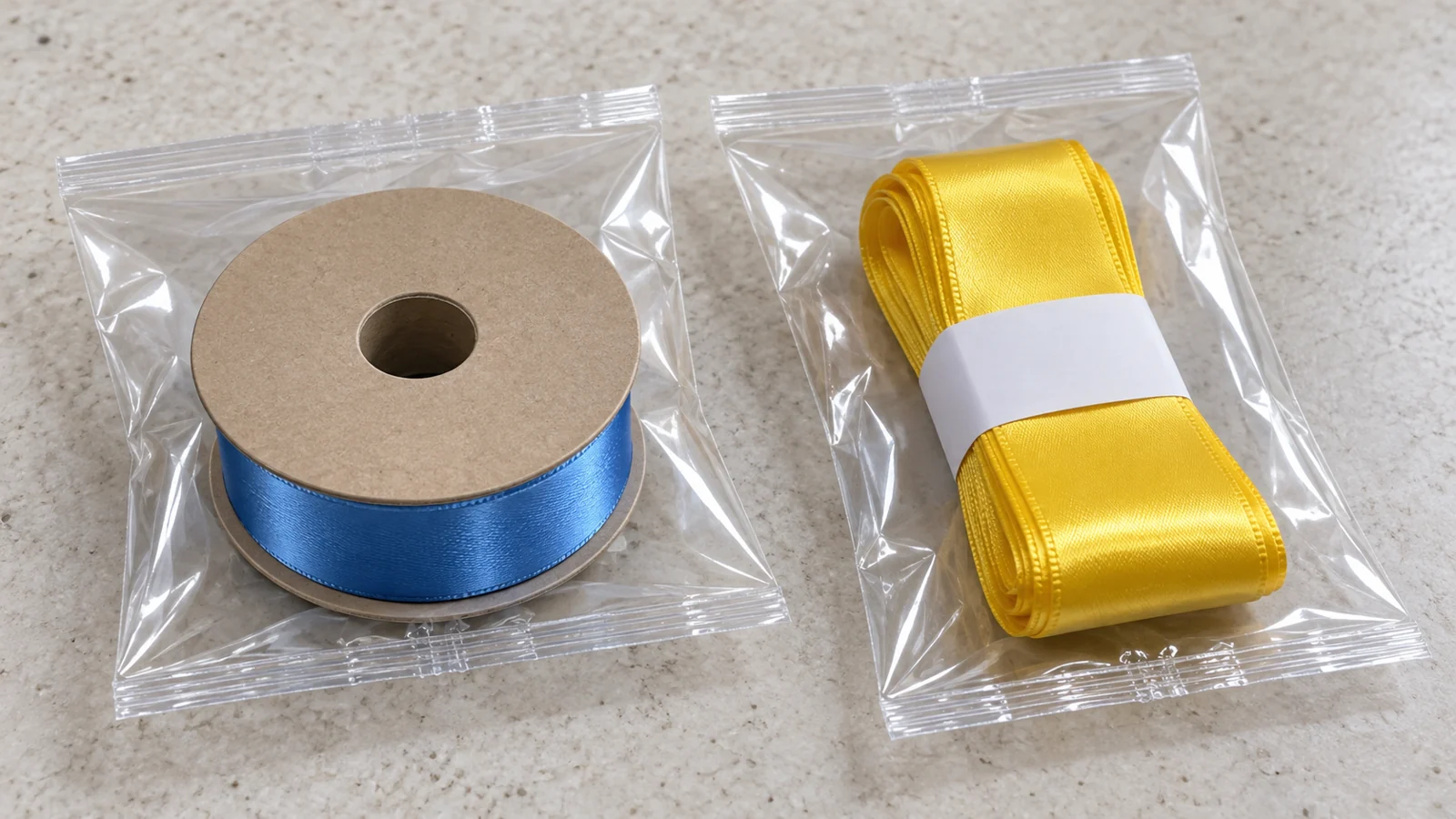
Start with the spool or folded bundle
| Product entering the wrapper | Support to assess | Prepared state |
|---|---|---|
| Rigid ribbon spool | Contact at suitable flanges, with clearance around the wound ribbon. | Tail held flat and clear of the film path. |
| Folded ribbon bundle | Support beneath the bundle and restraint that keeps folds together. | Ends aligned; band or other approved restraint already applied. |
If the ribbon opens during transfer
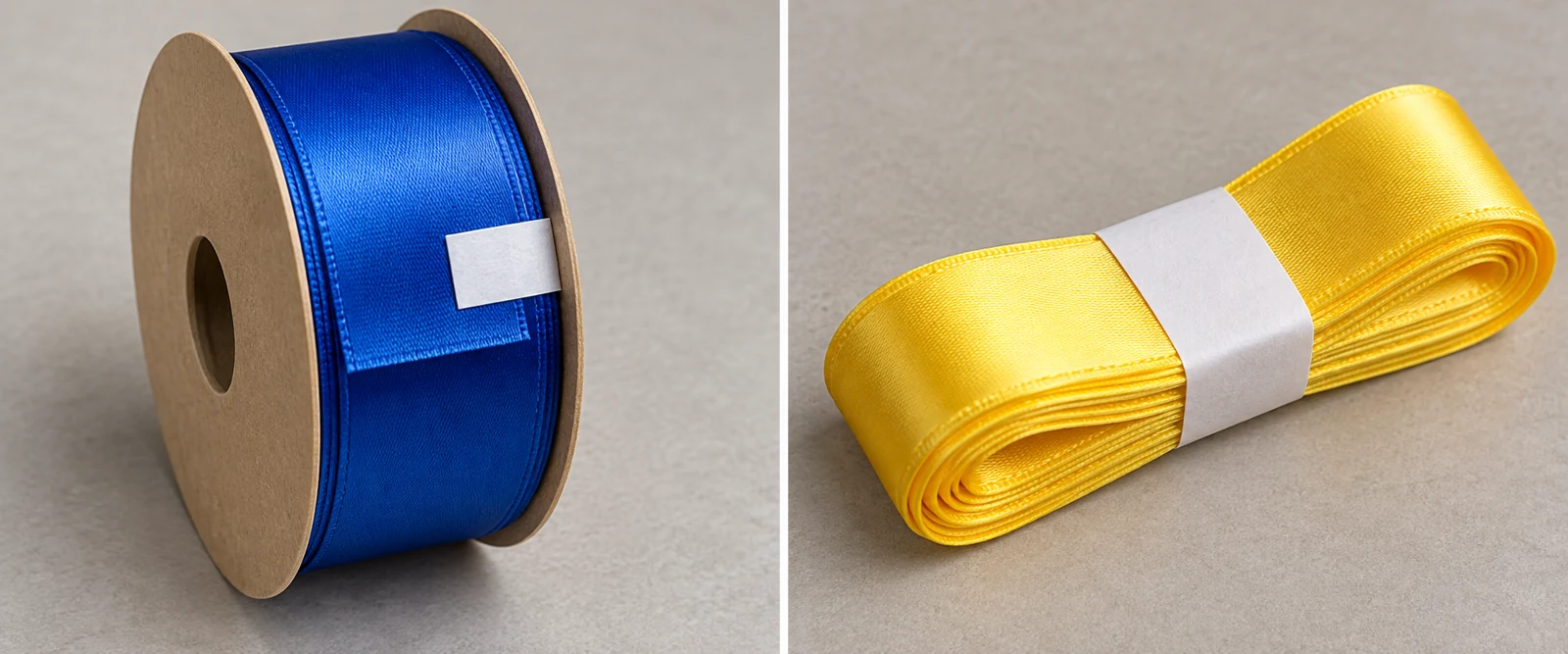
First add a suitable preparation step. That may be a retaining tab, band or another restraint compatible with the ribbon. Identify whether it is applied upstream, manually beside the wrapper or by additional equipment. The illustrated tab shows the required retained state; its adhesive still needs an appearance check on the actual ribbon.
Keep the ribbon face and edges presentable
Where a spool has firm flanges, use those surfaces for support when the geometry allows it. Keep guide contact away from the satin face and keep the tail inside the product profile. Peel off a sample retaining tab after packing and check for residue or a pulled surface.
For a folded bundle, inspect the band contact and the outer folds. A band tight enough to hold the shape may still leave an unacceptable crease. Compare the same bundle before transfer and after opening its bag, including the face, fold edges and retained ends.
Choose feeding around the orders you run
Changing from a spool to a folded bundle
| Changeover step | What changes |
|---|---|
| Support and contact | Replace flange-based guidance with support beneath the bundle; keep the retaining band clear of interference. |
| Film path | Check the full width and height of the restrained bundle, then select compatible film width and forming setup. |
| Bag length and spacing | Leave the ends clear of both transverse seals and prevent the bundle opening between infeed positions. |
| First packs | Open them and compare the ribbon face, edges, folds and restraint with the unpacked sample. |
A saved setting can recall an adjustment, but cannot replace a different physical support. For short varied orders, an operator-loaded infeed can accommodate prepared products while the wrapper repeats forming and sealing.
A repeated spool order
Example: prepared spools supplied in a fixed orientation
1. Manual replenishment
Operator places tail-secured spools into the specified supply position.
2. Spacing and transfer
Equipment releases and moves spools at the required pitch.
3. Form and seal
The wrapper encloses each supported spool.
4. Discharge
Closed bags leave for collection.
The equipment spaces and transfers the prepared spools. Operators replenish the supply position and film.
Ribbon wrapping budgets and remaining manual work
| October 2026 planning allowance | Reference task | Operator work |
|---|---|---|
| US$5,000–25,000 Operator-loaded wrapper | One approved prepared spool, compatible infeed, film forming, sealing and discharge. | Place each spool on the infeed, replenish film and collect output. |
| US$12,000–35,000 Prepared-spool spacing and wrapping | The same spool, supplied in a fixed orientation; specified release, spacing and supported transfer, plus the wrapper. | Replenish the defined supply position and film; perform stated interventions. Tail is already secured. |
Both are conditional planning ranges for new China-supplied equipment and one compatible spool/film format. The second price adds the spacing and transfer task shown above. A bundle or substantially different spool needs its own support and feed review.
Winding, ribbon-length measurement, tail fixing, complex mixed sets and cartoning are separate. Freight, taxes and overseas installation are additional unless listed. The ranges do not establish an output rate or a capability for every spool diameter.
The outer-bag operation
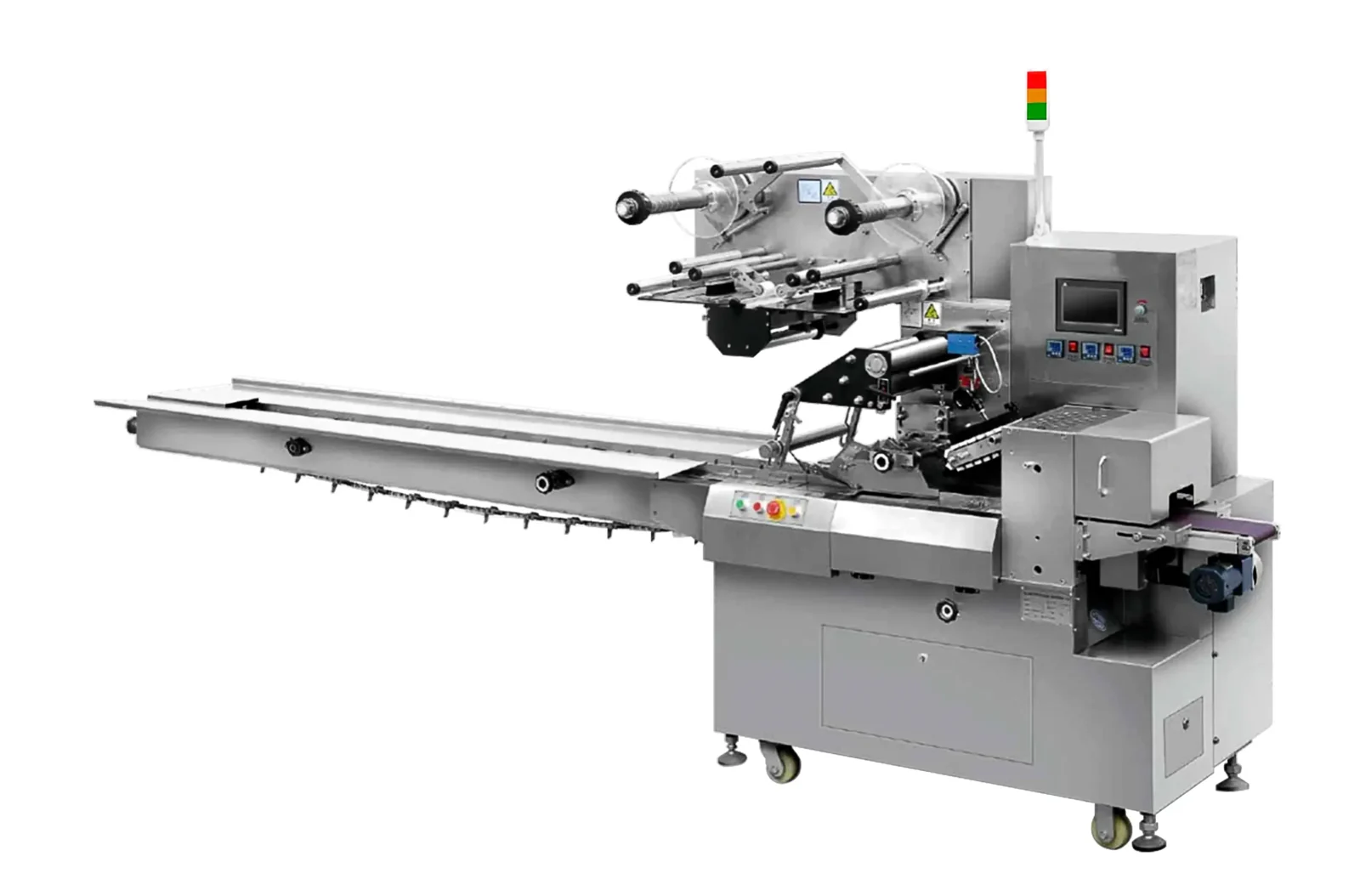
The horizontal flow wrapper forms and seals the bag around the prepared product.
Count finished packs over the available shift
An illustrative requirement of 1,800 single-spool packs per hour equals 30 bags per minute. Three spools per bag would require ten bags per minute, while feeding and grouping still handle 30 spools. Use the time actually available after changes and replenishment when matching the equipment.
During the agreed run, record packs with trapped tails, opened folds, marked ribbon or damaged flanges. Then open representative bags and inspect the product again. The result should reflect the appearance customers receive, as well as the number of sealed bags.
Where storage moisture protection is required, film and package performance need their own specification. A tidy transparent bag alone does not establish that protection.
Send the ribbon in its incoming condition
Share the spool or folded bundle with Comwin, including its present restraint, desired bag and batch pattern. We can identify the contact surfaces, format changes and preparation needed alongside wrapping. This guide concerns finished textile ribbons; coding-ribbon printers and winding machines perform other operations.
Comwin offers free sample testing, a two-year machine warranty and a three-year warranty for core components. Remote support responds within 24 hours; installation and training are specified in the proposal.