
1. Introduction: The Powerhouse Engine Behind Our Devices
At Comwin, we do more than describe lithium battery pack assembly—we are a dedicated supplier of battery pack assembly equipment and a solutions partner.
From smartphones to Tesla’s electric vehicles, an intelligent energy system powers their remarkable endurance. Engineers carefully build this system from hundreds or even thousands of individual lithium-ion batteries (cells).
Battery Pack Assembly is the core technology that transforms these tiny cells into a reliable “power heart.” This article from Comwin will detail the entire lithium battery pack assembly process, a key stage in modern battery manufacturing processes.
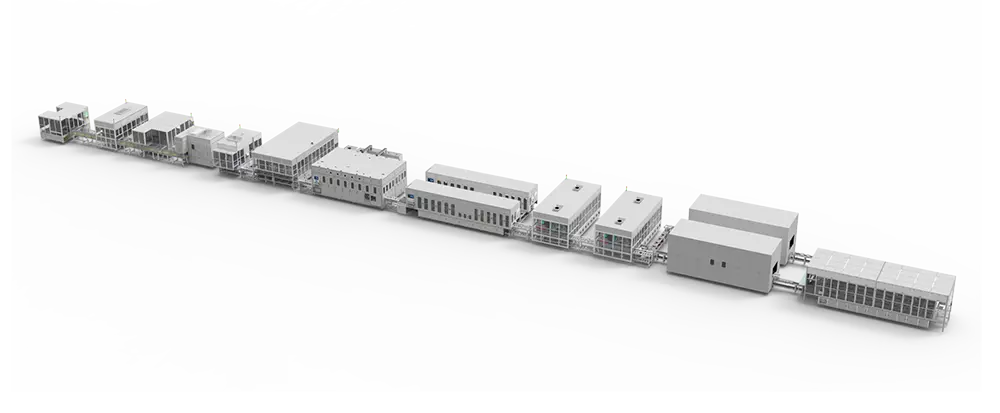
2. What is Battery Pack Assembly? A Core Definition
Core Definition: Battery Pack Assembly is a multi-stage manufacturing process. In this process, technicians electrically connect individual battery cells, secure them mechanically, and integrate them with a thermal management system and an intelligent Battery Management System (BMS). This creates a complete unit capable of delivering stable electrical energy.
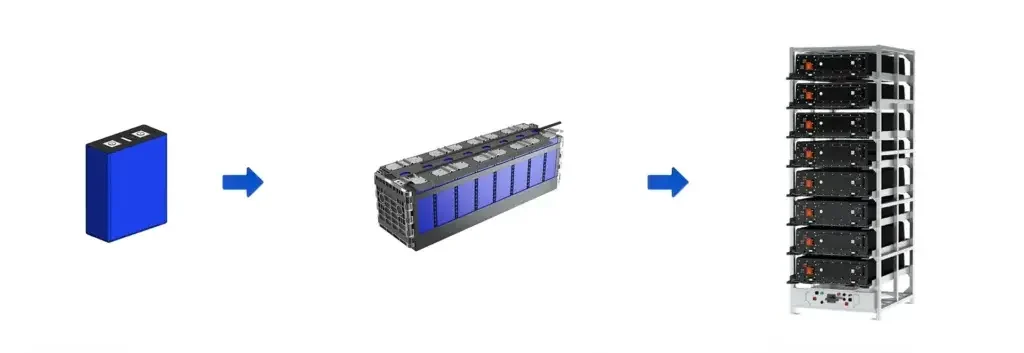
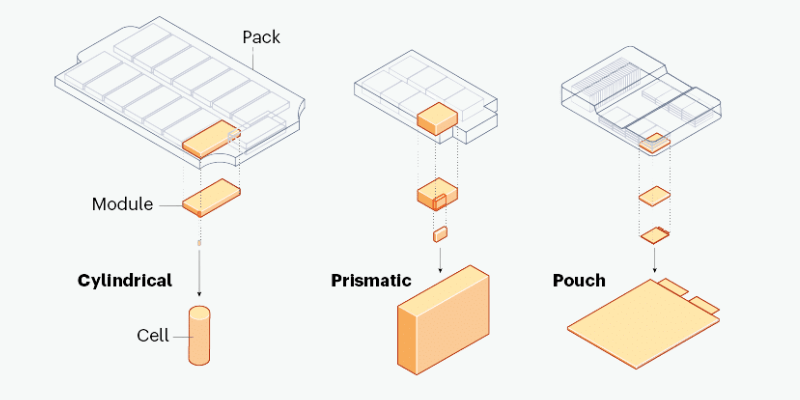
Analogy: Think of it like building a detailed castle with LEGOs. The cells are the basic bricks. The assembly process combines structural design (arranging each battery module), connection technology (like laser welding to prevent short circuits), and an intelligent control system (the BMS). Together, they build a powerful and reliable energy solution.
The Goal: To overcome the limits of single cells and achieve a performance increase and system-level safety control, ensuring the final pack is reliable and robust.
3. Why is Professional Battery Pack Assembly So Critical?
| Aspect | Benefit of Assembly | Industry Example |
|---|---|---|
| Boosting Performance | It creates custom voltage, capacity, and discharge rates through precise connections, meeting diverse power demands. | Tesla’s 4680 battery pack optimizes assembly to significantly boost energy density. |
| Safety Assurance | A quality manufacturing process with strict quality control is designed to prevent short circuits. The BMS and thermal systems work together to manage high temperature. | A precise Battery Management System (BMS) is key to preventing fires caused by faults in lithium-ion batteries. |
| Longevity & Reliability | Careful cell screening and a strong mechanical design extend the cycle life and ensure consistent battery performance over thousands of charge and discharge cycles. | Leading power battery suppliers (e.g., CATL) offer warranties of 8 years or more on their assembled packs. |
4. Anatomy of a Battery Pack: Core Components in Lithium Battery Assembly Line
Battery Cells & The Battery Module Structure
A cell is the foundation of any pack. It converts chemical energy into electrical energy as ions move between an anode and cathode. These electrodes are made from carefully selected active materials mixed with conductive additives to maximize performance. Manufacturers then group these cells into a larger structure called a Battery Module. This modular approach is key to large-scale battery pack assembly.
The Battery Management System (BMS) – The “Intelligent Brain”
No modern lithium battery assembly is complete without an advanced Battery Management System (BMS). Its main role is to ensure top battery performance and safety.
- ✅ State Monitoring: Accurately estimates SOC (State of Charge) and SOH (State of Health).
- ✅ Cell Balancing: Balances cells within each battery module to resolve differences.
- ✅ Safety Protection: Actively works to prevent short circuits, over-current, and operation at dangerously high temperature.
- ✅ Data Communication: Interacts with other system components via CAN/LIN bus.
Electrical Connections & Thermal Management
- Connections: High-conductivity nickel strips and busbars connect cell terminals. Laser welding is the preferred method in high-end battery pack assembly. It creates low-resistance, reliable connections that help prevent short circuits.
- Thermal Management: Systems like liquid cooling are critical for removing heat. Uncontrolled high temperature is a leading cause of early aging and safety incidents in lithium-ion batteries.
5. The 5-Step Battery Pack Manufacturing Process
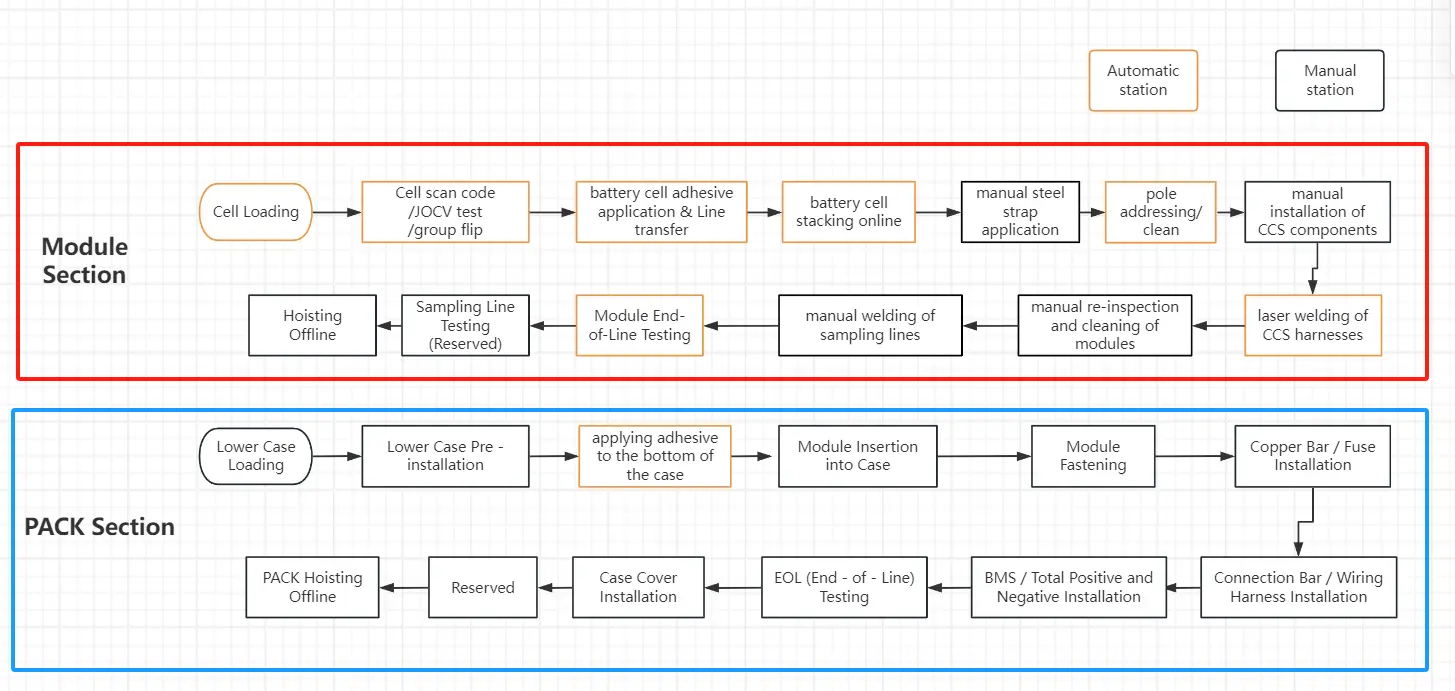
Step 1: Cell Screening and Sorting
The first step in the lithium battery journey is ensuring all cells are perfectly matched. This initial quality control check prevents imbalances that would otherwise lower overall battery performance and lifespan.
Step 2: Battery Module Assembly (The Core Process)
This process involves physically and electrically joining individual cells to form a strong battery module. The core of this stage is the actual cell assembly.
- Cell Stacking: Automated equipment carefully places cells into module holders.
- Electrical Connection: High-speed laser welding robots connect the cell anode and cathode terminals to busbars.
- Module Fixation: Technicians secure the cell group to withstand vibration and thermal expansion.
Step 3: BMS Integration and Wiring
Technicians install the Battery Management System (BMS) slave board and temperature sensors onto each battery module for precise monitoring and control.
Step 4: Final Pack Assembly and Integration
Assemblers install all completed battery modules, the master BMS, and other systems into the final pack housing. This step in the manufacturing process often includes sealing for environmental protection.
Step 5: Final Quality Control – Performance and Safety Testing (EOL Testing)
Before shipping, we must thoroughly test every battery pack. This final quality control step, known as End-of-Line (EOL) testing, checks both safety and battery performance. It includes insulation checks, capacity verification, and functional tests of the Battery Management System (BMS).
Battery Pack Assembly Line Types
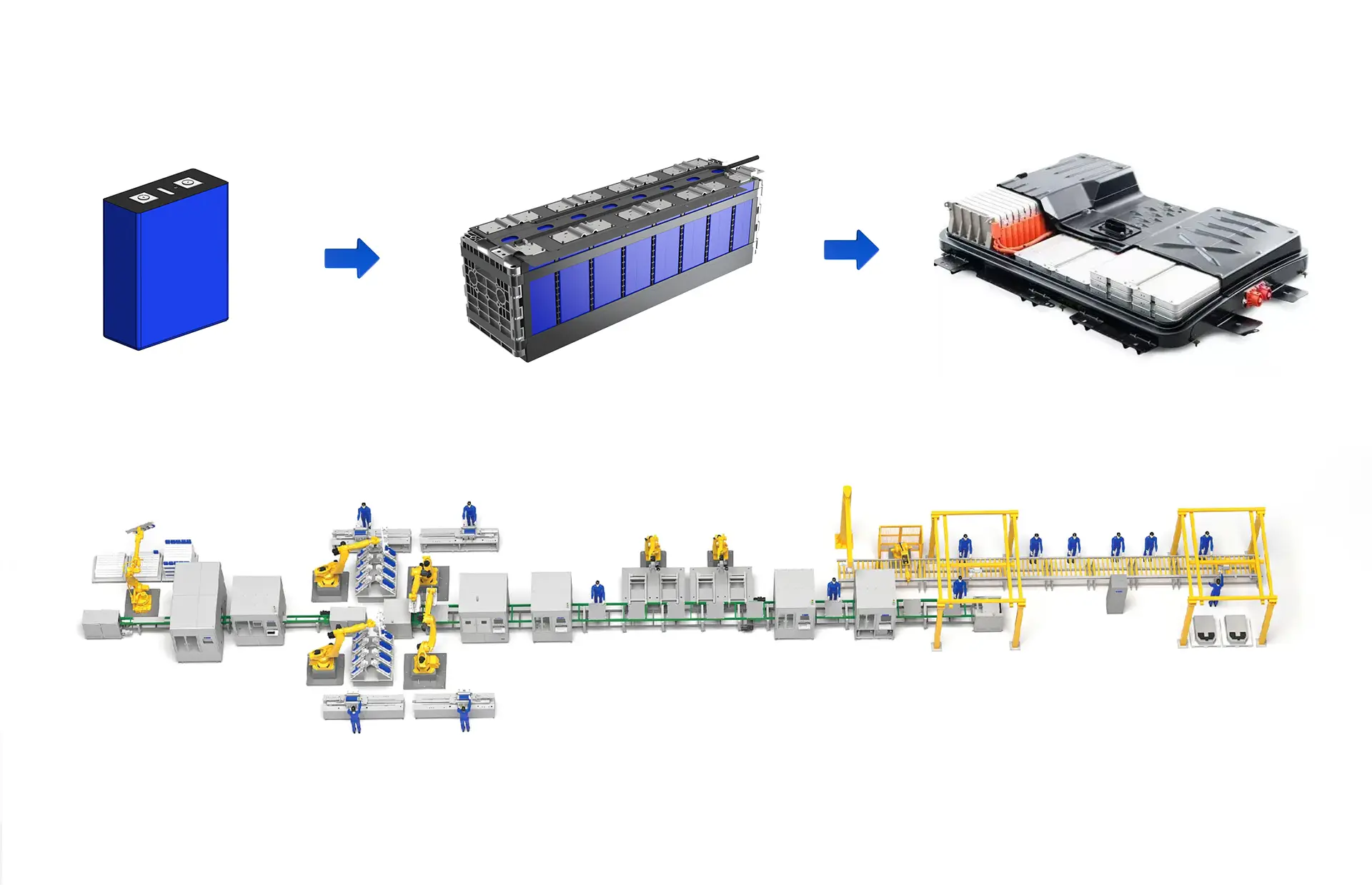
Prismatic Battery Pack Assembly Line
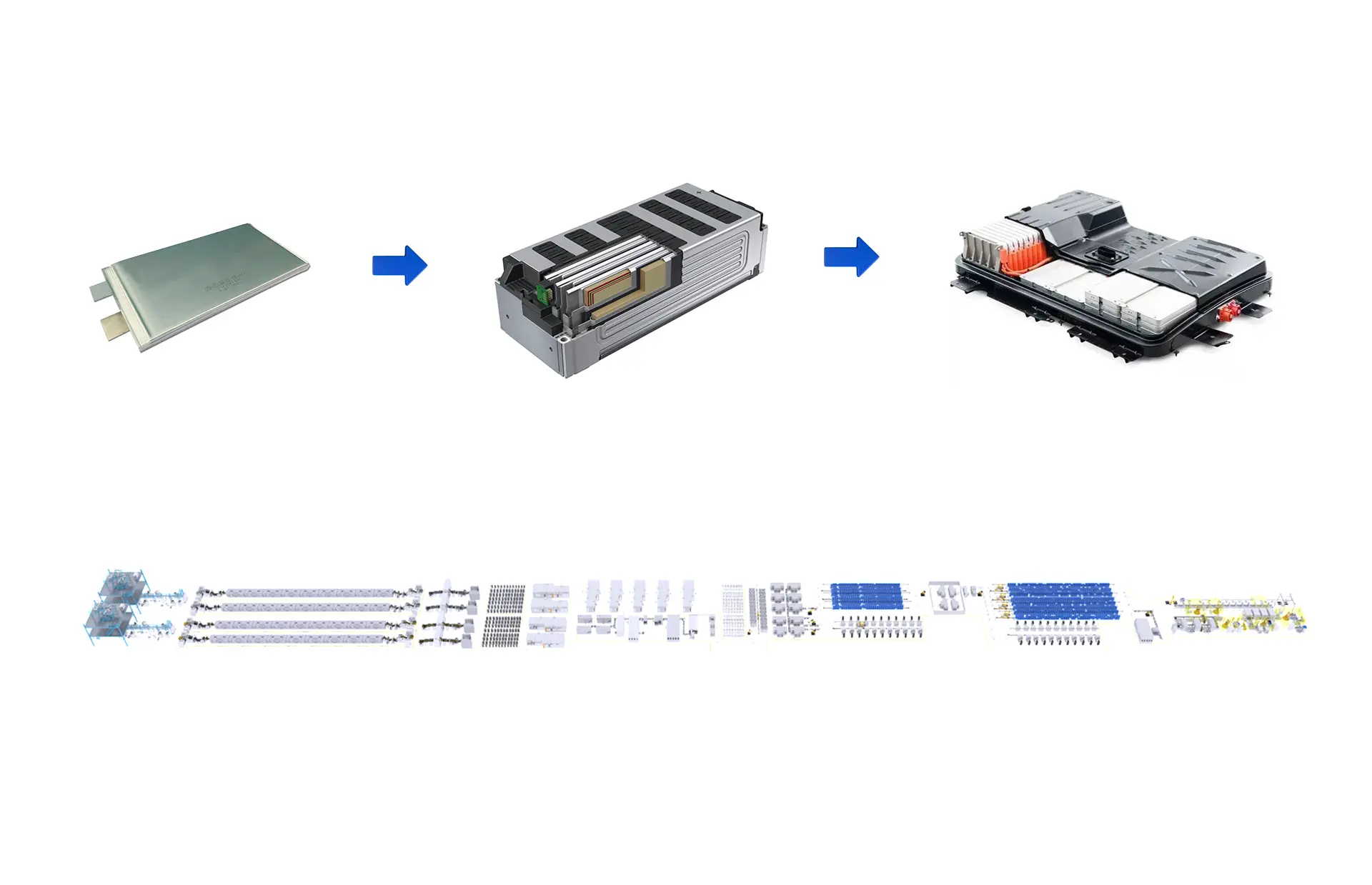
Pouch Battery Pack Assembly Line
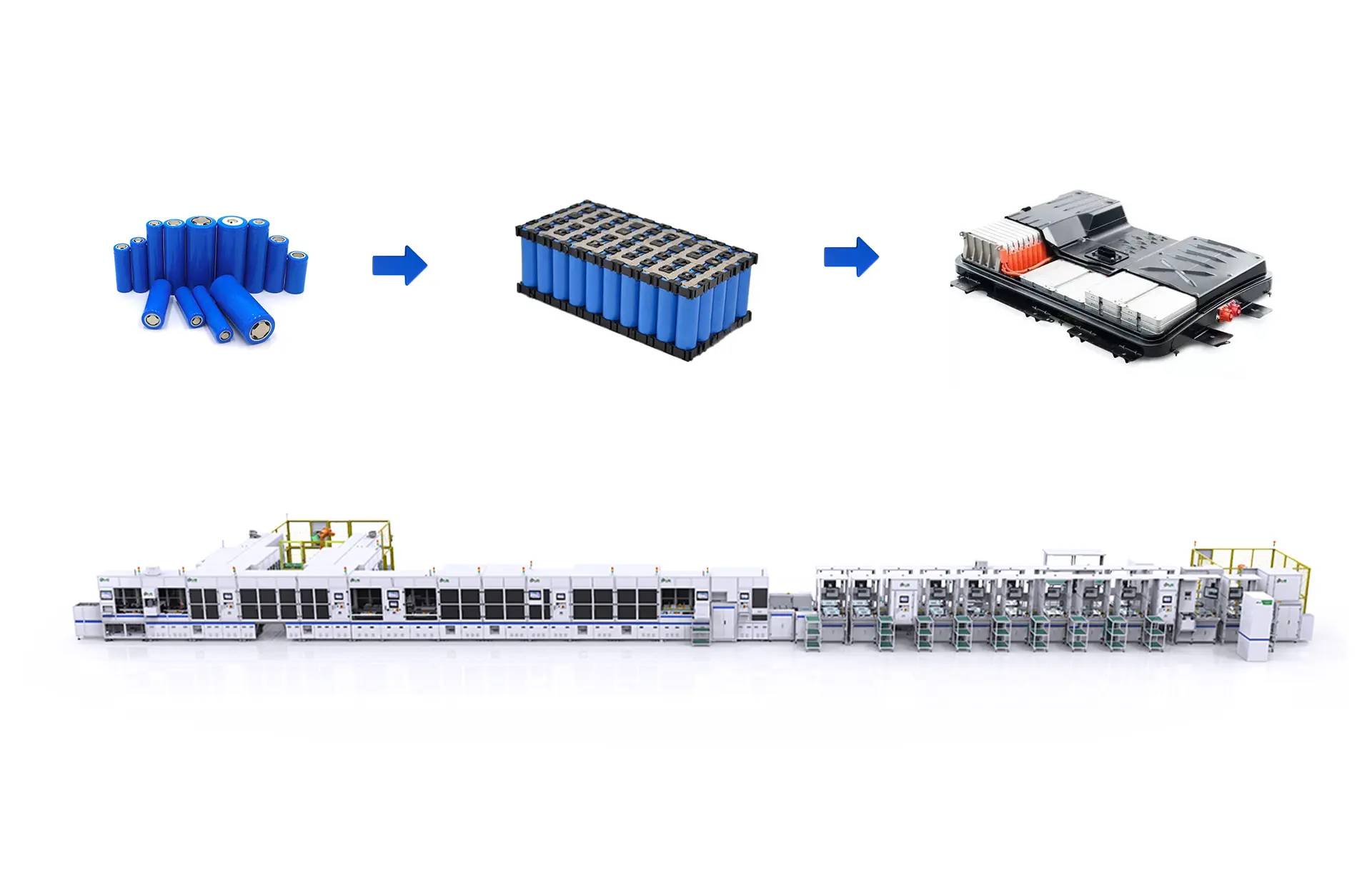
Cylindrical Battery Pack Assembly Line
6. Applications of Modern Battery Pack Assembly line
Professional battery pack assembly is the key technology behind devices that need specific performance traits:
- Electric Vehicles (EVs): Where high energy density and safety at high temperature are top needs.
- Energy Storage Systems (ESS): Focusing on long lifespan and reliability over thousands of charge and discharge cycles.
- Consumer Electronics & Power Tools: With a focus on a high discharge rate in a lightweight, compact design.
7. Future Trends in Lithium Battery Pack Assembly Lines
- CTP/CTC Technology: Cell-to-Pack technology streamlines the manufacturing process by removing the traditional battery module step.
- Wireless BMS: Simplifies the battery pack assembly process by reducing complex wiring harnesses, which lowers potential points of failure.
8. Conclusion: The Precision Science of Energy Systems
Ultimately, Battery Pack Assembly is a complex field that combines many subjects. As the world electrifies, a high-quality and safe process for assembling lithium-ion batteries—controlled by a smart Battery Management System (BMS)—is critical for achieving top battery performance and reliability. This is the cornerstone of all modern battery manufacturing processes.
Call to Action (CTA): If your project requires a professional custom battery pack solution, or if you wish to learn more about the latest battery pack assembly processes, we invite you to connect with our team of technical experts.
9. Frequently Asked Questions (FAQ)
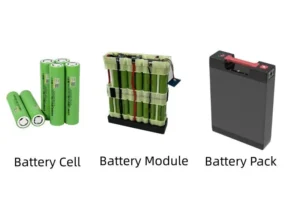
Q1: What is the difference between a cell, a battery module, and a pack?
- Cell: The smallest individual unit of a lithium-ion battery, containing an anode and cathode.
- Battery Module: A middle unit where cell assembly has formed a group of cells with wiring and basic structural parts.
- Pack: The complete energy system, containing multiple modules, a master Battery Management System (BMS), and a casing.
Battery Pack vs. Battery Module: A Complete Guide to the Key Differences
Q2: Can I perform lithium battery assembly myself?
⚠️ Strongly Not Recommended. The professional manufacturing process uses specialized equipment to ensure quality and prevent short circuits. DIY assembly carries a serious risk of poor connections, overheating, fire, and explosion.
Q3: What are the main cost drivers in battery pack assembly?
- Cell Cost (approx. 60%-70%): The technology, brand, and cost of raw materials for the lithium-ion batteries.
- BMS System (approx. 10%-15%): The complexity and features of the Battery Management System (BMS).
- Structure & Thermal Management (approx. 15%-20%): The cost of the casing and cooling systems needed to manage high temperature.
Q4: Why is the Battery Management System (BMS) so essential?
The Battery Management System (BMS) is the pack’s guardian. It is the most critical line of defense, actively working to maintain ideal battery performance and prevent safety incidents by managing current, voltage, and high temperature.
Q5: What about the environmental impact of these manufacturing processes?
The environmental impact is a significant consideration. Reputable manufacturers focus on responsible sourcing of raw materials, reducing energy consumption during assembly, and designing packs for easier end-of-life recycling. This minimizes waste and promotes a more sustainable battery lifecycle.