
A tea packing machine can mean four very different systems: a rectangular filter tea bag machine, a double-chamber tea bag machine, a pyramid tea bag machine, or a vertical machine that packs loose tea, chai patti or tea powder into retail pouches. Their prices cannot be compared until the finished package, tea characteristics, dosing method, outer envelope, target output and downstream automation are defined.
As a practical planning guide, basic published supplier listings for filter tea bag machines begin at about US$3,950, while public examples with outer envelopes commonly reach roughly US$9,500–25,000. Published pyramid systems span about US$11,500–31,180 across different configurations and order terms. A conventional vertical retail-pouch system is typically budgeted separately at US$5,000–30,000 in our project reference. These are planning references, not a quotation or a market average.
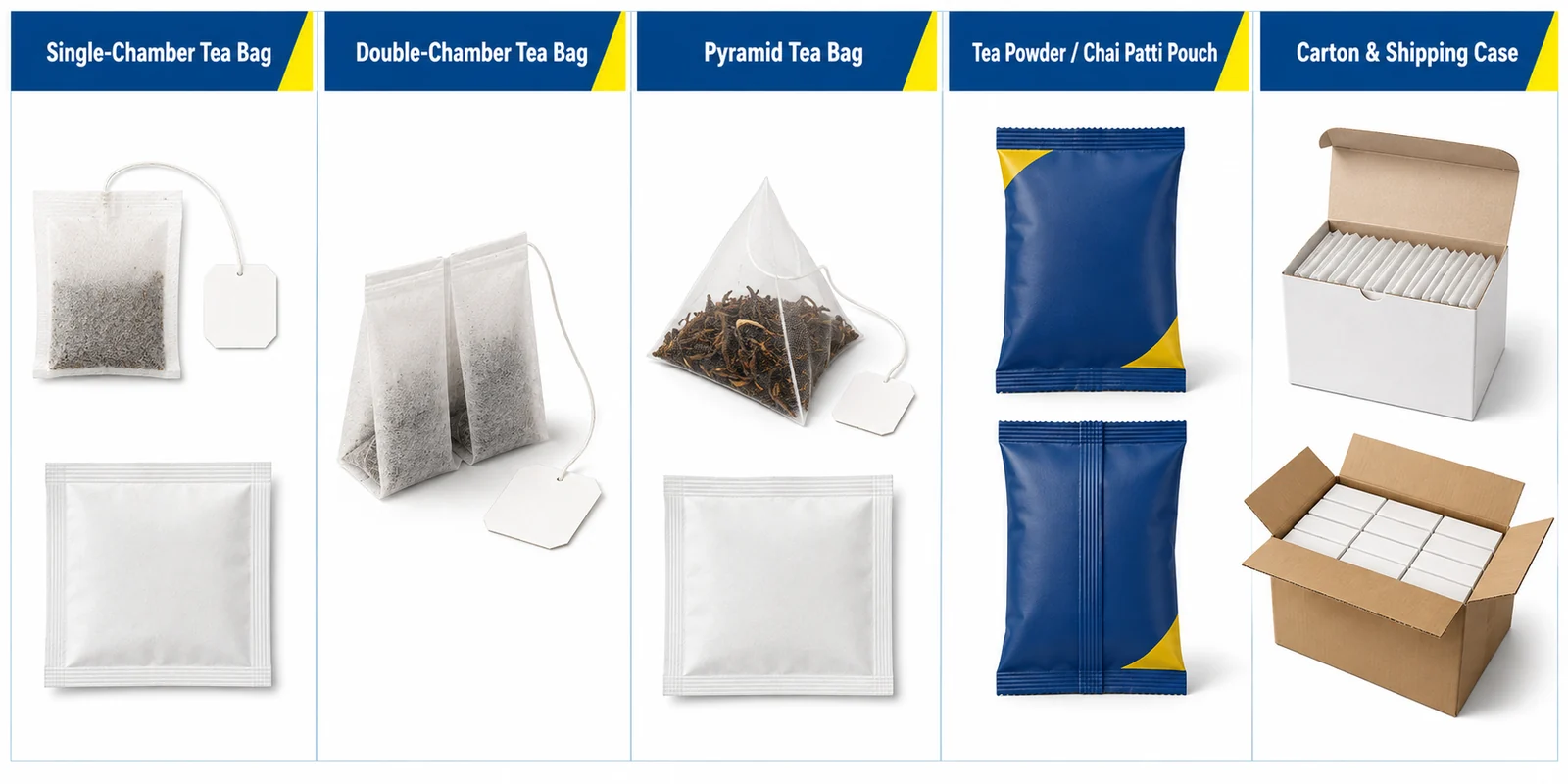
1. First Choose the Finished Tea Package
The package format determines the machine architecture. Fine-cut black tea can suit a rectangular filter bag; premium whole leaves need more room to expand; chai patti sold as loose tea usually needs a retail pouch rather than an infusion bag. Start with representative samples and the package you want customers to buy.
| Packaging route | Suitable tea and finished format | How the system works | Best-fit situation |
|---|---|---|---|
| Single-chamber filter tea bag | Fine-cut black tea, green tea, herbal blends or tea dust in a rectangular filter-paper bag; string, tag and outer envelope can be optional | Measures the dose, forms or feeds filter material, fills and seals the inner bag; selected configurations add thread, tag and envelope | Mainstream tea bags, moderate budgets and straightforward retail formats |
| Double-chamber tea bag | Fine or controlled-cut tea in a folded two-pocket bag, commonly with string and tag; an envelope and carton can follow | Forms a two-chamber structure and completes the closure, thread and tag sequence before optional envelope packing | Established high-volume formats where the double-chamber presentation is part of the brand specification |
| Pyramid tea bag | Long-leaf tea, flowers, fruit pieces and premium herbal blends in nylon, PET, PLA or other qualified mesh material | Meters the product and ultrasonically or thermally seals a tetrahedral or compatible flat bag; an envelope may be added | Premium products that need visible ingredients and more infusion space |
| VFFS retail pouch | Tea powder, chai patti, loose leaf tea or refill packs in pillow, gusseted or selected retail bags made from rollstock | Forms a bag from roll film, meters product, fills, seals and cuts in one continuous process | Lower packaging-material cost, flexible bag sizes and volume retail production |
| Cartoning and case packing | Individually wrapped tea bags, retail pouches or grouped packs placed into cartons and shipping cases | Collates finished primary packs, loads retail cartons or shipping cases, then closes and labels as required | Automated secondary packaging, repeatable case counts and distribution-ready output |
A “small tea bag packing machine” is not a separate package type. It usually means lower throughput, a smaller footprint, fewer automatic functions or a smaller investment. Define bags per minute, hours per shift, labor available and whether the machine must add a tag, envelope or carton before comparing compact models.
2. Tea Packing Machine Price by Configuration
The following figures are useful for initial budgeting. The tea-bag figures are observed public supplier examples accessed on September 6, 2026. The VFFS, cartoning and complete-line figures come from our internal overseas-sales planning reference. Configuration, MOQ and commercial terms differ, so the rows should not be averaged.
| Machine or line | Planning price in USD | Price basis | Main cost drivers |
|---|---|---|---|
| Basic rectangular filter tea bag machine | About $4,000–12,000 | A public FOB listing starts at $3,950; the upper figure is a planning allowance for added functions | Dosing system, string and tag, seal method, controls and output |
| Filter tea bag with outer envelope | About $9,500–25,000 | Public inner-and-outer-bag supplier examples; final scope varies | Envelope style, registration, tag attachment, nitrogen option, coding and speed |
| Pyramid tea bag, inner bag only | About $11,500–22,000 | Public pyramid-machine listings across several configurations | Mesh material, ultrasonic sealing, bag shape, dosing and changeover parts |
| Pyramid tea bag with outer envelope | About $21,900–31,200 | Public examples include $23,500 and configurations listed around $21,910–31,180; MOQ varies | Inner/outer synchronization, envelope material, tag/string, controls and output |
| Double-chamber tea bag machine | Project quotation | Machine construction and automation vary widely; a defensible common range was not established | Closure technology, tag/string method, speed, envelope and cartoner integration |
| VFFS tea powder or chai patti retail pouch | $5,000–30,000 | Comwin overseas project-budget reference | Filler, bag width, film control, dust management, gas flushing and coding |
| Automatic cartoner or case packer | $25,000–80,000 | Comwin overseas project-budget reference | Pack pattern, carton/case size, infeed, closing method and inspection |
| Integrated tea packing line | $80,000–500,000+ | Comwin overseas project-budget reference for customized lines | Number of machines, output, inspection, conveying, cartoning, case packing and project scope |
Public examples include Synda’s rectangular tea bag equipment, Unionpacker’s pyramid machine listings and a Zonesun pyramid-and-envelope system. Prices can exclude freight, duties, taxes, commissioning, spare parts and packaging materials unless the offer says otherwise. Send your tea, bag specification and required functions for a configuration-based quotation.
3. Why Prices Differ So Much
Tea flow and dosing
Tea dust, fine black tea, rolled leaves, flowers and mixed herbal ingredients behave differently. A volumetric cup may suit a stable free-flowing product, while a scale can be better when bulk density varies. Powder may require an auger and dust-control measures. Large leaves can bridge narrow passages or break during transfer. A sample test shows whether the feeder delivers the target dose without unacceptable product damage.
Inner bag, envelope and tag
A plain inner tea bag is a shorter process than a bag with string, tag and a registered printed envelope. Heat-sealable filter paper, non-heat-sealable paper and mesh materials also require different forming and sealing systems. If the envelope needs a tear notch, date code, gas flushing or tight print registration, those functions must be included in the specification.
Accepted output rather than headline speed
Published supplier specifications show how wide the category is: dedicated double-chamber systems can be built for hundreds of bags per minute, and specialized pyramid equipment also reaches high output. Those figures belong to named supplier models and conditions; they are not a promise for every tea, material or Comwin configuration. Compare accepted bags per minute after rejects, stops, refilling and downstream limits, using your own tea and packaging material.
Secondary packaging
An automatic tea bag packing machine may stop at a sealed inner bag, or it may continue through an envelope, retail carton, shipping case and case label. The quote must state the handoff point. Otherwise, a low machine price can conceal manual work and additional equipment needed later.
4. Packaging Applications and Recommended Routes
The illustration connects each tea type to its finished pack and equipment route. Fine-cut tea can use conventional filter bags; high-volume brand formats may specify a double-chamber bag; whole leaves and flower blends often suit a pyramid bag; loose chai patti and tea powder normally use a VFFS retail pouch. Any sealed primary format can then move to cartoning and case packing when the required volume justifies automation.
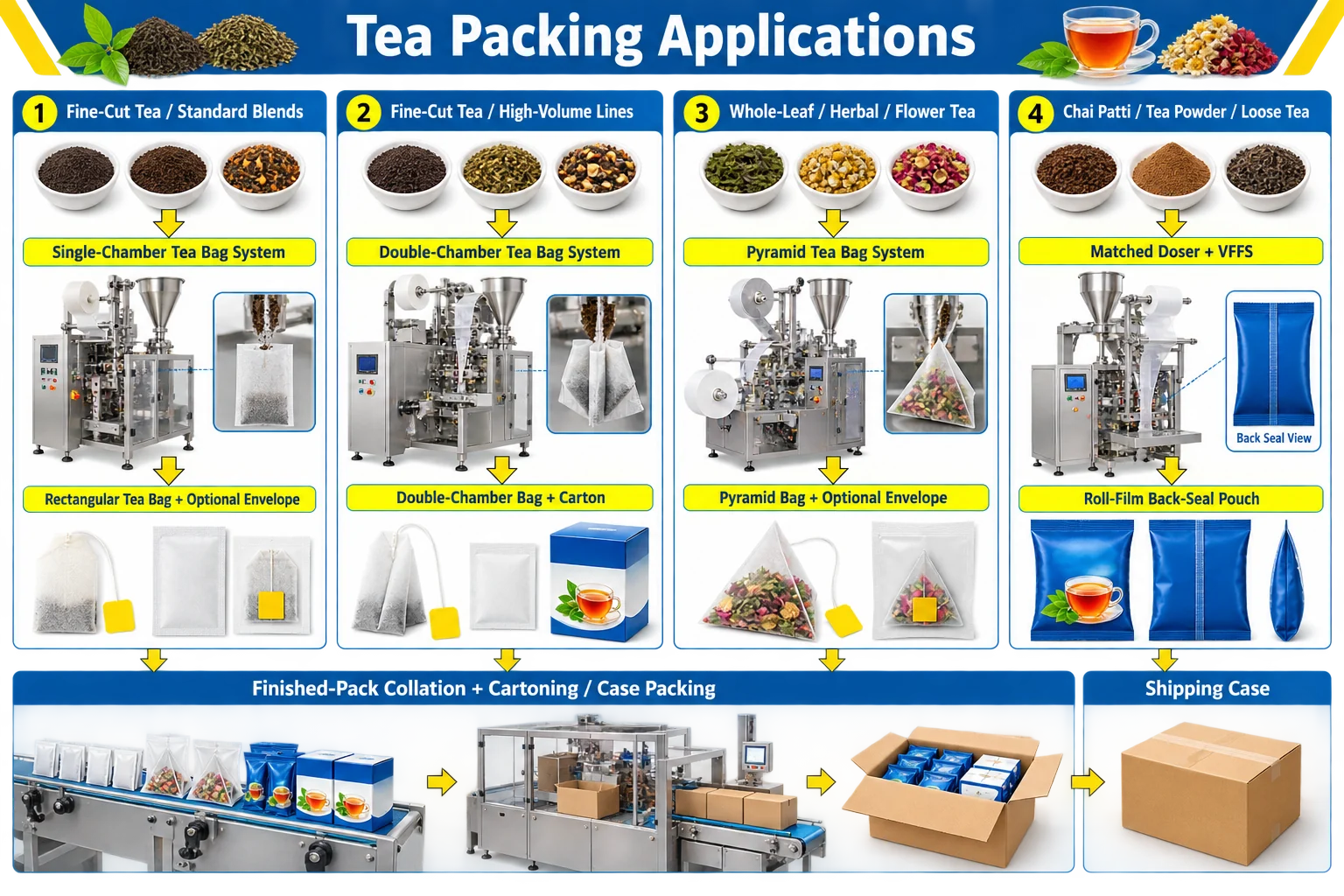
| Product example | Recommended primary route | Package example | Key sample-test question |
|---|---|---|---|
| Fine-cut black tea or tea dust | Single-chamber filter tea bag | Rectangular filter bag with optional string, tag and envelope | Does the dose remain stable, and does dust contaminate the seal? |
| High-volume traditional tea bag SKU | Double-chamber tea bag system | Folded two-pocket bag, normally followed by tag and optional envelope | Can the chosen paper and closure run reliably at the accepted line speed? |
| Whole-leaf green tea, chamomile flowers or fruit blend | Pyramid tea bag system | Tetrahedral mesh bag or compatible flat mesh bag, with optional envelope | Can large pieces feed without bridging or excessive breakage? |
| Chai patti, loose black tea or refill tea | VFFS with suitable scale or volumetric dosing | Roll-film pillow or gusseted retail pouch | Does bulk-density variation affect weight, bag shape or headspace? |
| Tea powder or instant tea mix | VFFS with auger or validated filler | Sachet or retail back-seal pouch | Can dust be controlled so the seal stays clean? |
| Finished tea bags or pouches for retail distribution | Cartoner, case packer and case sealer | Retail carton and sealed corrugated shipping case | Can the infeed collate packs without jams, damage or count errors? |
5. Equipment Details to Confirm Before Ordering
Do not use one website model’s dimensions or speed as the limit of the available solution. We select and customize equipment around the actual product, pack format, output and budget. The final specification and acceptance test should cover the following items.
| Specification group | Decisions to confirm |
|---|---|
| Tea and dose | Tea type, particle-size range, bulk density, target weight, acceptable variation, moisture sensitivity, dust, oil or sticky inclusions |
| Primary package | Single- or double-chamber paper bag, pyramid mesh bag, roll-film sachet, retail pouch, string/tag, envelope and retail carton |
| Packaging material | Filter paper or qualified mesh, seal layer, roll width, print repeat, barrier target, food-contact documents and sample rolls for testing |
| Machine construction | Product-contact material, frame material, accessible cleaning points, tool-free parts where practical and dust extraction interface |
| Options | Gas flushing, coding for date/batch, label application, tear notch or perforation where suitable, checkweighing, metal detection and reject handling |
| Utilities and layout | Voltage, frequency, compressed air, extraction, available floor space, operator access and upstream/downstream elevations |
| Performance acceptance | Accepted bags/min, dose tolerance, seal integrity, print position, reject criteria, changeover time and agreed test duration |
| End of line | Count per carton, carton style, case pattern, case sealing, label data, inspection, pallet interface and future expansion |
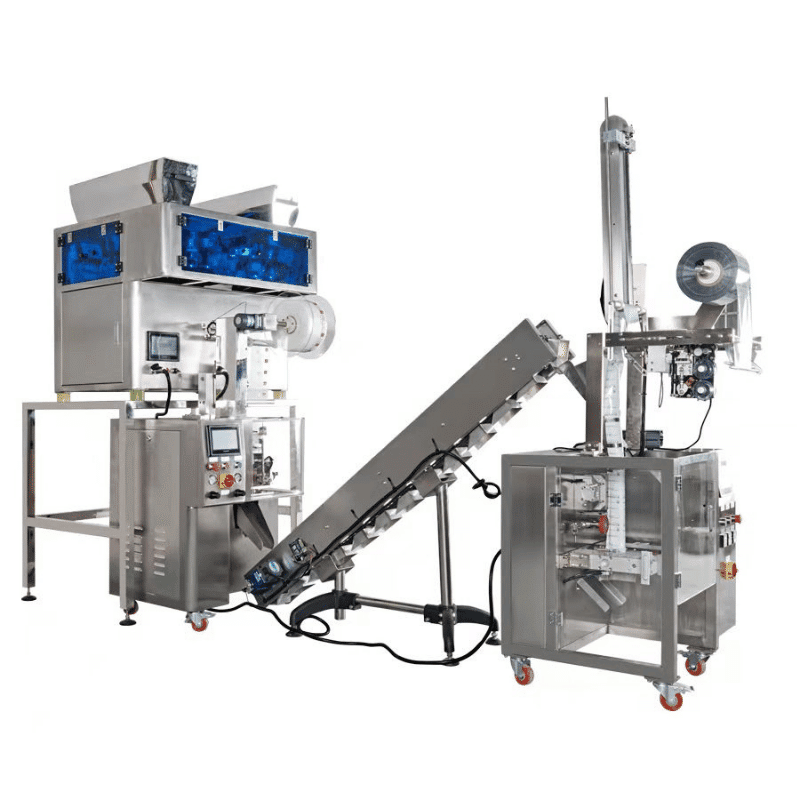
The pictured system is an example of tea bag equipment available on our website. Its visible arrangement is useful for discussing an automated tea bag project, but the image does not define the only machine layout, bag size or achievable speed. We match the equipment to the tea, bag drawing and required process.
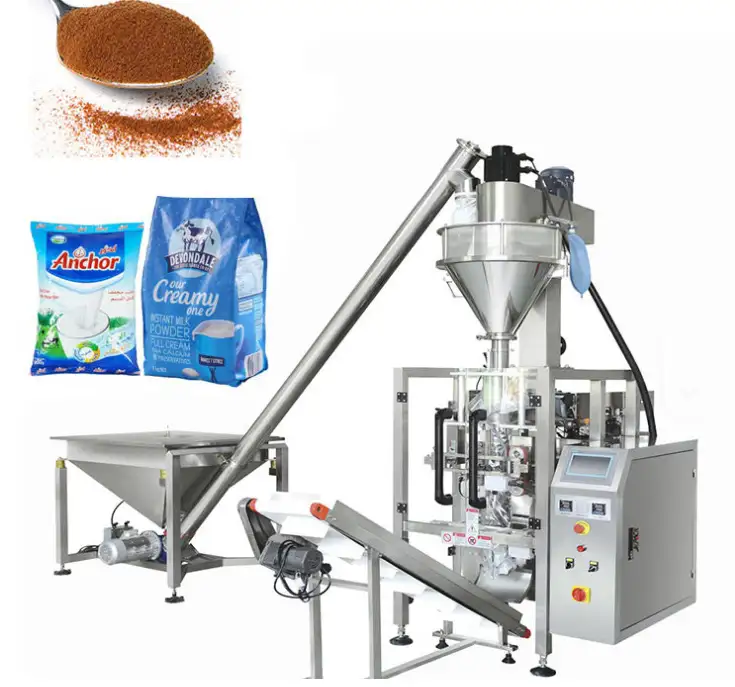
For tea powder and compatible chai products, an auger-based vertical arrangement may provide controlled dosing into roll-film packs. Free-flowing loose tea may instead need a scale or volumetric system. The filler and transfer path should be selected after sample testing.
6. From Tea Bag to Carton and Shipping Case
Primary packaging and secondary packaging solve different problems. The tea bag or pouch protects and presents the product; the carton groups retail units and provides display space; the corrugated case protects finished packs during handling and distribution. A complete line may combine discharge conveyors, counting or collating, cartoning, case packing, case sealing, labeling and inspection. The modules should be sized to the accepted output of the slowest confirmed process.
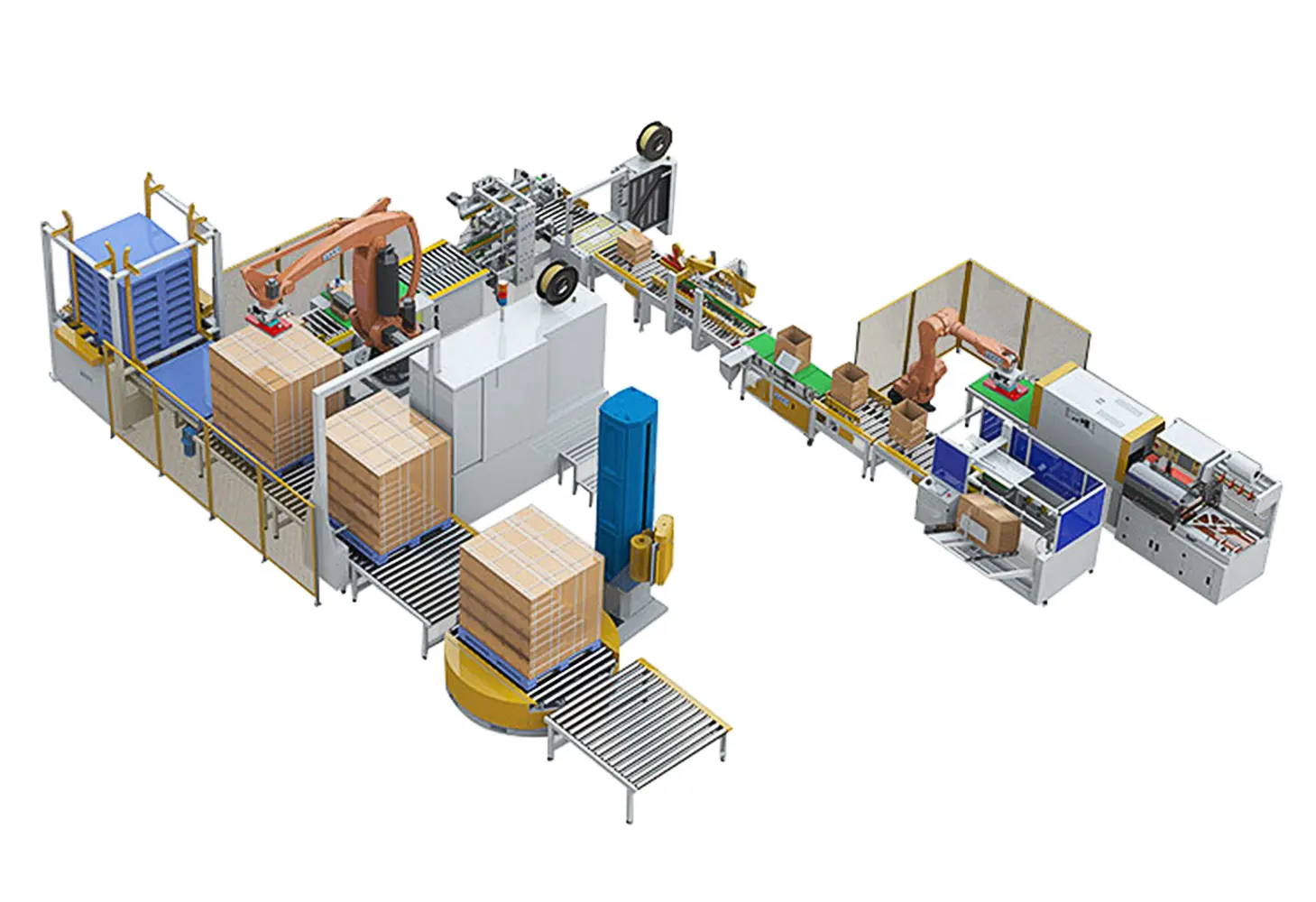
The line illustration shows one possible end-of-line arrangement. Actual projects can use fewer or different modules. Confirm the finished pack dimensions, count pattern, carton and case drawings, label data, inspection standard and available space before layout approval.
7. A Better Way to Compare Supplier Quotations
Ask every supplier to quote against the same requirement sheet. A useful comparison records the exact finished bag, included filler, output acceptance condition, material specification, change parts, spare parts, utilities, delivery term and service scope. The cheapest headline price may cover only an inner bag while another offer includes an envelope, printer, conveyor and cartoner.
- Send representative tea from normal production, including the finest and largest particles expected.
- Provide finished-bag samples or dimensioned drawings for every important SKU.
- State the desired accepted output in the correct unit: bags/min, pouches/min, cartons/min or cases/min.
- Define whether string, tag, envelope, coding, gas flushing, inspection and cartoning are required.
- Request a sample-test report or video showing dose, seal and finished appearance.
- Agree on acceptance criteria before production of the machine starts.
8. Frequently Asked Questions
How much does a tea bag packing machine cost?
Basic public rectangular tea bag machine listings start near US$4,000, while inner-and-outer-bag examples commonly run about US$9,500–25,000. Pyramid configurations in the public examples reviewed run roughly US$11,500–31,200. Double-chamber and integrated lines should be quoted from the exact format and output. Send tea samples, bag details and required functions so we can match a configuration instead of comparing unrelated prices.
Should I choose a single-chamber or double-chamber tea bag machine?
Choose single-chamber equipment for a simpler rectangular filter bag and a more accessible starting configuration. Choose double-chamber equipment when the two-pocket format is a firm brand requirement or the project needs a specialized high-output platform. Confirm paper, closure, tag, envelope and carton requirements before selection because these machines are not interchangeable through a simple setting change.
Is a pyramid tea bag machine better for whole-leaf tea?
Often yes. A pyramid pack provides more visible space for long leaves, flowers and fruit pieces, while a conventional rectangular paper bag suits finer tea. The deciding factors are ingredient size, bag material, dose, infusion presentation and packaging cost. Send representative samples for feeding and sealing tests before fixing the machine and mesh specification.
Can one machine pack both tea powder and whole-leaf tea?
Sometimes a common bagger can use different fillers, but powder and large leaves need different feeding, dosing and dust-control behavior. We recommend free sample testing with both products. The result determines whether one base machine with change parts is practical, or separate configurations will give more reliable output and faster changeovers.
Can a tea bag machine also make chai patti retail pouches?
Usually these are different equipment routes. A filter or pyramid tea bag machine makes infusion bags; chai patti sold as loose tea is commonly packed by a VFFS machine into a roll-film retail pouch. If the project needs both, they can share suitable downstream cartoning or case packing after the primary packs are complete.
What should “small tea bag packing machine” mean in my request?
State the daily volume, bags per minute, available floor space, automation level and finished format. A compact inner-bag machine can be small in size and price, but adding string, tag, outer envelope or cartoning changes the system. These details let us identify a genuinely economical option instead of merely a physically small machine.
What information is needed for an accurate quotation?
Provide the tea type and samples, target weight, bag material and dimensions, string/tag/envelope requirements, target accepted speed, SKU count, voltage, compressed air, available layout and downstream scope. For a complete line, also provide carton and case drawings, counts per carton/case and inspection requirements.
9. Configuration, Testing and Support
We provide the most suitable packaging solution for your tea, pack format, output and budget. Free sample testing checks feeding, dosing, sealing and appearance, and customers can visit a real factory to see relevant equipment running. Small machines include video guidance and remote video support. The machine warranty is two years, core components are covered for three years, and remote inquiries receive a response within 24 hours.
Ready to define your tea packing line? Send samples for testing or contact us with the bag, dose, output and downstream scope. We will match the configuration and prepare a quotation.