Quick answer
Match ghee packing equipment to the pack and the product condition at filling. Portion sachets use film forming and sealing, larger pouches use suitable pouch fillers, and jars or bottles use filling and capping. Controlled product temperature and clean seal areas matter more than choosing by machine speed alone.
Indicative equipment budgets are USD 5,000–30,000 for film sachets, USD 10,000–45,000 for premade pouches and USD 12,000–50,000 for jar/bottle filling and capping.
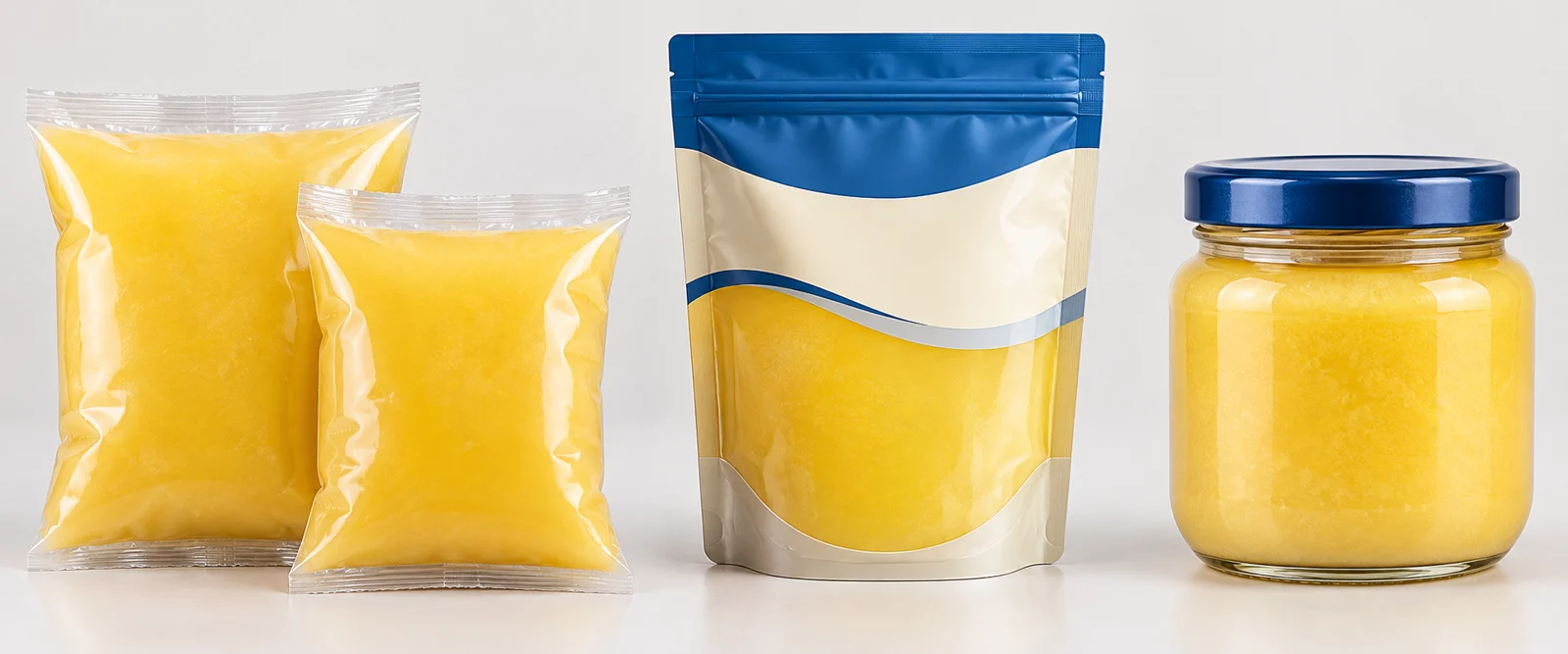
Ghee packaging depends on the product condition at filling as well as the finished pack. Comwin matches product feed, dosing and closure to your ghee and its expected operating temperature range.
Choose the finished pack and equipment
| Route | Best starting condition | Packaging operations |
|---|---|---|
| Ghee portion sachets from roll film | Small portions with a controllable flowing product state | Appropriate temperature-controlled feed → measured fill → film sealing/cutting |
| Premade retail ghee pouches | A defined stand-up or larger retail pouch | Suitable product path → pouch opening/filling → final sealing |
| Ghee jars or bottles | Rigid retail containers with a defined closure | Recipe-matched filling → cap/lid application → optional inner sealing |
Ghee portion sachets from roll film
Avoid cold spots that interrupt feed, and keep fat clear of the seal band. Specify only the heating or insulation actually required by the product. Multi-lane liquid sticks need their own dosing and film scope rather than assuming the single-lane budget covers them.
Premade retail ghee pouches
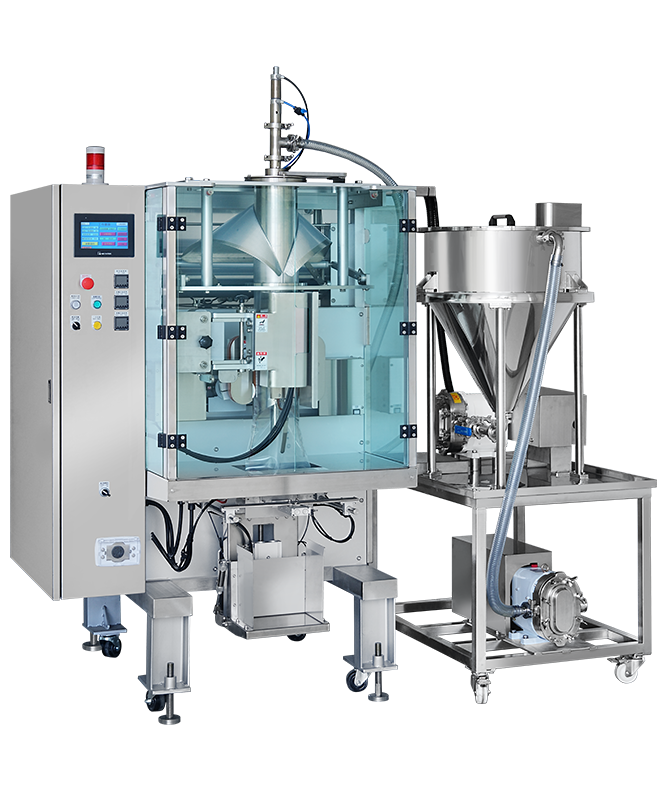
Check fat compatibility, nozzle cutoff and the available top-seal area. If product solidifies during a stop, evaluate restart behavior. A reclosure feature does not replace the specified final seal.
Ghee jars or bottles
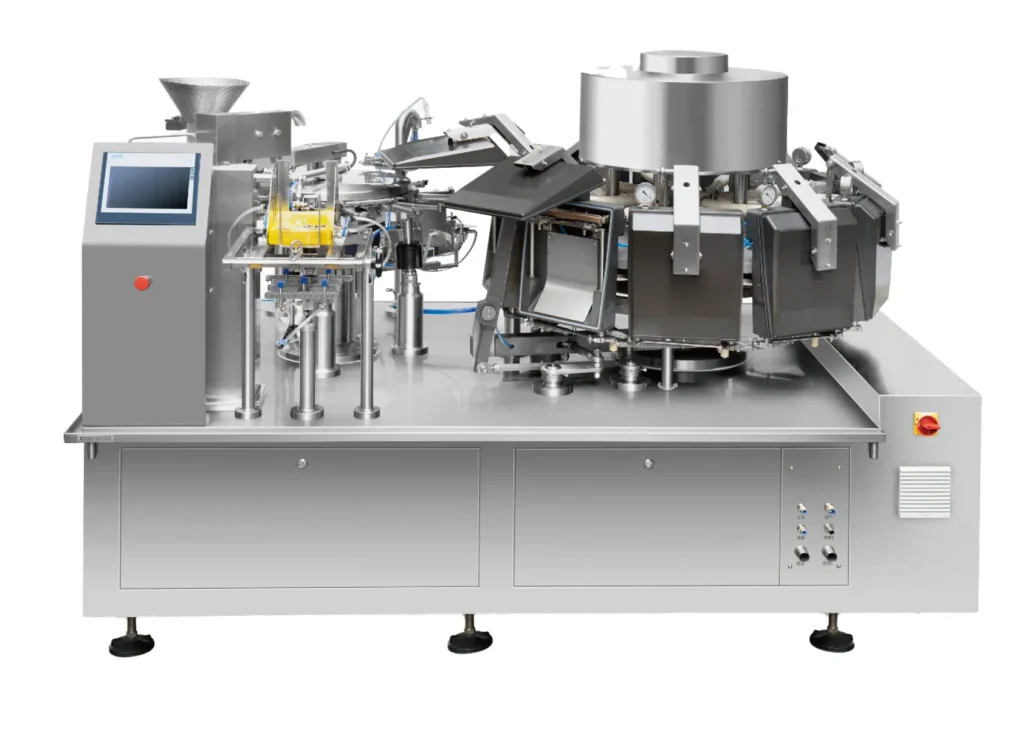
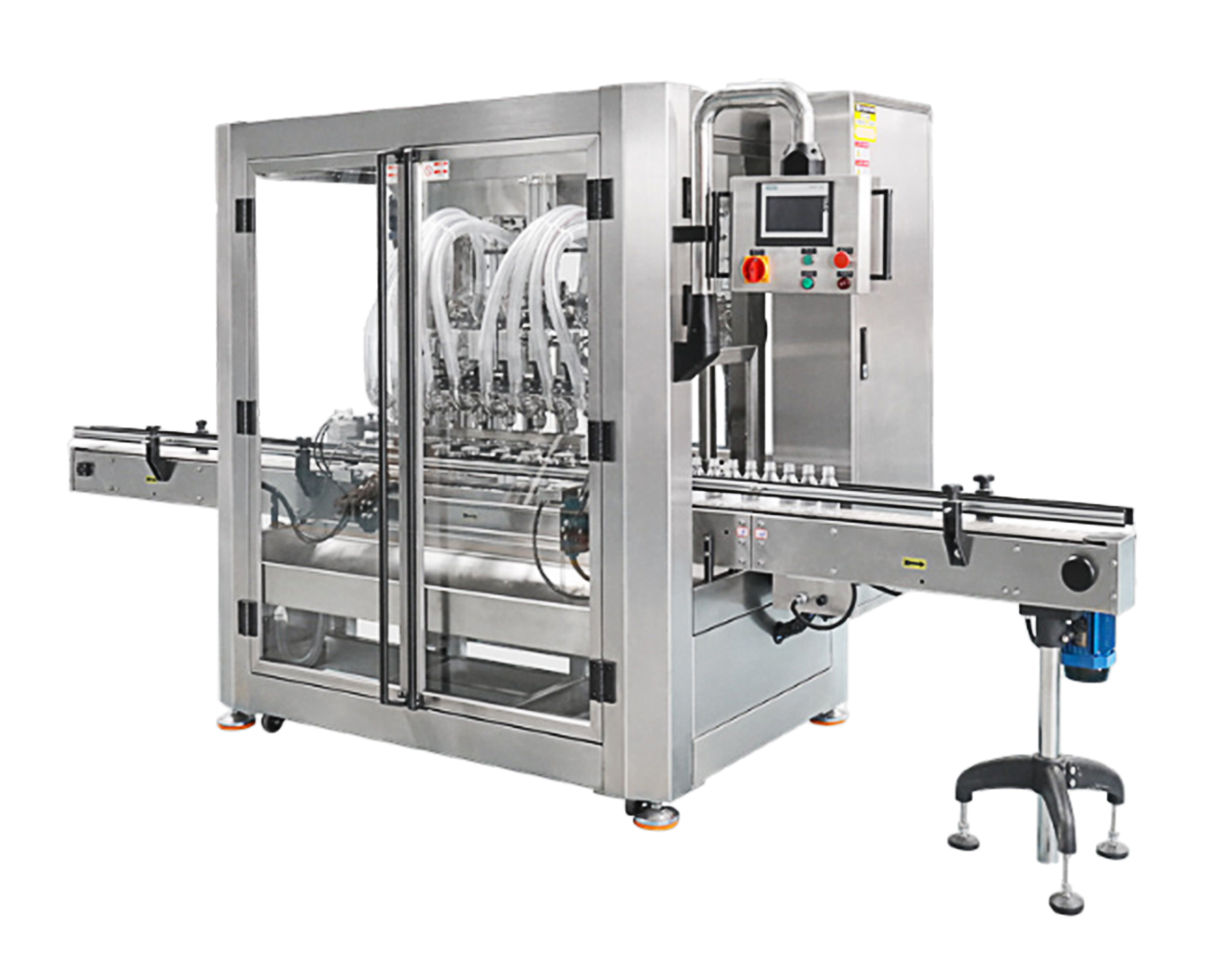
Match liquid or semi-solid filling conditions to the actual container and dose. Confirm heat tolerance where warm filling is used. Ghee bottle sealing may mean cap closing, an inner seal or both; each operation needs compatible samples.
Packaging problems and the configuration to check
| Problem | Likely mechanism to investigate | Configuration and confirmation check |
|---|---|---|
| The dose changes as ghee cools | Product state or feed flow changes across the working range. | Define the usable product range and compare accepted fills during steady operation and restart. |
| Product solidifies in the valve or pipe | Cold points interrupt the flow. | Evaluate the necessary tank/pipe/valve temperature control and cleaning, without prescribing one universal ghee temperature. |
| Pouches leak with fat in the seal | Cutoff and seal clearance are not suited to the product. | Coordinate nozzle action and sealing; test material compatibility and leakage after expected temperature/handling changes. |
| Inner-sealed containers still leak | Container, liner and cap requirements were not coordinated. | Confirm closure fit and torque independently from inner-seal bonding. |
Match the product and use case

| Product or order | Finished pack | Trial or decision |
|---|---|---|
| Foodservice ghee portions | Sealed film sachets | Prioritize dosing and a clean fat-free seal band. |
| Household ghee pouch | Premade retail pouch | Check material, cutoff and stop/restart conditions. |
| Retail ghee container | Capped jar or bottle | Define net fill, closure and any liner-compatible inner seal. |
Include cooling and restart in the filling trial
A warm continuous run is only part of a ghee project. Comwin should also know what happens when production pauses and the product cools. Specify feed recovery, any required heating or insulation, cleanout and restart checks. Ghee composition can vary, so a generic temperature value is not a complete selection rule. Test the actual material with the intended container or film.
Required temperature-control hardware, additional formats, inner sealing, labeling and downstream operations must be explicitly listed in the quotation.
Ghee Packing Machine Price: Indicative Equipment Budget
Use these USD ranges for preliminary equipment planning as of October 2026. They describe alternative configurations, not a package of all the listed machines. They are not a formal quotation or a verified market average.
| Equipment scope | Planning range | Assumptions and boundaries |
|---|---|---|
| Ghee sachets from roll film | USD 5,000–30,000 | One film format and suitable product dosing; temperature-control scope must be stated. |
| Premade ghee retail pouches | USD 10,000–45,000 | One pouch format, handling, suitable dosing and final sealing. |
| Ghee jar/bottle filling and capping | USD 12,000–50,000 | One agreed rigid-container/cap format with filling and cap operations. |
Assume a new China-export supply, one agreed packaging format and the ordinary product conditions stated above. Confirm the delivery term and included commissioning in the written quote. Freight, taxes, overseas installation, factory utilities, upstream food or water processing, cold-chain equipment, extra formats/tooling, inspection, labeling and downstream packing are excluded unless expressly included. Heating, cleaning or special-hygiene functions require a defined scope. A broader range does not mean every configuration includes its upper-end features.
Compare offers at the same fill size, product condition, package material, good-pack output and acceptance criteria. Ask for the included functions, change parts, consumables and interfaces alongside the price. Do not add alternative route budgets together.
Compare the work the equipment actually automates
| Dimension | Assisted or batch operation | Repeated automatic operation |
|---|---|---|
| Production mode | Short ghee batches with assisted pack presentation | Continuous packing at the agreed product temperature |
| People and replenishment | Handle packs and closures while maintaining the product feed condition. | Replenish packaging; monitor feed temperature, cutoff and closures. |
| Format and product changes | Keep the actual setup work visible: Product path, pouch/bottle tooling and cold restart preparation. | Agree change parts, setup access and a repeatable cleaning/restart sequence. |
| Acceptance | Use the same product and packaging quality criteria. | Trial normal filling, a stop/restart and the cooled finished package. |
Set the required good packs per shift before choosing a quoted speed. Deduct planned cleaning, format changes and replenishment from production time, and include rejected packs. A short demonstration at nominal speed does not establish sustained accepted output.
What to compare in a supplier proposal
| Dimension | Evidence to request | Useful comparison |
|---|---|---|
| Budget and supply scope | An itemized offer for ghee sachets from roll film or your selected alternative. | Same package, product conditions, included operations, delivery term and exclusions. |
| Production output | A run using the actual ghee and packaging, with accepted packs recorded. | Good packs over usable run time; record rejects, replenishment and stops. |
| Product and format adaptation | The agreed product path, packaging tooling, change parts and cleaning access. | Resolve the hardest sample condition in the product trial, not just the easiest demonstration. |
| Support and maintainability | Training, manuals, wear/spare parts, fault information and the support contact. | Define response arrangements and practical local maintenance access. |
| Delivery and acceptance | A written build scope, layout/interfaces, trial protocol and delivery responsibilities. | Record who supplies product/materials and what is needed before shipment and installation. |
Use sample testing with your actual product and packaging to resolve dosing, handling and seal questions before fixing the equipment scope.
Frequently asked questions
Can ghee be packed in pouches?
Yes, suitable film-forming and premade-pouch routes can be evaluated. Define product state, temperature range, material compatibility and clean sealing, then trial the actual ghee and package.
Does a ghee bottle need foil sealing?
Only when the closure specification requires and supports it. Cap closing and inner sealing are different operations. Provide the container mouth, cap and liner samples to confirm the arrangement.
What affects ghee filling machine price?
Product-state control, dosing, container/film handling, output and cleaning requirements change the offer. Required heating or insulation, extra formats and downstream equipment should be listed explicitly.
Can one filler handle liquid and semi-solid ghee?
If the feed path and dosing work across both product states, it may be possible. Trial steady running and a cooled stop/restart; do not use one generic temperature value as a guarantee.
Send the samples that determine the configuration
Ghee sample and expected product-state/temperature range; stopping and restart conditions; pouch or container and closure; fill target; leakage checks; good packs per shift; cleaning, utilities and handling.
Include the required product-contact and cleaning specification, acceptable fill variation, seal or cap checks and any existing equipment interfaces. Send photographs, dimensions or samples of the complete package, not only a nominal pack volume.
Comwin uses these inputs to recommend the packaging route, dosing and handling arrangement, required interfaces and an itemized equipment offer. Where testing is needed, the trial plan should identify the product/materials, checks and acceptance criteria before the configuration is finalized.
Comwin offers free sample testing and factory visits. The confirmed warranty is two years for the complete machine and three years for core components, subject to the agreed terms. Remote support targets a response within 24 hours; resolution time depends on the fault and required action.