Quick answer: A pickle packing machine is not one universal filler. Whole cucumbers, sliced vegetables, chunky achar, brine and oil often need separate product-handling steps before the selected package is sealed. Choose a manual or semi-automatic jar cell for small batches, an automatic jar line for repeatable solid-plus-liquid filling, a premade-pouch line for retail bags, a vacuum pouch system for suitable low-headspace products, or a cup filler-sealer for portion packs.
Comwin planning prices: a configured bottle filling and capping machine is US$12,000–50,000, a premade-pouch machine is US$10,000–45,000, and a standalone vacuum sealing machine is US$3,000–15,000. A coordinated filling-product packaging line is US$80,000–500,000+. Manual pickle filling equipment and cup filling-sealing systems are quote-based because the current Comwin reference does not define a pickle-specific fixed range. These are September 4, 2026 experience-based budget ranges, not binding quotations; product feeders, brine dosing, capping, retort compatibility and downstream modules change the scope.
Choose the Right Pickle Packing Machine Route
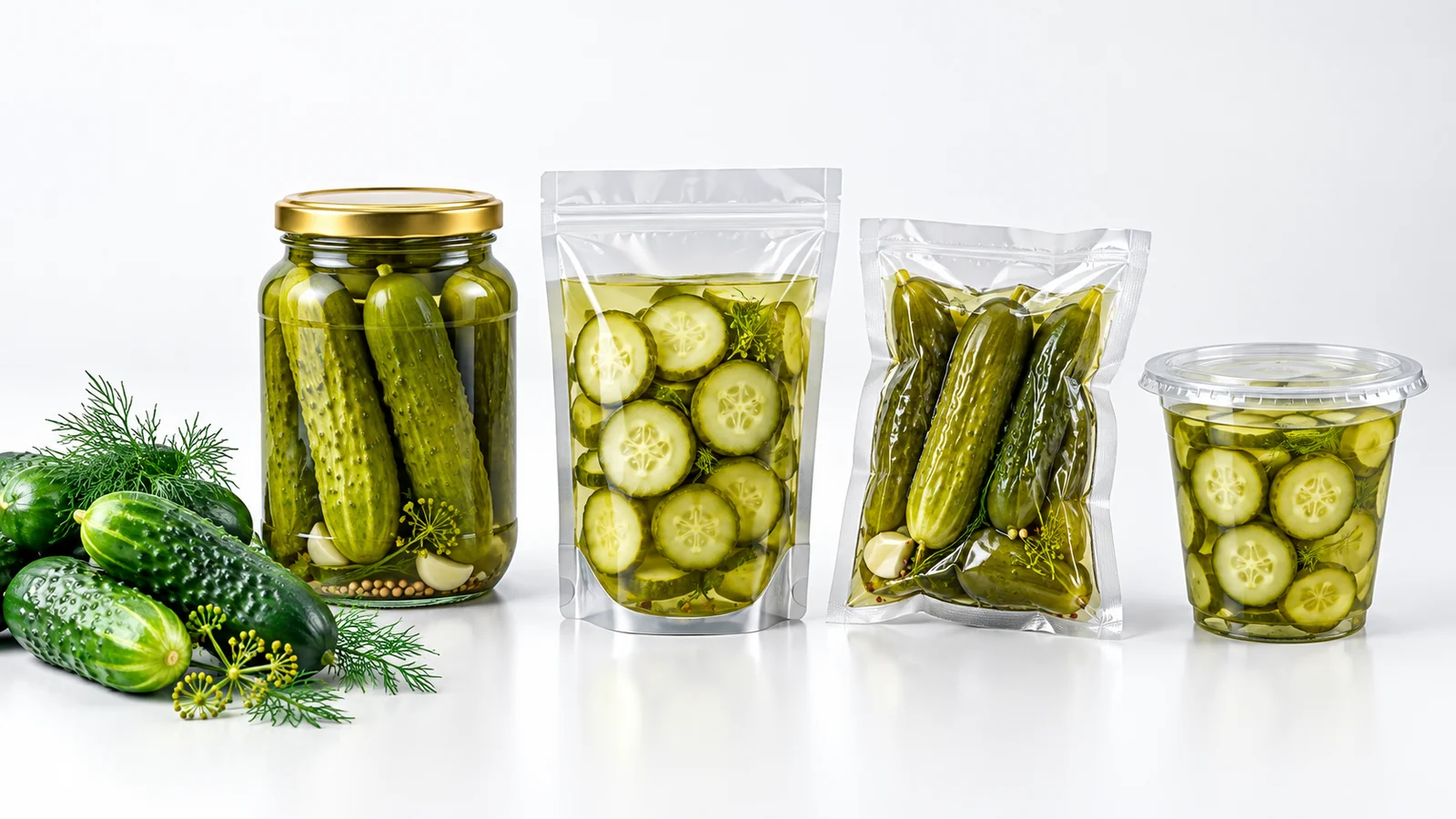
Start with the finished package and the product inside it. A free-flowing brine behaves differently from cucumber pieces, shredded vegetables or oil-rich achar. If solids and liquid must both be present, define the target solid weight, liquid volume, headspace and final seal as separate acceptance points.
Select the package route first, then configure solids handling, liquid dosing and sealing.
| Route | Finished package and process | Best fit | Why choose it / next confirmation |
|---|---|---|---|
| A. Manual or semi-automatic jar cell | Operators place whole or cut pickles; a small filler adds brine or oil; a bench capper closes the jar. | Startups, recipe trials, seasonal production and many SKUs with modest output. | Lowest automation complexity and easy oversight. Confirm operator pace, container hygiene, liquid cutoff and the exact lid process. |
| B. Automatic jar filling and capping | A feeder or manual loading station controls solids, a separate filler adds brine/oil, then the line applies and verifies the closure. | Stable jar sizes, repeat recipes and production that has outgrown hand loading. | Separates solid and liquid control and supports downstream labeling. Confirm piece size, solid-to-liquid ratio, fill temperature, jar and cap samples. |
| C. Premade or vacuum pouch line View the premade/vacuum pouch platform | The machine opens a finished pouch, doses solids and liquid in sequence, cleans the seal zone as required, then heat-seals or evacuates and seals. | Sliced pickles, kimchi-style vegetables, mixed achar and retail stand-up or flat pouches. | Choose premade pouches for presentation and format flexibility; choose a vacuum configuration only when the product, liquid level and package process have been validated. |
| D. Cup filling and heat sealing | Cups index through solids filling, brine/oil dosing, rim control, lidding-film placement and heat sealing. | Single-serve, foodservice or refrigerated portion cups. | Good portion presentation and repeatable lidding. Confirm cup and film compatibility, flange cleanliness, fill temperature and required shelf-life process. |
For the pouch route, review the published premade and vacuum pouch platform before fixing pouch handling and vacuum scope.
Problems the Correct Configuration Should Solve
Pickle projects combine irregular solids with a mobile liquid phase. The equipment should therefore solve the product-flow and closure problem together, rather than treating the pickle as a uniform sauce.
Each response maps to a route above and must be verified with the real product and package.
| Plant problem | Recommended Comwin route | How the configuration responds | Suitable products |
|---|---|---|---|
| Solid weight and brine volume vary from pack to pack. | Route B automatic jar line or Route C premade-pouch line with dual dosing. | Meter vegetable pieces and liquid in separate stages, then record both net-weight and liquid-level checks during FAT. | Whole or sliced cucumber, mixed vegetables, chunky achar and kimchi-style products. |
| Brine, oil or spice residue reaches the sealing area. | Route C with drip control and seal-zone management, or Route D with rim protection before lidding. | Sequence the fillers, control nozzle cutoff, allow settling where needed and reject packs whose seal area is contaminated. | Oil-rich achar, vegetables in brine and portion cups. |
| Large or fragile pieces bridge, jam or break. | Route A for gentle hand placement, or Route B/C with a product-specific feeder and wide passages. | Select feeding and transfer around the largest real piece, then inspect breakage and product appearance after a sustained run. | Whole gherkins, spears, slices and mixed-cut vegetables. |
| Jars leak or lose closure vacuum. | Route A/B with the capper or vacuum/steam-vacuum closing method matched to the jar and lid. | Control clean rim, headspace, cap presentation and closure application; verify finished closure according to the approved food process. | Glass jars with twist-off/lug lids and brine- or oil-packed pickles. |
| Frequent size and recipe changes create long cleaning stops. | Route A for high-mix small batches, or modular Route B/C tooling for planned formats. | Limit shared product paths, provide accessible contact parts and approve a documented cleaning and changeover routine. | Contract packers, seasonal producers and brands with several jar or pouch sizes. |
Which Pickle Products and Packages Fit Each Route?
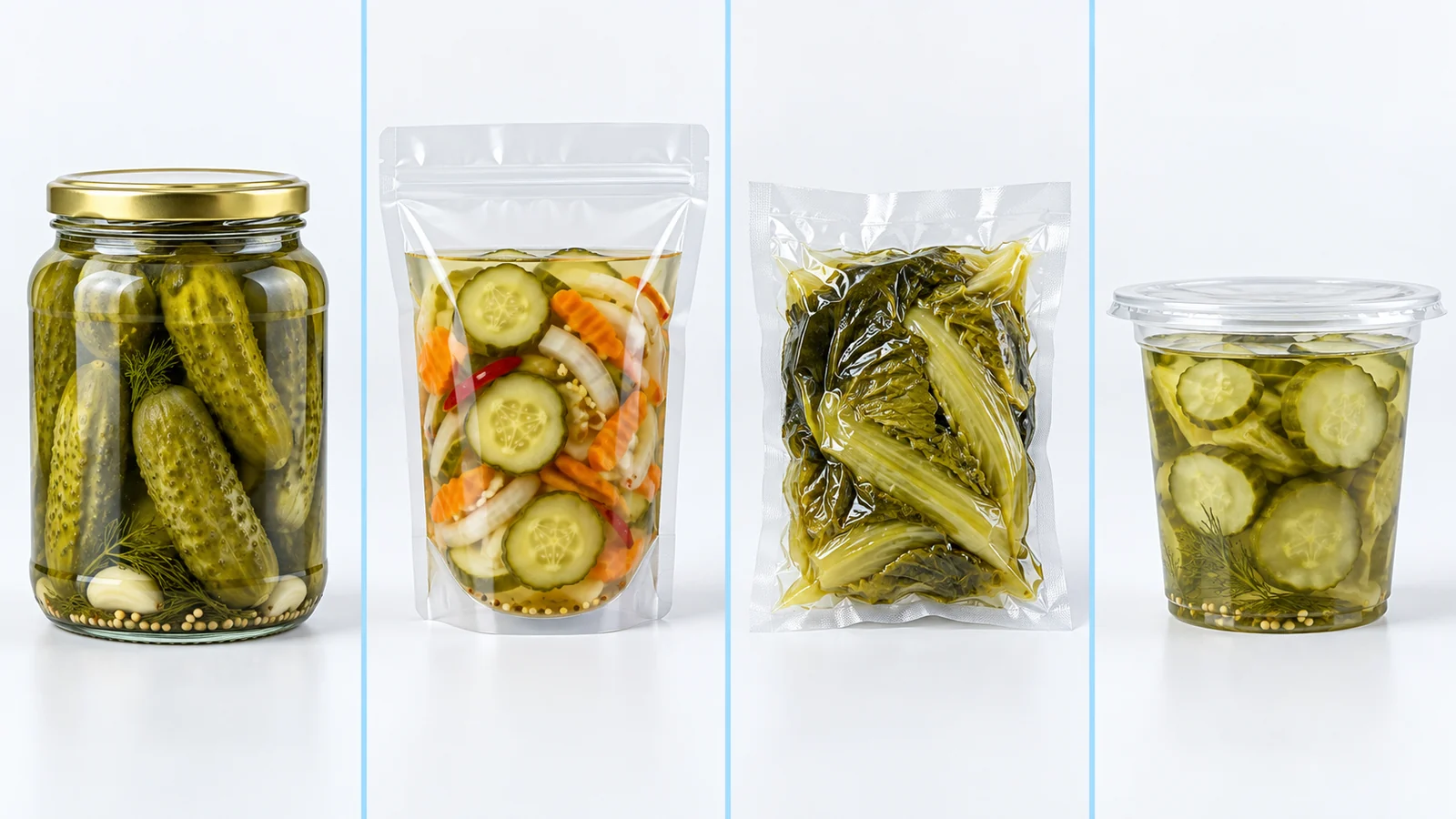
Match product state, business stage and distribution needs to one primary route.
| Scenario | Package | Business or distribution need | Recommended route |
|---|---|---|---|
| Whole cucumber or gherkin in brine | Glass jar with twist-off/lug lid | Retail shelf presentation, visible product and a validated jar-closing process | Route B for regular output; Route A for trials and small seasonal batches. |
| Sliced pickled vegetables with controlled brine | Stand-up or flat premade pouch | Lower package weight, printed retail presentation and several pouch sizes | Route C with separate solids and liquid dosing plus top-seal inspection. |
| Kimchi-style or shredded vegetables | Premade pouch, with or without an approved vacuum step | Compact distribution and low headspace where the product process permits | Route C; validate gas removal, liquid behavior and seal integrity with the actual recipe. |
| Pickle slices for single-serve or foodservice | Preformed or formed cup with lidding film | Portion control and convenient service | Route D with flange protection and cup-film compatibility testing. |
| Mixed achar with oil and spice paste | Wide-mouth jar or premade pouch | Gentle solids handling and control of oily residue near the closure | Route A/B for jars or Route C for pouches, selected after a free sample test. |
Compare the wider bagged packaging routes when deciding whether the product belongs in a premade, vacuum or film-formed package.
What Does a Pickle Sealing Machine Actually Seal?
The phrase pickle sealing machine can refer to several incompatible closure methods. Specify the container and closure before asking for a sealer. A pouch heat sealer cannot apply a jar lid, and a jar capper does not create a lidding-film seal on a cup.
The food process determines the required closure method; the packaging machine executes the approved process.
| Package | Sealing equipment | Critical checks | Important boundary |
|---|---|---|---|
| Glass jar | Twist-off/lug capper, optionally using an approved steam-vacuum or vacuum process. | Rim cleanliness, headspace, cap engagement, finished vacuum and leak checks. | Closure settings do not replace recipe, thermal-process or shelf-life validation. |
| Premade pouch | Top heat-sealing station; a chamber or rotary vacuum configuration when specified. | Seal contamination, time/temperature/pressure window, wrinkles, leakage and drop/transport tests. | Not every laminate or liquid-rich product is suitable for the same vacuum cycle. |
| Cup | Die-cut lid or rollstock lidding-film heat sealer. | Cup flange condition, film compatibility, peel strength, code and leak test. | A snap-on overcap is not the primary heat seal unless the package design says so. |
| Vacuum bag | Chamber vacuum sealer or automatic vacuum pouch machine. | Liquid carryover, target residual air, seal condition and finished-pack deformation. | Vacuum packaging alone does not establish food safety or shelf life. |
Manual Pickle Filling Machine: When It Makes Sense
A manual pickle filling machine is usually a work cell rather than a single all-in-one machine. Operators may load solid pieces by weight or count, while a hand-operated or pneumatic filler adds brine, oil or a flowable seasoning phase. Capping can remain manual or move to a semi-automatic vacuum capper. This approach is practical when batches are small, recipes change frequently or the product is too irregular for an economical automatic feeder.
Move toward automatic filling when operator pace becomes the bottleneck, solid-to-liquid ratios drift, jars queue before capping or the required traceability cannot be maintained reliably. Before automation, record the current best manual method: piece size distribution, target solid weight, liquid volume, headspace, temperature, jar and lid specification, and accepted packs per hour. Those observations become the machine requirement.
Automatic Jar Filling: Separate Solids from Brine
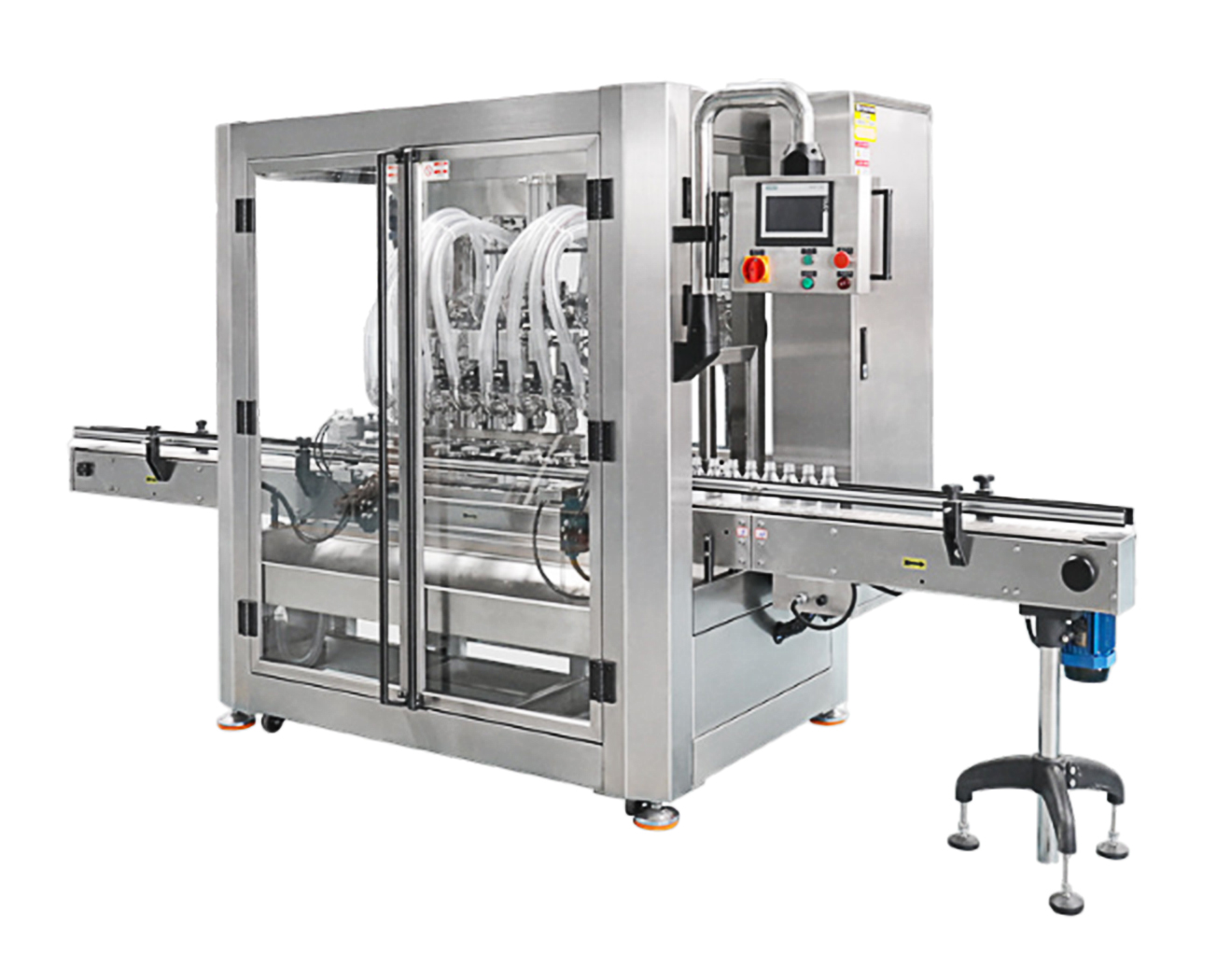
An automatic jar project should treat the solids feeder, brine or oil filler and closure station as coordinated modules. Whole pickles may need orientation or gentle placement. Slices and mixed pieces may use a weighing, volumetric or vibratory feeding method chosen from product trials. The liquid filler then adds the specified brine or oil without washing product onto the jar rim.
For a broader container platform, review our bottle filling and sealing equipment. If the project includes labeling, coding, case packing and pallet preparation, define the interface around a filling-product packaging line rather than adding unrelated modules after purchase.
For jar projects, use the bottle filling and sealing equipment as the container-filling and closing reference; pickle solids handling remains a separate configuration.
Pickle Packing Machine Price
A useful pickle filling machine price comparison starts only after the product, package and included modules match. The table below uses Comwin experience-based planning ranges dated September 4, 2026. It does not represent a factory transaction price, market average or binding offer. Freight, duties, taxes, molds/tooling, installation and on-site services are not assumed to be included.
Budget ranges are configuration-dependent and should be converted into an itemized quotation.
| Equipment route | Comwin planning price | Typical included boundary | Main price drivers |
|---|---|---|---|
| Manual pickle filling machine / small work cell | Quote-based | Manual solids loading plus selected brine/oil dosing and closing tools. | Filler type, air supply, jar and lid range, vacuum capping requirement and local labor steps. |
| Automatic jar filling and capping machine | US$12,000–50,000 | Configured filling and closing platform; the exact solids feeder, brine tank, lid system and inspection scope are project-specific. | Piece handling, number of heads, fill temperature, cap method, change parts and controls. |
| Premade-pouch packing machine | US$10,000–45,000 | Pouch feeding, opening, filling and top sealing; dual solids/liquid dosing and vacuum are configured separately. | Pouch size, product feeder, liquid filler, seal cleaning, vacuum, coding and output. |
| Standalone vacuum sealing machine | US$3,000–15,000 | Chamber or continuous sealing function; product filling and pouch handling may be outside the supply boundary. | Chamber size, pump, liquid handling, conveyor arrangement and cycle requirements. |
| Cup filling and sealing machine | Quote-based | Cup denesting/indexing, selected fillers, lidding and sealing according to the approved cup-film system. | Cup tooling, number of lanes, solids/liquid dosing, MAP option and sanitation design. |
| Integrated filling-product packaging line | US$80,000–500,000+ | Selected primary filling/closing, coding, inspection, conveyors and downstream packing modules. | Line output, automation depth, product preparation, inspection, case packing, layout and commissioning scope. |
Public China listings for pickle premade-pouch equipment span widely because base pouch machines, dual-filling systems and vacuum configurations are mixed together. European and North American industrial suppliers commonly use quote-based pricing. For a fair comparison, ask every supplier to state the feeder, filler, sealer/capper, controls, format parts, FAT materials, spares and site services on the same boundary.
If labeling, inspection or case packing is in scope, define those interfaces around a filling-product packaging line instead of treating them as unrelated add-ons.
Configuration Checklist Before You Compare Machines
Turn the product and package into measurable equipment requirements.
| Input | What to define | Why it changes the machine |
|---|---|---|
| Pickle solids | Whole, spear, slice, dice or shred; largest dimensions; fragile or sticky behavior; target solid weight/count. | Determines feeder, passages, anti-bridging features and acceptable transfer method. |
| Liquid phase | Brine, vinegar, oil or spice paste; viscosity, particles, foaming, fill temperature and target volume. | Determines tank, pump/filler, nozzle cutoff, recirculation and cleanability. |
| Package | Physical jar, lid, pouch or cup samples; dimensions, materials, seal layer and print registration. | Determines handling, tooling, sealing method and format-change parts. |
| Output | Accepted packs per hour for every SKU, plus batch size and changeover frequency. | Sets lane/head count and identifies whether manual, semi-automatic or automatic handling is economical. |
| Quality checks | Solid weight, liquid volume, headspace, closure vacuum/torque, seal test, leak test, code and reject rule. | Defines sensors, inspection points and the factory acceptance test. |
| Factory and line | Power, compressed air, steam/water if applicable, drainage, floor space, upstream process and downstream case pattern. | Defines utilities, layout, interfaces and the actual supply boundary. |
How to Compare Pickle Packaging Suppliers
Use the same requirement sheet and acceptance test for every supplier. The country of origin and advertised base price do not show whether the quotation includes the right solids feeder, brine dosing, closure method or sanitation access.
These are selection signals, not a universal ranking of suppliers.
| Dimension | Choose Comwin when… | Choose a European/US industrial supplier when… | Choose another China supplier when… |
|---|---|---|---|
| Budget | You need an itemized, configuration-matched Chinese export project within the relevant Comwin planning range. | Your budget supports a premium industrial platform and regional lifecycle service; pricing is usually quote-based. | A standard catalog machine meets the requirement and entry price is the main constraint. |
| Production scale | You are moving from manual/semi-automatic work toward a matched medium-scale cell or coordinated line. | You require high-output continuous production with plant-level engineering and established local support. | You need a small standardized machine and can manage more integration yourself. |
| Customization | Solid/liquid sequence, package format and downstream modules require a project-specific combination. | The project needs a specialized hygienic process, advanced controls or a platform already proven in your regulated environment. | Your sample fits an existing standard model with minimal changes. |
| Support | Free sample testing, a two-year machine warranty, three-year core-component warranty and remote response within 24 hours fit your service plan. | Local field engineers, regional spare-parts infrastructure and long-term plant standardization justify the premium. | Basic remote support is sufficient and your team can maintain and integrate the equipment. |
| Delivery and response | You want direct engineering discussion and a negotiable project schedule after sample and scope review. | You can work with a formal capacity schedule and longer engineering cycle for a standardized industrial platform. | A supplier has a matching standard unit available and you have verified FAT, documentation and support. |
Factory Acceptance Test for Pickle Equipment
Run the most difficult real product and every purchased package size. Record accepted packs per hour rather than empty-machine cycles. Check solid weight or count, liquid volume, headspace, drips, seal-area contamination, closure result, leakage, code readability and rejects. Include cold start, steady operation, short stop and restart, cleaning access and each format change. If a downstream labeler or case packer is included, run it at the same accepted primary-pack rate.
The FAT confirms packaging performance under agreed conditions. It does not replace food-safety, thermal-process, retort, fermentation or shelf-life validation by the buyer and the appropriate process authority.
Why Work with Comwin?
We match the equipment to your pickle pieces, liquid phase, package, output and budget, from a small filling cell to a coordinated line. You can send product and package samples for free testing and arrange a real-factory visit. Support includes installation/training planning, a two-year machine warranty, a three-year core-component warranty and remote response within 24 hours.
Frequently Asked Questions
How much does a pickle packing machine cost?
If you need automatic jar filling and capping, use US$12,000–50,000 as a Comwin planning range. If you need premade pouches, use US$10,000–45,000; if you need only a vacuum sealer, use US$3,000–15,000. Choose the US$80,000–500,000+ line range only when coordinated upstream, inspection and downstream modules are actually included.
When should I choose a manual pickle filling machine?
If your batches are small, recipes change often or irregular whole pieces need gentle placement, choose a manual or semi-automatic jar cell. When operator pace, solid-to-liquid variation or closure consistency becomes the constraint, move to separate automatic solids filling, brine dosing and capping modules.
Can one machine fill both pickle pieces and brine?
If the product is genuinely pumpable and uniform, one filler may be evaluated. For whole, sliced or chunky pickles with free liquid, use separate solids and liquid dosing so each component has its own target and test. Send representative samples before choosing the feeder and filler.
Which pickle sealing machine should I buy?
If you use glass jars with twist-off lids, choose the matched capping or approved vacuum/steam-vacuum route. If you use pouches, choose heat sealing with optional vacuum only after product and laminate tests. If you use cups, choose a cup-lidding heat sealer matched to the cup flange and film.
Should I use jars or premade pouches for pickles?
If visible product, rigid protection and a traditional shelf format matter most, choose jars. If lower pack weight, printed presentation and flexible sizes matter more, choose premade pouches. Compare filled-package leakage, transport, process compatibility and material cost before deciding.
Does vacuum sealing make pickles shelf-stable?
No. If shelf stability is required, the recipe, acidity, thermal or retort process, package and closure must be validated together by the responsible food-process authority. A vacuum reading or a sealed pouch by itself is not shelf-life approval.
Request a Pickle Packing Machine Proposal
For an accurate configuration and quote, provide the minimum information below:
- Product: whole, sliced, diced or shredded pickle; brine, vinegar, oil or spice-paste phase; largest piece size and fill temperature.
- Package: jar and lid, premade pouch, vacuum pouch or cup and lidding film; send physical samples and drawings when available.
- Fill target: solid weight/count, liquid volume, headspace and every required SKU.
- Production: accepted packs per hour, batch size, changeover frequency and manual/semi-automatic/automatic preference.
- Seal and quality: closure type, vacuum/torque or heat-seal requirement, leak test, code, inspection and reject rules.
- Factory: floor plan, power, compressed air, water/steam/drainage where applicable, upstream process and final case pattern.
Send these details through our contact page or review the available bagged packaging routes. We will return a module-by-module recommendation, the proposed supply boundary and a budget quotation for your samples and target output.