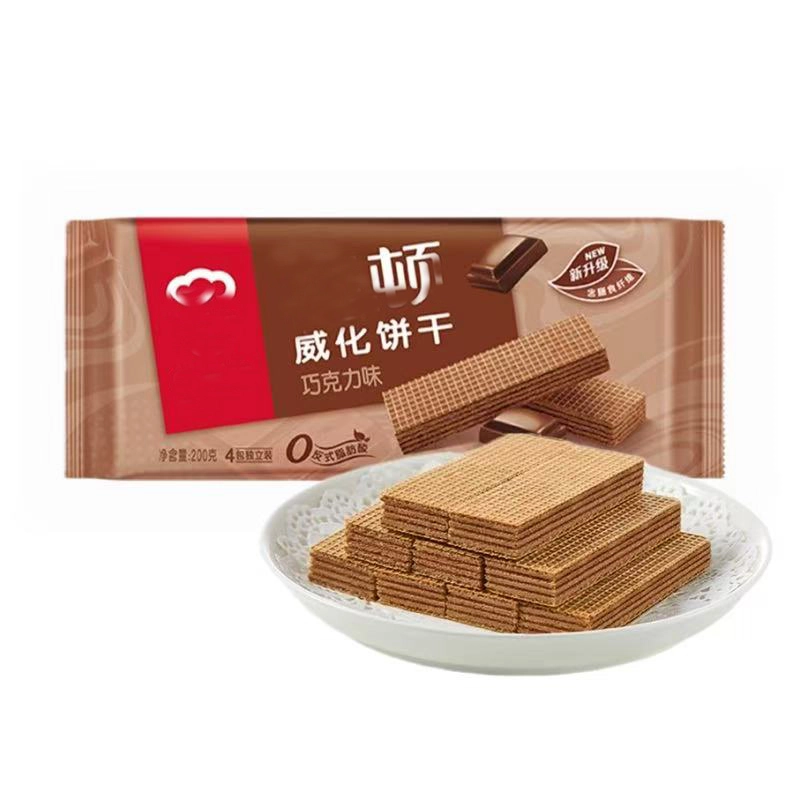
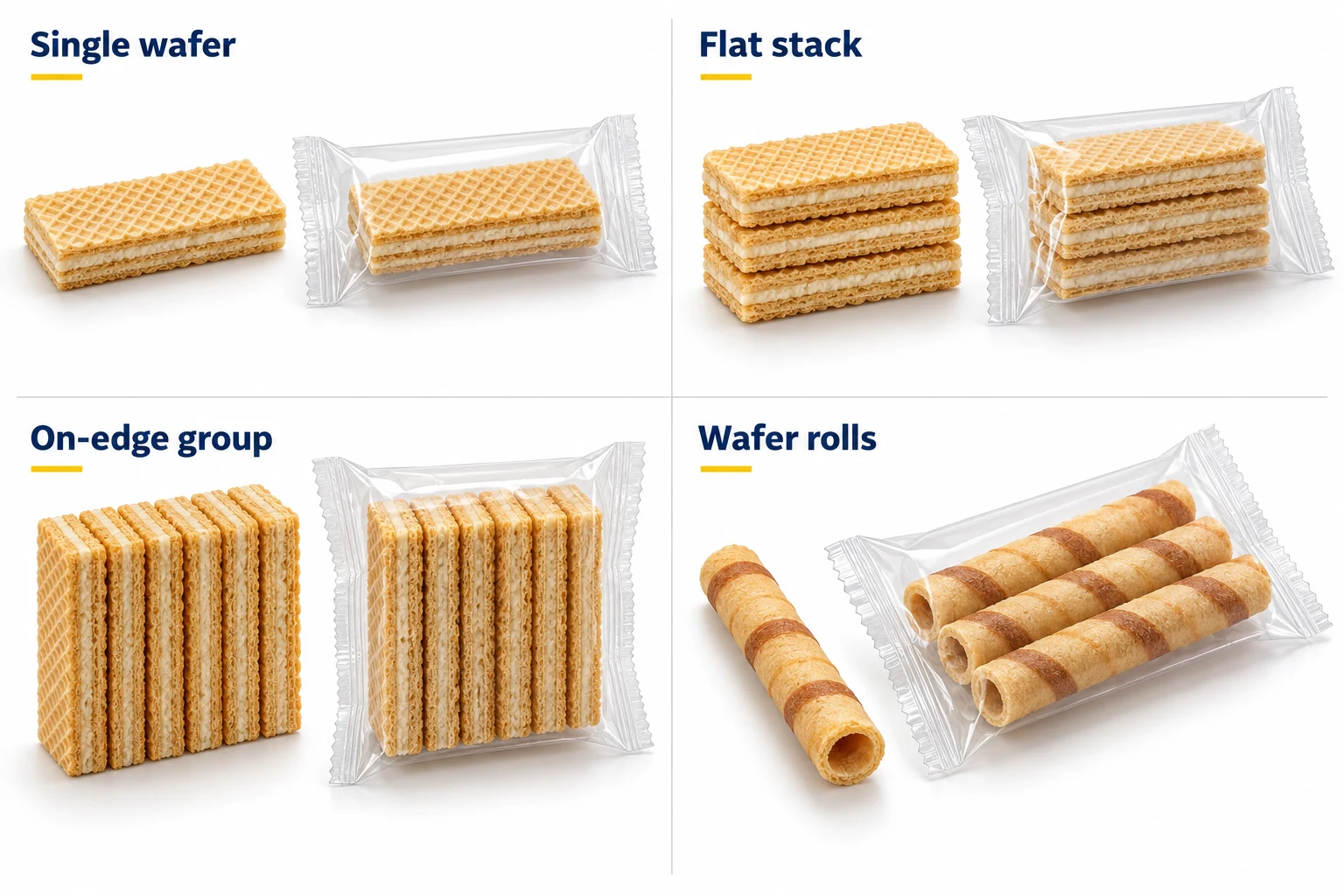
A wafer packing machine usually uses horizontal flow wrapping to enclose wafer biscuits in a sealed pillow pack. The important choice is how the product reaches the wrapper: as a single wafer, a flat stack, an upright group or aligned wafer rolls. The feeder must preserve that arrangement without crushing the product.
Comwin develops wafer packaging solutions from a single flow wrapper to a coordinated packaging line. We match the product handling, film sealing and required output to your wafer samples and finished pack.
Price guide: Comwin’s planning reference for a horizontal flow wrapper is US$5,000–25,000, depending on the selected configuration. Dedicated wafer grouping and more extensive automation need a defined scope. Optional cartoning, case packing and complete projects have separate budgets, explained in the price comparison.
Choose the wafer pack first, then match the feeder
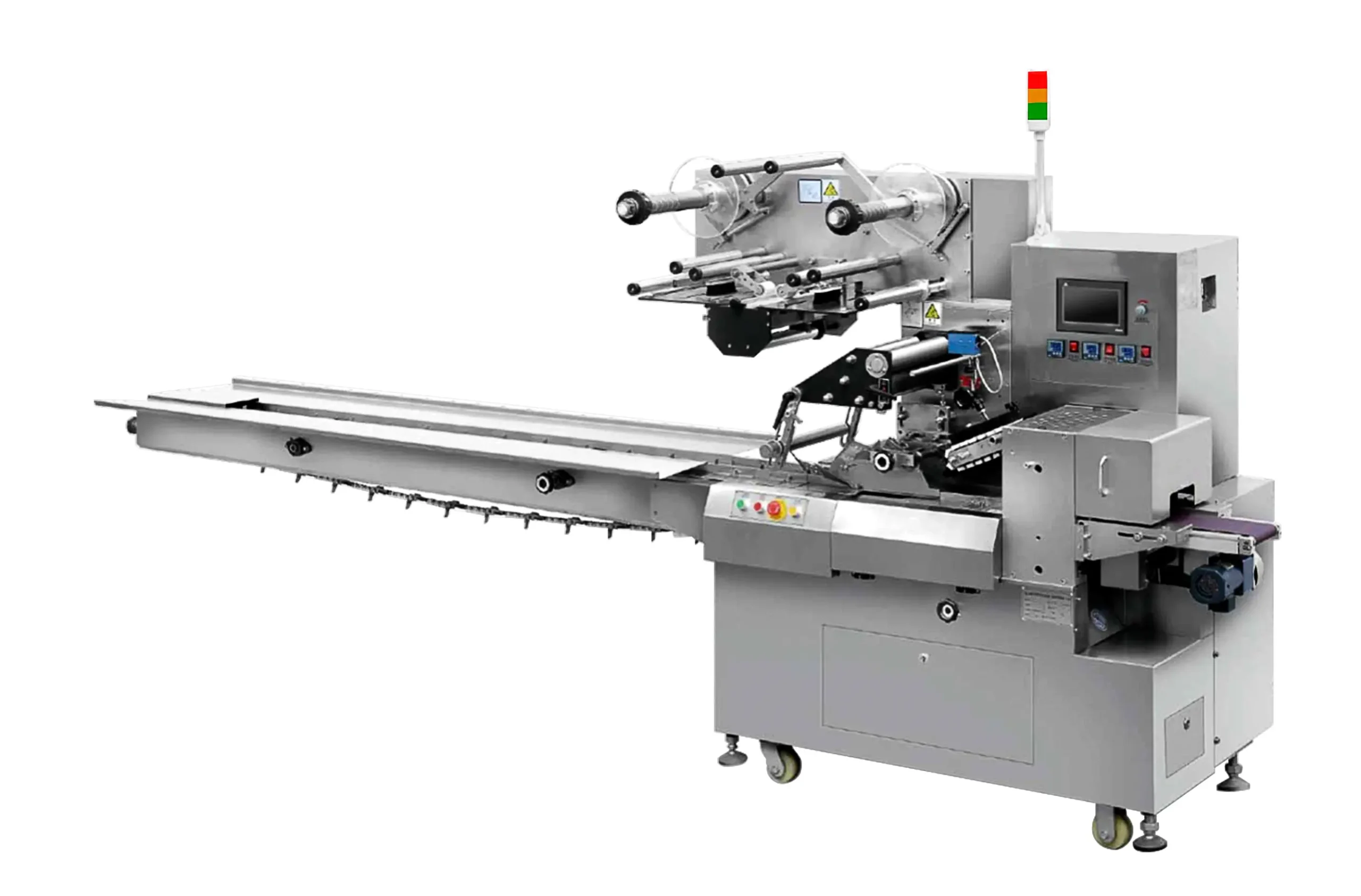
For regular wafer biscuits, a horizontal flow wrapper is the starting point. It forms film around the product, makes a longitudinal seal and seals and cuts the two ends. Product orientation, grouping and transfer into the film determine which feeding arrangement fits.
| Product and finished pack | Recommended starting configuration | What changes the selection? |
|---|---|---|
| One rectangular wafer or coated wafer bar per pillow pack | Flow wrapper with a product-matched infeed and guides. Use supported transfer where the surface or edges are easily marked. | Irregular arrivals, sticky coating or damage from pushing may call for a different belt transfer or automatic spacing arrangement. |
| A flat stack or grouped portion in one pillow pack | Flow wrapper with a defined portioning and stack-support method. Prepare the group manually or add grouping equipment to meet output. | Stack height variation, sliding layers or inconsistent count can make the grouping station the critical part of the project. |
| Wafers standing on edge in a family pack | On-edge feeding with suitable pockets or support, followed by a compatible flow wrapper. | Check how the group is formed, held upright and released. A general infeed should not be assumed to maintain this arrangement. |
| Wafer rolls aligned in a portion pack | Flow wrapping with guides and product support selected for the roll diameter, length and count. | Rolling, bridging or breakage during transfer may require dedicated grouping or a different supporting arrangement. |
Send an actual product and a target pack sample or drawing. Comwin uses them to select the feeding method, sealing arrangement and format parts, including any changes needed for your production conditions.
Solve wafer breakage and feed interruptions at the right point
A neatly sealed bag can still contain broken or miscounted wafers. Evaluate handling and sealing separately so that the equipment recommendation addresses the cause of the loss.
| Production problem | Configuration to consider | What to check in a trial |
|---|---|---|
| Chipped corners or broken layers | Supported transfers, aligned guides and a feeder that avoids excessive product pressure. Review drops, pushing and turning before changing wrapper speed. | Inspect product before and after each transfer; define unacceptable breakage and count it using the same method. |
| Crumbs entering the sealing area | Accessible crumb collection, suitable product clearance and separation between the product and sealing jaws. | Run representative crumb levels and inspect seals after continuous operation and restarts. |
| Incorrect count or tilted groups | Portioning, counting and group support matched to the intended arrangement; detection and rejection where required. | Challenge the system with a missing piece or incomplete group and inspect both the accepted and rejected packs. |
| Wrapper waiting for wafers or products bunching up | Spacing, distribution or buffering based on the actual upstream discharge and recovery behavior. | Run normal supply, short gaps and stop/restart sequences. Record which station stops the process. |
| Coating marks or inconsistent end seals | Product-compatible contact surfaces and transfer; film, sealing settings and clearance selected together. | Use the real product temperature and film. Inspect contact marks, trapped product, seal condition and cut position. |
Examples for different wafer products
| Your product | Practical packing approach | Main decision |
|---|---|---|
| Vanilla sandwich wafers in individual portions | Single-product pillow wrapping with controlled product spacing. | Can the current operator or upstream process feed the required number of good packs consistently? |
| Chocolate-coated wafer bars | Single-bar flow wrapping with contact and transfer tested at the actual packing temperature. | Does the infeed preserve the coating during starts, stops and routine production? |
| Uncoated wafers in stacked or on-edge family packs | Group the specified count, support the arrangement and wrap the complete portion. | Can the group keep its shape through transfer, film forming and end sealing? |
| Hollow wafer rolls in portion packs | Align the rolls and support the group through a compatible wrapper. | Can the system handle variation in length and diameter without trapping or breaking a roll? |
Example: changing an individual pack to a flat stack. The machine now receives a grouped portion instead of one piece. Review the grouping step, pack height, forming clearance and film size. A new bag-length setting alone does not establish that the new pack can run.
Example: packing coated wafers after a cooling conveyor. Supply samples at their actual packing condition and show how the conveyor releases them. The useful trial includes irregular arrivals and a restart, because these can expose handling problems that a short, evenly hand-fed demonstration misses.
Wafer packing machine price and project budgets
The following figures are Comwin’s USD planning references dated September 4, 2026. They help define a starting budget; the final quotation follows your product, pack format, output and equipment list.
| Equipment scope | Planning reference | How to use the range |
|---|---|---|
| Horizontal flow wrapper | US$5,000–25,000 | Reference for the wrapper and its specified configuration. Speed, drive system, product size, selected feeding and printing affect the price. Dedicated on-edge grouping or extensive handling may exceed this scope. |
| Optional retail cartoner | US$25,000–80,000 | For small paperboard cartons. Define product grouping, carton style, loading method and change parts. Integration with the wafer wrapper must be listed. |
| Optional shipping-case packer | US$25,000–80,000 | For loading shipping cases. Establish whether case erecting and closing are included; palletizing is a separate scope decision. |
| Complete bagged-product packaging project | US$80,000–500,000+ | Broad reference for a selected primary-packaging process and substantial downstream equipment. A simple feeder upgrade is not a complete project at this starting price. |
Cartoning and case packing share a broad reference band in Comwin’s budget guide, but they perform different jobs and require separate specifications. A complete-project quote should list the included machines so that primary and downstream costs are not counted twice.
These are experience-based budget references, not market-average prices or binding offers. Confirm EXW, FOB or other delivery terms, and itemize freight, insurance, taxes, installation, training, spares and any additional compliance requirements. Automatic wafer distribution, grouping, inspection and extra formats should each be identifiable in the quotation.
To keep the first investment focused, start with the pack formats needed for launch and identify the operation limiting accepted output. Add automation at that operation, then allow the agreed space and interfaces for future equipment.
When does automatic wafer feeding become worthwhile?
An automatic wafer packing machine can have an automatic wrapping cycle while still relying on an operator to load wafers. Specify the work performed before the infeed and after the discharge when comparing proposals.
| Production mode | Remaining operator work | Changeover work | Acceptance focus |
|---|---|---|---|
| Operator-fed flow wrapping | Prepare and place each product or group; replenish film and remove packs. | Adjust the infeed, guides, film and settings for the next pack. | Sustainable accepted output with the planned staffing and representative products. |
| Assisted grouping and automatic feeding | Supply wafers to the agreed entry point; replenish materials and handle exceptions. | Change grouping, count and support parts as well as wrapper settings. | Correct counts and low product damage during normal supply and gaps. |
| Connected upstream supply and selected downstream machines | Manage materials, quality checks, changeovers and recovery. | Coordinate recipes and physical adjustments across the included stations. | Whole-process accepted output, controlled stopping and safe recovery from a blocked station. |
Choose the level around the available labor, product flow and production schedule. Frequent short runs may place more value on accessible adjustment and cleaning than on automating every transfer.
Calculate packs per minute from the sales pack
Planning example: you need 120,000 accepted wafer pieces per day, with four pieces in each finished pack and six effective packing hours.
- Required saleable packs: 120,000 ÷ 4 = 30,000 packs per day.
- Effective packing time: 6 × 60 = 360 minutes.
- Required accepted output: 30,000 ÷ 360 = 83.3 packs per minute.
This defines a production requirement, not a machine rating. At perfect yield, the feeder would supply about 333.3 pieces per effective minute in correctly formed groups; actual input must also cover agreed product losses. Agree operating allowance and demonstrate sustained output with the actual wafer and film. Do not deduct the same cleaning or changeover time twice if it is already excluded from the six effective hours.
For running cost, compare film, product loss, labor, utilities, maintenance and equipment cost over the same number of accepted packs. Keep rejected packs and damaged wafers visible in the calculation; a faster displayed cycle rate alone does not establish a lower cost per saleable pack.
Match the film and sealing process to the wafer
Define the required storage conditions and product-life target before selecting the film. Ask the film supplier for the relevant barrier and sealing data, then test the structure on the proposed wrapper. Clear film, printed film and metallized structures need their own assessment; similar appearance does not establish equivalent protection or machinability.
For coated wafers, include the surface condition and product temperature in the test. If gas flushing is part of the project, specify the gas supply, monitoring and acceptance method, then validate the finished pack. A gas-flush attachment alone does not establish a shelf-life claim.
Comwin offers free sample testing. A useful acceptance plan records:
- Products and formats: representative wafer sizes, fragile variants, grouping and film rolls.
- Output and quality: accepted packs over an agreed run, correct counts, breakage criteria, seals and print/cut registration.
- Operating changes: short product gaps, restart, roll changes and the agreed format change.
- Cleaning and access: crumb removal, contact-area access, and the operator tasks needed between products.
- Recorded limits: approved materials, settings, adjustments and unresolved items before shipment.
Add an outer multipack, retail carton or shipping case when needed
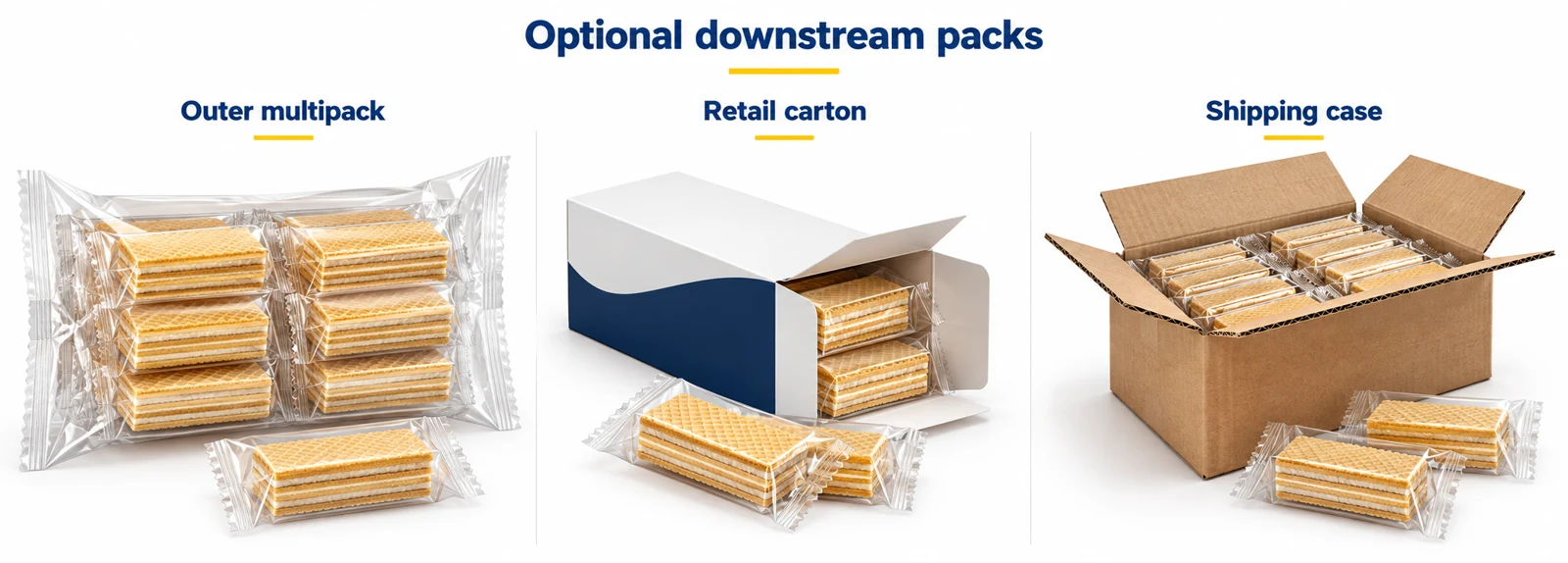
Once the primary wafer pack is defined, decide whether the sales or distribution format needs another packaging step. The following are optional downstream choices. They are included in a project only when specified.
Outer pillow multipack
Use an outer pillow bag when several individually wrapped wafer portions are sold as one bundle. Count and arrange the finished inner packs, then feed the group to a flow wrapper sized for that bundle. The inner film tails and the group’s stability matter during transfer. This requires a specified grouping and wrapping step beyond the primary pack.
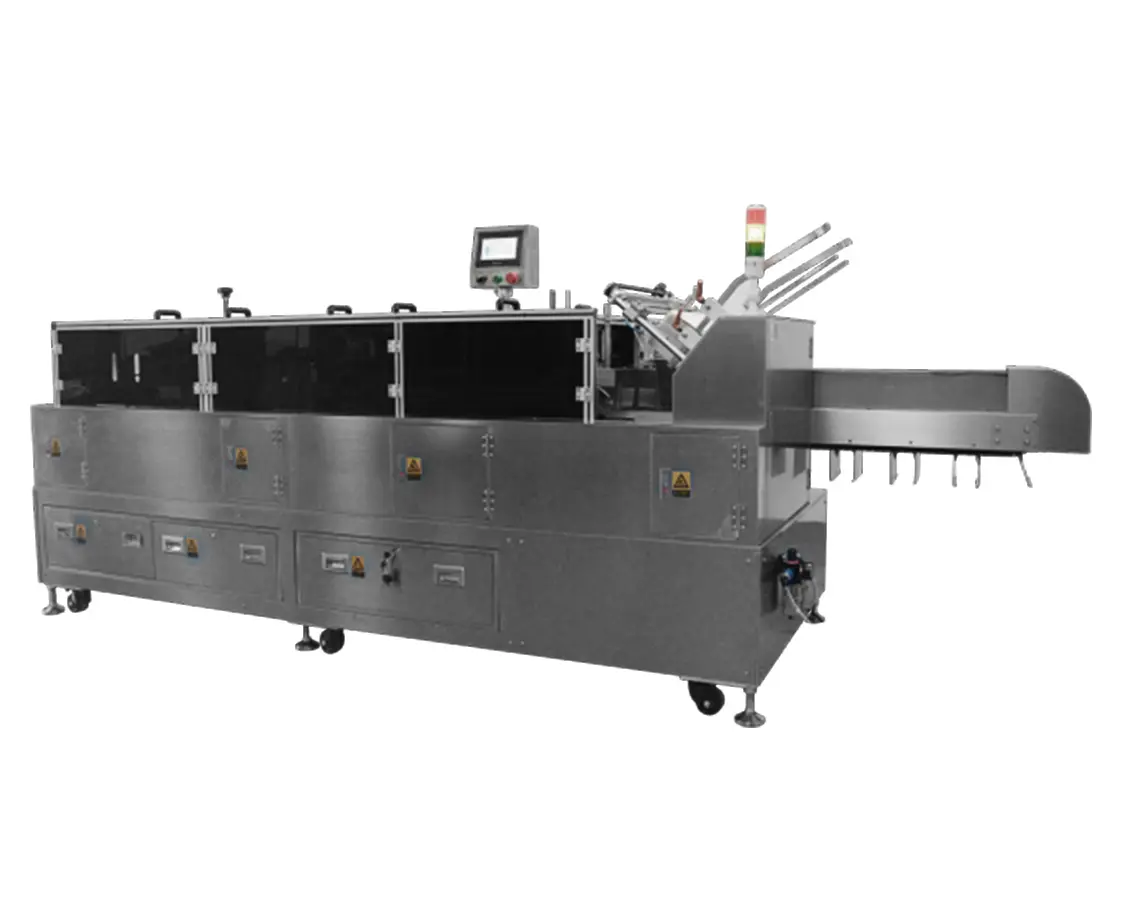
The flow-wrapper equipment shown above represents this equipment category; the outer-pack configuration must fit the bundle dimensions and film.
Retail paperboard carton
Choose a retail cartoner when the sales unit needs a folding paperboard box. Define the number and orientation of wrapped wafers, the carton closure and the loading method. A counted group must reach the carton without excessive compression.
Corrugated shipping case
Choose a case packer when the task is to load wrapped packs or retail cartons into shipping cases. Specify the layer pattern and case dimensions, and identify which stations erect and close the case. Establish transport-pack performance separately from primary sealing.
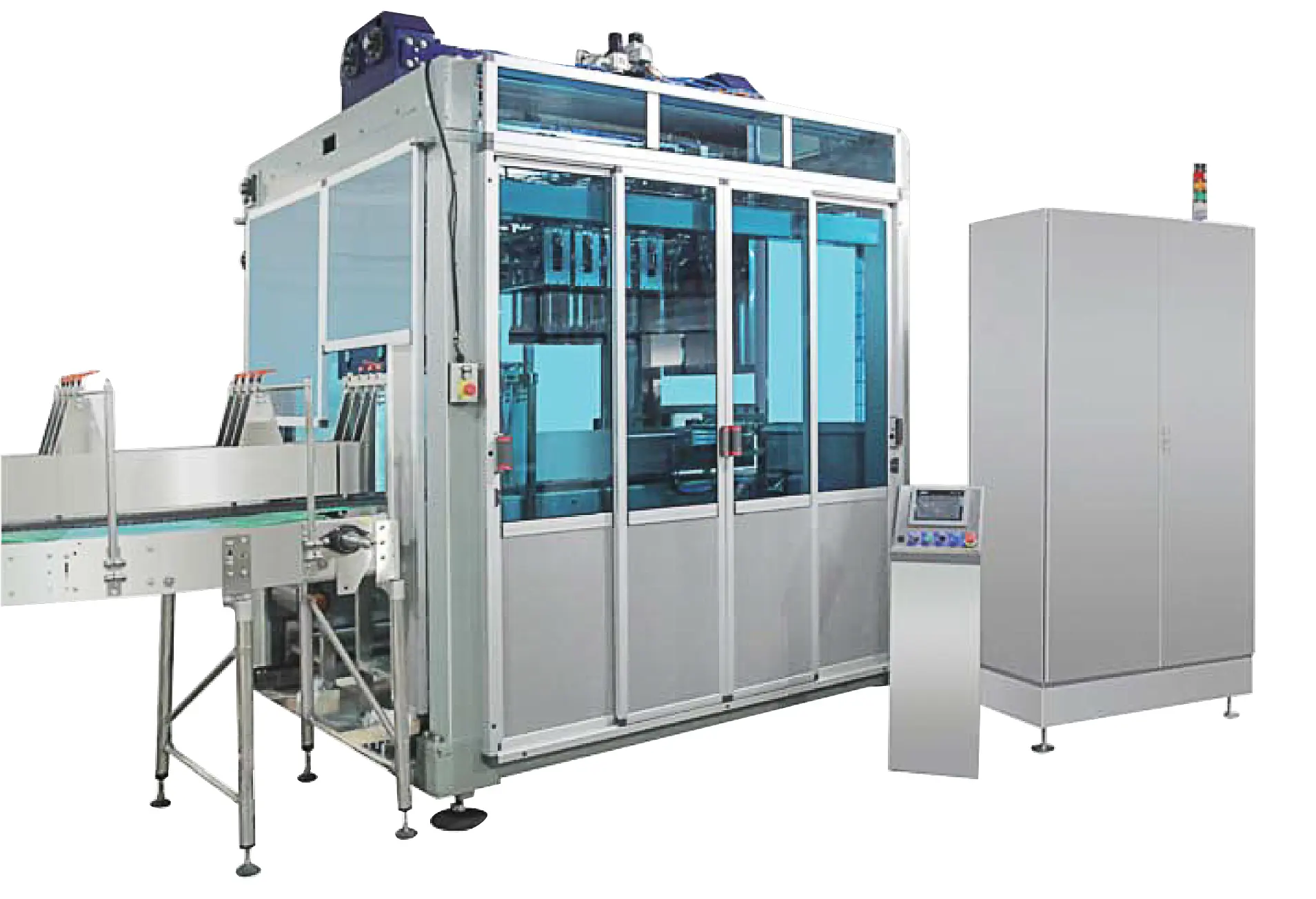
Size downstream equipment from the agreed packs per bundle, carton or case and the output arriving from the wrapper. This keeps the project scope clear and exposes a slow transfer or manual loading step before the machines are ordered.
Compare wafer-machine suppliers on the same production requirement
| Comparison point | Evidence to request | How to decide |
|---|---|---|
| Budget and included scope | Named wrapper, feeding/grouping equipment, formats, inspection, downstream stations and delivery terms. | Compare the same pack and supply boundary; identify optional items and excluded costs. |
| Accepted output | Trial record using your product, film, staffing and quality criteria. | Use good packs per minute and the agreed run conditions, alongside the causes of rejects and stops. |
| Product and format adaptation | Feeding method, guide/support details and a demonstrated changeover between the required products. | Check the difficult wafer or arrangement as well as the easiest sample. |
| Support and maintenance | Training method, service response, spare-parts list and cleaning/access instructions. | Match support and routine work to the operators and maintenance resources at your site. |
| Delivery and commissioning | Approved drawings, sample/film responsibilities, acceptance steps and site-readiness requirements. | Agree milestones and responsibilities against a defined scope before comparing delivery commitments. |
Wafer packing machine questions
Can one machine pack single wafers and family packs?
It may, if the wrapper’s working range and the required feeding arrangements support both. A flat stack and an on-edge group can need different support and format parts. Include both finished packs in the trial and request the changeover procedure and parts list.
Do I need an automatic feeding line immediately?
If operator loading reliably meets the required accepted output, an operator-fed wrapper can fit the job. When group formation or irregular upstream arrivals limit output, assess grouping and feeding automation at that point using your actual production flow.
Can a wafer wrapper handle chocolate-coated products?
For coated products, select the contact and feeding method using samples at their normal packing temperature. Check marking and sticking during a sustained run and restart. A setting that works on an uncoated wafer should not be assumed to work on its coated version.
Does the price include the feeder and cartoner?
Only the equipment listed in the quotation is included. Use the US$5,000–25,000 wrapper reference for early planning, then specify grouping, automatic feeding and downstream equipment separately. Ask for one clear equipment list before comparing total project prices.
Should several wafers go in one bag or be wrapped individually first?
If they are sold and consumed as one portion, a grouped primary pack may suit the product. If the bundle needs separate portions, wrap those portions first and add the outer multipack afterward. Compare the required portion format, handling and packaging-material use.
Is this equipment for potato wafers?
This guide concerns wafer biscuits and wafer rolls. If your product is loose potato crisps, specify that product explicitly: its weighing and feeding task differs from arranging fragile wafer biscuits for flow wrapping.
Send your wafer and pack requirements for a proposal
Provide the following so Comwin can recommend the equipment, trial plan and itemized budget:
- Product: wafer type, dimensions, weight, coating, packing temperature and fragile features, with representative samples.
- Finished primary pack: pieces per pack, orientation, dimensions, opening requirements and a sample or drawing.
- Film: structure, thickness, roll details, print registration and intended storage requirements, if already selected.
- Production: daily accepted output, effective packing hours, formats, available operators and a video of the current discharge/feed.
- Site and optional downstream: available floor plan, power and air; any required outer bag, retail carton or shipping-case specification.
- Delivery: destination, preferred trade terms and installation/training requirements.
Comwin provides free sample testing and can arrange visits to see real equipment operating. Our service terms include a two-year whole-machine warranty, three years for core components and remote response within 24 hours; small equipment is supported with video guidance and remote calls. Project-specific installation and training are defined in the offer.
Send your wafer packaging requirements to receive a proposed feeding and wrapping configuration, a clear equipment scope and the next steps for sample testing.