Quick answer: A pickle pouch packing machine must match the pouch construction, pickle solids, brine/oil and sealing method. Use a premade-pouch machine for retail stand-up or flat bags, a vacuum-pouch configuration for products that benefit from reduced headspace after trials, or a VFFS route when a roll of film and high repeatability are more important than premade-bag presentation.
Comwin planning prices: a configured premade-pouch machine is US$10,000–45,000; a standalone vacuum sealing machine is US$3,000–15,000; and a complete filling-product packaging line is US$80,000–500,000+. A manual pouch filling or small pickle pouch sealing setup is quote-based until pouch size, solids/liquid ratio, film and target output are defined. These are September 4, 2026 experience-based budget references, not binding quotations.
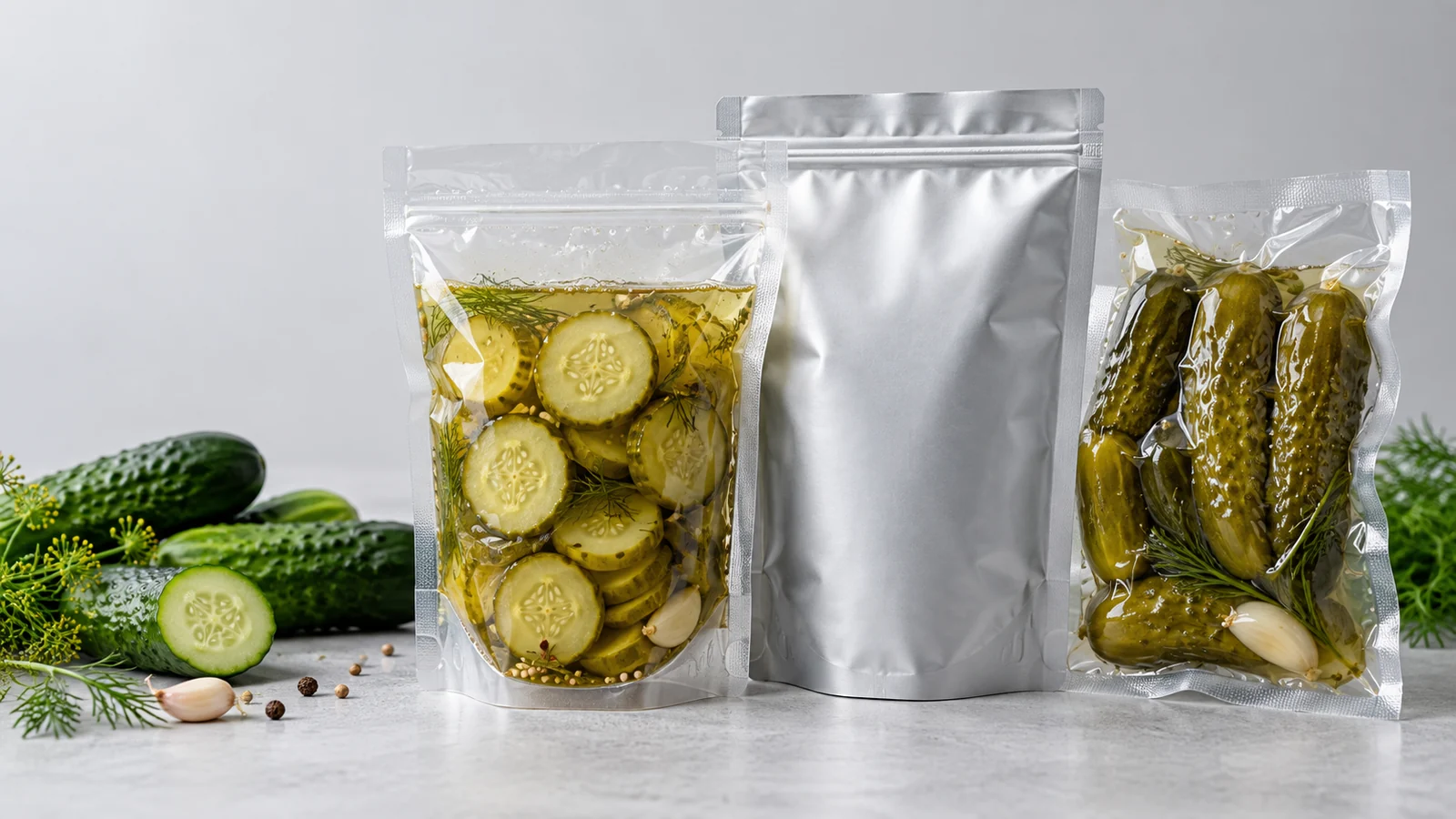 Pouch-route hero image: finished stand-up and vacuum pouches make the film, seal edge and product geometry visible before machine selection. This AI-generated image is an application illustration, not factory or test evidence.
Choose the Right Pickle Pouch Packing Machine
Choose the pouch route before choosing a filler. Whole cucumbers and large pieces need a pouch opening and loading path that will not damage the film; sliced pickles and brine need separate solids and liquid control; oil-rich achar may need a different dosing and seal-cleaning approach. A pouch machine is not automatically interchangeable with a bottle filler. A broad pickle packing machine page can introduce the category, while this page resolves the pouch-specific decision. A separate pickle sealing machine may only close pre-filled bags.
The package, product state and sealing principle determine the best route.
| Route | How it works | Best fit | Why choose it / boundary |
|---|---|---|---|
| A. Premade stand-up or flat pouch | The machine picks an already-made pouch, opens it, loads solids and liquid, cleans the seal zone as needed and heat-seals the top. | Retail pickles, sliced vegetables, mixed achar and premium presentation. | Good format flexibility and graphics. Confirm pouch dimensions, zipper/spout, fill opening and seal contamination tolerance. |
| B. Premade vacuum pouch | Solids and liquid are loaded into a premade pouch, then air is removed before the pouch is sealed. | Products and processes where lower headspace is desired and validated. | Choose only after product, liquid level and film trials; vacuum is a process choice, not a shelf-life guarantee. |
| C. VFFS or sachet-style pouch | Film is formed into a pouch, solids/liquid are dosed, longitudinal and cross seals are made, then packs discharge. | Stable film, repeatable sizes and higher-volume small or medium pouches. | Potentially efficient for a defined film and format. Confirm film sealing window, piece size, dosing method and changeover limits. |
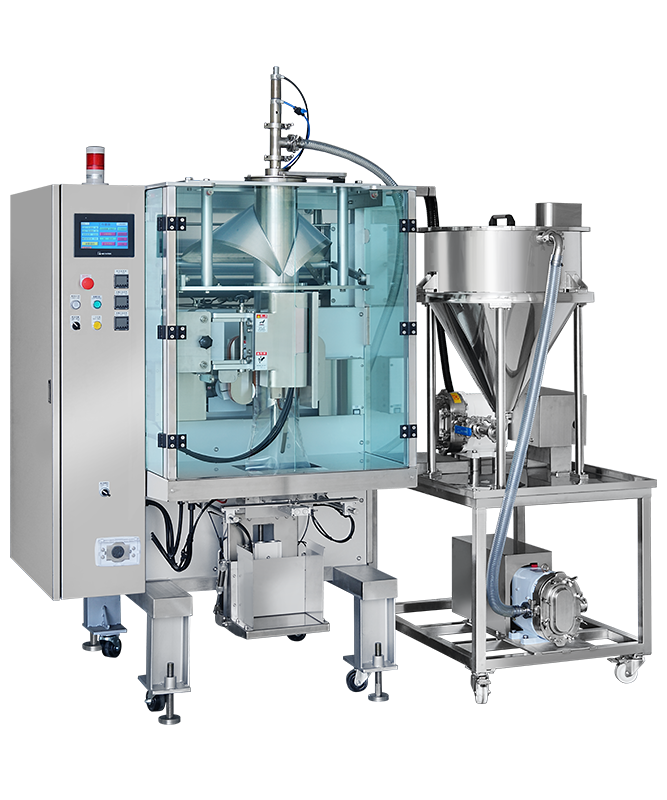
Start with the published bagged packaging solution to separate premade, vacuum and film-formed pouch routes.
Pouch Problems the Configuration Should Solve
Pickle pouches fail when solids, liquid and the seal are treated as one undifferentiated flow. The table maps each field problem to a route and a check. Sources and engineering boundaries are recorded in the research note.
Each response must be tested with the real product, film and pouch samples.
| Plant problem | Recommended Comwin route | Configuration response and acceptance check | Suitable product |
|---|---|---|---|
| Pieces enter the seal area | Route A/B with guided loading and seal-zone cleaning | Control fill height and use a defined wipe/air-cleaning step before sealing; inspect seal width and peel/leak samples. | Whole pickles, spears and chunky mixed vegetables |
| Brine or oil causes weak seals | Route A/B/C with separated liquid dosing and controlled cutoff | Dose liquid after solids where appropriate, protect the seal jaw, and verify seal integrity after product-contact contamination. | Brined pickles, oil pickles and mixed achar |
| Pouch wrinkles or leaks under vacuum | Route B with film and vacuum trial | Match vacuum level and dwell to pouch material, product geometry and liquid level; test for leaks rather than promising a fixed shelf life. | Vacuum-ready whole or sliced pickles |
| Film or pouch format changes stop the line | Route A for multi-format premade pouches; Route C for a defined film family | Keep change parts and film specifications documented; verify setup, registration and sealing window after each change. | Multiple retail sizes or seasonal SKUs |
| Pack weight varies between solids and liquid | Route A/B/C with separate solids and liquid metering | Define target solid weight, liquid volume and total weight as separate checks; use representative pieces for FAT. | Sliced pickles, relish-like mixes and chunky achar |
Pouch Applications and Equipment Boundaries
These examples show how product, pouch and equipment fit together. A bottle or cup requirement should be scoped as a separate project rather than forced into a pouch quotation.
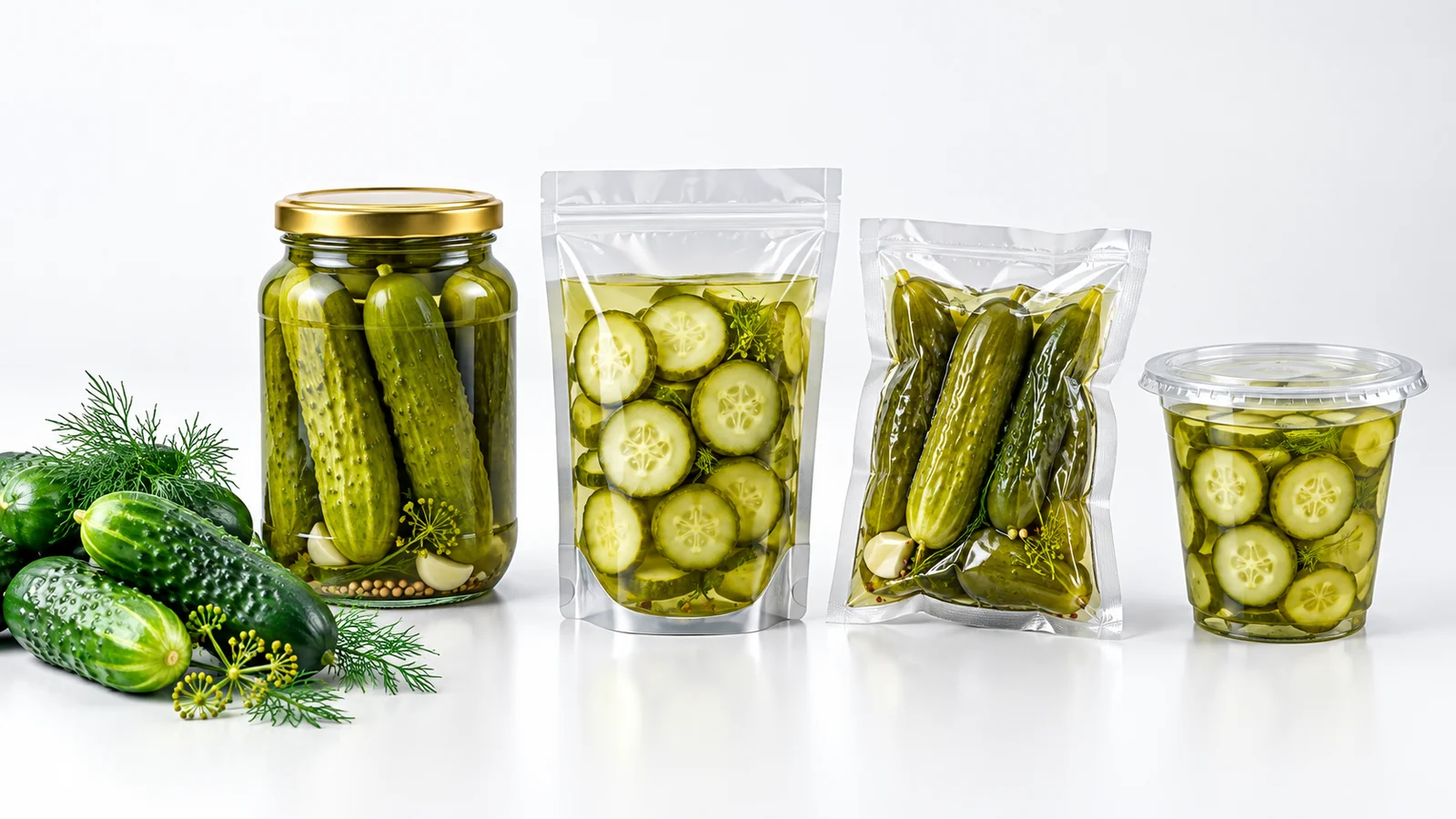
Use the scenario as a project brief, then confirm with product and packaging samples.
| Product and channel | Finished pouch | Recommended route | What to confirm |
|---|---|---|---|
| Retail sliced pickles | Printed stand-up pouch, optional zipper | Route A premade pouch | Pouch mouth, slice size, brine volume, seal cleanliness and display orientation |
| Whole or chunky pickles for foodservice | Flat or gusseted vacuum pouch | Route B premade vacuum pouch | Piece geometry, liquid level, film puncture resistance and post-vacuum leak test |
| Small pickle sachets or defined film packs | Rollstock pillow or sachet pouch | Route C VFFS | Film sealing window, target grams, piece bridging, lane count and code placement |
Use the premade and vacuum pouch platform as the equipment reference when the project needs finished-pouch handling or an application-specific vacuum stage.
Pouch Materials, Filling and Sealing Inputs
Before comparing a pickle pouch packing machine price, define the inputs that control the machine scope:
- Pouch: premade or rollstock, width/length, gusset, zipper or spout, film structure, thickness and sealant layer.
- Product: whole, sliced or mixed solids; brine/oil ratio; viscosity; temperature; piece size and puncture risk.
- Fill target: solid weight, liquid volume, total weight, headspace and acceptable variation.
- Seal: top seal width, jaw temperature/dwell window, contamination tolerance, vacuum requirement and leak/peel method.
- Output: pouches per minute or shift, SKU count, changeover frequency, coding and reject handling.
- Factory: power, compressed air, washdown, drainage, footprint and downstream case packing.
Pickle Pouch Packing Machine Price and Scope
The phrase pickle pouch packing machine price can describe a VFFS frame, a premade-pouch rotary machine, a vacuum module or a complete line. These scopes should not be averaged together.
Comwin experience reference dated September 4, 2026; USD planning figures, not binding quotations.
| Scope | Comwin reference | Scope boundary | Main price drivers |
|---|---|---|---|
| Premade-pouch machine | US$10,000–45,000 | Configured machine for pouch pickup, opening, filling and heat sealing | Pouch size, solid feeder, liquid dosing, vacuum option, cap/spout and tooling |
| Standalone vacuum sealing machine | US$3,000–15,000 | Vacuum/sealing module only; upstream filling is separate | Chamber/jaw format, pouch size, vacuum process and sealing controls |
| Manual or small pouch filling/sealing setup | Quote-based | Bench or assisted equipment matched to samples | Pouch handling, filler, seal jaw, operator workflow and quality checks |
| Complete filling-product packaging line | US$80,000–500,000+ | Coordinated project scope, not a minimum for every pouch | Product preparation, metering, main pack, inspection, case packing and integration |
Quote inputs: send pouch samples/drawings, film or laminate information, product samples or videos, solid and liquid targets, desired pouches per minute or shift, seal and vacuum requirements, coding, utilities and downstream packing needs. We will return a route recommendation, supply boundary, sample-test plan and configuration-based budget.
If inspection, coding and case packing are included, define their interfaces through a filling-product packaging line.
Supplier Selection for a Pouch Project
Compare the supplier profile with your project constraints; no category is best for every pouch.
| Dimension | Comwin fit | European high-end fit | Other China supplier fit |
|---|---|---|---|
| Budget | US$10K–45K premade-pouch reference; larger scopes are configured | Quote-based for high documentation or specialized hygienic integration | May fit standard pouch equipment at a basic entry scope |
| Production scale | Small-to-medium projects moving from manual to coordinated pouch handling | Large continuous lines with local engineering and service networks | Small batches or standard semi-automatic transitions |
| Customization | Pouch, product, dosing, vacuum and downstream modules can be matched | Deep process engineering for established packaging specifications | Best when a standard frame needs limited changes |
| Support | Free sample testing, 2-year machine warranty, 3-year core-component warranty and remote response within 24 hours | Local service or on-site engineering may be available under contract | Verify response route, spare-parts scope and language support |
| Delivery and response | Direct technical discussion and a project schedule to be confirmed | Formal project gates and fixed production slots | Potentially quick standard delivery; confirm engineering depth |
FAQ: Pickle Pouch Packing and Sealing
Should I choose premade pouches or VFFS?
If you need printed stand-up presentation, zipper options or several pouch shapes, choose Route A premade pouches. If film and pouch dimensions are stable and repeat output is the priority, compare Route C VFFS.
When is a vacuum pickle pouch machine appropriate?
If lower headspace is a validated product objective, choose Route B and run film, liquid-level and leak trials. Vacuum alone is not a shelf-life guarantee.
What determines pickle pouch packing machine price?
If the pouch and product are fixed, price is mainly driven by pouch size, solids feeder, liquid dosing, vacuum, sealing controls and automation. If samples are missing, request a quote-based scope instead of comparing headline prices.
Can one pouch machine pack whole and sliced pickles?
If both products fit the same pouch opening and dosing method, a configurable premade-pouch route may work. If piece size or liquid behavior changes substantially, plan separate contact parts and changeover tests.
Is a pickle pouch sealing machine the same as a pouch packing machine?
No. If pouches are already filled, a sealing module may be enough. If the line must open/form pouches, dose solids and liquid, then seal, choose a complete pouch packing route.
What should FAT check?
For each pouch and recipe, check solid weight, liquid volume, total weight, seal width, contamination tolerance, vacuum/leak result, code placement, reject logic and changeover repeatability.
Request a Pouch-Packing Recommendation
Send the minimum information for this pouch project:
- Product: whole/sliced/mixed pickle, brine or oil, viscosity, temperature and piece size.
- Pouch: premade or rollstock, dimensions, film structure, zipper/spout and sample packs.
- Fill target: solids, liquid, total weight, headspace and speed.
- Seal: heat-seal, vacuum, leak/peel and contamination requirements.
- Production: pouches per minute/shift, SKU count, coding and changeover.
- Factory: power, air, washdown, footprint and downstream case packing.
We will return a module-by-module recommendation, supply boundary, sample-testing plan and configuration-based quotation. Compare the bagged packaging solution, premade/vacuum pouch platform and filling-product packaging line before sending your brief through the contact page.