For formed chikki bars in individual sealed packs, start with a horizontal flow wrapper and product handling that keeps the bars supported and clear of the end seals. A suitable manual-feed chikki packing machine has an indicative budget of USD 5,000 to 25,000. Gentle alignment with flow wrapping is provisionally USD 18,000 to 55,000 when a consistent stream of bars needs coordinated feeding.
Comwin matches the product’s shape, temperature and surface to the pack and handling process. Jaggery blocks may use individual wrapping; loose granules need suitable weighing and bagging. Soan papdi needs support for its delicate layers. Each route needs its own handling trial and budget. Mixing, forming and cutting chikki are upstream processes and are excluded from the wrapping figures.
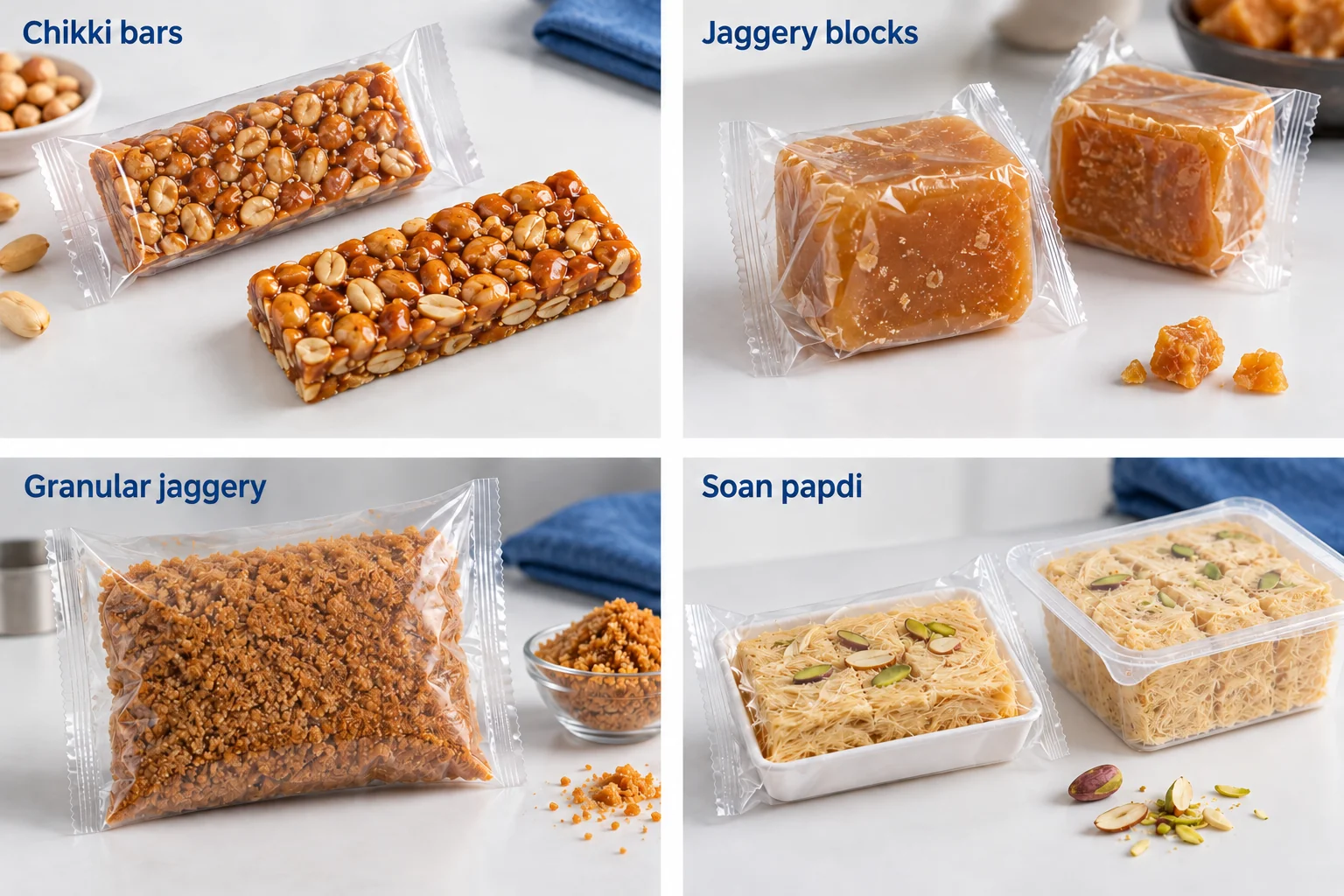
Select the route for bars, blocks, granules or delicate sweets
| Product and pack | Equipment route | Selection reason | When to revise it |
|---|---|---|---|
| Stable chikki bars or jaggery blocks in individual film packs | Manual or matched feeding, support and positioning, flow wrapping and sealing | Places each formed piece inside a sealed pack | Irregular loose fragments need dosing by weight; very fragile pieces may need additional support |
| A consistent stream of brittle bars | Gentle alignment, controlled spacing and synchronized flow wrapping | Coordinates bar arrival with the wrapper while limiting pressure and falls | Warm sticky bars or inconsistent dimensions require a different arrival condition or feeding arrangement |
| Loose jaggery granules or suitable small pieces | Compatible feeding and weighing with VFFS or premade-pouch handling | Creates a net-weight retail bag | Fine powder, wet clumps or large blocks need a separate dosing and discharge evaluation |
| Delicate soan papdi | Gentle placement on a suitable tray with flow wrapping, or loading a compatible container for lid-film sealing | Supports the sweet and limits compression during transfer | The retail structure calls for a different tray, container or closure |
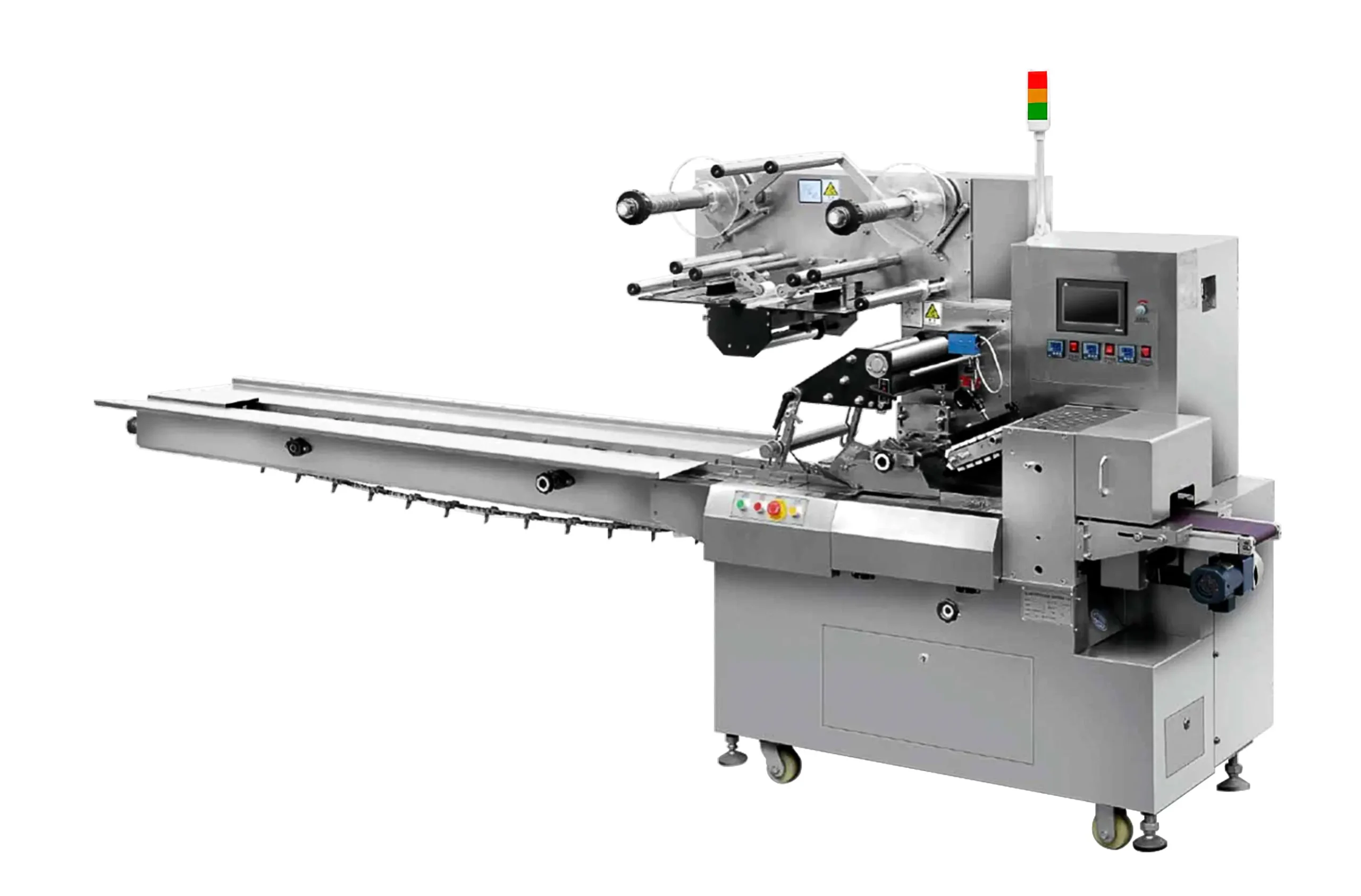
Our horizontal flow-wrapping equipment is the starting route for formed bars and blocks. The product guide, support and spacing must fit the actual sweet, including its most brittle or sticky packing condition.
Define jaggery’s physical form before specifying a machine
A jaggery block needs positioning for wrapping; granules need dosing into the bag. For blocks, inspect product placement, contact marks and the film around the piece. For loose granules, evaluate feeding, dose variation and residue. If the product is powder, wet or clumped, reassess the dosing and bag-mouth arrangement before adopting a granular configuration.
For a chosen premade bag, the premade-pouch equipment route must be matched to the jaggery’s condition and the pouch. This article’s VFFS budget does not include an alternative premade-pouch machine.
Give soan papdi support without adding unnecessary pressure
Soan papdi has a delicate layered or fibrous structure. A shallow tray can support it through handling and flow wrapping; a compatible container with a selected lid film is another primary-pack route. Test the finished appearance and loose fragments, including corner damage. Net weight alone cannot show whether the layers remain acceptable.
Choose the tray dimensions and film path around the product’s height. If the pack rubs or compresses the sweet, adjust clearance and placement before raising output. Trial soan papdi separately because its delicate layers respond differently from hard chikki.
Address breakage, sticky surfaces and crushed layers
| Problem | Cause to inspect | Configuration response | Check in the trial |
|---|---|---|---|
| Chikki bars crack | Excessive pushing, unsupported transfers or product entering the sealing/cutting position | Support the bar, control spacing and match feeding to the wrapping cycle | Compare incoming and packed breakage, crumbs and end-seal position |
| Jaggery sticks to guides or film | Temperature, moisture and surface sugar change contact behavior | Test the packing condition, contact arrangement and actual film | Residue and marks during sustained running and after a stop |
| Soan papdi layers lose shape | Handling or film pressure compresses an unsupported product | Use appropriate support and gentle placement with clearance | Agree visual defects and compare layers, corners and loose fragments |
| Granular jaggery leaves product in the seal | Uneven discharge, fines or clumps cross the closing area | Match dosing and settling to the material and bag | Dose variation, residual material and the finished seal |
Use samples at the temperature and condition expected at packaging. Define the allowed breakage with a repeatable method. After a pause, inspect sweets left on the guides, residue and the first packs after restarting; include those results in the sustained-run and changeover checks. Count acceptable packs under the agreed run conditions, including stops and rejects.
Choose film using the actual sweet and seal
Choose chikki film from the product-protection task as well as the wrapper. Define the required resistance to moisture exchange and contact with the sweet, then match the material to the selected seals and print. For an unsupported brittle bar, compare handling damage with the cost and loading work of a tray. For soan papdi, a tray protects shape during transfer while an outer film closes the retail pack; a lidded container changes both the support and closure process. Comwin matches those operations as one selected configuration.
Keep the simpler untrayed pack when its handling and presentation meet the product requirement. Add support when that is what prevents unacceptable damage, rather than adding a tray to every sweet. Validate the complete material, closure and storage conditions before setting a preservation claim.
Reference situations for chikki, jaggery and soan papdi
| Product condition | Finished pack | Starting route | Condition that changes it |
|---|---|---|---|
| Formed peanut chikki bar | Individual sealed pillow pack | Manual feed or gentle aligned flow wrapping | Warm, soft or sticky arrival requires a revised feed condition |
| Thin sesame or rajgira brittle bar | Individual or supported film pack | Supported transfer and low-pressure positioning into a wrapper | Visible cracking requires handling changes before higher speed |
| Loose jaggery granules | Example: 250 g retail bag | Compatible granular dosing and bagging | Powder, moisture or larger clumps change the dosing task |
| Delicate soan papdi portion | Tray inside sealed film, or compatible lidded container | Gentle placement with tray wrapping or container sealing | Retail closure requirements select the appropriate closing equipment |

Example: a formed peanut-chikki bar
Establish the bar dimensions and the range of product conditions after cutting. Trial supported feeding with the chosen film and compare edge damage and end-seal clearance. For an illustrative output of 60 bars per minute at 40 g each, the product flow is 144 kg/h. This is a conversion of assumed packaging inputs, not an upstream forming-machine rating or a promised wrapper output.
Example: a soan papdi retail portion
Compare gentle placement onto a selected tray with placement into the intended container. After closing, examine the layers and corners and apply the agreed handling check. A tray flow wrapper produces an outer film pack around the loaded tray; a lid-film sealer closes the compatible container rim. Select the structure the retailer needs, then test that complete pack.
Chikki packing machine prices and related routes
These October 2026 indicative USD budgets assume new equipment supplied from China for ordinary non-aseptic food, one selected product and one format. They support initial planning and are not binding quotations. Freight, taxes, overseas installation, site work, extra formats and upstream sweet production are excluded. Inspection and subsequent packaging are additional unless expressly listed.
| Equipment scope | Budget, USD | Included planning scope | Main exclusions |
|---|---|---|---|
| Suitable manual-feed flow wrapper | 5,000 to 25,000 | One compatible chikki/bar or block format and film pack | Mixing, forming, cutting, automatic alignment and later packaging |
| Gentle alignment with brittle-bar wrapping | 18,000 to 55,000 | One consistent incoming bar stream, basic alignment and one wrapping format | Complex multi-lane distribution, processing/cooling and inspection |
| Granular-jaggery VFFS combination | 12,000 to 35,000 | One suitable granule/small-piece product and bag; feeding, dosing and bagging | Powder auger dosing, wet/sticky treatment, inspection and processing |
| Soan papdi tray-flow-wrap configuration | 8,000 to 30,000 | One suitable tray/product, manual tray loading, support and wrapping | Automatic sweet forming, automatic tray loading and later packaging |
| Separate sealer for prefilled dessert containers | 1,500 to 6,000 | One compatible heat-sealable container/film, manual presentation | Loading the sweet, making containers and processing/sterilization |
Keep chikki making and chikki packing prices separate
The packaging scope starts with formed chikki. If mixing, sheet forming or cutting is also required, define those upstream operations and their handoff separately in the project.
Ask for an itemized proposal using the product and pack details below. Compare the quoted feeding duties, operator steps and test targets on the same scope.
When manual loading or automatic alignment fits the order
| Dimension | Manual loading or independent operation | Coordinated feeding and wrapping |
|---|---|---|
| Production mode | Short orders, frequent shapes or deliberate gentle placement | Repeated orders with consistent bars and stable arrival conditions |
| Labor | Place bars/trays or present filled containers; collect packs as specified | Selected alignment and synchronization; replenishment, collection and cleaning remain defined |
| Changeover and cleaning | Reset guides, film or closure and clear contact residue | Also adjust feeder spacing, support and interfaces; measure the whole changeover |
| Acceptance | Good output with the planned placement steps and damage checks | Sustained good packs, crumbs, sticking, sealing and stop/restart recovery |
Keep manual placement when it protects the sweet and meets the order. Add alignment when placement is the limiting step and consistent products can be fed gently. If incoming temperature or irregular cutting causes sticking and cracks, correct that interface before adding speed.
Compare the handling and supplied scope
| Dimension | What to compare | Comwin proposal focus |
|---|---|---|
| Budget and scope | Wrapping, alignment, support, manual duties and excluded making equipment | Itemize the selected primary-pack process and options |
| Output and scale | Good packs with actual sweets, film and personnel | Balance the order target and the product-handling constraint |
| Adaptation | Bar clearance, brittle edges, sticky contact and layered-product support | Specify appropriate guides, support and format changes |
| Support | Sample trials, cleaning guidance, parts and response responsibility | Agree support for the selected equipment |
| Delivery | Approved samples, configuration and acceptance milestones | Define supplied operations and interface responsibilities |
Comwin provides free sample testing and can arrange a real factory visit. Confirmed service terms are a two-year machine warranty, three years for core components and remote response within 24 hours. Your proposal defines equipment scope and agreed acceptance conditions.
Questions about brittle-sweet packaging
Does a chikki packing machine also make chikki?
For making and packing together, add the upstream operations to the project scope. The arriving bar still determines the wrapper contact and spacing.
Can chikki and soan papdi share a wrapper?
If the product/tray dimensions and materials fit one configuration, shared use can be assessed. Test chikki breakage and soan papdi compression separately, including the changeover.
Should every brittle sweet use a tray?
For damaged unsupported sweets, compare tray support with the added material and loading work. Retain an untrayed pack when the agreed handling and presentation are acceptable.
Can one jaggery bagger handle powder and blocks?
If the physical form changes, reassess feeding, dosing and the pack opening. A granule configuration is not a verified powder doser or an individual-block wrapper.
Send the formed sweet and finished pack for a proposal
| Information | What to send |
|---|---|
| Product | Bar, block, granule, powder or delicate layered sweet; dimensions, packing temperature, moisture and sticking |
| Packaging | Film pack, weight bag, tray or container samples; material and print |
| Quantity | Pieces or net weight per pack, positioning and acceptable damage |
| Closure | Flow-wrap seal, tray overwrap or container lid film, coding and required pack checks |
| Production | Arrival after forming/cutting, spacing, good packs per shift, personnel and changeovers |
| Factory | Receiving/cleaning arrangement, floor space, utilities, packing environment and destination market |
Send your chikki and jaggery packaging requirements. We will return a matched process and equipment recommendation, included items and options, a sample-test plan and a quotation for the selected scope.