For formed protein, cereal and granola bars, choose a horizontal flow wrapper with feeding suited to the actual surface. Sticky protein bars need compatible contact and support; brittle granola bars need gentle transfers and stable spacing. Short runs can use manual feeding, while regular upstream supply can justify automatic organizing.
A compatible manually fed flow wrapper has an indicative budget of USD 5,000 to 25,000. Basic gentle automatic feeding with wrapping is USD 20,000 to 65,000. The budgets below distinguish the contact/support configuration and optional multipack equipment. Comwin matches these operations to your actual bar and incoming supply.
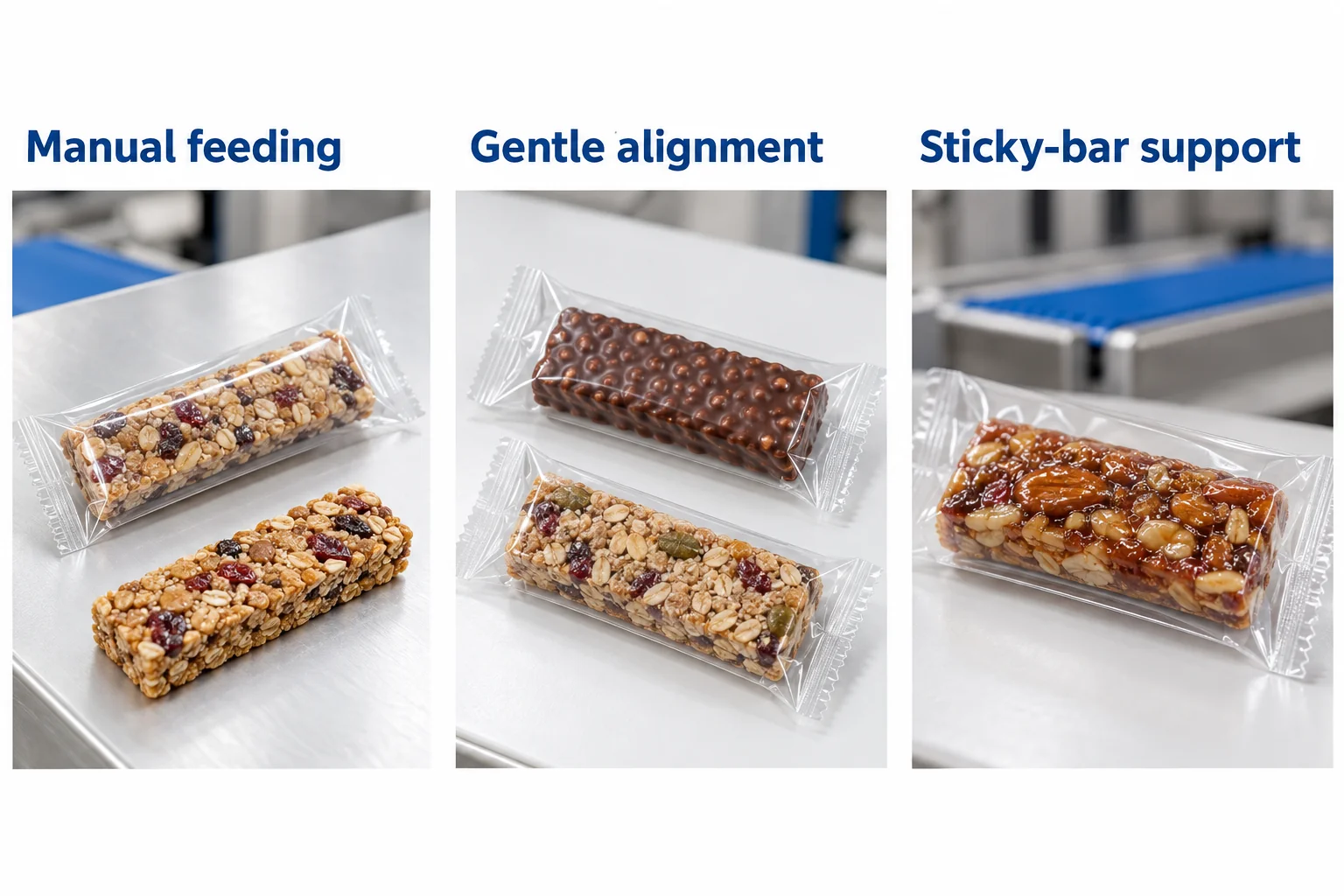
Match bar support first, then choose manual or automatic feeding
The first choice is how the bar can touch the machine and film. The next is who supplies and spaces it. Sticky-product support can be used with manual or automatic feeding; it is not a separate automation level.
| Bar condition | Starting contact and support arrangement | Why it changes the configuration |
|---|---|---|
| Stable, firm bar | A suitable belt or product guide carrying the bar into flow wrapping. | Use manual placement for short runs; add organizing and spacing for regular upstream supply. |
| Soft or sticky protein bar | Compatible contact surfaces and, where needed, a wrapper with a supporting-film path. | The film-support path can reduce pushing contact. Match the feed and seal position around it; adhesion and slipping determine whether the arrangement is suitable. |
| Brittle granola bar | Continuous support, reduced-impact transfers and controlled spacing. | Protect corners at each handoff. Revise the transfer where crumbs first appear instead of adjusting an undamaged downstream step. |
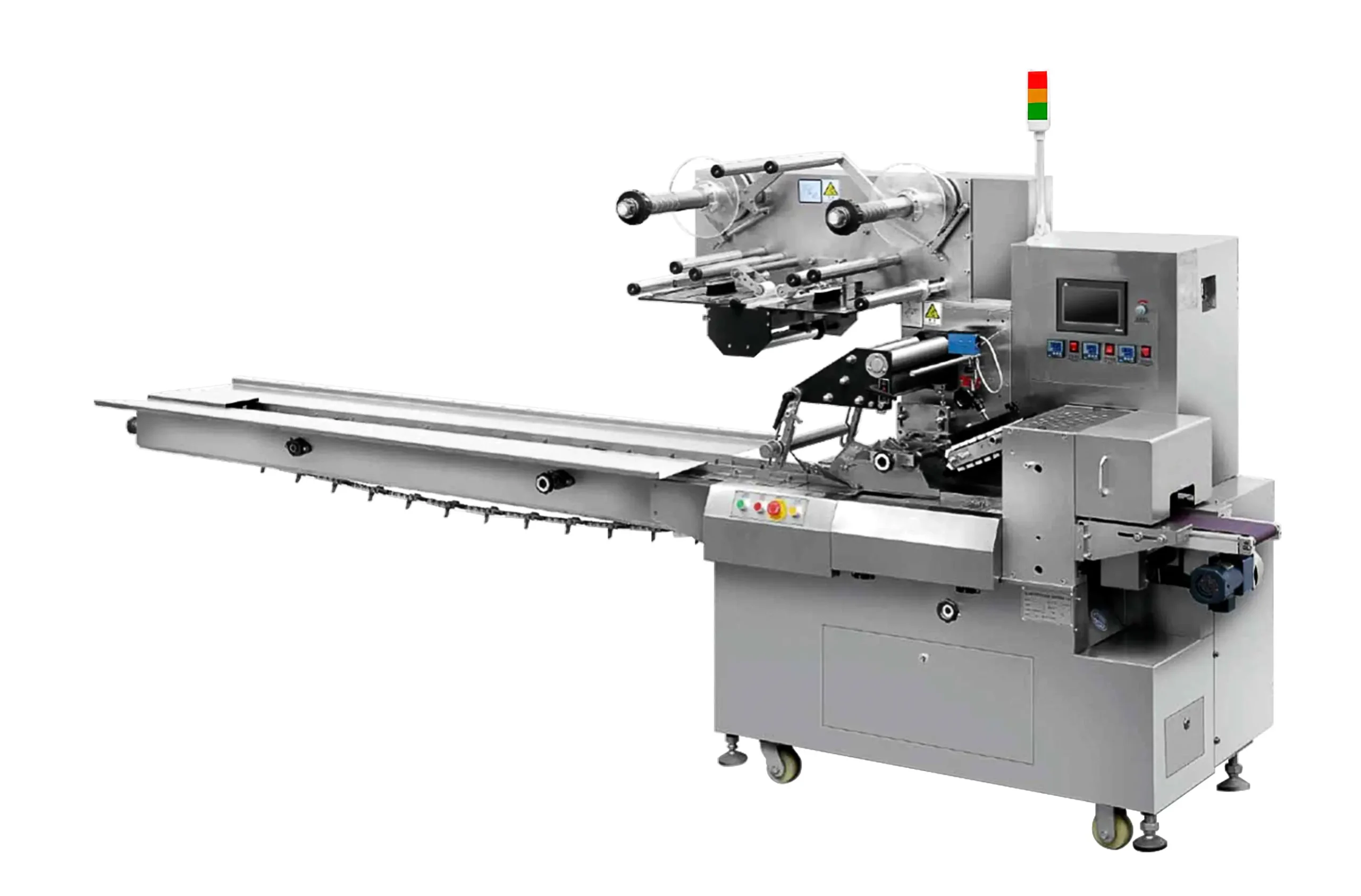
We then select manual feeding or automatic buffering and organizing from the order pattern, incoming lanes and interruptions. For varied short batches, retain operator placement when it meets the workload. For repeated bars from a cutting line, coordinate spacing and a stop/restart response with the wrapper. The proposed contact/support arrangement remains part of either choice.
Our horizontal flow-wrapping equipment covers the individual sealed pack. Grouping and outer wrapping or cartoning are downstream operations described separately below. Bar forming and cutting define the incoming product and are priced separately when required.
Handle adhesion and breakage as different problems
| Problem and cause | Configuration response | Trial check |
|---|---|---|
| Protein bars stick or coatings scuff; product state and contact are mismatched. | Trial compatible contact surfaces and product support at the actual packing temperature. | Run the tackiest recipe long enough to observe residue buildup, surface marks and cleaning needs. |
| Granola corners crumble; pushing, drops or clamping contact is excessive. | Use gentler transfers, stable support and spacing that keeps bars clear of the sealing jaws. | Inspect incoming and packed bars using the same breakage and crumb criteria. |
| A flavor change needs repeated adjustment; width, thickness and friction change together. | Document recipe-specific guides, support parts and feeding/sealing settings. | Measure changeover through the first acceptable packs of the next actual recipe. |
| Bars accumulate and press against each other when wrapping stops. | Coordinate a suitable buffer and stop/restart signals with the forming or cutting process. | Stop and restart repeatedly; inspect accumulated bars and record who clears or diverts product. |
Sticky protein-bar feeding
A supported feeding configuration is a practical direction when pushing drags a soft bar or it adheres to the transfer surface. For a compatible wrapper design, trial a film-support path that carries the bar with less pushing contact. Match its film path and sealing arrangement to the agreed recipe and incoming condition, then check slipping, contact marks and a clean longitudinal seal area together. Inspect residue buildup during a sustained run.
Fragile granola-bar handling
For a granola bar packaging machine, begin with low-impact transfer and controlled spacing. Inspect the corners and loose cereal pieces after each transfer, not only after wrapping. If damage starts at an upstream cut or a drop onto the infeed, changing the final seal settings will leave that damage in place. Revise the offending handoff or support, then repeat the comparison.
Protein and cereal bar packaging scenarios
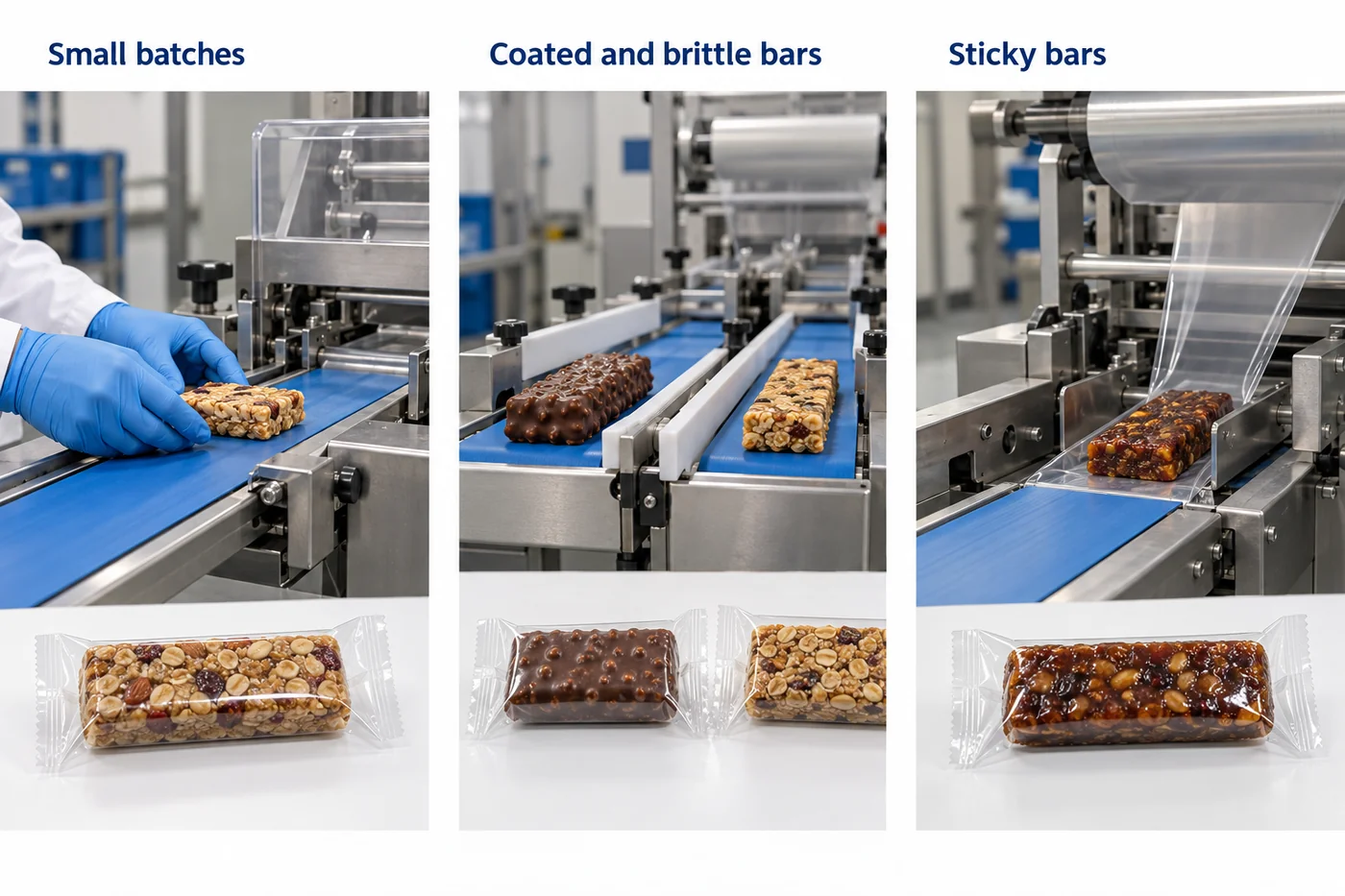
| Product and production situation | Finished pack | Starting route and change condition |
|---|---|---|
| Handmade protein bars; several flavors and short orders | Individual film pack | Manual-feed wrapper if contact is suitable; add supported feeding when the actual recipe adheres or deforms. |
| Coated cereal bars; repeat continuous orders | Individual heat-sealed film pack | Gentle automatic feeding and wrapping. Review the incoming state if the coating softens or marks. |
| Brittle granola bars with exposed cereal particles | Individual film pack with suitable support | Low-impact feeding and flow wrapping. Revise a transfer when corner breakage appears. |
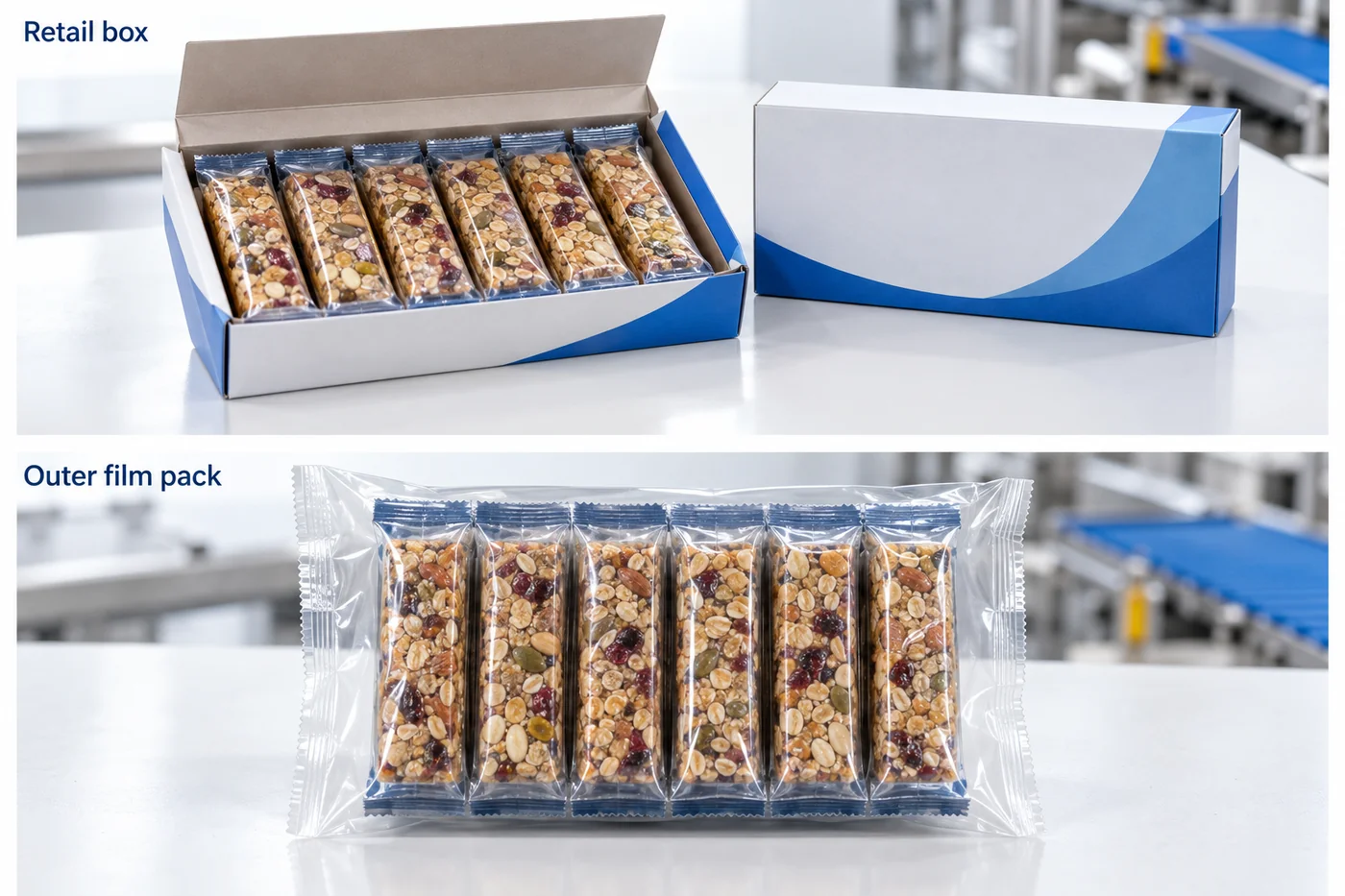
| Six individually wrapped bars for retail | Six primary packs in an outer bag or retail carton | Count and group after primary wrapping; select outer wrapping or cartoning from the retail format. |
Example: two protein-bar recipes on short runs
Suppose two short-run recipes share dimensions, but one is tackier. Begin with manual placement for the order schedule and select contact/support for the tackier recipe. If it drags on the proposed surface, a compatible supporting-film arrangement is the next configuration to compare. Keep the recipe-specific support and cleaning settings so the second flavor can return to acceptable packs without repeated trial adjustment.
Example: a brittle granola bar from a cutting line
Begin with gentle feeding and wrapping, using the real cut bars and their incoming spacing. Trace where loose cereal and corner damage first appear, then adjust that transfer. Include wrapper stops in the trial because accumulated bars can press against one another even when steady running looks satisfactory. If upstream supply is intermittent, revise buffering and recovery before adding speed. Agree acceptable appearance and crumb criteria with the same samples used for film and seal tests.
Bar packaging machine budgets by feeding scope
These indicative USD ranges are for October 2026 planning: new equipment supplied from China, ordinary non-aseptic food and one selected bar/pack format. Freight, taxes, overseas installation, site work, extra formats and upstream forming/cutting are excluded. Temperature-control equipment, inspection and gas generation require a separate scope unless listed. The selected equipment and sample results determine the quotation.
| Equipment scope | Indicative budget, USD | Included and excluded work |
|---|---|---|
| Compatible manual-feed flow wrapper | 5,000 to 25,000 | One bar/film-pack format; excludes upstream forming/cutting, automatic organizing and multipack work. |
| Gentle automatic feeding plus wrapping | 20,000 to 65,000 | Basic buffering and organizing of one lane with wrapping; excludes complex lane distribution, temperature control and inspection. |
| Selected supported-feeding configuration for sticky bars | 15,000 to 45,000 | One bar, contact/support and film-path arrangement with basic feeding and wrapping; excludes recipe processing, upstream cooling and inspection. |
| Counting/grouping plus secondary outer wrapping | 25,000 to 75,000 | One arrangement of already-wrapped bars plus outer film wrapping; excludes individual primary wrapping, cartoning and case packing. |
| Optional retail cartoner, equipment-family reference | 25,000 to 80,000 | Retail cartoning machine with feeding and carton format to be selected; excludes individual wrapping, transport-case packing and palletizing. |
The first three rows are complete primary-wrapping budget examples, not separate fees to add together. The sticky-bar range assumes basic feeding with the selected support/film path. An automatic sticky-bar project combines the required support with automatic organizing and needs one itemized configuration quote; none of these ranges proves that every option is included.
Compare labor, recipe changes and accepted output
| Decision | Manual feeding | Automatic feeding and connected operations |
|---|---|---|
| Production mode | Short orders and varied recipes with operator placement. | Repeat products with known incoming spacing and an agreed response to supply interruptions. |
| Labor steps | Include placement, residue checks, replenishment and collection. | State the automatic buffering/spacing steps and assign cleaning, replenishment and recovery tasks. |
| Changeover | Time guide, film and recipe changes through acceptable packs. | Also list support, belt or film-path parts and connected-machine settings. |
| Acceptance | Inspect surface, seal position and good output at the planned staffing. | Also inspect residue accumulation, missing product, repeated restarts and upstream interaction. |
Six-bar multipacks after individual sealing
For a retail group, choose an outer film pack or a retail carton and define the orientation of the individually wrapped bars. A carton may also require dividers or a particular loading pattern. Compare those features before selecting retail cartoning equipment.
For example, an assumed 120 good individual packs per minute divided into six-bar cartons gives a theoretical 20 cartons per minute. Grouping losses and cartoner interruptions need buffering and an agreed recovery plan. This is planning arithmetic, not a verified line speed. Retail cartoning and outer wrapping are alternative downstream formats; neither is included in the basic individual-wrapper budget.
Compare suppliers with your difficult recipe
| Comparison | Evidence to request | Comwin proposal focus |
|---|---|---|
| Budget and scope | The same bar state, contact method, film and start/end points. | Separate primary wrapping, feeding and optional multipack costs. |
| Output | Good packs using tacky or brittle production samples, including interruptions. | Match the infeed and upstream handoff to the required packed output. |
| Adaptation | Proposed support/contact parts and settings for every selected recipe. | Specify the contact and feeding arrangement around adhesion, coating and breakage. |
| Support | Sample testing, residue cleaning instructions, spares and response responsibilities. | Define support with the selected equipment and its cleaning tasks. |
| Delivery | Approved bar/film samples, configuration and linked-equipment acceptance steps. | Agree milestones for the primary wrapper and any separately selected grouping operation. |
Food-bar packaging questions
Does a protein-bar packaging machine also form bars?
When forming and cutting are required, list them separately in the project. A wrapping scope normally begins with formed bars; define their spacing, condition and handoff to the wrapper.
How should sticky bars be fed?
For dragging or marked bars, choose the contact/support arrangement first, including a compatible supporting-film path where suitable. Then match manual or automatic feeding to the supply task.
Can one wrapper run protein and granola bars?
When dimensions, film and product behavior fit the selected configuration, identify the change parts and settings and trial both. Verify adhesion for protein bars and crumbs/corner damage for granola bars separately.
Are multipacks included in the individual-wrapper price?
If an outer bag or retail carton is required, specify count and arrangement and add the relevant grouping and packing equipment to the quotation. The individual-wrapper budget covers the primary pack.
Send bar samples and the intended retail format
- Product: recipe/coating, length, width, thickness, packing temperature, tack and fragility.
- Packaging: individual film pack, support, outer bag or retail carton, with actual samples.
- Portion: individual weight, group count, orientation and loading arrangement.
- Sealing: film, cutting position, barrier objective, coding and inspection.
- Production: upstream cutting, lanes and spacing, good packs per shift, stops and format changes.
- Factory: cleaning, temperature conditions, space, utilities and connected-equipment interfaces.
Send your bar-packing requirements. Comwin returns a recommended configuration, included and optional equipment, sample-test and acceptance criteria, and quotation for the selected scope.
We provide free sample testing and can arrange a real factory visit to see machines run. Whole-machine warranty is two years and core-component warranty is three years. Remote response is within 24 hours. Small equipment includes video tutorials and remote video-call support.