For avocados sold individually, use a horizontal flow wrapper with a supported infeed. Each whole avocado goes into its own pillow pack without a tray. Keep the fruit steady through transfer and leave room beyond its shoulder and stem for the film and end seals. A tray helps hold a display pair in position. Choose mesh when the retailer specifies a net, and pack loose graded fruit into cases for wholesale.

Match the avocado pack to the way the fruit is supported
| Pack format | Configuration to assess | Reason to adjust it |
|---|---|---|
| One avocado in a trayless pillow pack | Support and space each fruit on the horizontal infeed, then wrap it separately from rollstock. | Check the smallest fruit for rotation and the longest, widest and softest normal fruit for contact marks, film clearance and clean end seals. |
| Two or more fruit displayed in a tray | Place fruit into a fitted tray and use a horizontal flow wrapper to enclose it. | Change pockets or infeed if the fruit rotates, projects above the allowed height or drags the tray out of position. |
| Retail mesh pack | Count or weigh the approved grade, support the drop into tubular net and clip the gathered ends. | Change tube, net or dose if the fruit jams, the stems snag or the clips sit too close to the load. |
| Whole fruit shipped in cases | Place graded fruit in the specified case pattern with suitable support or separators. | Change placement if the load shifts or fruit shoulders bear the weight of the case above. |
For the same two-fruit retail pack, compare the material and loading work as well as appearance. The net route needs an agreed count or weight and a clip closure. The tray route adds tray supply and fruit placement before wrapping. Price the actual net or tray, film consumption and operator duties for your pack; either route can change when the fruit grade or retail presentation changes.
Flow-wrap one avocado without a tray
A horizontal pillow packaging machine forms film around each fruit and makes a longitudinal seal and two end seals. For single-fruit retail packs, this removes the tray and the tray-loading step. Support the pear-shaped fruit lengthwise so it stays in position from the infeed to the film former. If fruit arrives loose from the grader, specify singulation and spacing for one avocado per wrapper cycle.
Trial the shortest and longest fruit, the widest shoulder, and the softest firmness accepted for packing. Check that guides do not mark the skin, the stem does not puncture the film and the fruit cannot drift into either end seal. Inspect packs after stopping and restarting. Confirm film and ventilation with the produce team for the intended distribution conditions. If the retailer specifies a close-fitting shrink finish, evaluate that film and heat step separately.
Check the highest shoulder as the tray enters the film

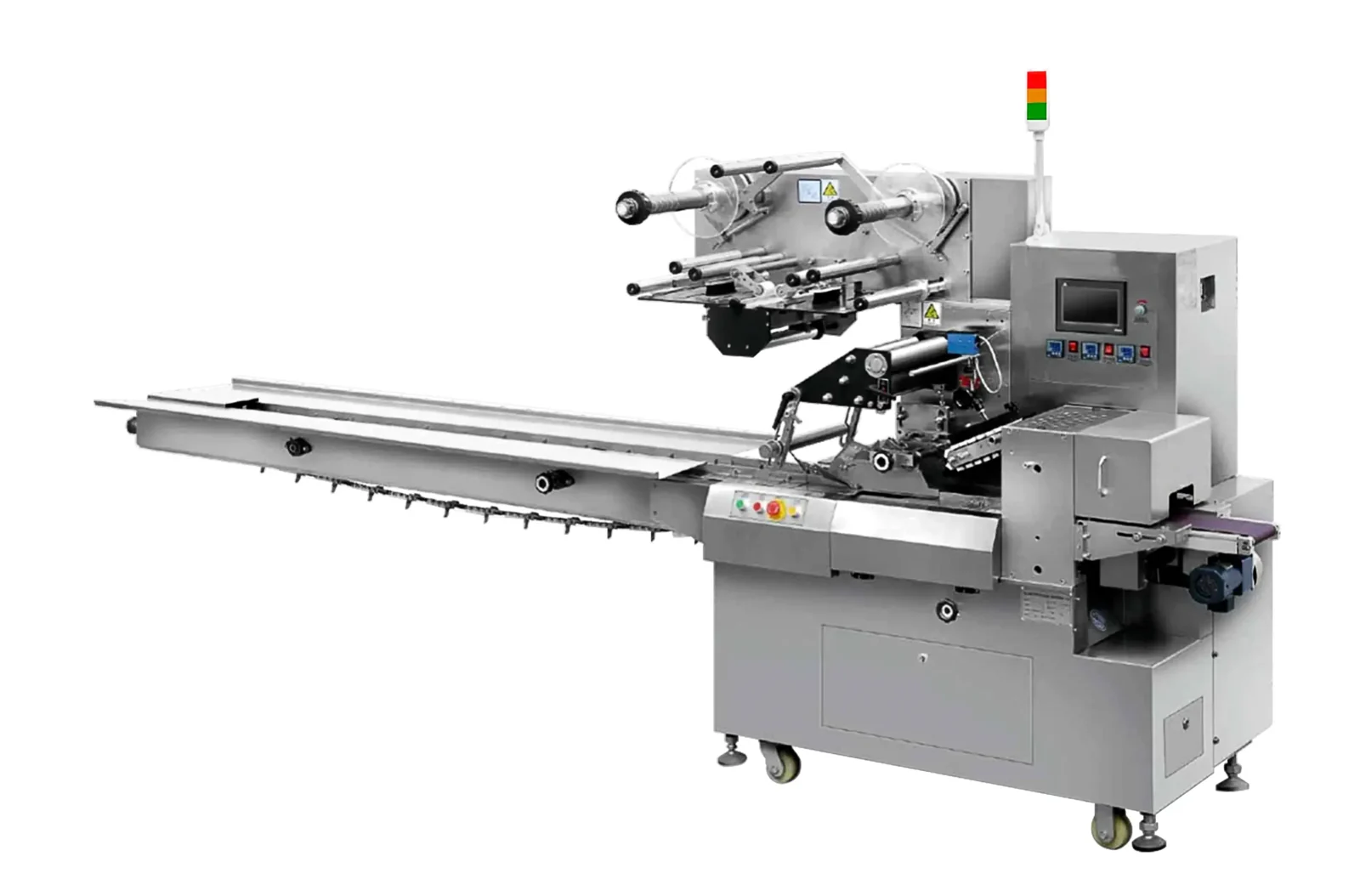
Trial the loaded tray, rather than sizing the wrapper around the empty container. A tall avocado shoulder or a projecting stem can pull on the film where it folds around the tray. Run the largest normal pair and check the path from loading to the end jaws. Use fruit from the firm and ripe ends of your normal range to compare contact marks, position after transfer and operator repositioning. Adjust the pocket or transfer where the trial shows a problem before increasing the bag size.
For small runs, staff can place fruit and feed the loaded tray at an agreed pitch. A repeated tray and grade mix make automatic placement worth evaluating. Confirm who supplies trays, clears doubles and removes any pack that stops partway through sealing. A pillow wrap surrounds the tray. A lid film sealed to a tray flange would need a separate container and closing specification.
Set net dimensions from the full grade band
Check the widest fruit against the tube and the smallest against the net opening and loaded pack. For a net sold by weight, one additional avocado may create substantial giveaway. Test narrower size bands or alternative count combinations before lowering the weighing target. Inspect the finished net with the actual clip, tag and carrying arrangement. A longer tube or bag does little if a stem still catches at transfer.
Give whole cases their own loading specification
Retail tray. Orient the fruit in pockets → feed the loaded tray → wrap and seal.
Net. Prepare the count or weight → support the fruit into the mesh → clip and inspect.
Wholesale case. Route by grade → place the fruit in the specified pattern → confirm fit and case clearance.
Use the actual case and insert, and check fruit condition after a representative handling period. For already packed nets or trays, compare case packing equipment with the real retail pack’s shape and grip points.
Send the fruit sizes and your retail or wholesale pack
Photos, the grade range, target pack count or weight and required output are enough to start. Include the avocado’s normal firmness range and any trays or cases you already buy. Comwin can propose the feed and closure sequence and define the samples needed for a trial. Discuss your avocado pack. For single-fruit wrap, send the fruit length and widest shoulder, normal firmness range, stem condition, and whether the fruit arrives spaced or loose.