
Quick answer
Yogurt packaging starts with the product form and finished pack. Spoonable yogurt and set curd usually lead to cup or tub routes; pourable yogurt may use pouches; drinking yogurt may use bottles. Set-in-pack and fermented-before-filling products need different process sequences.
Indicative budgets are USD 12,000–35,000 for compact cup fill/seal, USD 5,000–30,000 for film pouches and USD 12,000–50,000 for bottle filling/capping; larger tubs need individual costing.
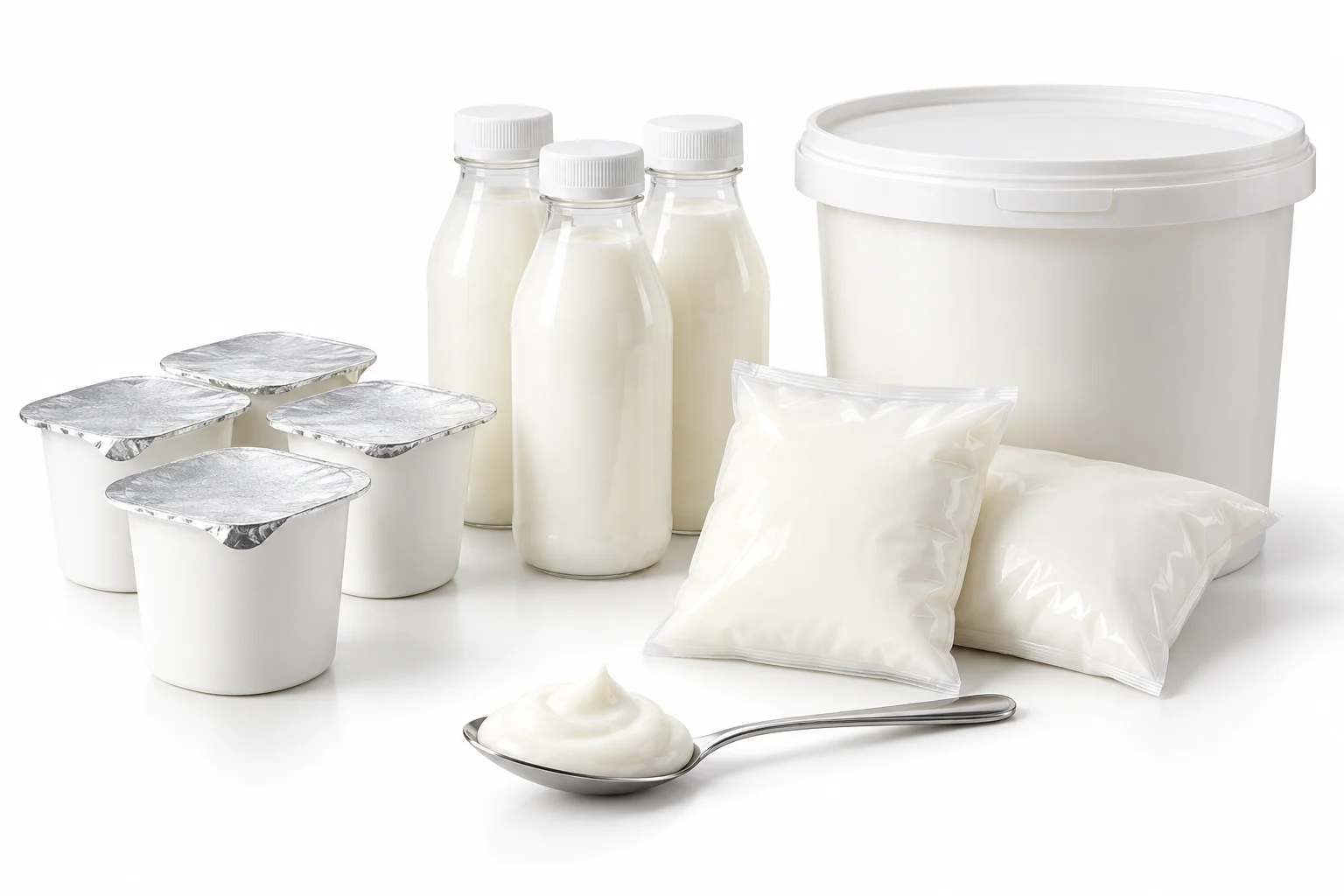
Curd and yogurt packaging starts with product form: set, stirred or drinkable. Comwin matches the cup, pouch, bottle or larger tub to that form and coordinates packaging with the agreed fermentation, cooling and handling process.
Choose the finished pack and equipment
| Route | Best starting condition | Packaging operations |
|---|---|---|
| Cups for spoonable or set yogurt | Retail spoonable yogurt or an in-cup setting process | Cup supply → appropriate filling → lidding and sealing |
| Pouches for pourable yogurt | A flowable dairy recipe and suitable film package | Compatible product feed → film forming → dosing and sealing |
| Bottles for drinking yogurt | Drinkable cultured products sold in capped rigid containers | Bottle positioning → recipe-matched filling → capping |
| Larger tubs for catering or bulk supply | Defined larger containers and closure/handling requirements | Suitable larger-dose feed → tub filling → selected lid closing |
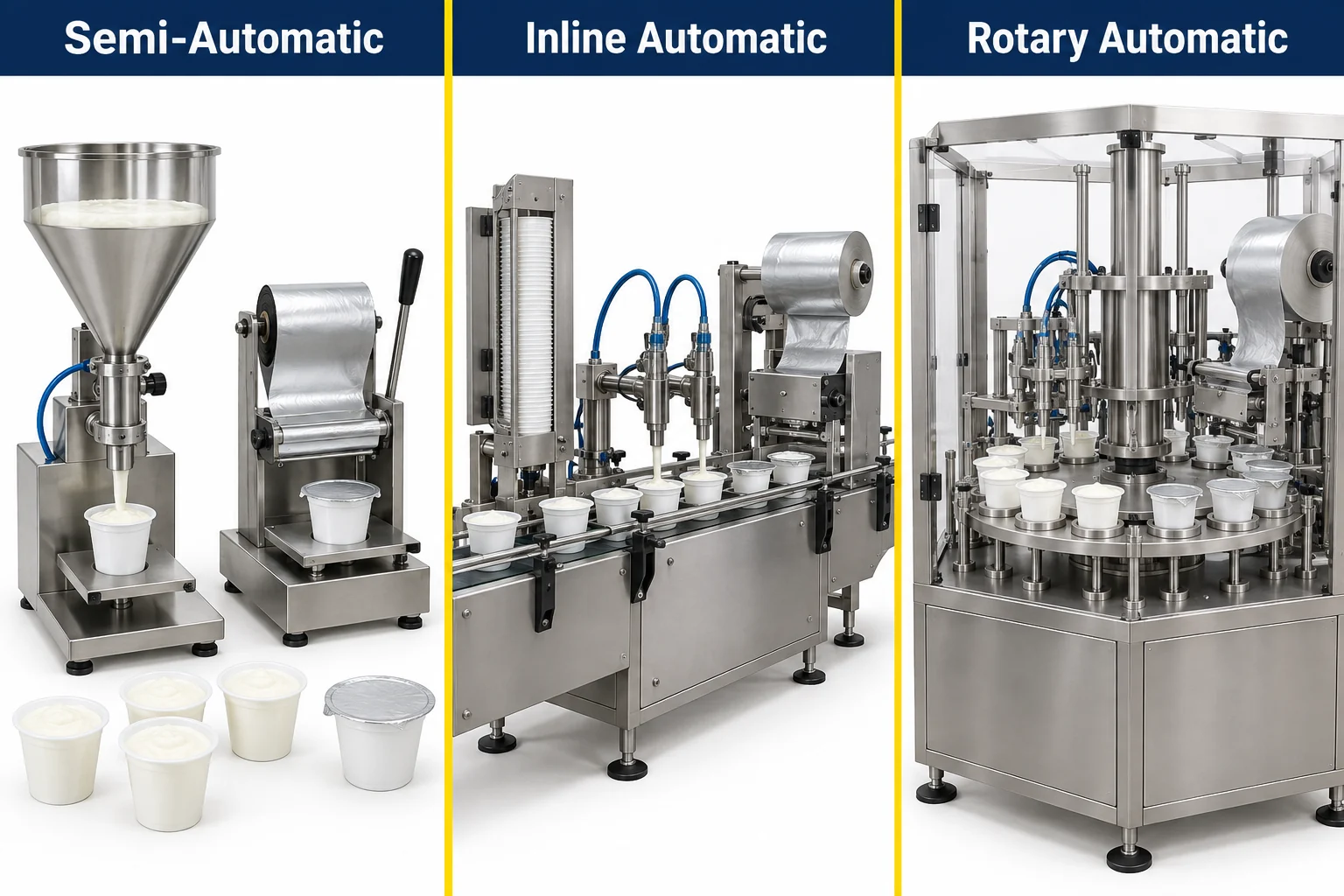
Cups for spoonable or set yogurt
Set yogurt and stirred yogurt enter packaging at different process stages. Match the filler to the product state and define the incubation/cooling interface. Detailed cup-flange and lid decisions belong in the cup filling-and-sealing specification.
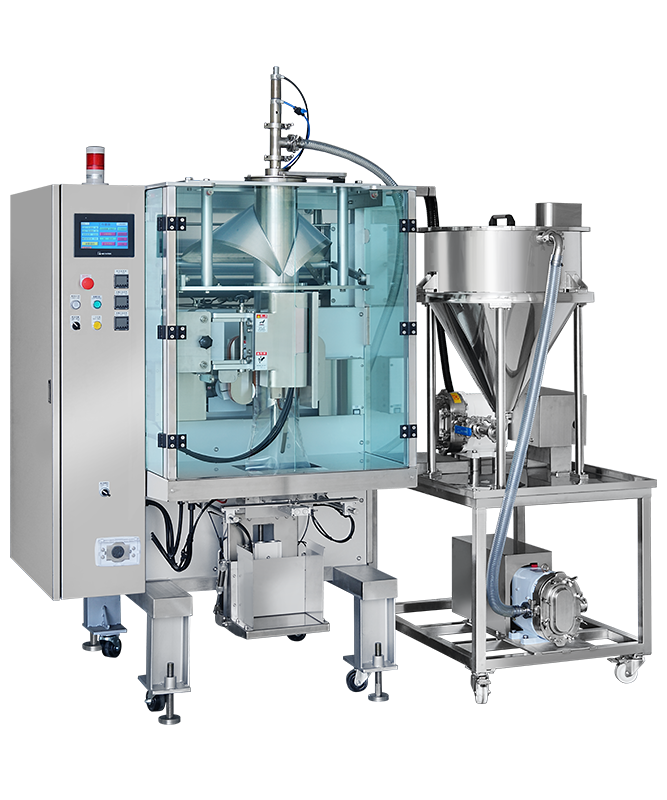
Pouches for pourable yogurt
A dairy pouch machine can be evaluated for pourable yogurt when its feed path and seal process suit the recipe. Thick spoonable curd, large inclusions and stringing product require separate trials; suitability cannot be inferred from a milk application.
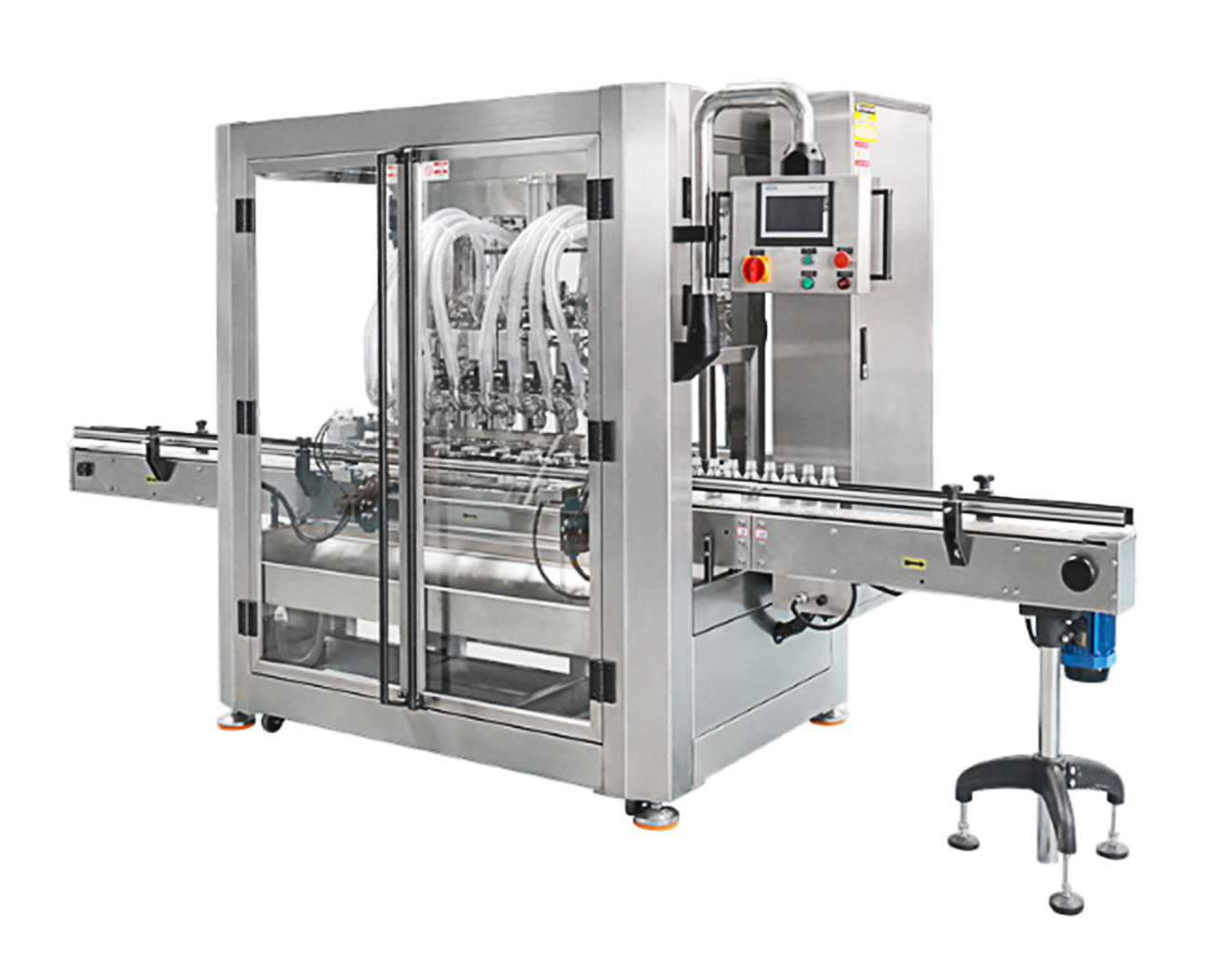
Bottles for drinking yogurt
The bottle route needs its own transport, nozzle and closure arrangement. Check aeration, viscosity, fill acceptance and cleaning with the finished recipe. A cup machine does not become a bottle line through a minor format adjustment.
Larger tubs for catering or bulk supply
This is a separate capacity and handling review. Confirm the actual dose, container stability and lid operation before specifying machinery. A small cup-machine price is not a catering-tub project price.
Packaging problems and the configuration to check
| Problem | Likely mechanism to investigate | Configuration and confirmation check |
|---|---|---|
| All curd recipes are treated as the same liquid | Set, stirred and drinkable products have different process states. | Record the actual product entering packaging and its inclusions, then select the pack and filling path. |
| One machine is expected to switch freely between cups, pouches and bottles | Package supply and seal/closure structures are different. | Evaluate common feed where useful, but specify the packaging ends and their changeovers separately. |
| Incubation or cooling is missing from the project layout | Only the packaging frame was considered. | Place set and stirred product paths on separate process plans and agree responsibility for each interface. |
| A packaging choice is used as a shelf-life guarantee | The recipe, hygiene, process and distribution were omitted. | Validate these inputs together; no pack photograph or sealing method establishes a fixed shelf-life claim. |
Match the product and use case
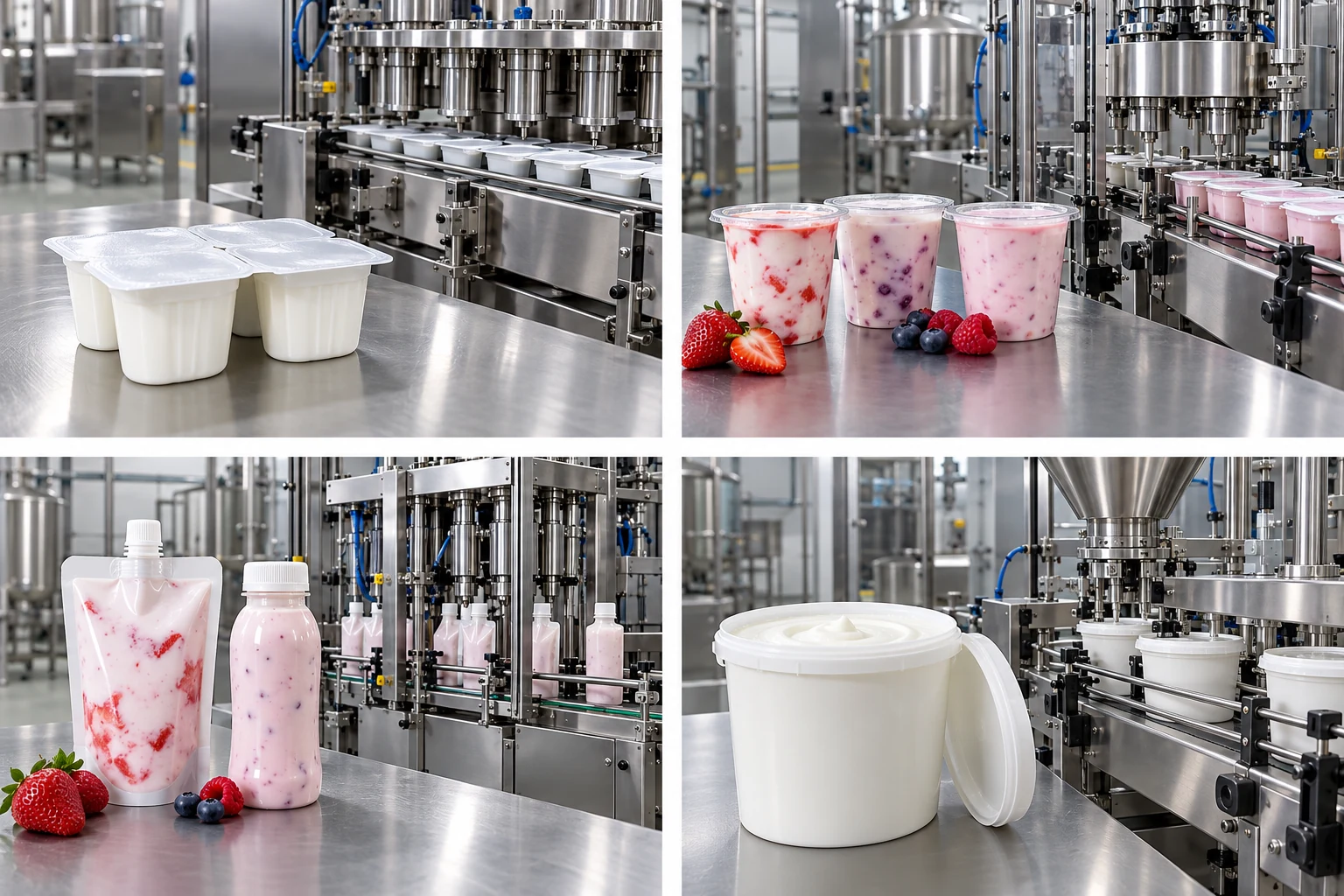
| Product or order | Finished pack | Trial or decision |
|---|---|---|
| Plain set dahi | Sealed retail cups | Align filling with in-cup setting and chilled distribution. |
| Stirred fruit yogurt | Sealed cups | Verify product texture, particles and clean flange sealing. |
| Drinking yogurt | Pouch or capped bottle | Test flow and foam for each packaging route independently. |
| Foodservice yogurt | Larger closed tub | Define dose size, lid handling and filled-container movement before quoting. |
For the broader dairy filling interfaces, see milk filling and its product-process requirements. The recipe and preservation process still determine the applicable packaging conditions.
Separate the food-process map from the packaging map
Set yogurt may be filled, sealed, incubated in the cup and then cooled. Stirred yogurt is fermented and mixed before packaging, with the detailed temperature sequence set by the process team. Drinking yogurt adds its own blending and flow behavior. Comwin uses these interfaces to match the feed, dosing and packaging equipment; processing tanks, incubation and cold storage are not assumed to be included in a packaging-machine price.
Use this guide to choose the packaging direction. Detailed cup lidding belongs to the curd cup guide, while lassi and milk-bottle projects retain their own product-specific decisions.
Yogurt Packaging Machine Price: Indicative Equipment Budget
Use these USD ranges for preliminary equipment planning as of October 2026. They describe alternative configurations, not a package of all the listed machines. They are not a formal quotation or a verified market average.
| Equipment scope | Planning range | Assumptions and boundaries |
|---|---|---|
| Compact yogurt cup filling and sealing | USD 12,000–35,000 | One cup/lid format and ordinary non-aseptic chilled-product handling. |
| Yogurt pouches from roll film | USD 5,000–30,000 | One film format with feed/dosing suited to the pourable recipe. |
| Drinking-yogurt bottle filling and capping | USD 12,000–50,000 | One bottle/cap format and defined filling/cap operations. |
| Larger yogurt tubs | Project quotation | Product consistency, tub size, dose and closure determine the configuration. |
| Sealer for pre-filled yogurt cups | USD 1,000–5,000 | One cup/lid format and manual loading; filling is separate. |
Assume a new China-export supply, one agreed packaging format and the ordinary product conditions stated above. Confirm the delivery term and included commissioning in the written quote. Freight, taxes, overseas installation, factory utilities, upstream food or water processing, cold-chain equipment, extra formats/tooling, inspection, labeling and downstream packing are excluded unless expressly included. Heating, cleaning or special-hygiene functions require a defined scope. A broader range does not mean every configuration includes its upper-end features.
Compare offers at the same fill size, product condition, package material, good-pack output and acceptance criteria. Ask for the included functions, change parts, consumables and interfaces alongside the price. Do not add alternative route budgets together.
Compare the work the equipment actually automates
| Dimension | Assisted or batch operation | Repeated automatic operation |
|---|---|---|
| Production mode | Short dairy runs with manual container presentation | Repeated cup, pouch or bottle production in one selected route |
| People and replenishment | Handle packs and closures; preserve the recipe/process conditions. | Replenish packaging and product; monitor texture, fill and closure quality. |
| Format and product changes | Keep the actual setup work visible: Container/film parts plus recipe and cleaning changes. | Agree change parts, setup access and a repeatable cleaning/restart sequence. |
| Acceptance | Use the same product and packaging quality criteria. | Evaluate product texture, closures and good packs under the actual process. |
Set the required good packs per shift before choosing a quoted speed. Deduct planned cleaning, format changes and replenishment from production time, and include rejected packs. A short demonstration at nominal speed does not establish sustained accepted output.
What to compare in a supplier proposal
| Dimension | Evidence to request | Useful comparison |
|---|---|---|
| Budget and supply scope | An itemized offer for compact yogurt cup filling and sealing or your selected alternative. | Same package, product conditions, included operations, delivery term and exclusions. |
| Production output | A run using the actual curd and yogurt and packaging, with accepted packs recorded. | Good packs over usable run time; record rejects, replenishment and stops. |
| Product and format adaptation | The agreed product path, packaging tooling, change parts and cleaning access. | Resolve the hardest sample condition in the product trial, not just the easiest demonstration. |
| Support and maintainability | Training, manuals, wear/spare parts, fault information and the support contact. | Define response arrangements and practical local maintenance access. |
| Delivery and acceptance | A written build scope, layout/interfaces, trial protocol and delivery responsibilities. | Record who supplies product/materials and what is needed before shipment and installation. |
Use sample testing with your actual product and packaging to resolve dosing, handling and seal questions before fixing the equipment scope.
Frequently asked questions
Can one machine fill cups, pouches and bottles?
Cups, pouches and bottles use different package supply and closing structures. Common feed can be reviewed where useful, but the packaging ends need separate selection and defined changeover scope.
Which pack suits set curd?
For an in-cup setting process, evaluate cups coordinated with incubation and cooling. Provide the process sequence and cup/lid samples; the cup guide covers the detailed filling and sealing selection.
Can thick yogurt run on a milk pouch machine?
Only if the actual viscosity, inclusions, product path and sealing are compatible. Trial the thickest yogurt and intended film. A machine that handles milk is not automatically suitable for every yogurt.
Does packaging determine shelf life?
No. The recipe, processing, hygiene, material and distribution conditions all contribute. Validate the combination rather than assigning a fixed shelf life from the pack or machine alone.
Send the samples that determine the configuration
Set/stirred/drinking product and actual process sequence; consistency, inclusions and filling temperature; cup, pouch, bottle or tub sample; fill target; accepted output; cleaning, cooling, layout and handling.
Include the required product-contact and cleaning specification, acceptable fill variation, seal or cap checks and any existing equipment interfaces. Send photographs, dimensions or samples of the complete package, not only a nominal pack volume.
Comwin uses these inputs to recommend the packaging route, dosing and handling arrangement, required interfaces and an itemized equipment offer. Where testing is needed, the trial plan should identify the product/materials, checks and acceptance criteria before the configuration is finalized.
Comwin offers free sample testing and factory visits. The confirmed warranty is two years for the complete machine and three years for core components, subject to the agreed terms. Remote support targets a response within 24 hours; resolution time depends on the fault and required action.