Powder Bottle Filling Machine Price: Auger Dosing and Closing
Use an auger filler for a compatible fine powder and support the bottle under its mouth. If the bottle fills by volume before reaching target weight, check bottle capacity and settling time. If there is space but net weight drifts, trial the dosing settings or weight feedback on the actual powder.
Indicative prices are US$3,000–10,000 for assisted auger filling with manual bottle transfer, US$10,000–35,000 for single-head filling with indexing and short conveying, and US$25,000–80,000 for the defined bottle filling and closing section. The last range covers the specified bottle feed, capping and compatible induction sealing.
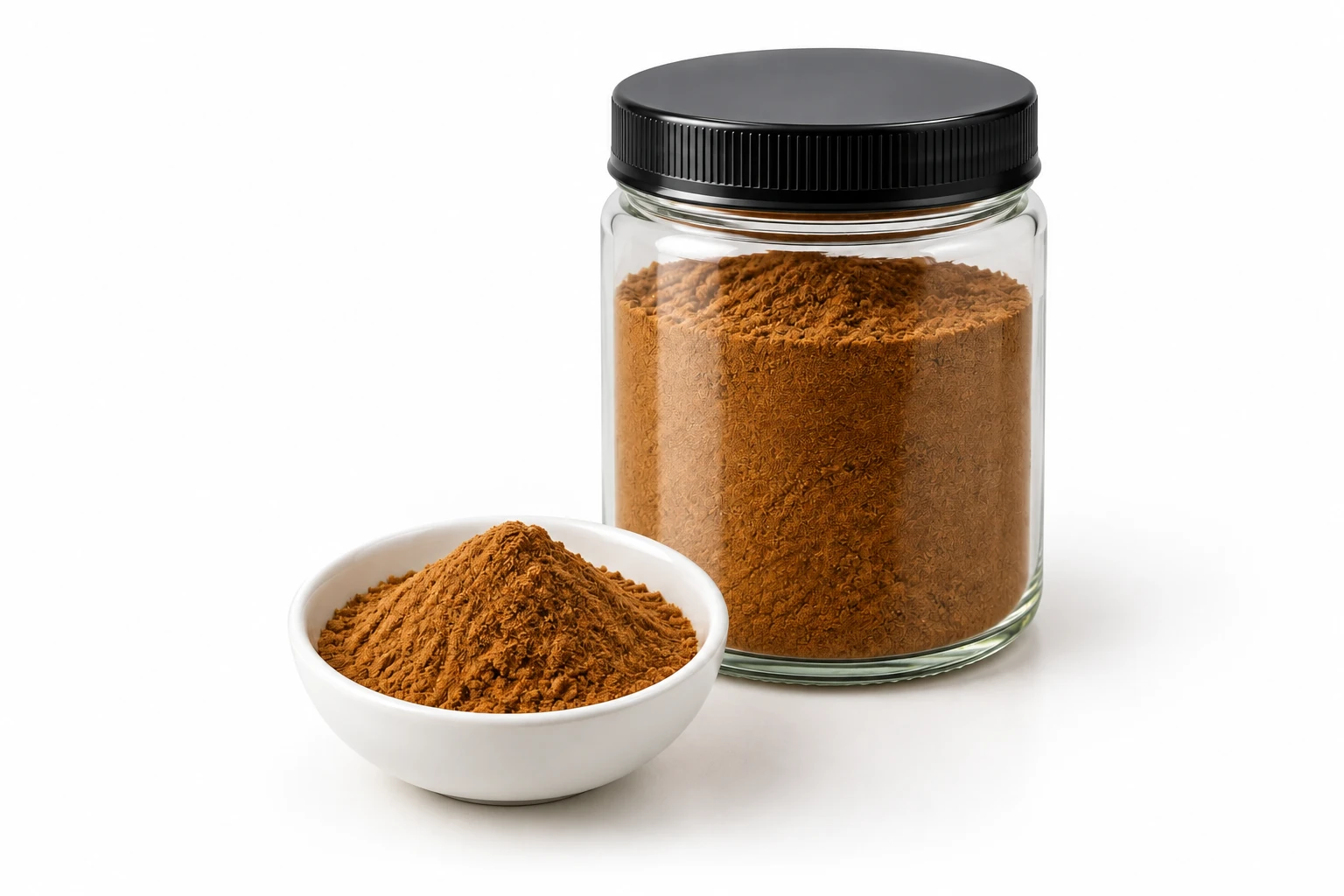
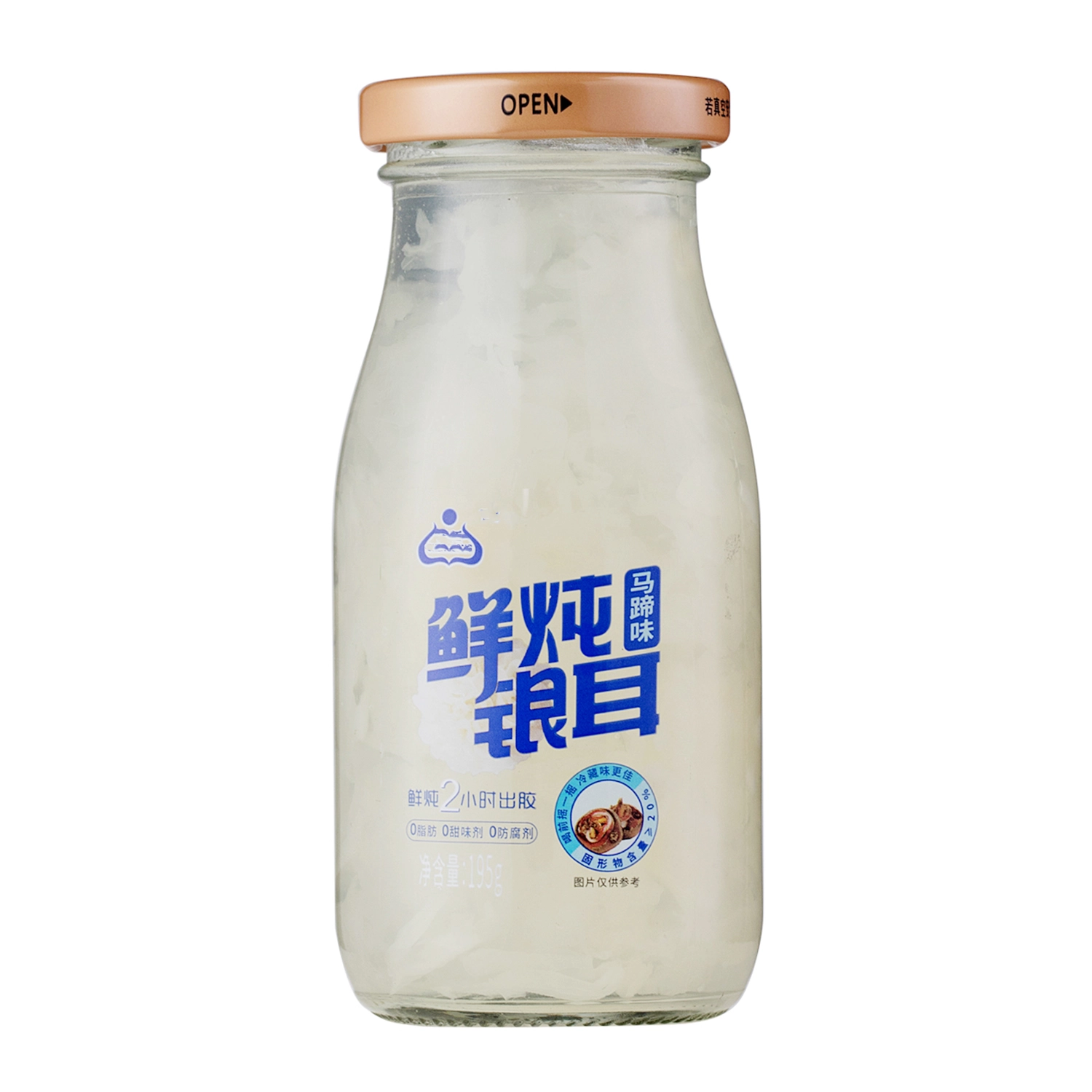
Closed powder jar (pack illustration). Filling and the specified closure are separate operations.
Match powder, dose and bottle geometry
Requirement
Configuration starting point
What to confirm
Fine powder in an operator-presented jar
Assisted auger filler with stable container support
Dose, flow, hopper feed and operator cycle
Repeated bottles at an automatic line
Auger filler with indexing, positioning and suitable height/support
Mouth alignment, bottle stability and accepted output
Density changes cause unacceptable mass variation
Review in-process weighing or checkweigher feedback with the dosing control
Measured variation, response limits and out-of-tolerance handling
Airy powder fills the container before reaching target mass
Review container volume, fill sequence and controlled settling where suitable
Loose-fill volume, headspace and cycle time
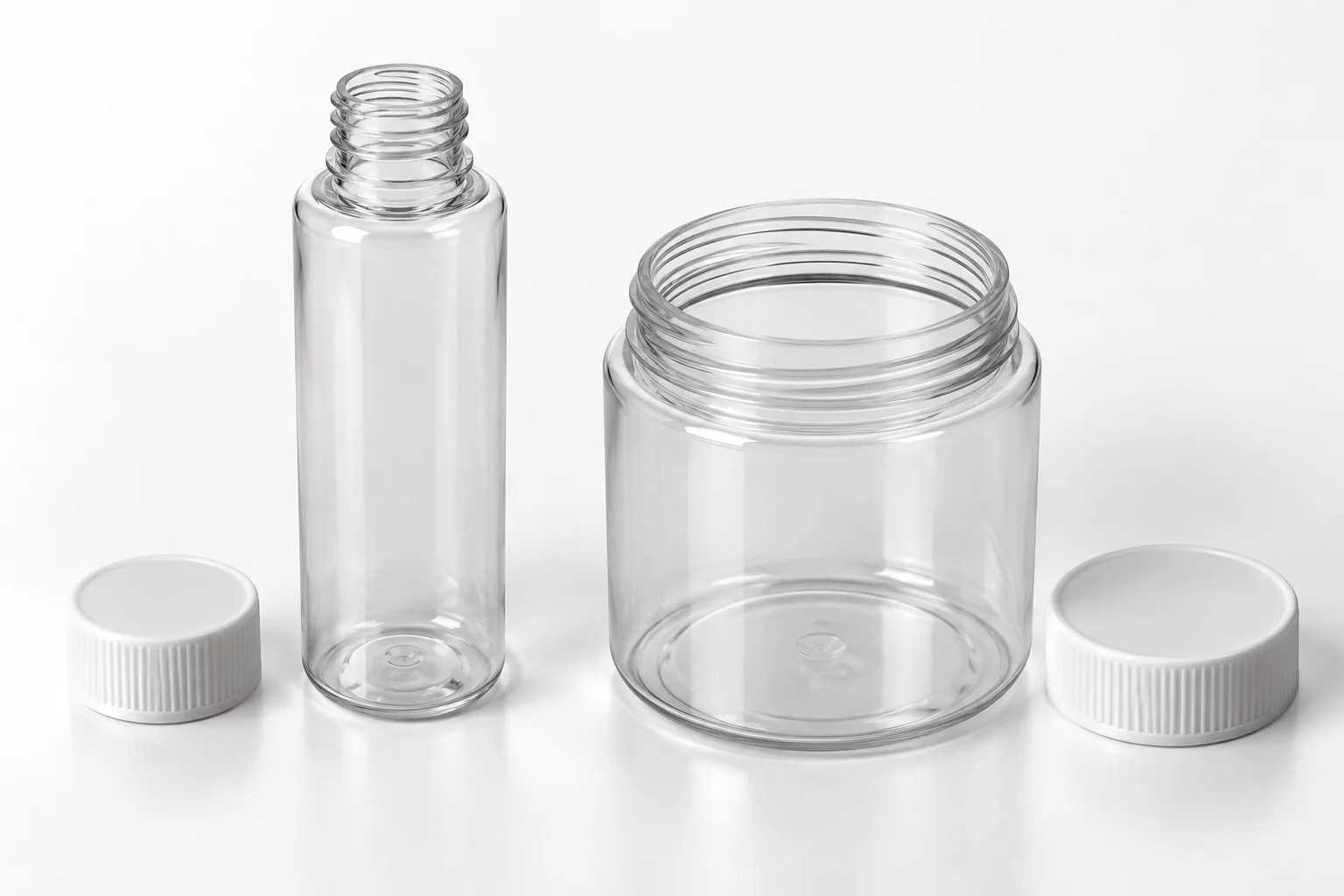
Narrow-neck bottle and wide-mouth jar (container illustrations, not to scale). Actual internal dimensions determine funnel clearance.
The filling funnel needs clearance at the mouth, while air displaced by incoming powder needs a path out. A narrow neck can limit the filling cycle even when the bottle body is large. Review neck height, internal shoulder shape, support and the position of the dosing outlet together.
Work with an existing bottle or choose a new one
An existing jar must stay
Use the actual internal mouth and shoulder dimensions to assess funnel clearance, air escape and the complete fill. If the required mass fills the jar before dosing ends, establish whether a suitable filling/settling sequence is feasible within the available cycle. Increasing auger speed alone cannot create more container volume.
A new pack can be developed with the filler
Compare candidate containers using the powder in its loose filling condition, then allow headspace for the intended closure and any insert. A wide body with a narrow neck still constrains the discharge. Select the bottle, funnel and closure together before committing to the production packaging.Run changes between the powders and bottles you plan to use. Record the cleaning, positioning and tool changes required across that range; a single recipe in a wide-mouth jar covers only part of the job.
How powder density affects the auger dose
An auger dispenses according to its geometry, rotation and the powder supplied to it. Servo control sets the screw movement; the delivered mass also depends on powder condition. Agitation, consistent hopper feed and appropriate weighing feedback are selected around that behaviour.For illustration, a 300 g dose occupies about 750 mL at a loose bulk density of 0.4 g/mL, but 500 mL at 0.6 g/mL. These are assumed values. Select the container using your powder’s volume during filling, then allow the required headspace. A jar sized only from the volume after settling may overflow before the dose is complete.
Choose how the filled weight will be controlled
Control arrangement
What it does
When to assess it
Auger turns set the dose
Meters a repeatable screw movement; delivered mass also depends on the powder supplied
Product density and feed are stable enough for the required weight results
Weighing controls the fill
Uses measured weight during or between filling steps to control cutoff or top-up
Density varies or each dose needs weight-based control; assess the complete weighing cycle
Checkweighing after filling
Measures the completed pack; configured rejection removes out-of-range packs, and feedback can adjust subsequent doses
Production needs an independent filled-pack check; agree how feedback and rejection work
A downstream checkweigher detects an incorrect fill. Rejection removes that bottle, while feedback adjusts later doses; neither tops up the bottle already checked. Agree on these functions and the required weight tolerance for your powder and dose.
Fill to the required weight and leave the bottle ready to close
Control dust near the outlet and mouth without disturbing the dose or weighing system. The extraction arrangement must suit the powder and its feed path; excessive or poorly placed suction can remove product. Agree how captured material is handled.
Production problem
Recommended equipment or change
How it helps
Where it applies
The container looks full before it reaches the target mass
Container capacity and filling/settling sequence matched to loose powder volume
Leaves room for the full dose and the required closure clearance
Aerated or low-density powder; evaluate the product as it reaches the filling station
Powder on the rim causes cleaning or sealing rework
Matched auger/funnel, controlled cutoff and local dust capture
Keeps the product discharge and escaping air clear of the closing surface
Powder bottles and jars; inspect them immediately before capping
Filled weights drift during a production run
Consistent hopper feed and suitable weighing/control feedback
Allows the dosing control to respond to the actual weight results
Powders with changing density or feed conditions; record sequential package weights
Bottles miss the funnel, tip or interrupt the line
Container guides, indexing and support matched to the bottle
Locates the mouth under the outlet and supports the container during transfer
Small or light bottles; include starts, stops and the smallest required mouth
Filling section
Present and locate bottle → dispense powder → settle if specified → check weight or condition where included → transfer the open filled container.
Closing section
Apply the specified closure → tighten or secure it → seal a compatible liner if required → inspect the finished pack.
Induction sealing requires a compatible liner, container and cap arrangement. It is not supplied by the auger filler itself. A scoop, desiccant or other insert is also a separate handling task if the pack specification requires it.
Balance filling with bottle handling and closing
With assisted filling, the operator positions and removes each bottle and handles the transfer or closing steps left manual. Automatic indexing takes over repeated positioning. Plan who will supply bottles, replenish powder and deal with interrupted or rejected fills.A connected filler and capper must pass a clean, stable container between them. Match the transfer, capping and any induction-sealing cycle to the actual fill, and coordinate inspection and rejects in the packaging automation layout. Measure complete acceptable packs, recorded weights and product loss through normal replenishment and stops.For another powder, assess cleanout and the first fills after changeover. For another bottle, check the auger/funnel, guide width, support height, indexing and closure parts. These changes influence usable shift output as well as the headline filling rate.
Powder bottle filling budgets: filler, automation and closures
For early budgeting, these ranges assume new equipment supplied from China, one approved nonsterile powder, dose and container, and an ordinary production requirement.
Equipment scope
Indicative budget
What the estimate covers
Assisted auger filling
US$3,000 to 10,000
Auger filler and container support; the operator presents and transfers bottles
Automatic single-head filling
US$10,000 to 35,000
Filling with indexing and short conveying
Defined bottle filling and closing section
US$25,000 to 80,000
Modest bottle feeding, powder filling, capping and compatible induction sealing
Identify weighing feedback, extraction/containment, tools and conveyors in the quotation. Final pricing follows the approved product, container and closure specification.Powder manufacture, sterile or hazard-specific execution, insert handling unless listed, labelling, cartoning, freight, taxes and overseas installation are excluded.
Compare the filled bottle handed to closing
During a demonstration, check the powder mass in the actual bottle, the cleanliness of the closing surface and the clearance for the closure. Follow the weighing controls and the bottle through transfer after filling. Compare output over this complete cycle.Comwin can select the doser and bottle supports or indexing system from your sample, then plan the transfer to closing. The proposal should list cleaning access, change parts, weight feedback and rejection where needed, and who supplies the capping and sealing equipment.Comwin offers free sample testing, a two-year machine warranty and a three-year warranty for core components. Remote support responds within 24 hours. Training, installation and spare-part responsibilities are agreed in the proposal.
Send the powder, bottle and target fill
Ask Comwin to review the powder sample, target weight and bottle or jar. Include the internal mouth diameter, required closure and containers per minute or shift.Comwin can recommend the filler, bottle handling and closing equipment. Also provide powder flow and density, dust behaviour, acceptable weight variation, inserts, product changes, available space, utilities and destination.