
Comwin develops RO water packaging solutions from a single filling machine to a coordinated production line. We match the pack format, water-contact system, automation and downstream handling to your product, factory and growth plan. Choose the finished pack first, then build the equipment scope around the quality and output you need.
RO water packing machine price: our planning references are US$5,000–30,000 for the liquid VFFS equipment family, US$12,000–50,000 for bottle filling and capping, and US$80,000–500,000+ for broader integrated filling and packaging projects. These are Comwin experience-based USD budgets dated September 4, 2026; the selected configuration and supply scope determine the quotation.
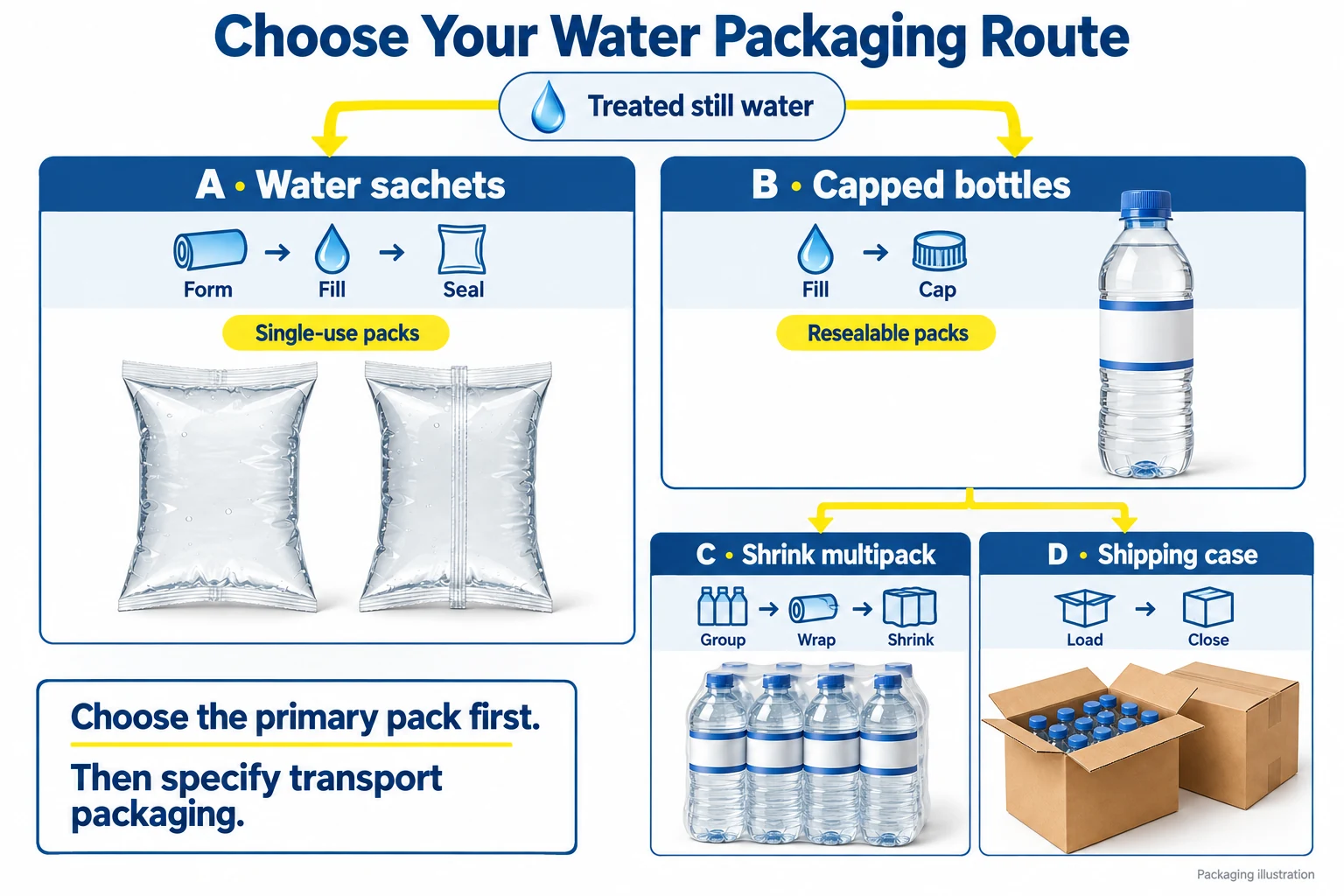
Choose the Pack, Then the Equipment
This guide covers non-carbonated drinking water. RO describes water treatment; the finished pack determines the packaging route. Comwin can match a sachet system, a bottle line or separate production routes within one project. A drinking-water or mineral-water project starts with the same pack, filling-condition and capacity decisions.
A. Water Sachets: Roll Film to a Sealed Pack
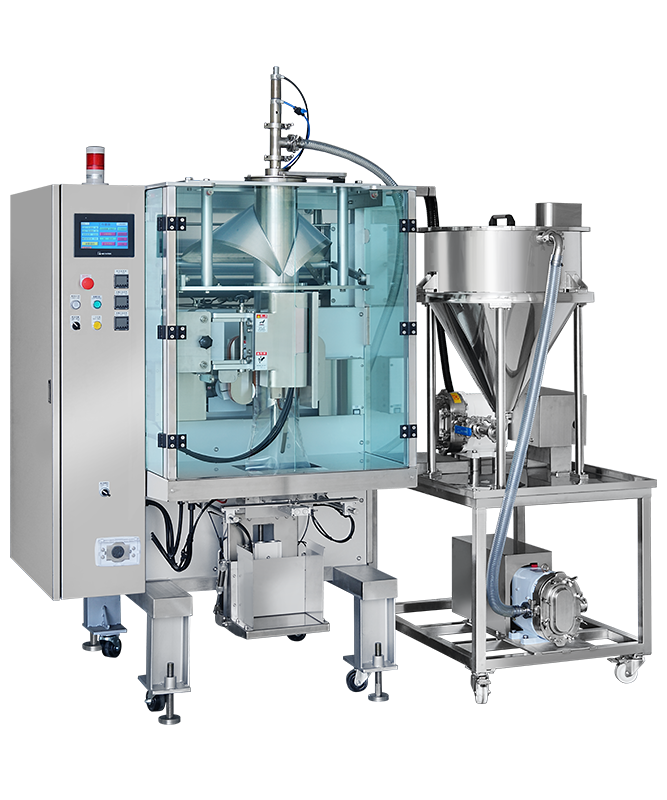
Liquid vertical form-fill-seal (VFFS) suits single-use water sachets. Based on your filling volume, film and required output, we recommend the dosing, bag-forming and sealing configuration. Your coding and collection requirements determine the supporting equipment.
For repeat production, the key is a stable filling and sealing process with your actual film. Choose resealable bottles instead when customers need to carry and reclose the pack. Our water pouch machine guide covers 200 mL packs and manual-versus-automatic choices in more detail.
B. Bottled Water: A Resealable Retail Format
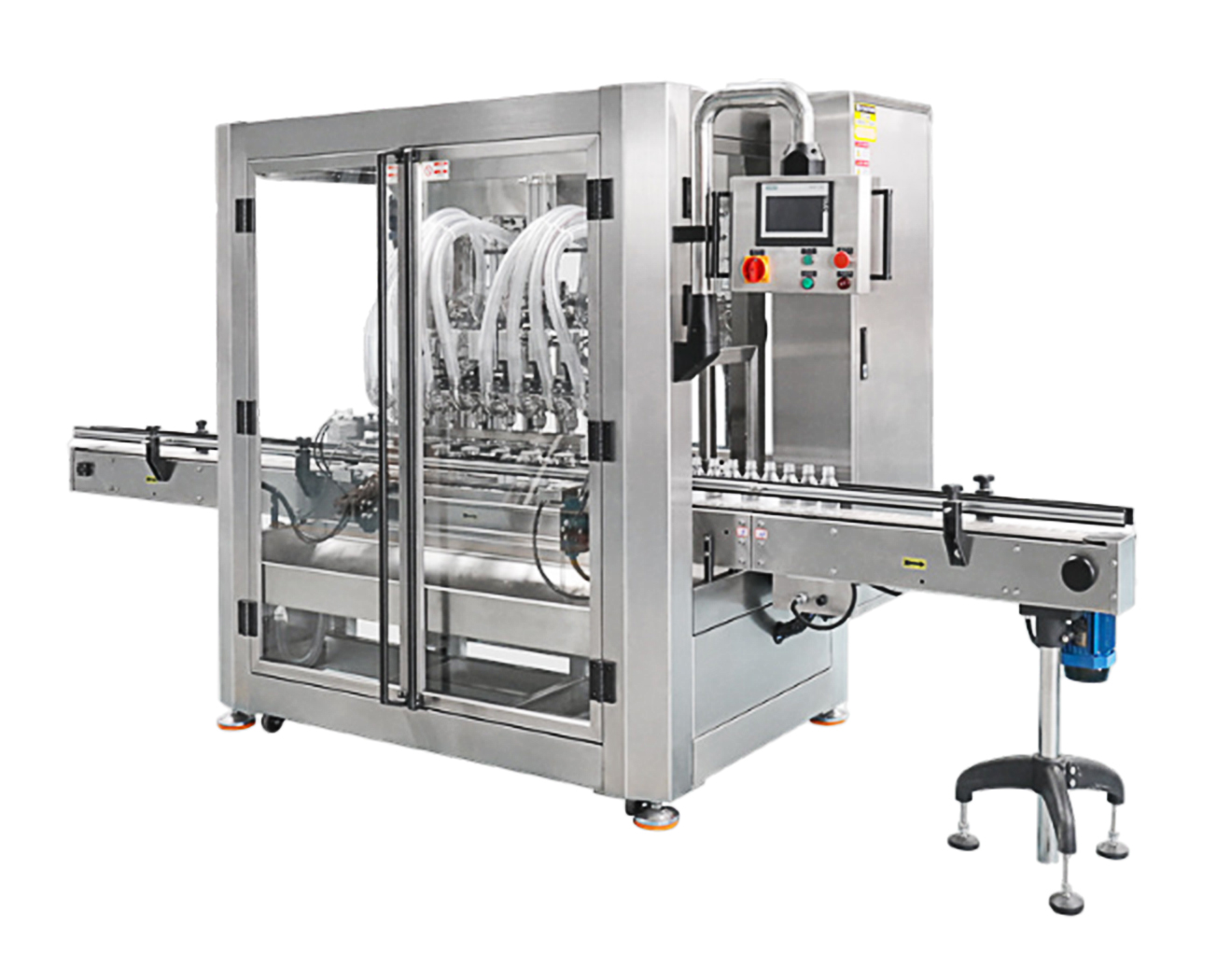
Bottles suit projects where resealability, label presentation and retail distribution matter. With your bottle and cap samples, filling volume and output target, we recommend the filling and capping equipment and any required container preparation, labeling or conveying. Bottle-neck geometry and container stability guide our equipment selection.
For an established bottle format, a dedicated setup can simplify operation. For several bottle sizes, plan adjustable handling and the necessary change parts from the start. If bottles will be made on site, we can coordinate suitable blowing equipment and its connection to the filling line within the project proposal.
Bottle Multipacks and Shipping Cases: Finish the Bottled-Water Line
C — Shrink multipacks: choose grouped, film-wrapped bottles when the sales channel needs a compact bundle. Match bottle grouping, sleeve wrapping and the shrink tunnel as one process. D — Shipping cases: choose corrugated cases when the distribution format calls for case protection and handling. Combine case erecting, bottle loading and closing; palletizing can follow as the project requires.
Both are downstream stages after filling and capping. Comwin can configure either route around your bottle layout, packaging materials and dispatch requirements.
What We Engineer into the Configuration
Your water, packaging samples and production requirements give us the basis for equipment selection. We evaluate the following points when recommending the configuration and sample-run checks.
| Production need | Comwin configuration approach | What to demonstrate |
|---|---|---|
| Water sachet seal reliability | Match dosing and film tracking with sealing tooling and settings; keep the seal area controlled during filling. | Filled-pack seal integrity and appearance after representative handling. |
| Bottled-water filling and closure consistency | Match bottle positioning, filling control, neck handling and cap application to the container. | Fill consistency, cap fit and leak checks with the intended bottle and cap. |
| Cleaning between sachet and bottle production | Specify accessible wetted parts, compatible seals, drainage and the cleaning method appropriate to the process. | Access, cleaning steps and restart procedure for the selected configuration. |
| Shrink multipack or shipping-case stability | Match grouping and shrink conditions, or case layout and loading, to the bottle and transport format. | Bundle or case stability after agreed handling checks. |
| Coordination of bottling and downstream packing | Coordinate conveyors, accumulation and machine stop/start signals around the slowest required stage. | Accepted line output and recovery after a downstream stop. |
Which Configuration Fits Your Project?
The examples below show how we translate packaging and production requirements into equipment recommendations. They are planning scenarios.
| Your project | Recommended route | Configuration priority |
|---|---|---|
| 500 mL water sachets for local distribution | Liquid VFFS with coding and controlled discharge | Validate the film, filled-pack seals and handling before committing to bulk packaging material. |
| 500 mL and 1.5 L retail bottles | Bottle filling and capping, labeling and shrink multipacks | Plan bottle-size change parts and a repeatable bundle setup for each format. |
| Bottled water shipped in corrugated cases | Bottle filling and capping with case erecting, loading and closing | Match bottles per case, dividers where required and the dispatch rate. |
| Existing bottle filler with manual packing delays | Add shrink multipack equipment or case packing downstream of the existing filler | Measure actual filler output and available space; automate the downstream constraint. |
Sachet example: for a 500 mL single-use pack, start with one film and bag format. We would prioritize dosing, seal quality and discharge handling, then expand collection automation as orders grow. This keeps the first investment focused on the process that creates the saleable pack.
Bottle example: a brand selling 500 mL and 1.5 L bottles needs more than a filler with an adjustable volume. Bottle guides, cap handling, label setup and multipack dimensions also change. We would plan those changeovers together so expansion does not leave one incompatible stage in the line.
Build a Complete Line Around Your Factory
Comwin combines equipment selection, customization and line integration in one project plan. Our filling and packaging line solutions connect filling with labeling, coding, case handling and palletizing as required. Existing equipment can be retained where its capacity, controls and interfaces suit the new process.
For a new plant, treatment, treated-water storage and transfer can be coordinated with the packaging scope. Where RO treatment or bottle blowing is required, suitable specialist equipment can be included in the project proposal. The treatment specification starts with the feed water and required finished-water quality; the packaging specification starts with the pack and accepted output.
Your project plan should connect four decisions: water supply and storage → sachet or bottle packaging → inspection and transport packaging → dispatch handling.
We define the module list, layout, utilities, control interfaces and acceptance checks together. A replacement machine, a phased expansion and a new integrated line can therefore have different supply scopes within the same planning approach.
Match Capacity Across Every Stage
Specify accepted packs per shift, filling volume and available running time. Then allow for cleaning, replenishment, changeovers and rejects. A sachet machine speed, a bottle filling rate and a case-packing rate use different units; the line plan must reconcile them.
Planning example: 500 mL × 40 accepted sachets/min × 60 = 1,200 L/h entering saleable packs during continuous operation. A target of 60 bottles/min equals 3,600 bottles/h; at 12 bottles per case, the case-handling stage needs 5 cases/min before operating allowance. These are project calculations, not equipment ratings.
Choose an Automation Level That You Can Operate
| Production mode | Operator responsibilities | Changeover work | Acceptance focus |
|---|---|---|---|
| Manual filling and seal-only trials | Fill, position, seal and remove each pack. | Mostly manual adjustment and checks. | Complete-workflow output and package consistency. |
| Automatic primary packing | Replenish film or containers, clean, check packs and handle the chosen collection process. | Stored settings where specified, plus film/format or container change parts. | Sustained accepted packs with the actual material and operator tasks. |
| Integrated line | Supply consumables, supervise the line, perform cleaning and maintenance. | Coordinate the filler, labeler and selected shrink multipack or case-packing stage. | Line output, changeover sequence and stop/restart behavior. |
For regular commercial production, we recommend comparing automatic water sachet packing with a connected line. A pure water sealing machine that only closes prefilled bags leaves filling and handling to the operator, making it mainly a trial or small-batch option. A staged project can automate primary packing first and reserve space and interfaces for later expansion.
RO Water Packing Machine Prices and Project Scope
Use the budgets below to choose the level of investment, then compare offers with the same configuration. The ranges are equipment-family planning references; a custom or broader project is quoted against its agreed scope.
| Equipment / project | Budget reference | What defines the scope |
|---|---|---|
| Liquid VFFS equipment family for water sachets | US$5,000–30,000 | Liquid dosing, film/seal requirements, coding and discharge arrangement. |
| Bottle filling and capping equipment family | US$12,000–50,000 | Container range, filling configuration, cap handling and preparation stages. |
| Bottle shrink multipack module · C · Shrink packaging module | US$5,000–20,000 | Wrapper/tunnel configuration; bottle grouping and feeding are itemized. |
| Shipping-case packing module · D · Automatic case packer | US$25,000–80,000 | Case loading method; erecting, dividers and closing are itemized. |
| Shipping-case sealing module · D | US$4,000–15,000 | Closing method, flap handling and size adjustment. |
| Broader integrated filling and packaging project | US$80,000–500,000+ | Selected primary route, downstream modules, interfaces and project engineering. |
The integrated-project range is not the minimum price of every small line. Choose water sachet packing or bottled-water filling as the primary route and add the modules the project needs; avoid counting equipment twice when it is already included in a package. Treatment, storage, bottle blowing, utilities, freight, taxes, installation and training are listed as included, excluded or separately priced in the offer.
Compare Proposals Against Your Production Requirements
A useful equipment proposal connects your requirements to a recommended configuration. Compare quotations against the same product, packaging and output targets.
| Your requirement | What Comwin recommends or specifies | What to compare between offers |
|---|---|---|
| Investment budget | Recommended equipment, included functions and itemized supply scope. | Equivalent equipment scope, delivery terms and total project costs. |
| Required output | Equipment capacity and interfaces matched to your packs per shift. | Sustained accepted output using the intended packaging. |
| Product and packaging samples | Suitable filling, sealing or capping configuration and any necessary adaptations. | Fit with the actual samples and format-change requirements. |
| Operator and maintenance needs | Training, handover and service arrangements for the supplied equipment. | Support responsibilities, warranty and response commitments. |
| Target production date | A schedule for sample review, configuration approval, testing and delivery. | Project milestones and dependencies on site readiness. |
Prove the Configuration with Your Packs
Use our free sample testing to evaluate representative film or bottles and caps. Agree the checks before the run: filling consistency, seal or closure integrity, coding, sustained accepted output and changeover steps. For bottle shrink multipacks or shipping cases, include package stability under representative handling.
For an integrated project, review cleaning access, consumable replenishment, line stoppages and restart behavior as well as individual machine performance. Record the configuration and test conditions so the approved result can guide delivery acceptance. Water-quality control remains part of the plant process alongside packaging validation.
Frequently Asked Questions
How much does an RO water pouch packing machine cost?
For a flat water sachet, use Comwin’s US$5,000–30,000 liquid VFFS-family budget as an initial reference. The water-compatible dosing and sealing configuration determines the equipment offer. If you also need treatment, storage or downstream automation, request those as named project modules.
Can Comwin supply a complete water packaging project?
Yes. We can develop the project from equipment selection and customization through coordinated filling, closing, coding, labeling and transport packaging. When treatment or bottle blowing is needed, we can coordinate those specialist stages in the proposal. The approved scope identifies each supplied module, interface and acceptance requirement.
Can RO water, pure water and mineral water use the same machine?
For still water with comparable filling conditions and the same pack, a suitable configuration may serve these products. We recommend checking the water-contact materials, cleaning process and representative packs together. Carbonated products require a different filling assessment.
Which bottle transport pack should I choose?
Choose bottle shrink multipacks when the sales channel needs grouped bottles in film. Choose shipping cases when the distribution specification calls for corrugated protection, dividers or case handling. If both are required, we can plan the additional stages and space in the line layout.
Can the same setup also pack milk or juice?
For a multi-product project, evaluate the actual products before choosing shared equipment. Viscosity, ingredients, temperature and cleaning can change the filling route. Sample evaluation helps us recommend a shared configuration with changeover provisions or a separate process.
Plan Your Water Packaging Project with Comwin
We provide free sample testing and can arrange visits to real factories to see equipment operating. Our support includes a 2-year machine warranty, a 3-year core-component warranty and remote response within 24 hours. Small equipment receives video tutorials and remote video-call support.
Send us: water type and filling temperature; sachet film or bottle-and-cap details; fill volume and accepted output per shift; required multipack or case format; existing equipment; floor plan, utilities, destination and investment target.
Through our project enquiry page, request a recommended equipment combination, preliminary layout, itemized budget and testing plan. We will use your production requirements to define the single-machine, phased-expansion or complete-line scope.