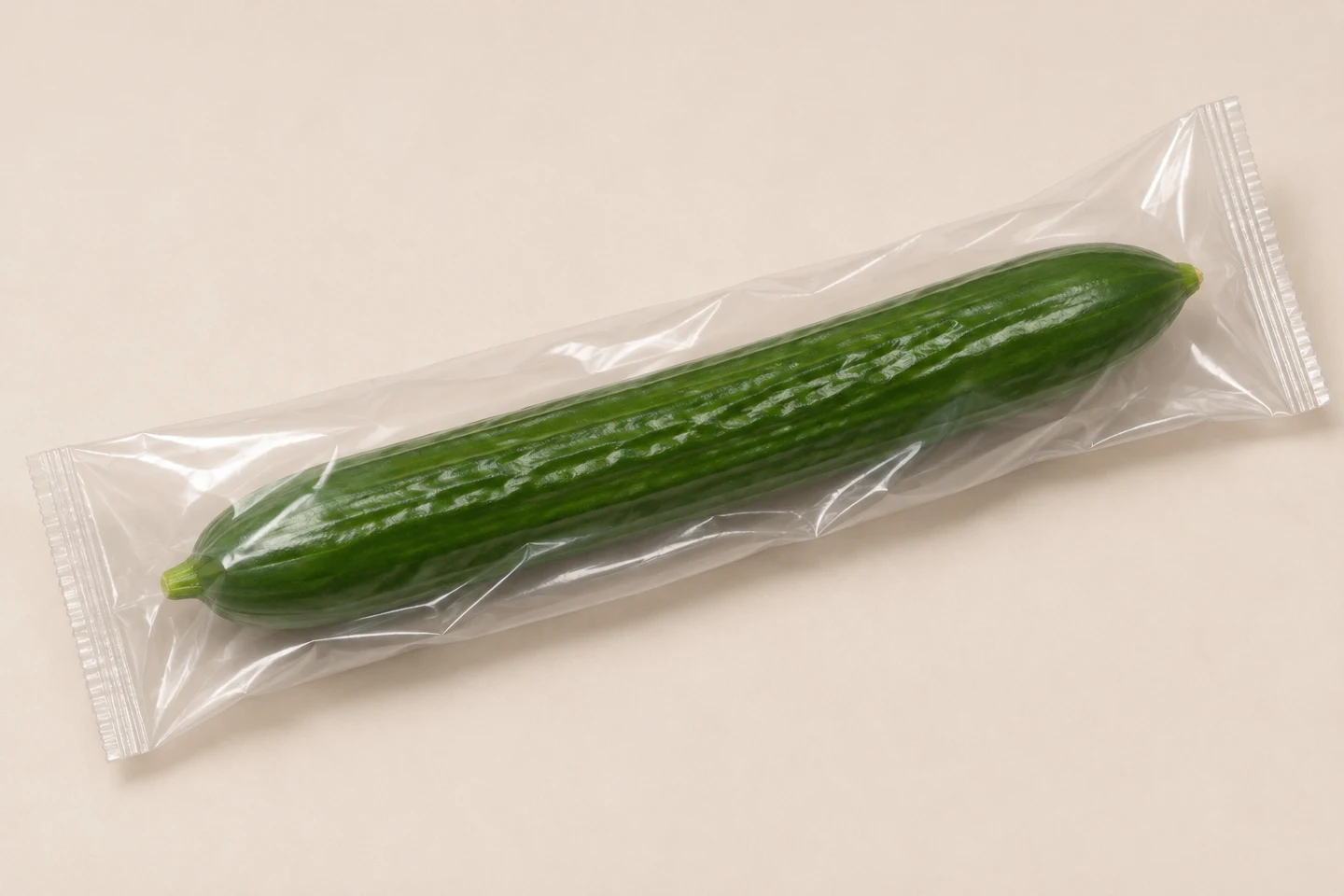
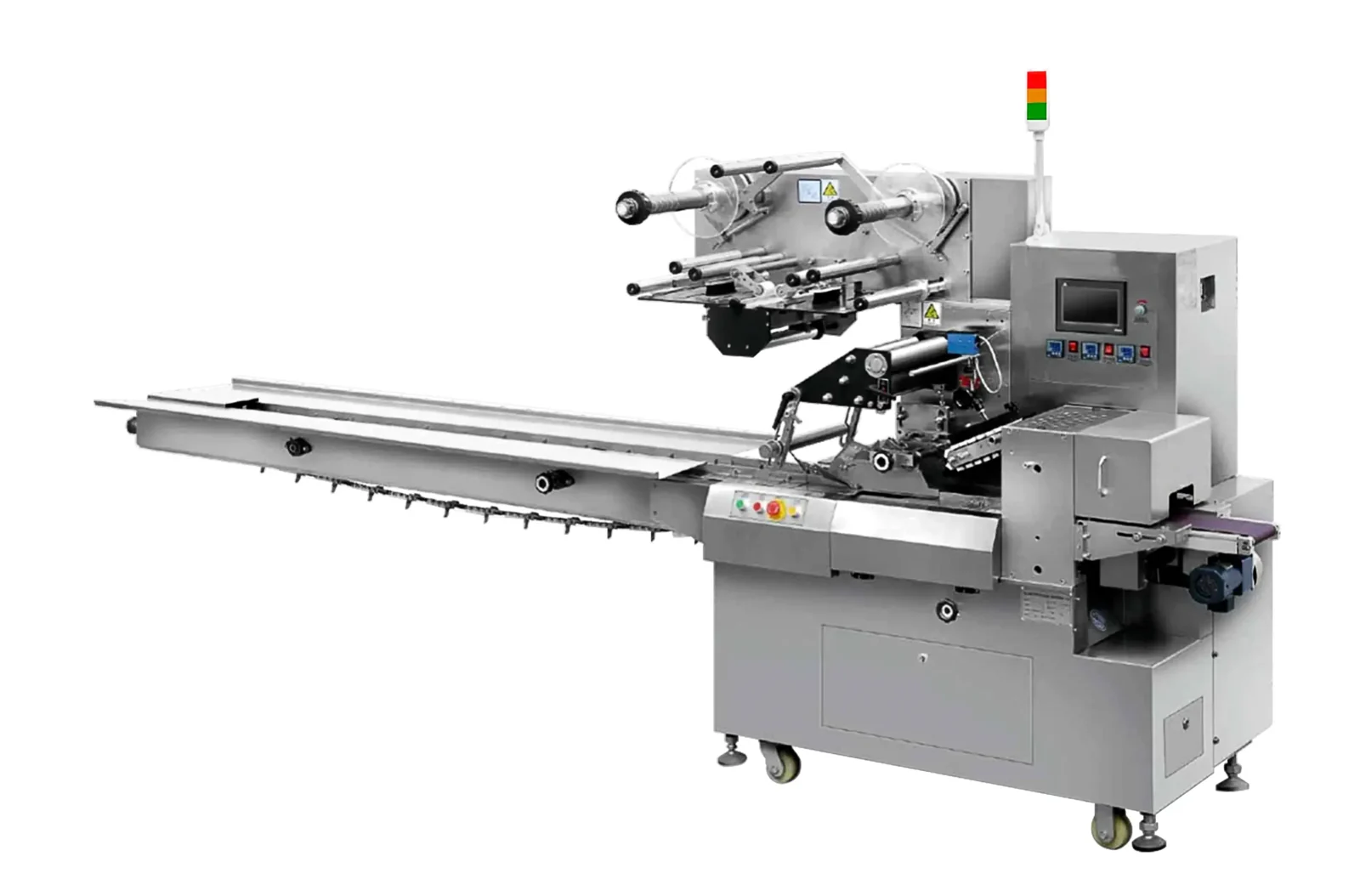
Use a horizontal flow wrapper for one cucumber, one ear of sweetcorn or a counted row of long vegetables. The belt holds the produce in line as the film closes. For a weighed film bag, start with a vertical bagger and choose the feed around the product. Whole potatoes need a gentle drop, wet leaves need room above the dose and frozen pieces need a clear discharge after a stop.
Whole item or fixed count · US$5,000–25,000. Base horizontal flow wrapper with a standard belt for one film pack. Quote orienting, counting and special guides separately.
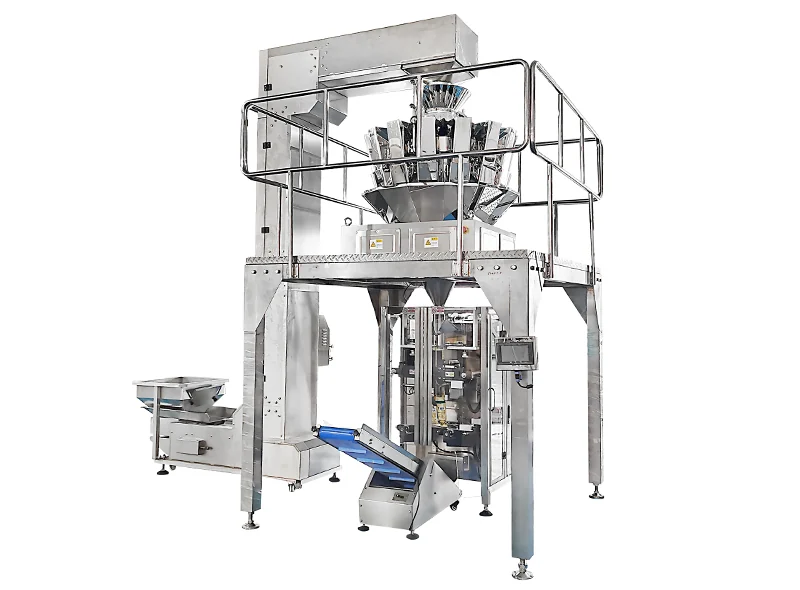
Weighed vegetable bag · US$5,000–30,000. Vertical film-forming and sealing machine only. Quote weighing, product-specific feeding, transfer and drop control separately.
Choose the machine by the vegetable and the pack
| What the buyer wants | Equipment to assess | What makes it work |
|---|---|---|
| Whole item, counted group or assembled bundle | Horizontal flow wrapper | A long, supported infeed holds the produce in position. Check bunch width and the longest tips. |
| Loose short pieces or weighed whole potatoes | Vertical form-fill-seal bagger | Match the dosing unit, discharge and sealing cycle to actual piece size and moisture. |
| Leafy salad by weight | Low-drop weighing and vertical bagging | Check how the leaves release, whether they bridge, and what film and atmosphere the product team specifies. |
| Mushroom tray, a clipped onion net or another specified pack | Match the tray closure or dedicated net station | Compare only when the buyer has selected that container or closure. |
What goes wrong when the pack and the feeder disagree
A skewed cucumber can catch in the film former. Size the guides for the widest normal curve, then run the shortest fruit through a stop and restart. For a bundle, compare a loose group and a tied group on the belt to see how much handling you can remove without losing alignment.
The same weight can take up very different space in a bag. Test the actual filled volume and make sure the full dose clears the jaws. For a shared line, retest the feed and seal after each changeover.
Whole roots and tubers: limit damage at the drop
A low, supported transfer helps prevent bruising while a weigher sets the retail portion. Check the largest potatoes and the wettest baby carrots. After normal handling, inspect the skins and verify the net weights and seals.
Cut leaves: leave room at the top seal
Choose the forming tube and bag from the volume of the actual portion. A loose, bulky dose can hang near the jaws. Check the seal on the wettest normal batch after the leaves have settled.

Frozen pieces: check the first doses after a stop
Feed and chute choice depends on how pieces clump at production temperature. When the line restarts, watch for a delayed dose or moisture close to the jaws. Compare the first bags with steady-running bags.
Vegetable packing examples
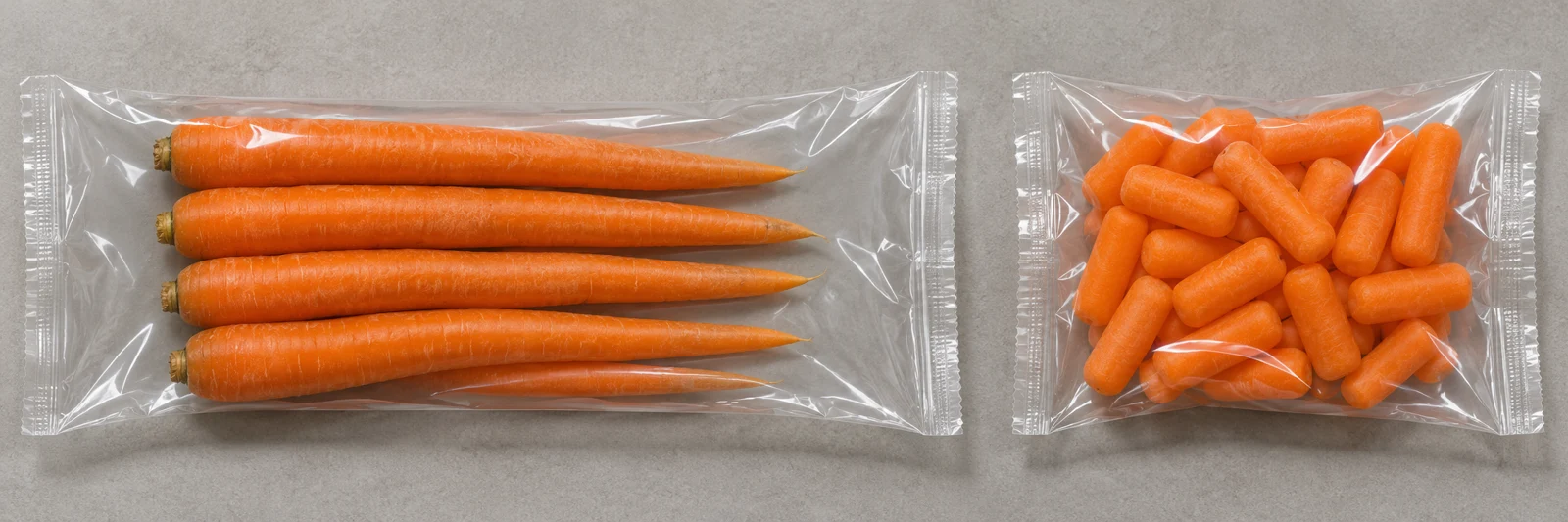
Use the carrot packing guide to compare whole-root alignment with baby-carrot weighing. For sweetcorn, separate whole-cob wrap from loose kernel bagging. A whole head of lettuce needs support through the wrapper. Cut leaves need a bagger and a feed that release a dose cleanly.
For a heavy potato sack or a clipped onion net, support the load while the closure is made. A tomato or mushroom in a retail tray needs the tray to support the product; try a filled sample through its outer wrap or rim sealer. If the specification calls for vacuum, confirm the product and food process with the packaging team before selecting the closer.
You can use the same packing line for fruit and vegetables only after both products pass a trial. Confirm dosing, guide width, film, cleaning and changeover. Vegetable oil uses a liquid filling system. Field packing and cutting have separate equipment requirements.
Decide what to automate after a sample run
For mixed packs in short runs, an operator can load the belt while the machine seals. When volume is steady, automate the step that limits good packs per hour: counting, orienting, weighing or transferring the finished bag. Add inspection, labelling or case loading if required by the chosen pack. If several stations need to work together, see the packaging equipment and production line overview for the connections to agree.
Vegetable packing machine price and scope
| Base equipment | Indicative USD budget | Budget separately |
|---|---|---|
| Horizontal wrapper, one agreed vegetable pack | US$5,000–25,000 | Automatic spacing, wet-product infeed, shrink finishing if required. |
| Vertical bagger, one agreed film pack | US$5,000–30,000 | Weigher or counter, controlled drop, film tooling and transfer. |
| Integrated vegetable packing line | Project quote | Layout, feeding, controls and options depend on the accepted pack and throughput. |
The equipment figures are for early planning with new machines. They exclude freight, duties and overseas installation. Compare quotations on the same pack, accepted output, remaining operator work and changeover. For multi-format orders, check which tooling and training the supplier includes.
Start with the produce you actually pack
Send Comwin product and pack photos, the normal size range and your target accepted output. Include any current line equipment you want to keep. We can propose the feed, forming and closing equipment and identify the samples to run.