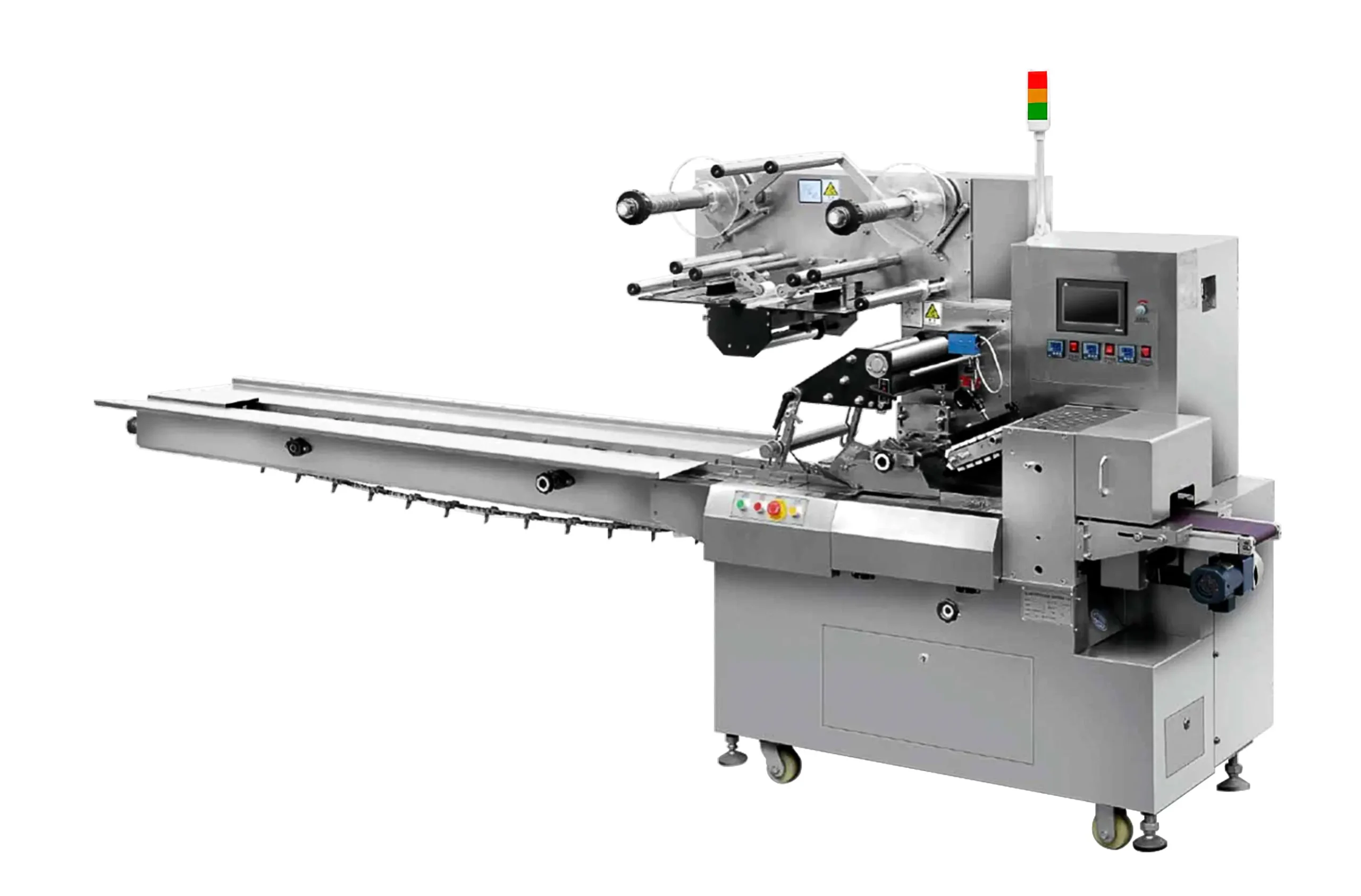
The finished sandwich pack determines the machine. A rectangular sandwich in a film bag needs flow wrapping; a triangular display wedge needs a sealer matched to its cardboard or plastic structure. Soft fillings can benefit from a supporting tray and lidding film.
A compatible manually fed flow wrapper has an indicative budget of USD 5,000 to 25,000. A cardboard wedge-sealing station is USD 3,000 to 12,000, while a manually loaded tray-lidding station is USD 8,000 to 25,000. Comwin matches the handling, closure and cleaning arrangement to your sandwich and packaging material.

Choose the selling pack before choosing the sealing system
| Packing route | Starting condition | Equipment and handling | When to change |
|---|---|---|---|
| Sandwich flow wrapping | Rectangular sandwiches or baguettes sold in film bags. | Support and space the prepared sandwiches, form the film tube and seal the pack. | Use a tray or change the pack if the filling moves under handling. |
| Cardboard wedge sealing | Triangular retail presentation with sealable paperboard. | Form or present the wedge, load the sandwich and close it with the matched sealing tooling. | Ordinary folded paperboard requires a different closure; heat sealing needs compatible construction. |
| Tray lidding | A rigid tray supports thick, soft or unstable fillings. | Load the tray, keep its rim clear and heat-seal compatible lidding film. | A different tray size needs matched tooling; MAP is a separate process choice. |
Paperboard wedges, plastic wedge trays and flexible bags need different feeding and sealing arrangements. Send the actual container as well as the sandwich. Coatings, folded corners and the sealing surface affect the closure. A machine that wraps a baguette does not acquire wedge-sealing capability by changing the bag length.
Handling problems and the configuration response
| Problem | Likely mechanism to assess | Configuration and check |
|---|---|---|
| Flattened bread or displaced filling | Pressure at a guide or an unsupported handoff. | Use gentler guidance and a stable transfer; add a tray when support is needed. |
| Leaking wedge corners | The coating, fold or sealing tool does not match the container. | Match the wedge construction and tool; inspect the corners as well as the straight seal. |
| Inconsistent seals after chilling | Condensation or food reaches the sealing surface. | Trial the real product temperature and pack material, with rim or seal-area control. |
| A fast wrapper waits for sandwiches | Assembly or pack loading supplies fewer units than the wrapper can accept. | Balance assembly stations, buffering and packing from acceptable packs per shift. |
Match the route to your production situation
| Product and situation | Finished pack | Starting equipment | What changes the choice |
|---|---|---|---|
| A central kitchen produces rectangular cheese sandwiches. | Sealed pillow packs. | Sandwich flow wrapping. | Add support if the bread or filling shifts. |
| A convenience-store supplier displays two triangular halves. | A sealed cardboard wedge. | Matched cardboard wedge sealer. | Check that the supplied paperboard has a compatible sealable surface. |
| A chilled sandwich has a thick, soft filling. | A loaded rigid tray with lidding film. | Tray-lidding station. | If MAP is required, assess the sealed structure, gas supply and product validation separately. |
Rectangular sandwiches from an assembly bench
An operator places each prepared sandwich onto a low-pressure infeed. Flow wrapping makes a sealed bag around it. If filling escapes at the handoff, change support or spacing there; increasing wrapper speed will not correct the unstable transfer.
Triangular wedges for retail display
Start with the real wedge blank or container and the intended sandwich portions. Select the forming or presentation step, loading method and sealing tooling together. The budget for a manual wedge sealer excludes automatic carton erection and loading.
Sandwich wrapping machine price and scope
These October 2026 indicative budgets are for new equipment supplied from China, one defined product and one selected format. They are early planning ranges; a formal quotation follows the agreed configuration. Freight, tax, overseas installation, site work, upstream production, extra formats and unlisted gas generation or options are excluded. Commercial terms are agreed in the quotation.
| Equipment scope | Indicative budget | Included scope | Separately specified |
|---|---|---|---|
| Manually fed flow wrapper | USD 5,000 to 25,000 | One selected sandwich format and wrapping machine. | Sandwich assembly, automatic feeding and special cleaning execution. |
| Cardboard wedge-sealing station | USD 3,000 to 12,000 | Manual loading and heat sealing of one compatible wedge structure. | Automatic wedge erection, loading, MAP and downstream packing. |
| Tray-lidding station | USD 8,000 to 25,000 | Manual tray loading and ordinary heat sealing with selected tooling. | MAP, automatic tray loading and sandwich preparation. |
| Automatic wedge erection and sealing combination | USD 35,000 to 100,000 | Matched paperboard, erection, transfer and sealing. | Sandwich preparation and assembly, dedicated MAP and case packing. |
As a planning example, 3,000 acceptable packs during six available packing hours require an average of 8.33 packs per minute. Check assembly and loading against the same requirement. Available time must reflect your actual cleaning and changeover schedule.
Where automation helps the workload
Automate wedge presentation or sandwich spacing when those steps constrain an otherwise repeatable order.
| Dimension | Manual or simpler arrangement | Added automation and decision |
|---|---|---|
| Production pattern | A central kitchen produces rectangular cheese sandwiches. | Automate wedge presentation or sandwich spacing when those steps constrain an otherwise repeatable order. |
| Operator steps | List presentation, product preparation, loading and collection for the actual route. | Automate the limiting step; replenishment, checking and collection remain explicit in the scope. |
| Changeover and cleaning | Bread and filling, product temperature, maximum dimensions and compression sensitivity. Check the actual format mix. | Agree guides, tooling, contact-part changes and cleaning access for the product change. |
| Acceptance | Use gentler guidance and a stable transfer; add a tray when support is needed. | Measure acceptable finished packs, operator involvement, stop/restart behaviour and agreed rejection checks. |
Compare proposals on the same packing task
| Dimension | Evidence to compare | How Comwin responds |
|---|---|---|
| Budget and scope | Use the same product, pack, handling and included operations. | We separate the packing machine, matched feeding and any downstream equipment in the proposal. |
| Output | Compare the actual container closure and handling of filled sandwiches. | We match the required acceptable output and interfaces to the actual product and material. |
| Product and format fit | Use gentler guidance and a stable transfer; add a tray when support is needed. | We select the suitable configuration and any needed handling or format changes from your samples. |
| Support | Identify training, contact parts, spares, warranty and response responsibilities. | We define the support scope alongside the selected equipment. |
| Delivery | Confirm samples, format, drawings, documents and acceptance milestones. | We agree the project plan after its configuration and responsibilities are settled. |
Questions buyers ask before selecting equipment
Can the same machine wrap bags and seal wedge packs?
For film bags, choose a flow wrapper. For paperboard or plastic wedges, choose the matching container-sealing system; their feeding and closure tools are different.
Does folded paper give an airtight pack?
If an airtight barrier is required, specify a compatible sealed structure and validate it. A folded paper wrapper provides handling and presentation without establishing an airtight seal.
When should I add MAP?
When your product and storage plan require an agreed protective atmosphere, assess MAP with the container, film, gas and refrigerated handling. The equipment name alone cannot establish shelf life.
What changes the price most?
For the same selling pack, compare manual loading with automatic presentation, then identify cleaning construction, sealing process and format changes. These must be explicit in the scope.
Send the product and finished pack for a matched proposal
Send product and finished-pack photos or samples, the required fill or count, and acceptable output per shift. We can then identify the starting configuration. For the detailed proposal, include:
- Bread and filling, product temperature, maximum dimensions and compression sensitivity.
- Film bag, paperboard wedge or tray; actual container and material samples.
- Portions per pack, orientation and the upstream assembly method.
- Required closure, seal-area contamination and any defined gas requirement.
- Acceptable packs per shift, SKU mix and assembly rate.
- Chilled handoffs, cleaning method, layout, electricity and compressed air.
We return the recommended operations and reasons, included equipment and options, product/material trial requirements and a quotation for the defined scope.
Comwin provides free sample testing and can arrange a visit to an actual factory to see equipment running. Whole-machine warranty is two years, with three years for core components and remote response within 24 hours.
Arrange free sample testing. Send your packing requirements.