Roti and chapati can use the same broad packaging route, but oil, stickiness and irregular edges change how the stack needs to be supported. Comwin selects the feeding arrangement around a product sample and the finished pack you want.
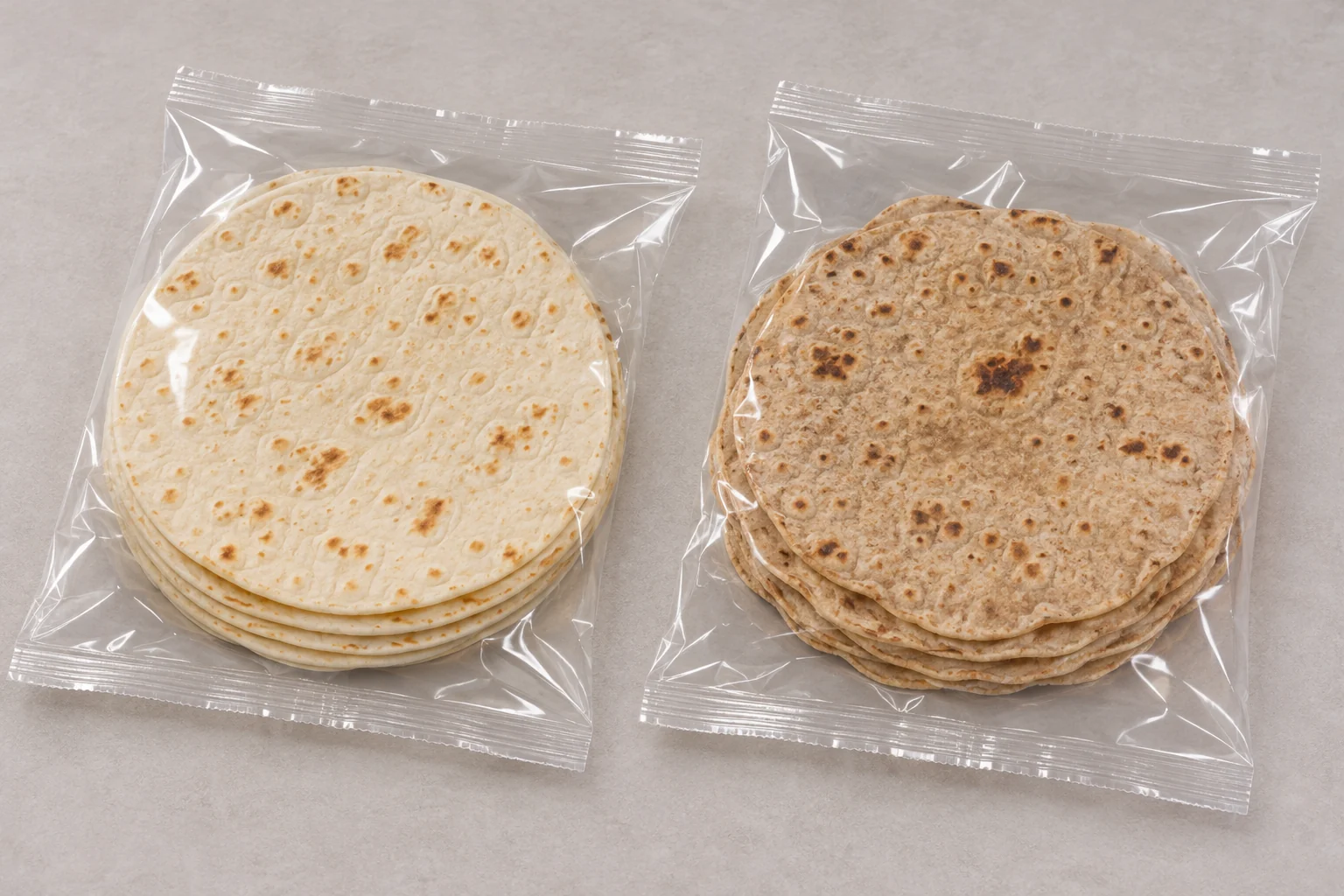
Select the infeed before comparing wrapper speeds
A horizontal flow wrapping machine forms a bag from rollstock around each stack, makes a longitudinal seal and closes the two ends. The packaging material, stack and feeding method must work together.
| Product at the infeed | Starting arrangement | What the trial must establish |
|---|---|---|
| A stable, aligned stack that moves without sticking | Supported transfer into a correctly sized flow wrapper. | The lowest tortilla stays with the stack through the transfer and bag former. |
| Soft or sticky stacks that drag when pushed | A supported infeed and controlled transfer into the wrapper; assess bottom-film feeding where it suits the soft stack. | Stack separation, film release, surface marking and clean sealing at the intended rate. |
| Individual flatbreads arriving continuously | Counting and stacking before controlled transfer to the wrapper. | Correct count, stack height and timing from upstream delivery through to the closed pack. |
With a bottom-film arrangement, the rollstock approaches beneath the product and carries it toward the forming area. A belt infeed supports the stack before that handoff; the transfer gap and relative speeds still need checking with the softest product.
Measure the largest actual stack, including uneven edges. Nominal bread diameter alone does not define the bag: stack height, side clearance and sealing space also matter. Where diameter varies, check the smallest product as well, since a loose stack can shift during transfer.
Choose the finished pack before specifying a reclosure. An ordinary flow-wrap bag has sealed ends; a zipper or resealable feature needs compatible materials and equipment. It should be included in the sample and quotation if it matters to how customers use the product.
Check the handoff with your softest stack
- On the infeed belt: Watch whether the bottom tortilla moves with the stack or starts to drag.
- Across the transfer: Look from the side at belt height. The lowest tortilla should cross the gap without curling under or sliding out of alignment.
- At the film entry: Check that the film takes the stack forward without shifting the count or pulling a bread edge into the seal.
Ask for a continuous side-view clip at the intended running speed, then open several finished packs and inspect the bottom tortilla. If it folds at the gap, adjust the support and belt-to-film timing before increasing speed.
Resolve the problems that show up after packing
| Problem | Likely area to investigate | Practical check |
|---|---|---|
| Stacks shift or the bottom bread folds | Unsupported transfer gaps, sticking, pusher contact or unstable stacking. | Run the softest product and observe the lowest layer through each handoff. |
| Moisture appears inside the pack | Product condition at packing, cooling consistency and the actual packaging environment. | Record product condition and inspect packs after the agreed holding period. Establish the cooling requirement with the food-production team. |
| Seals contain crumbs, oil or a bread edge | Stack position, film clearance, contamination and sealing settings. | Inspect the whole seal and assess pack integrity using the agreed test method. |
| Layers stick together when the customer opens the bag | Recipe, cooling, stack pressure and any separator used in production. | Open stored samples and separate the layers as a consumer would. |
A clean seal is one part of the preservation system. Recipe, hygiene, film barrier, storage and distribution conditions also affect the result. Agree a shelf-life validation plan for the actual product; a wrapper’s advertised speed or a gas-flush option cannot establish the usable life of your tortillas.
Match the layout to how you produce flatbread
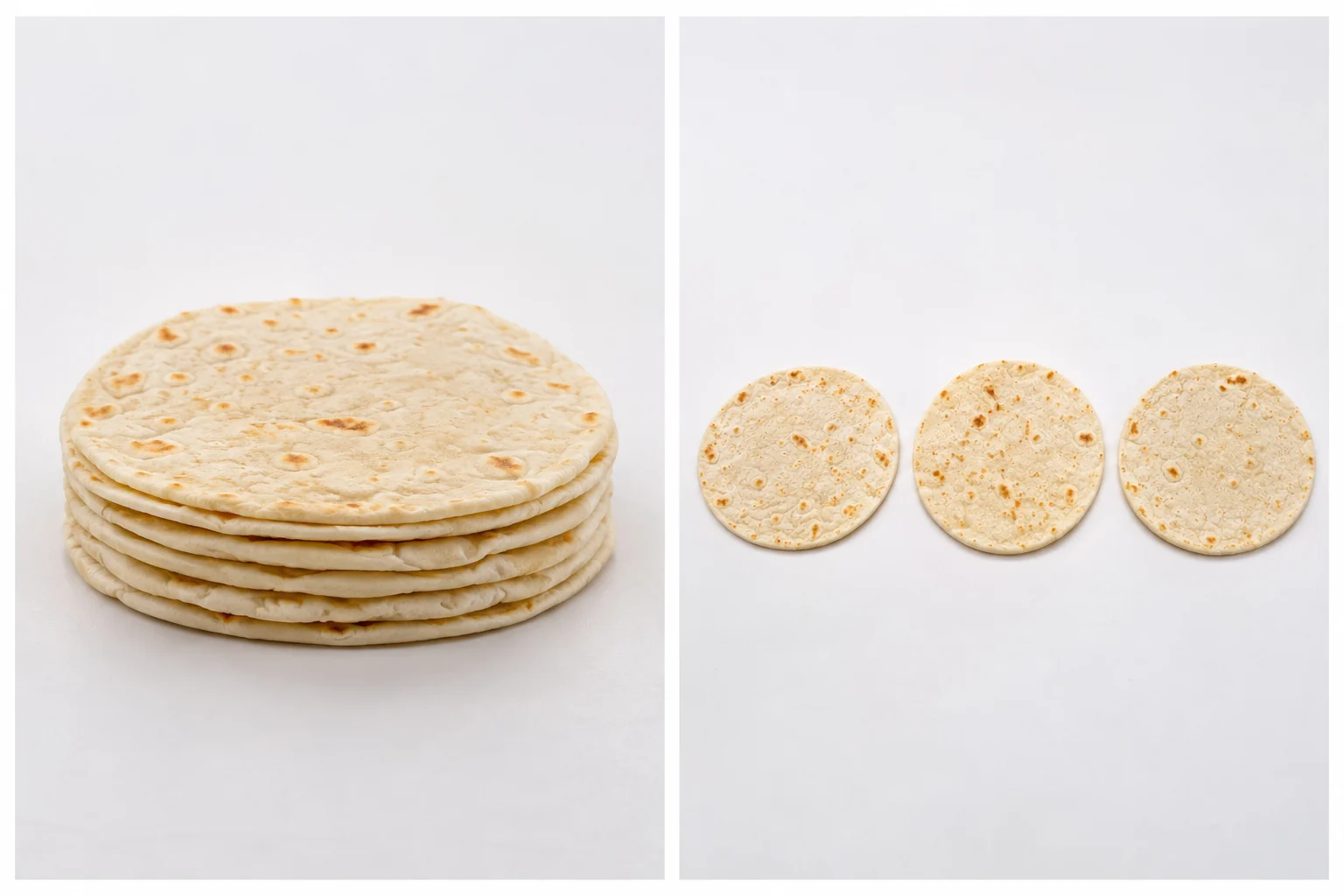
Stacks arrive ready counted
Keep the aligned stack supported → control the gap between stacks → transfer onto the wrapper’s film or support surface → seal.
Watch the lowest tortilla at the handoff. A dragging lower layer can fold even while the upper stack looks aligned.
Individual pieces arrive continuously
Count each piece → build an aligned stack → release the completed stack onto supported transfer → wrap.
Agree how an incomplete stack is held or removed during a stop. A wrapper alone does not count and stack the individual pieces.
One retail tortilla stack, produced throughout the shift
Use the regular stack size to set the infeed pitch, the distance from one stack to the next, and the bag format. If counting and stacking already work well, retain that process and trial the transfer into the wrapper. Automatic transfer becomes useful when operators cannot keep the stack spacing consistent or when handling causes damage.
Oily chapati or roti with variable edges
Trial the most difficult normal product, including oilier surfaces and the largest diameter. A belt-supported stack may move more cleanly than one pushed over a static surface. Check cleaning access and whether product residue builds up on belts, guides or the seal area during a sustained run.
Several sizes in short production runs
Compare how the operator changes guides, bag length, film and stack height. A manually loaded wrapper may suit this pattern if the loading rate meets demand. Ask for an actual change from the smallest to the largest format, including the first acceptable pack after restarting.
Product ready for packing → count and align stack → support the transfer → form and seal the bag → inspect the finished pack
Convert pieces per minute into packs per minute
If a line delivers 120 tortillas per minute and each pack contains six, the wrapper receives a theoretical 20 stacks per minute. For an eight-piece pack at the same upstream rate, that becomes 15 packs per minute. These are planning calculations, before rejects or stops.
Specify both the piece count and the required accepted packs per hour. Check that the counter, stacker and transfer can sustain the same result. A fast wrapper may wait for stacks, while a fast upstream line may need a controlled buffer when film is changed.
In a coordinated packaging line, agree the stop-and-restart signals and responsibility for a partial stack. State which operations remain manual, who removes rejects and how product is handled during a stoppage. Cooling and baking equipment are separate scope unless specifically included.
An equipment budget with a defined starting point
For a compatible manually loaded flow wrapper, use US$5,000 to US$25,000 as an indicative equipment reference. This assumes a defined stack format and suitable heat-sealable rollstock. It does not mean every wide tortilla stack or special feeding arrangement fits that range.
Automatic counting, stacking, dedicated belt feeding, unusually wide film, reclosure systems and atmosphere-control equipment require their own configuration and price. Cooling equipment, downstream case packing, freight, duties and overseas installation are outside this basic reference.
Compare offers using the same pack count, stack dimensions and trial material. Ask each supplier to identify the manual tasks and included change parts. The purchase price alone cannot show the labour required to produce an acceptable retail pack.
A useful tortilla packaging trial
- Use production flatbreads at their normal packing condition, including the softest and stickiest normal batch.
- Run every proposed count and stack height with the intended film.
- Record accepted packs, damaged stacks, wrong counts and seal rejects over an agreed run.
- Open packs to check layer separation and edge damage, and retain samples for the agreed storage assessment.
- Demonstrate replenishment, cleaning access and a real format change; identify operator tasks and training needs.
Request the exact film and settings used in the trial, the agreed acceptance criteria and the included change parts in the proposal. This makes the trial relevant to the equipment and materials delivered to your factory.
Send a stack sample and the pack count
Start with product photos, the diameter and height range of a complete stack, pieces per pack, packs required per hour and the desired finished bag. Include the packing condition, surface oil or sticking problems, and whether the line supplies individual pieces or counted stacks.
Comwin can then recommend an infeed and wrapping arrangement and identify what needs a sample run. If you already use a successful film, send its specification and a roll for the trial.
Comwin offers free sample testing, a two-year machine warranty and a three-year warranty for core components. Remote support responds within 24 hours. Training, installation and spare-part responsibilities are agreed in the proposal.