Quick answer
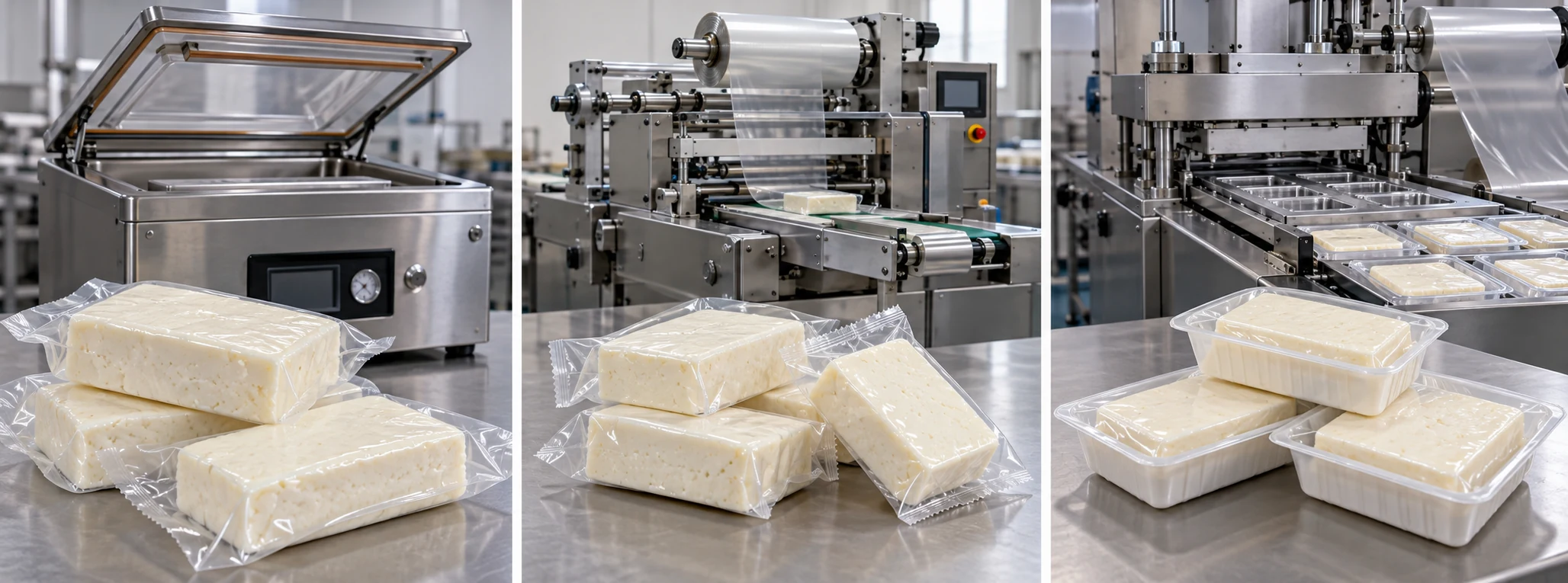
For paneer, choose packaging around the block size, moisture, handling and refrigerated distribution. Chamber vacuum machines suit batch bag loading; flow wrappers suit continuous block feeding; thermoforming systems form packs from film. Packaging alone does not establish shelf life, so validate the product, material and storage conditions together.
Indicative budgets are USD 3,000–15,000 for a chamber vacuum sealer, USD 5,000–25,000 for flow wrapping and USD 30,000–120,000 for thermoforming packaging.
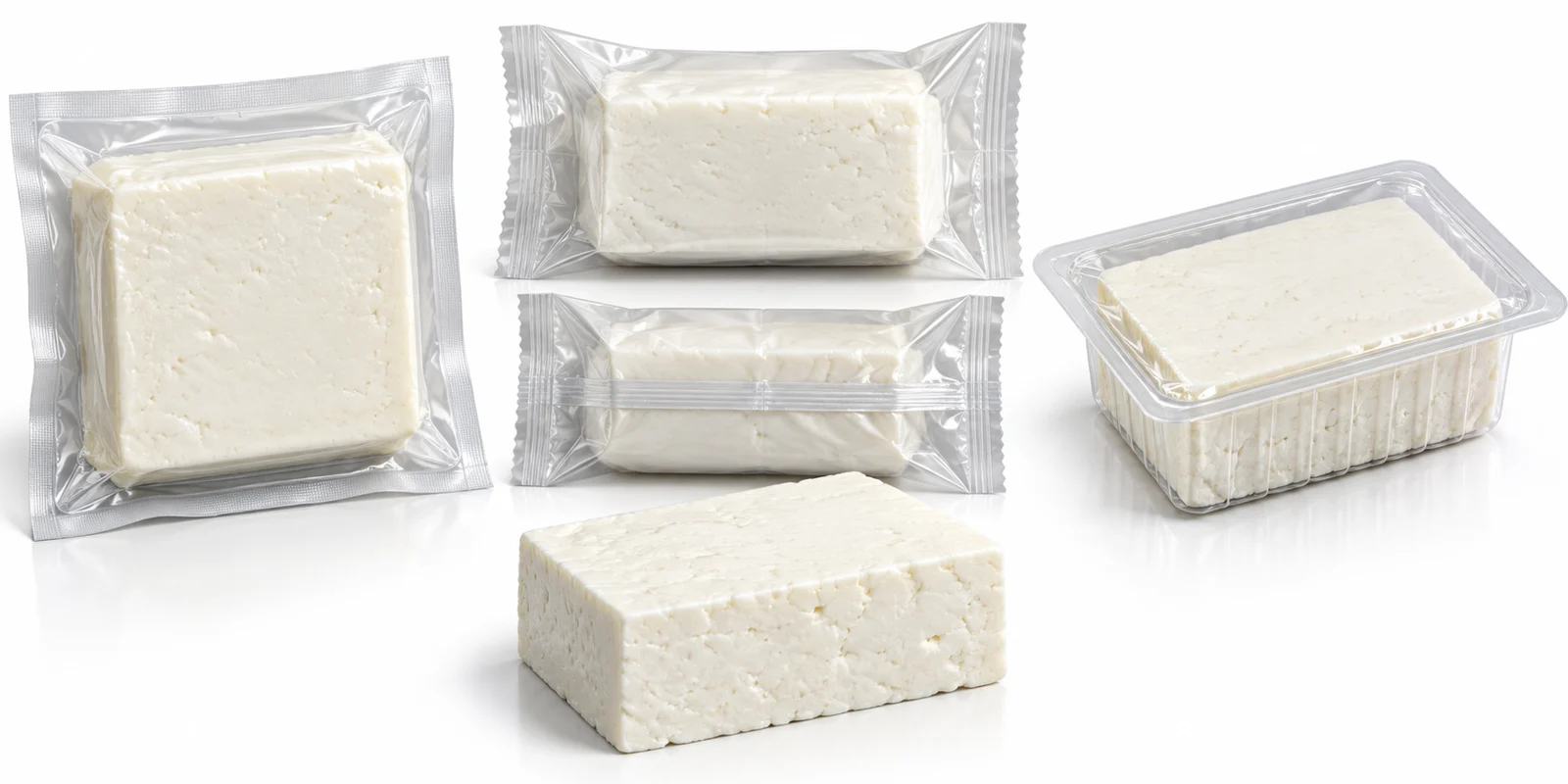
Paneer packaging needs to protect a moist, soft block through refrigerated handling. Comwin matches the bag or film structure, product loading and sealing process to the block and required output.
Choose the finished pack and equipment
| Route | Best starting condition | Packaging operations |
|---|---|---|
| Chamber vacuum packaging of paneer | Batch bag loading with manageable manual work | Place paneer in a suitable premade bag → chamber vacuum cycle → sealing |
| Continuous paneer flow wrapping | Stable blocks with controlled spacing and continuous supply | Block feeding → film wrapping → longitudinal/end sealing |
| Thermoforming packs for paneer | Continuous production where a formed-film pack suits the block | Bottom-film forming → product loading → evacuation or specified gas process → top-film sealing |
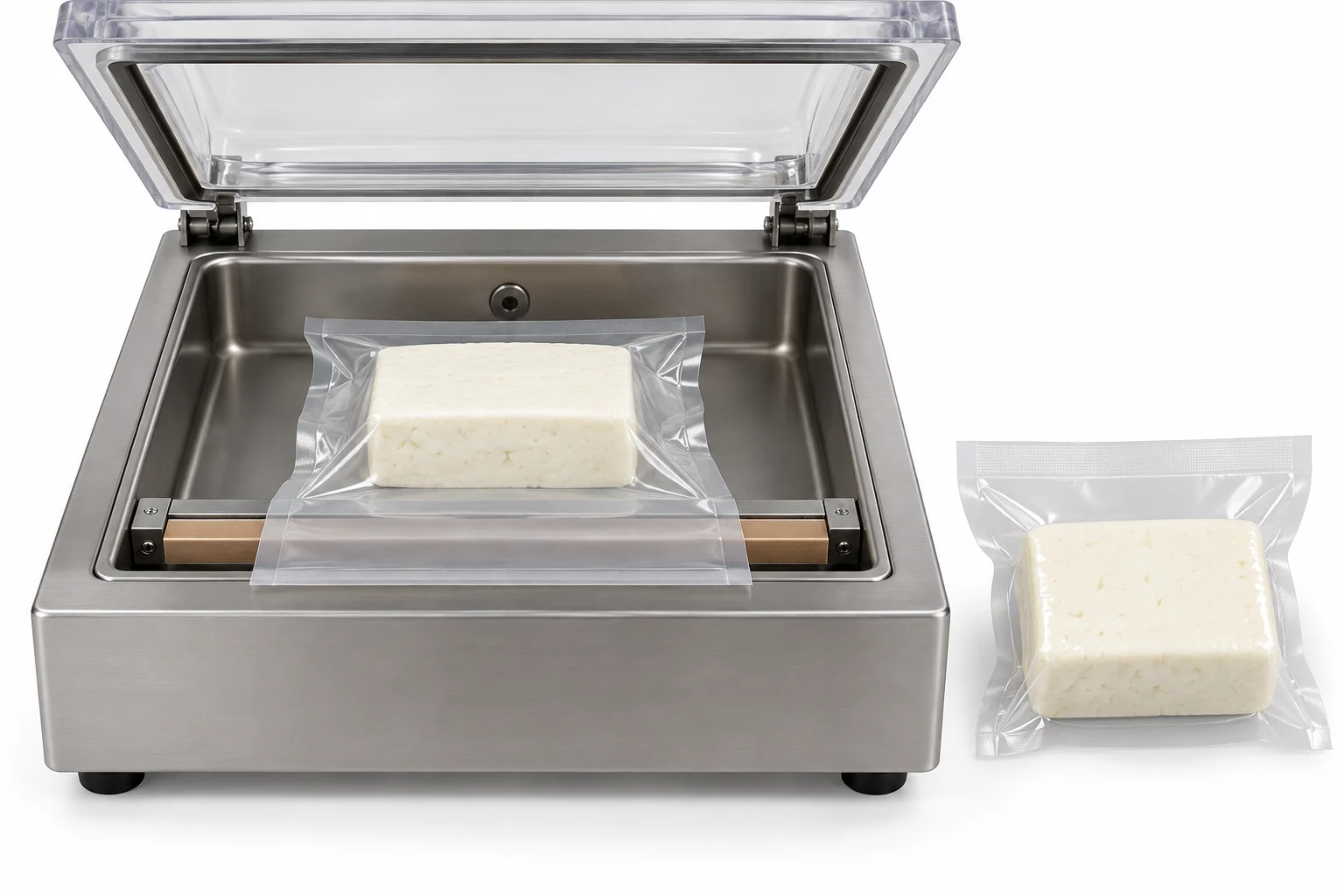
Chamber vacuum packaging of paneer
Choose chamber space, seal arrangement and cycle for the actual block, bag and surface moisture. Manual bag loading is part of the production plan. Vacuum pressure may alter block shape or release liquid; trial appearance and leakage rather than assuming maximum vacuum is always better.
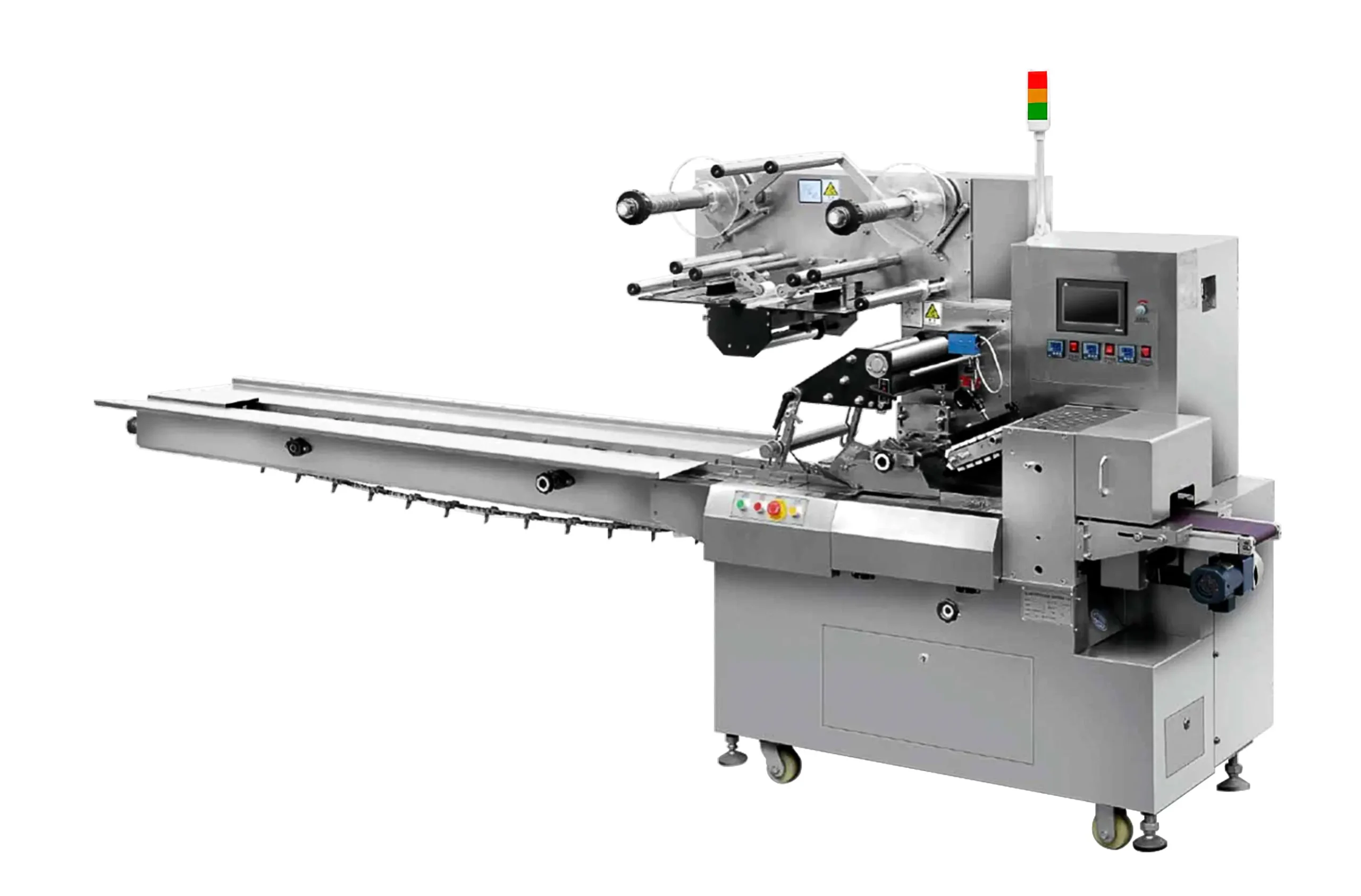
Continuous paneer flow wrapping
Wet surfaces and misplaced blocks can contaminate seals. Define block handling, separation and seal clearance. Gas flushing, where needed and suitable, is a separately defined configuration; ordinary flow wrapping is not automatically a validated modified-atmosphere process.
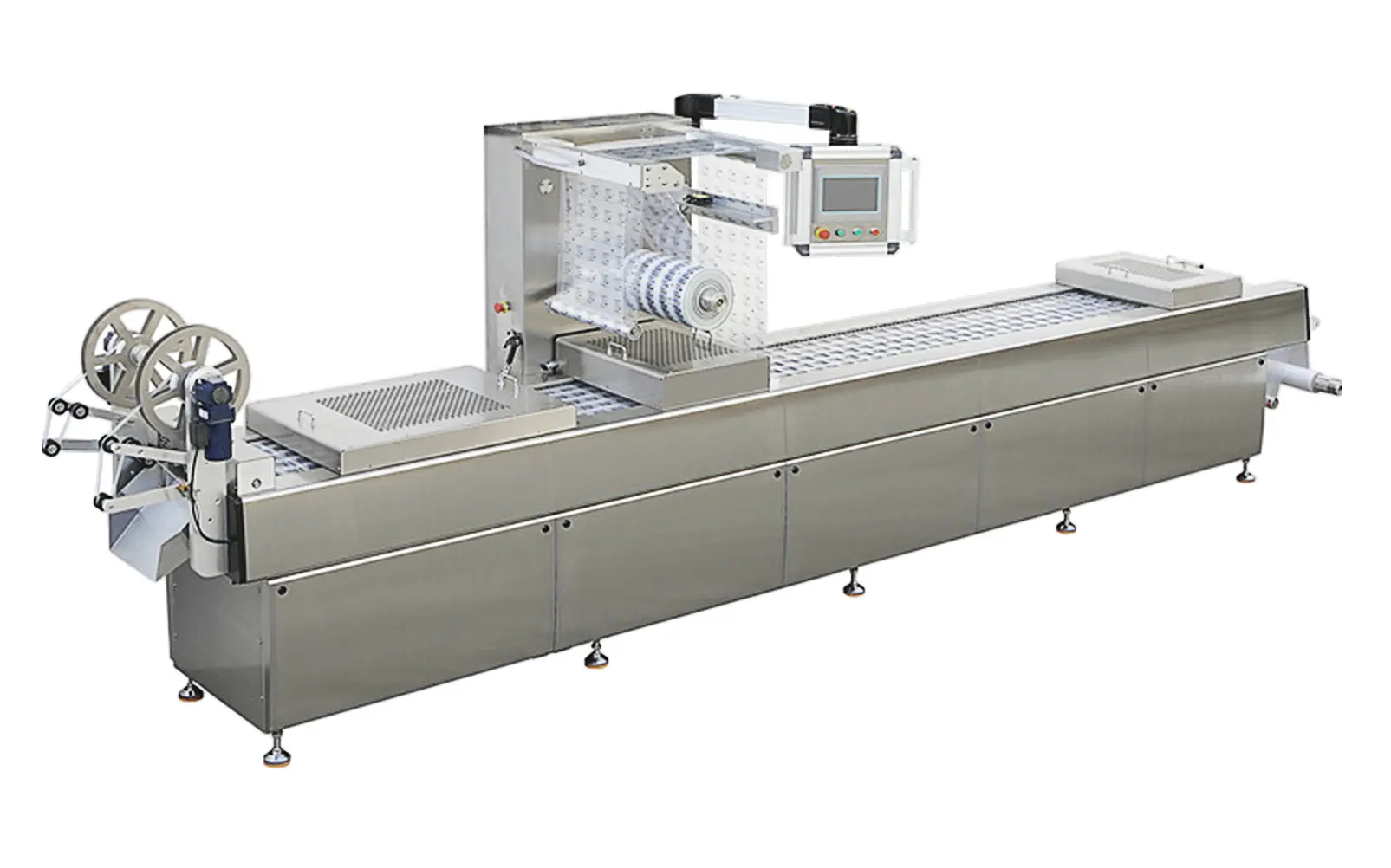
Thermoforming packs for paneer
Film depth, mold, loading and liquid management must be evaluated together. Premade rigid-tray sealing is a different equipment arrangement. Select the intended pack structure and inspect chilled samples before finalizing the format.
Packaging problems and the configuration to check
| Problem | Likely mechanism to investigate | Configuration and confirmation check |
|---|---|---|
| Moisture causes leaking seals | Liquid or a misplaced block enters the sealing band. | Control loading, seal clearance and any necessary liquid handling; inspect packs after chilling. |
| Vacuum distorts paneer | Block strength and vacuum cycle are mismatched. | Adjust the cycle and suitable support/pack structure; evaluate appearance, liquid release and pack integrity. |
| Automatic feeding jams | Blocks vary in size, stick together or arrive unevenly. | Compare manual alignment with suitable separation/feeding and measure accepted output using true blocks. |
| Shelf life is inferred from the vacuum machine | Packaging is confused with the full food-preservation process. | Validate product process, material and cold chain; removing air is not sterilization. |
Match the product and use case
| Product or order | Finished pack | Trial or decision |
|---|---|---|
| Small chilled paneer batches | Manually loaded vacuum bags | Fit chamber size and loading labor to the blocks. |
| Repeated retail paneer blocks | Continuous flow-wrap packs | Stabilize block spacing and keep the end seals clear. |
| Higher continuous paneer output | Formed-film packs | Define loading, mold depth, film and surface-moisture management. |
Choose a paneer vacuum packing machine by the loaded job
The usable chamber arrangement depends on block size, bag placement and clean sealing space, not just the machine footprint. Compare complete accepted cycles, including loading and unloading. For automatic paneer packing machine projects, the feeding system deserves the same attention as the sealing frame. Cheese slices and shredded cheese have different handling tasks; they should not be used as evidence that a paneer block feeder is suitable.
Vacuum packaging does not guarantee shelf life or eliminate all microbial risks. Product, packaging and refrigerated distribution need their own validation.
Paneer Packing Machine Price: Indicative Equipment Budget
Use these USD ranges for preliminary equipment planning as of October 2026. They describe alternative configurations, not a package of all the listed machines. They are not a formal quotation or a verified market average.
| Equipment scope | Planning range | Assumptions and boundaries |
|---|---|---|
| Chamber vacuum sealing for paneer | USD 3,000–15,000 | Manually loaded compatible vacuum bags, appropriate chamber size and seal arrangement. |
| Paneer flow wrapping | USD 5,000–25,000 | One agreed pack format and defined product feeding; vacuum or gas flushing is not assumed. |
| Paneer thermoforming packaging | USD 30,000–120,000 | One formed-pack format, forming/sealing system and specified evacuation scope; loading and tooling require confirmation. |
Assume a new China-export supply, one agreed packaging format and the ordinary product conditions stated above. Confirm the delivery term and included commissioning in the written quote. Freight, taxes, overseas installation, factory utilities, upstream food or water processing, cold-chain equipment, extra formats/tooling, inspection, labeling and downstream packing are excluded unless expressly included. Heating, cleaning or special-hygiene functions require a defined scope. A broader range does not mean every configuration includes its upper-end features.
Compare offers at the same fill size, product condition, package material, good-pack output and acceptance criteria. Ask for the included functions, change parts, consumables and interfaces alongside the price. Do not add alternative route budgets together.
Compare the work the equipment actually automates
| Dimension | Assisted or batch operation | Repeated automatic operation |
|---|---|---|
| Production mode | Manual bag loading followed by chamber cycles | Continuous feeding to flow wrapping or thermoforming |
| People and replenishment | Load bags/chambers and keep wet product away from the seal. | Feed portions or cavities and monitor handling, packs and sealing. |
| Format and product changes | Keep the actual setup work visible: Bag/chamber loading pattern, film width or formed-pack tooling. | Agree change parts, setup access and a repeatable cleaning/restart sequence. |
| Acceptance | Use the same product and packaging quality criteria. | Measure accepted paneer packs after loading, evacuation if used and sealing. |
Set the required good packs per shift before choosing a quoted speed. Deduct planned cleaning, format changes and replenishment from production time, and include rejected packs. A short demonstration at nominal speed does not establish sustained accepted output.
What to compare in a supplier proposal
| Dimension | Evidence to request | Useful comparison |
|---|---|---|
| Budget and supply scope | An itemized offer for chamber vacuum sealing for paneer or your selected alternative. | Same package, product conditions, included operations, delivery term and exclusions. |
| Production output | A run using the actual paneer blocks and packaging, with accepted packs recorded. | Good packs over usable run time; record rejects, replenishment and stops. |
| Product and format adaptation | The agreed product path, packaging tooling, change parts and cleaning access. | Resolve the hardest sample condition in the product trial, not just the easiest demonstration. |
| Support and maintainability | Training, manuals, wear/spare parts, fault information and the support contact. | Define response arrangements and practical local maintenance access. |
| Delivery and acceptance | A written build scope, layout/interfaces, trial protocol and delivery responsibilities. | Record who supplies product/materials and what is needed before shipment and installation. |
Use sample testing with your actual product and packaging to resolve dosing, handling and seal questions before fixing the equipment scope.
Frequently asked questions
What is a paneer vacuum packing machine?
It usually refers to loading paneer in a suitable bag, then evacuating and sealing in a chamber. Choose usable space, seal placement and loading labor around the actual moist blocks.
Can paneer be flow wrapped?
If block shape, spacing and wet-product seal clearance are controlled, flow wrapping can be evaluated. Gas flushing is a separate configuration; ordinary wrapping does not automatically establish a MAP process.
What affects paneer packing machine price?
Chamber vacuum, continuous flow wrapping and thermoforming have different equipment scopes. Compare loading, molds/format parts, accepted output and inspection separately using the same paneer.
Does vacuum packaging guarantee paneer shelf life?
No. Vacuum is not sterilization. Product process, material and refrigerated distribution must be validated together, without adopting a shelf-life guarantee from the equipment alone.
Send the samples that determine the configuration
Real paneer blocks with typical size variation and surface moisture; intended bag/film structure; net weight; shape and leakage checks; accepted output; loading labor, cleaning, changeovers and refrigerated handling.
Include the required product-contact and cleaning specification, acceptable fill variation, seal or cap checks and any existing equipment interfaces. Send photographs, dimensions or samples of the complete package, not only a nominal pack volume.
Comwin uses these inputs to recommend the packaging route, dosing and handling arrangement, required interfaces and an itemized equipment offer. Where testing is needed, the trial plan should identify the product/materials, checks and acceptance criteria before the configuration is finalized.
Comwin offers free sample testing and factory visits. The confirmed warranty is two years for the complete machine and three years for core components, subject to the agreed terms. Remote support targets a response within 24 hours; resolution time depends on the fault and required action.