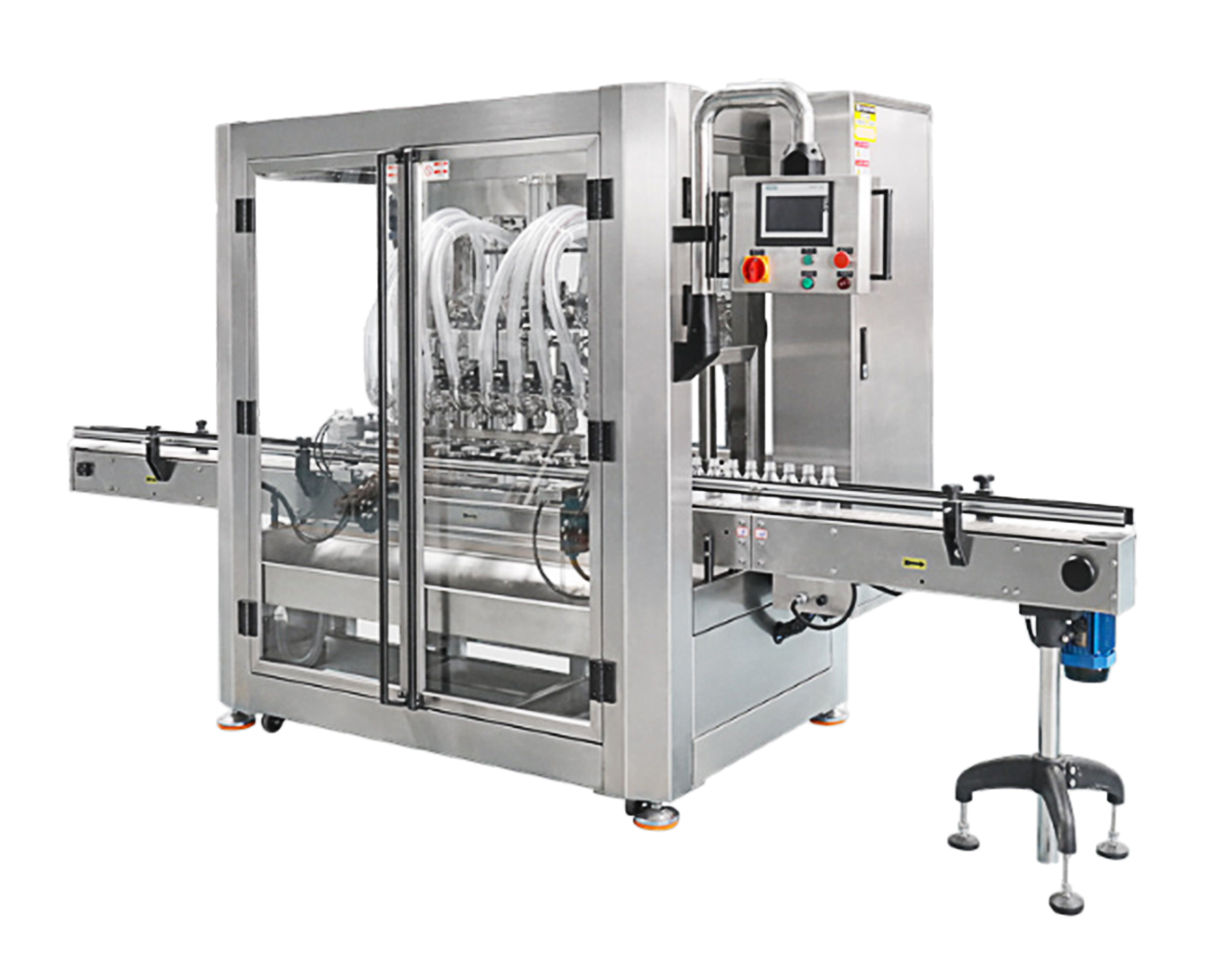
A jam packaging machine must dose the recipe without damaging fruit or leaving jam on the closing surface. Jars need filling and cap handling; portion sachets need product delivery that stops cleanly before the film seals. Specify filling temperature and the largest fruit pieces before choosing the dosing path.
Jar filling and closing has a platform reference of USD 12,000 to 50,000. A single-lane jam sachet configuration has an indicative budget of USD 8,000 to 25,000. For filling with heating or temperature holding and agreed fruit handling, allow USD 20,000 to 60,000. Comwin specifies the product path and packaging for your recipe.
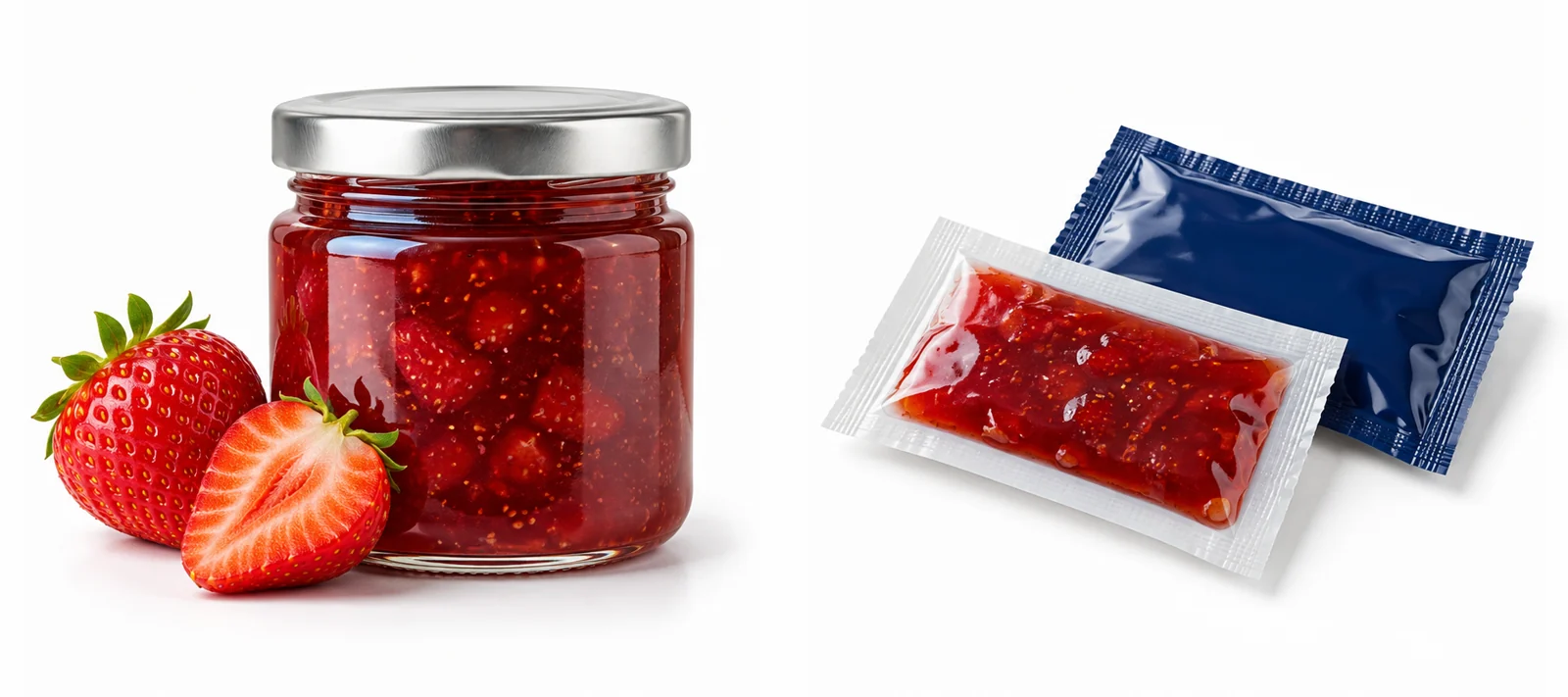
Choose jars or sachets, then define the jam handling
Jam jars with matched caps
For glass or plastic jars, select a metering path and nozzle that accommodate the jam and the agreed fruit-piece range. Containers must be held steadily and filled with sufficient control to keep the rim clean. Match cap supply and closing to the actual closure, including any separately specified vacuum-capping function.
Add temperature holding or agitation when the food process requires it. Temperature affects viscous jam feeding, while excessive shear or unsuitable stirring can change the fruit pieces. Trial the complete recipe at the intended filling condition; a water demonstration cannot establish those results.
Single-portion jam sachets
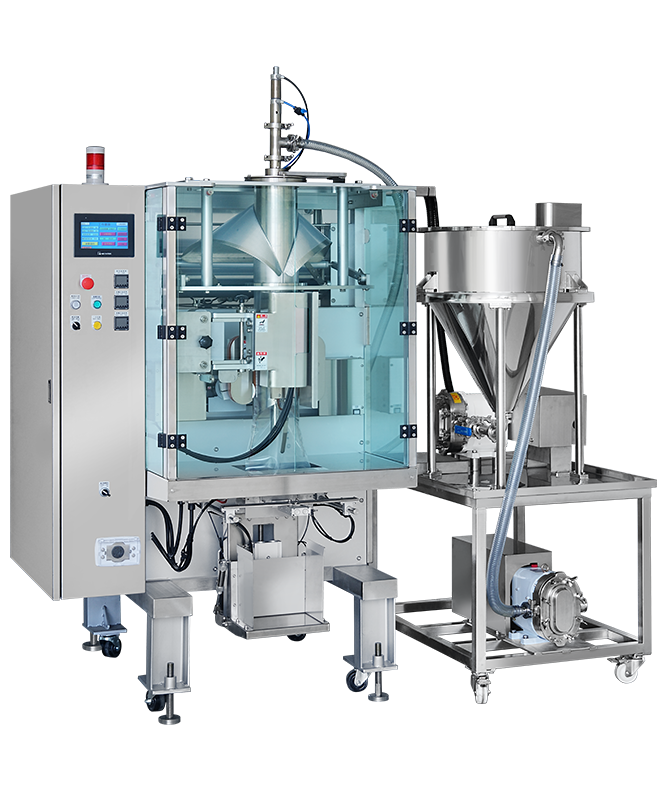
A suitable dosing unit supplies the jam into a formed sachet, then product flow stops before the sealing stage. Dose, nozzle passage and fruit-piece size must fit together: a very small portion may be incompatible with a recipe containing large pieces.
Trial the chosen portion and film through first fills, normal running and restart after a pause. Keep product tails clear of the seal and check filled sachets for leakage after handling. Multilane production needs its own equipment and budget; the single-lane range excludes it.
Preserve fruit pieces and keep the closure clean
| Packing problem | Matched equipment or configuration | How it responds and what to check | Applicable product |
|---|---|---|---|
| Fruit pieces block the valve or nozzle | Product passage and feed selected for the largest piece | Inspect fruit condition and dose stability using the actual recipe. | Chunky preserves |
| Jam strings across the pouch seal or jar rim | Controlled cutoff and nozzle withdrawal | Check consecutive fills and restart after a pause. | Sticky, high-solids jam |
| Dose changes as temperature drifts | Defined process temperature and suitable product supply | Compare fills across the agreed temperature range. | Temperature-sensitive viscosity |
| Cleaning leaves product in concealed spaces | Accessible product path and agreed cleaning procedure | Demonstrate disassembly and inspection of contact parts. | Frequent recipe or flavour changes |
Retail jam jars, foodservice portions and warm filling
| Production situation | Finished pack | Starting route | Configuration inputs |
|---|---|---|---|
| Retail jam in repeat jar sizes | Closed jam jar | Matched filling and cap closing | Fruit size, jar opening, cap and temperature Add specific cap or temperature functions only when required. |
| Foodservice single portions | Sealed rectangular sachet | Single-lane suitable dosing and sachet sealing | Dose, largest fruit piece and film Review recipe or dose if pieces cannot pass without damage. |
| Warm filling required by the recipe | Defined jar or sachet | Selected route with agreed temperature holding | Permitted heat history and quality checks |
Jar supply, product replenishment and recipe changes
| Production mode | Operator work | Changeover implications | Acceptance focus |
|---|---|---|---|
| Hand-positioned container filling | Operator loads and closes containers | Useful for small batches and recipe changes | Product condition, dose and clean rim |
| Automatic jar filling and closing | Operator supplies jars/caps and replenishes jam | Nozzles, container guides and caps need defined changes | Acceptable closed jars over complete batches |
| Automatic sachet production | Operator supplies film and product | Dose, film and seal settings follow the recipe | Seal cleanliness, portion consistency and restart |
Fruit size, process temperature and packaging limits
Provide viscosity at filling temperature, fruit-piece distribution, formulation constraints and the cleaning procedure. Include container material and thermal limits. Any maximum-particle claim must apply to the complete valve, pipe and nozzle path, not just one component.
Cooking, pasteurisation, cooling and validated shelf life are food-process tasks. Heating a hopper is not evidence of a complete thermal process or an aseptic system. If the product must be hot filled or meet a defined preservation method, supply the established process requirements so packaging interfaces can be assessed. Film barrier and jar closure should be validated against the actual product and storage plan.
Jam filling and sachet machine prices
These planning ranges concern new equipment supplied from China for a defined product and format. Product preparation, extra formats, freight, taxes, overseas installation and site work are excluded unless expressly listed. Equipment additions and commercial terms are settled in the formal quotation. Special product-contact, safety or environmental requirements can change the scope.
| Equipment scope | Planning budget | Range applies to | Items to define separately |
|---|---|---|---|
| Jam jar filling and closing platform | USD 12,000 to 50,000 | One specified container and closure, subject to product review | Special vacuum capping, heating and difficult fruit handling |
| Single-lane jam sachet configuration | USD 8,000 to 25,000 | One portion and film format with suitable jam dosing | Multilane production, upstream cooking and extra formats |
| Temperature-held filling arrangement | USD 20,000 to 60,000 | One defined product path, temperature condition and container family | Validated thermal processing, aseptic requirements and cooling systems |
Calculate jar output and jam supply
For an illustrative requirement of 2,400 jars at 250 g in 240 available minutes, the target is 10 acceptable jars per minute and 2.5 kg of jam per minute. Define how much time remains after recipe changes, cleaning and replenishment before comparing proposed equipment.
Weigh consecutive fills and inspect fruit pieces, jar rims or sachet seals. Repeat after a normal pause at the agreed temperature. Set fill variation and the treatment of damaged pieces or leaking packs from the product and sales requirements before the trial. A generic accuracy claim does not set these acceptance limits.
Compare proposals on the same product and pack
| Dimension | Evidence to compare |
|---|---|
| Budget and scope | The equipment operations, product and formats represented by each price. |
| Output | Compare the actual fruit recipe, filling condition and clean closure at the same target dose. |
| Product and format fit | Jam sample, fruit-piece range and viscosity at filling temperature; Jar/cap or sachet sample and packaging material. |
| Support | Training, contact parts, spares and the responsibilities for commissioning and support. |
| Delivery | Samples, format confirmation, layout, documentation and acceptance milestones. |
Questions to settle before ordering
Can one filler pack smooth jam and chunky preserves?
If the selected product path and metering method preserve both recipes, they can be assessed on one platform. Test the largest piece distribution and the smallest planned dose.
Does a heated hopper make the process safe for ambient storage?
If ambient storage is required, the complete validated food process and closure must support it. Hopper heating alone does not establish preservation or shelf life.
Can a jar filler also make sachets?
For sachets, dosing must be integrated with film forming, cutoff and sealing. Some product-supply components may be shared, but the packaging operations are different.
What causes jam sachet leaks?
When product reaches the seal area, first review cutoff, dose timing and pouch clearance alongside film and sealing settings. Trial the complete process rather than increasing temperature without diagnosis.
Request a trial with your jam recipe
Send the jam recipe and finished-pack photos or samples, the portion quantity and required output. For the equipment proposal, include:
- Jam sample, fruit-piece range and viscosity at filling temperature
- Target dose and acceptable variation
- Jar/cap or sachet sample and packaging material
- Required good output and recipe-change frequency
- Established heat treatment, filling temperature and cooling interfaces
- Cleaning method, contact-part requirements and destination
Comwin will specify a dosing path and closing process for the recipe, explain the configuration and sample trial, and quote the agreed equipment scope.
Comwin provides free sample testing and can arrange real factory visits. Small-equipment support includes video tutorials and remote video calls. The whole-machine warranty is two years, with three years for core components and remote response within 24 hours. Support and installation responsibilities are specified for the project.
Arrange free sample testing · Send your packing requirements