For fresh potatoes sold by weight in a ventilated pillow bag, use gentle transfer into a weigher and a compatible vertical form-fill-seal machine. It makes each bag from rollstock, so there are no empty bags for staff to present. Use a clipped net for a mesh retail pack and a supported closing station for heavier premade sacks.
Indicative budgets are US$15,000–55,000 for a weighed retail film-bag unit, US$20,000–65,000 for a tubular-net unit and US$8,000–25,000 for a manually presented sack and sewing station. A rollstock bagger alone is US$5,000–30,000 before weighing, feeding and supports.
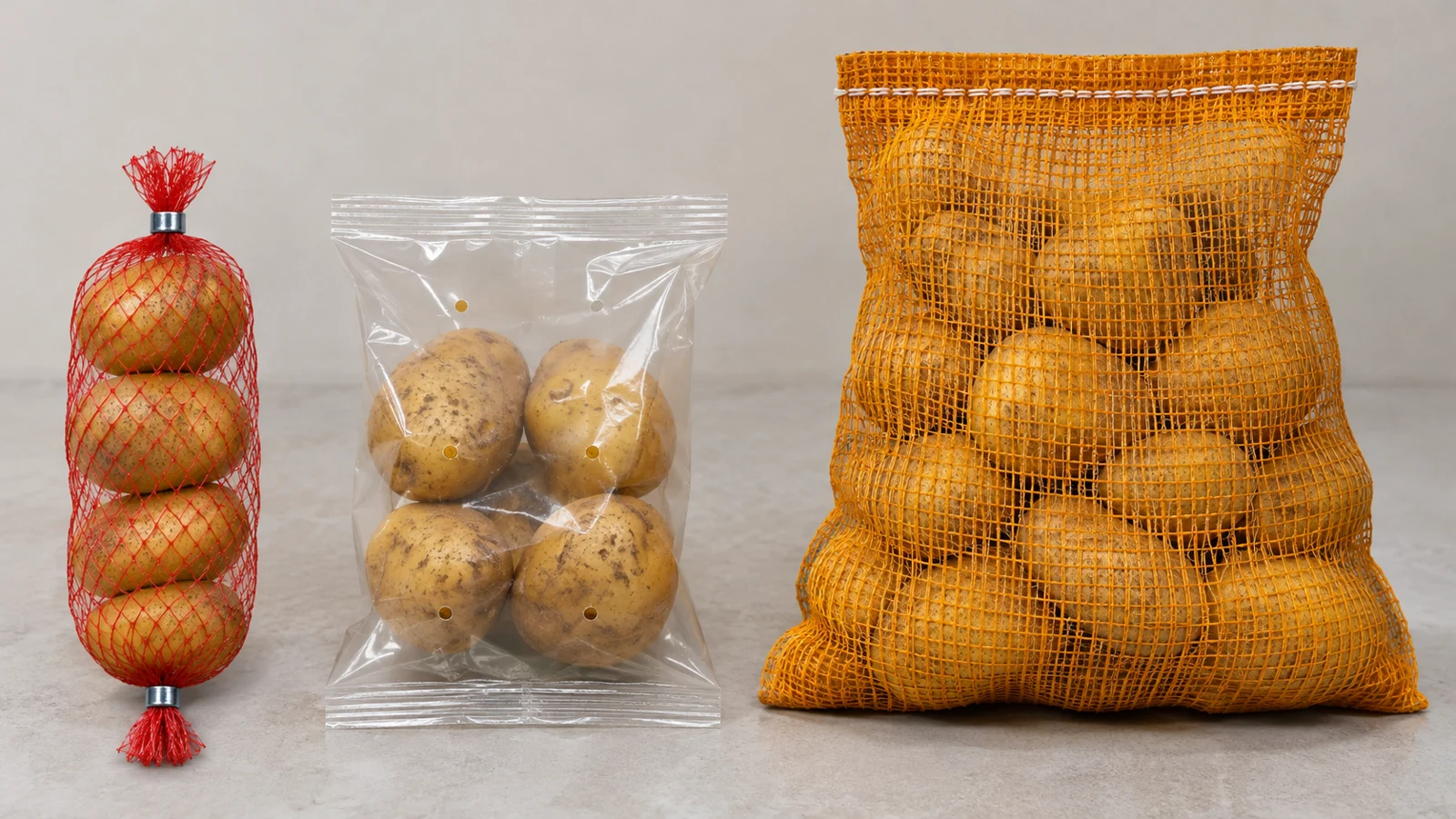
Match the pack to the closure and the loaded weight
| Finished pack | Equipment to assess | What to check with actual potatoes |
|---|---|---|
| Ventilated retail pillow bag made from rollstock | A compatible vertical bagger forms the pillow bag around a gently transferred weighed portion. Supplied wicketed bags use their own opening and closing station. | Compare punctures, empty seal clearance and the effect of surface water. Confirm how ventilation is provided in the actual film. |
| Small tubular retail net | Portion weigher, net feed around a filling tube, supported filling, gather and clip. | The smallest tuber stays inside the net. A long tuber or loose skin does not reach the clip zone. |
| Heavier mesh sack | Present the premade sack, carry the load on a platform, and sew the flat mouth if specified. | Set the bag-clamp height and supported outfeed for the heaviest normal load. Test the actual material and seam. |
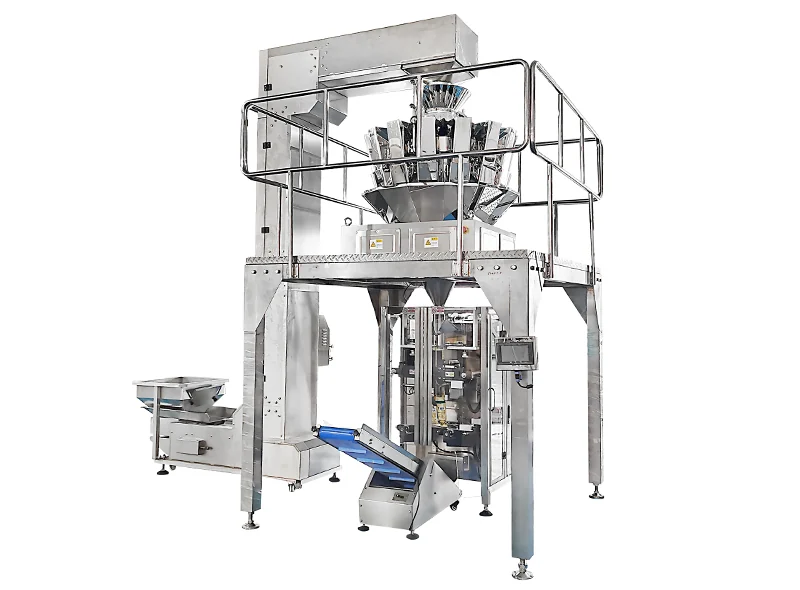
Keep the final potato from driving up giveaway
Measure the weight of individual tubers at the grader outlet. In a small retail portion, adding one large potato to make minimum weight can push the pack well over target. Trial a tighter grade band or a weigher that can combine suitable portions. Record both underweight rejections and weight given away on accepted bags. As a calculation example, an average extra 80 g in each of 1,000 accepted bags gives away 80 kg of potatoes. Your actual result depends on the grade mix and weighing trial.
Check bruising before packing, after the largest drop and again after the agreed handling period. Wet skins, loose soil and the longest tubers belong in the test. An empty-machine speed test cannot reveal a potato bouncing into the seal area or a heavy sack pulling against its mouth clamp.
Single wrapped potatoes for microwave cooking
Some convenience ranges sell one washed baking potato in its own microwave cooking film. If that is your finished pack, bring the specified film and a finished sample to the trial. Check how each grade rests on the infeed, how the film closes at both ends and how the finished pack performs under your approved cooking instructions. The prices here cover the weighed bag, net and sack configurations.
Find the step worth automating first
Mixed orders and sack sizes. A weigher can prepare the dose while an operator presents the sack. Keep the full sack supported during transfer to the closer.
Repeated retail net. Coordinate discharge, supported net filling, clip/cut and outfeed. Assign replenishment and closure checks to the operator.
Retail bags shipped in cases. Check bag dimensions and the count per case after primary packing. Specify any case loading equipment against the finished bag and case pattern.
Potato packing machine budgets by equipment scope
For early planning, compare the equipment needed to produce your chosen closed bag. The ranges below are indicative November 2026 equipment budgets in US dollars for new China-supplied equipment, one agreed format and a stable graded potato supply. They are not firm offers; the potato size band, pack weight and accepted output determine the quotation.
| Scope | Indicative budget | Included and remaining work |
|---|---|---|
| Rollstock bagger only | US$5,000–30,000 | Film forming, filling interface and sealing. Potato weighing, gentle transfer, product supports and conveyors are priced separately. |
| Weighed retail film-bag unit | US$15,000–55,000 | Bagger, basic potato-compatible portion weighing, controlled transfer and basic supports/outfeed. Operators replenish product and film and check finished packs. |
| Retail tubular-net unit | US$20,000–65,000 | Basic portion weighing, supported net filling, automatic clipping and discharge. Operators replenish net and clips; special labels and extra pack formats are separate. |
| Semi-automatic premade-sack station | US$8,000–25,000 | Basic weighing/spout, bag support, simple transfer and sewing closure for a compatible sack. Staff present the sack and guide it to the closer; automatic bag presentation is excluded. |
The configured-unit figures are preliminary allowances for the described scope. Washing, grading, inspection, case packing, extra tooling, freight, duties, utilities and overseas installation are excluded. Write the same portion weight, tuber size band, good bags per hour and operator duties into each enquiry. This lets you compare a complete bagging unit with another complete unit while keeping the base bagger price visible.
Can one station pack potatoes and dry beans?
Verify the two dosing ranges and closure types separately. Small dry beans need a feed and metering path suited to loose grains. Whole potatoes need wider passages, a controlled drop and support for the filled bag. A common conveyor or frame does not establish a shared weigh head or bagger.
Ask to see the full bagging cycle
For a packing-machine video or trial, follow the product from the weigher discharge to the closed bag and show a restart with real potatoes. A useful recording shows the clip, seam or heat seal close up, plus a sequence of finished weights. Share the tuber size range, photos of the bag and closure, target portion and output with Comwin to plan that trial. Discuss your potato packing requirements.