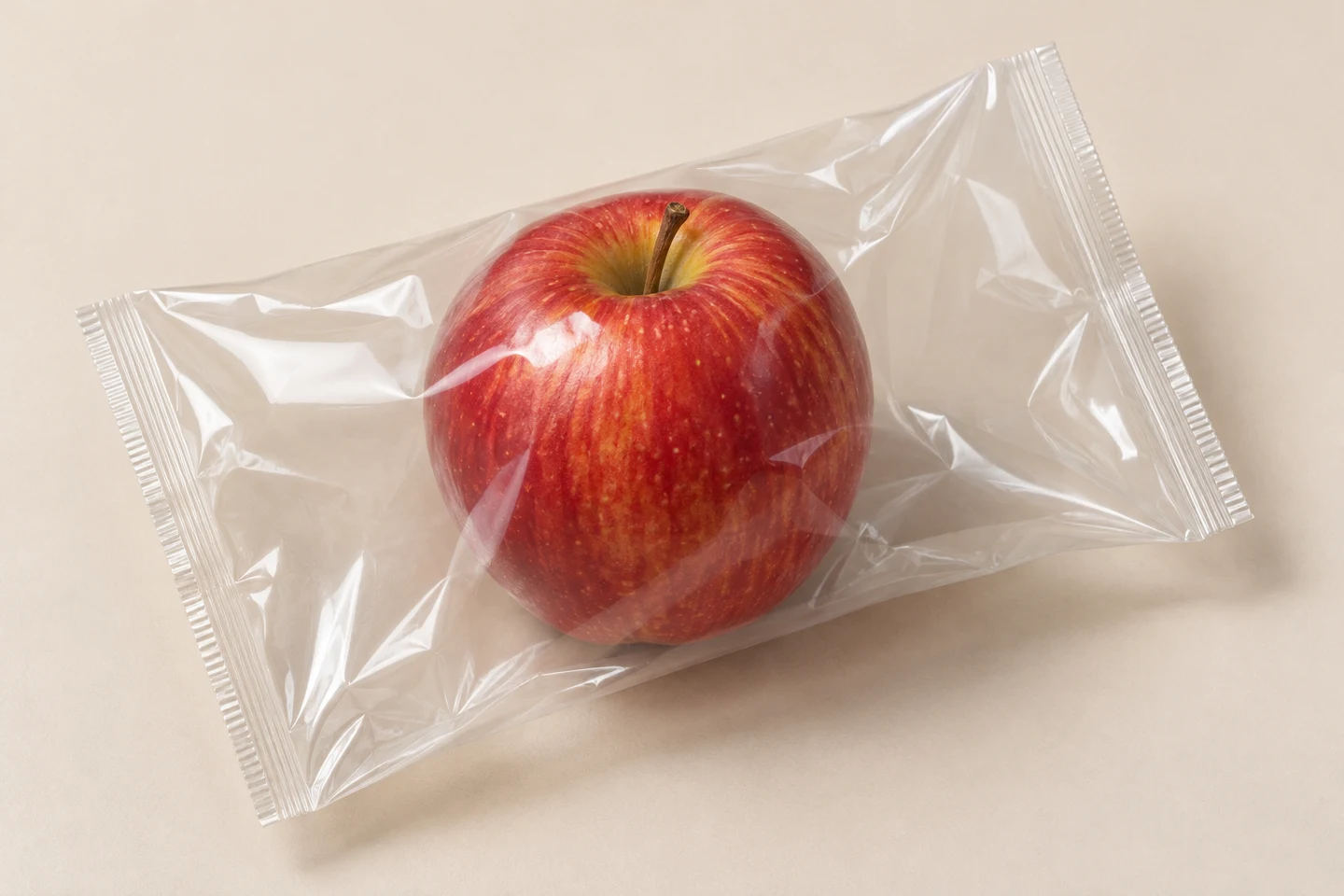
A horizontal flow wrapper can pack one whole apple per bag without a tray. Space the apples on a supported infeed and leave enough film beyond each fruit for the end seals. For a fixed-count retail pack, use a supported group if the apples stay in position, or load a tray to hold their layout. Fresh wedges sold by weight need gentle dosing into a vertical bagger.
Indicative base-equipment prices are US$5,000–25,000 for the horizontal wrapper and US$5,000–30,000 for the vertical bagger. Quote apple feeding, weighing, transfer and any grader separately. If the grader is already installed, start at its discharge.
Use the package to define the handling work
| Product and format | Route to assess | Trial that decides it |
|---|---|---|
| One whole apple per trayless pillow bag | Space the apples on a supported horizontal infeed and wrap each one from rollstock. | Run the smallest and largest normal fruit. Inspect for rolling, skin marks and fruit caught in the end seals. |
| Fixed-count apples in a trayless pillow bag | Collate and support the full group into the horizontal wrapper. | Check that the group holds its pattern across the transfer and stays clear of both seals. |
| Whole apples sold by weight in film bags | Gentle weighing and a supported bagging handoff. | Measure pack weights across the actual fruit size distribution. Inspect fruit after the longest drop. |
| Whole apples arranged on a shallow tray | Set the count and orientation on the tray, then use a compatible horizontal flow wrapper. | Confirm the highest fruit sits below the film path and end jaws. Check tray movement during stop and restart. |
| Fresh apple slices sold by weight in film bags | Use product-compatible weighing and a vertical form-fill-seal bagger with a controlled, low-impact discharge. | Verify wet-piece release, portion weight and a clear seal zone; change the contact path if slices cling or suffer damage. |
| Fresh apple slices in a rigid tray with a snap-on lid | Meter a portion into the tray, clear the rim and press the matching lid into engagement. | Check fruit height and engagement around the full lid perimeter. This route uses a rigid lid, not a heat-sealed top film. |
Whole apples: one per wrap, fixed-count groups or weighed portions
Wet wedges: weigh → load bag or tray → keep closure clear
Wrap one whole apple without a tray
Use a horizontal pillow packaging machine with a belt or carrier that holds the apple as it enters the former. If apples arrive loose from a grader, separate them and set the spacing before they reach the wrapper. Check for roll-back at the belt transfer and catch fruit that drifts toward the cutting jaws.
Run the normal size range on the approved film. Check the stem against the film and inspect the apples for bruising after handling. For multi-apple packs, trial the full group at normal running speed and immediately after a stop. When the group shifts far enough to foul the seal, adjust its support or trial a tray.
Weighed apple slices: film bag or rigid tray?
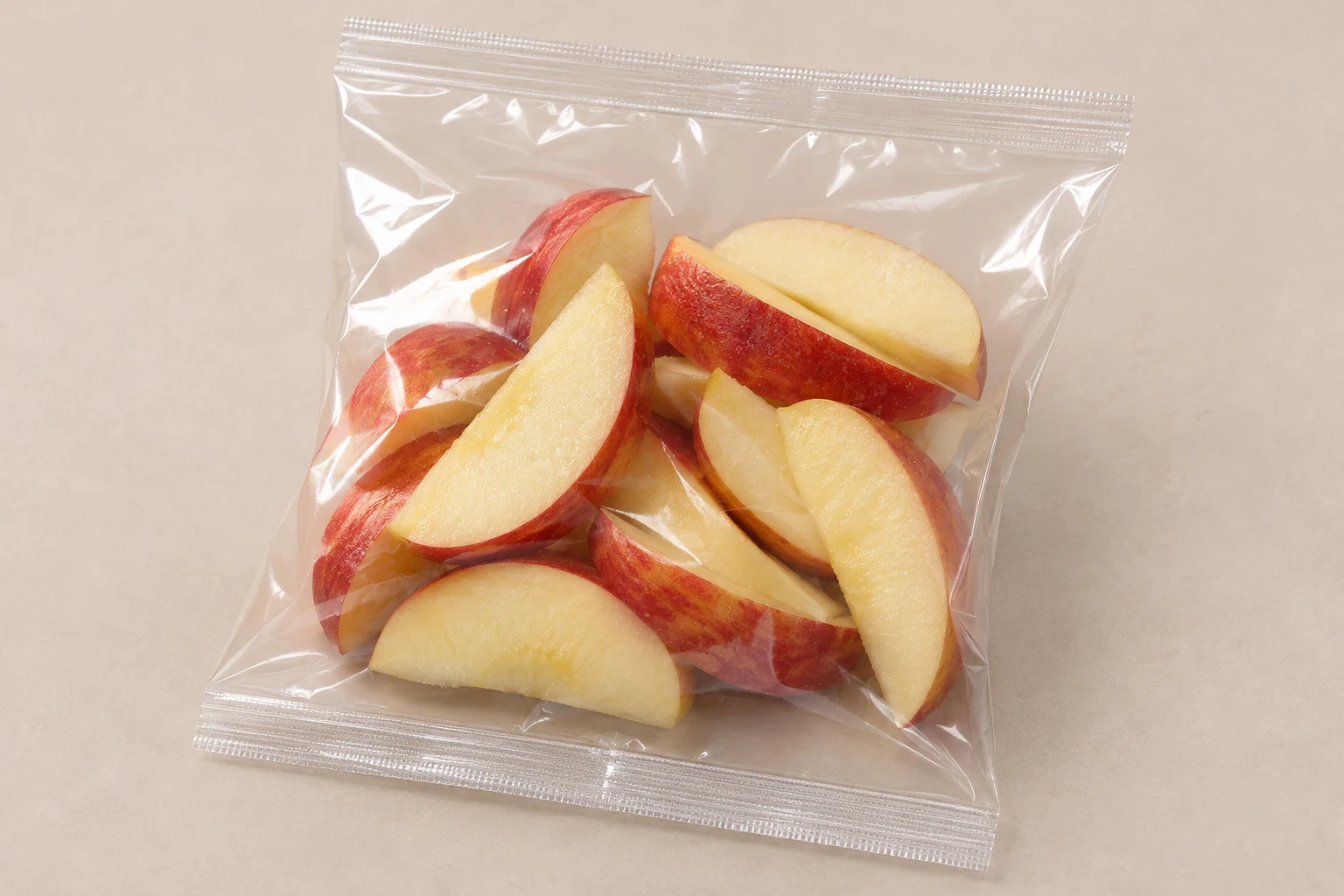
A rollstock bag is a route to assess when the retailer accepts a flexible portion pack and the slices can pass through a controlled weighing and filling path without unacceptable damage. Comwin can pair the dosing system with a vertical bagger and select the discharge geometry around the wet wedges. The cycle must leave time for the complete portion to fall clear before sealing.
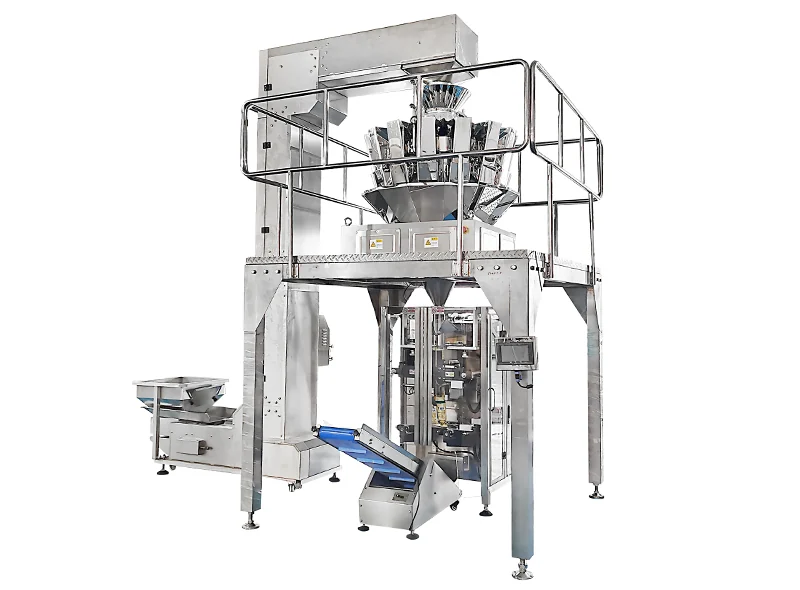
From prepared wedges to a closed bag
- 1 → Feed and separate.Keep pieces moving to the weighing system; check where wet slices bridge or remain attached.
- 2 → Weigh the portion.Use the actual cut-size mix and collect consecutive pack weights to find carry-over between doses.
- 3 → Release into the formed bag.Control the drop and keep pieces away from the end-seal zone.
- 4 → Seal and check.Inspect the closed pack, weight and fruit condition after the agreed handling period.
Choose the rigid-tray route when the sales format calls for a supported presentation or the required bagging trial cannot meet the fruit-condition target. The pictured tray closes with a snap-on lid. A heat-sealed top-film tray is a separate closure specification and tooling decision.
Whole apples on a support tray
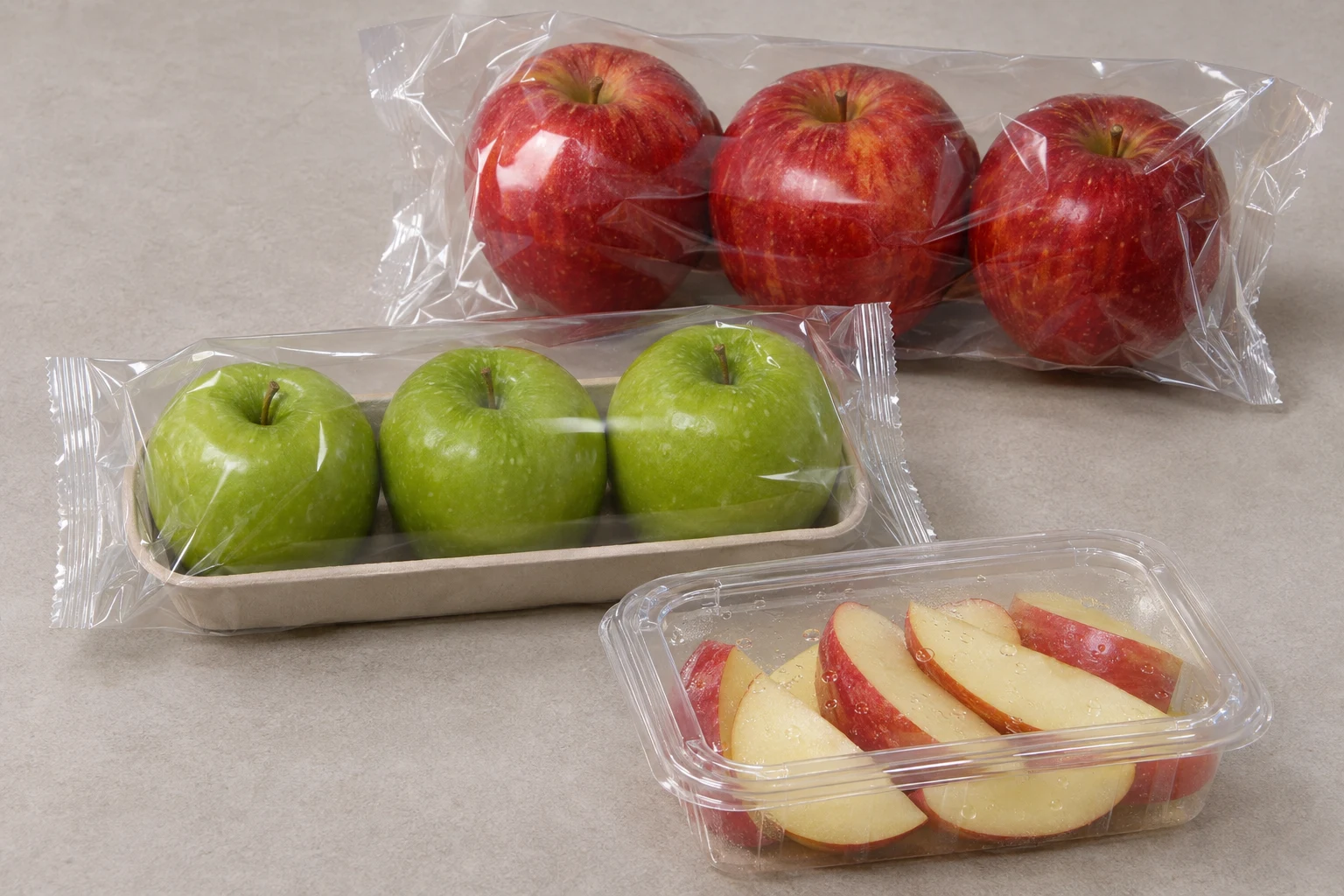
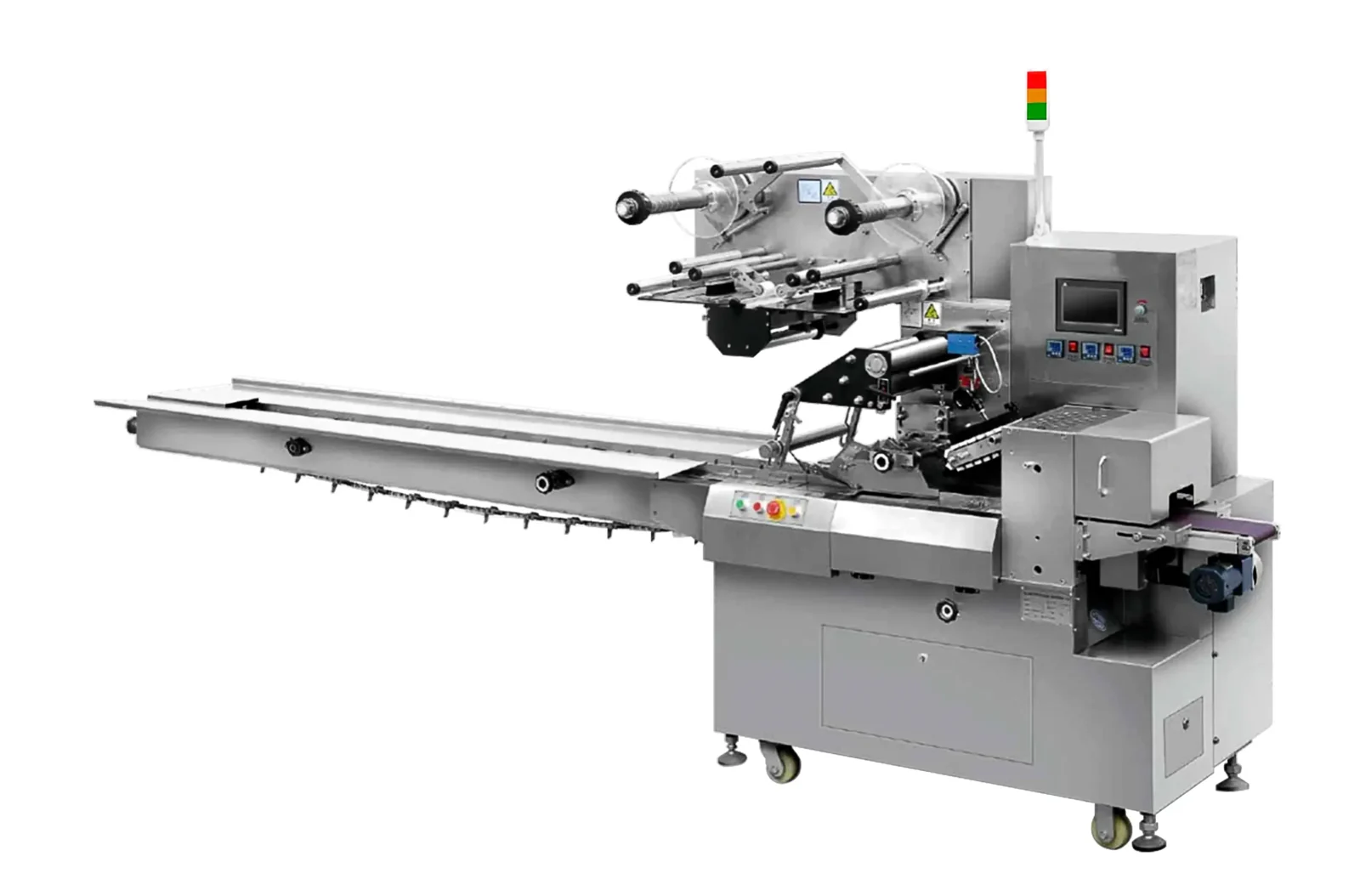
For tray wrapping, the arranged fruit and tray enter the wrapper together. Bagged whole fruit instead needs a quotation covering weigh feeding, the chosen bag-forming or bag-presenting station and its closure; a weigher alone does not provide that complete task.
Specify what a good portion looks like
Send the target net weight and permitted variation, then weigh representative apples or wedges. For whole fruit, count and weight can conflict when the size band is wide. Decide which comes first and let the supplier test combinations on the actual size mix. For sliced apples, sample the thickest and thinnest cut, including fines. Sticky pieces that remain on a chute can appear in the following dose.
For the slice trial, record pack weights in order, inspect contact surfaces after a stop and check how quickly the operator can remove and clean the product-contact parts. Film, atmosphere and shelf-life requirements belong with the approved fresh-cut process. Confirm them with the product and film suppliers using the packaged product.
Separate the grader interface from the packaging quote
For a small plant, manual tray loading may be adequate if the operator can maintain orientation at the required pack rate. For a grader-linked line, record the flow by outlet. A grader’s total throughput hides the peaks at a single lane. Agree what happens when one size outlet fills while another is idle, and show how surplus fruit is diverted without an extra drop.
For a compatible base wrapping station, allow an indicative US$5,000–25,000 for the horizontal wrapper configured for an agreed whole-apple pack. A compatible vertical bagger for the slice-bag route has a separate US$5,000–30,000 base-equipment reference. Neither figure includes the product-specific weighing, feeding and transfer arrangement. Itemise those components, further format tools, cleaning requirements and any grader interface before comparing project totals. Freight, import charges and site installation are separate.
Can the whole-fruit setup also pack slices?
Assess each contact path and closure separately. Whole fruit rolls and bruises at impacts, while slices can bridge or adhere and may leave liquid on the seal area. The same plant may share end-of-line space, but require different feeding, dosing and cleaning arrangements.
Start with the fruit and the sales pack
For whole apples, send the typical diameter range, the number per pack and a photo of the desired wrap. For wedges, add the cut size and target portion weight. Include the required good packs per hour. Comwin can propose the handling and packaging route and arrange representative sample tests. Where an existing grader or downstream case station will remain, we then check its outlet rates, heights and available transfer space. Request an apple packaging configuration.