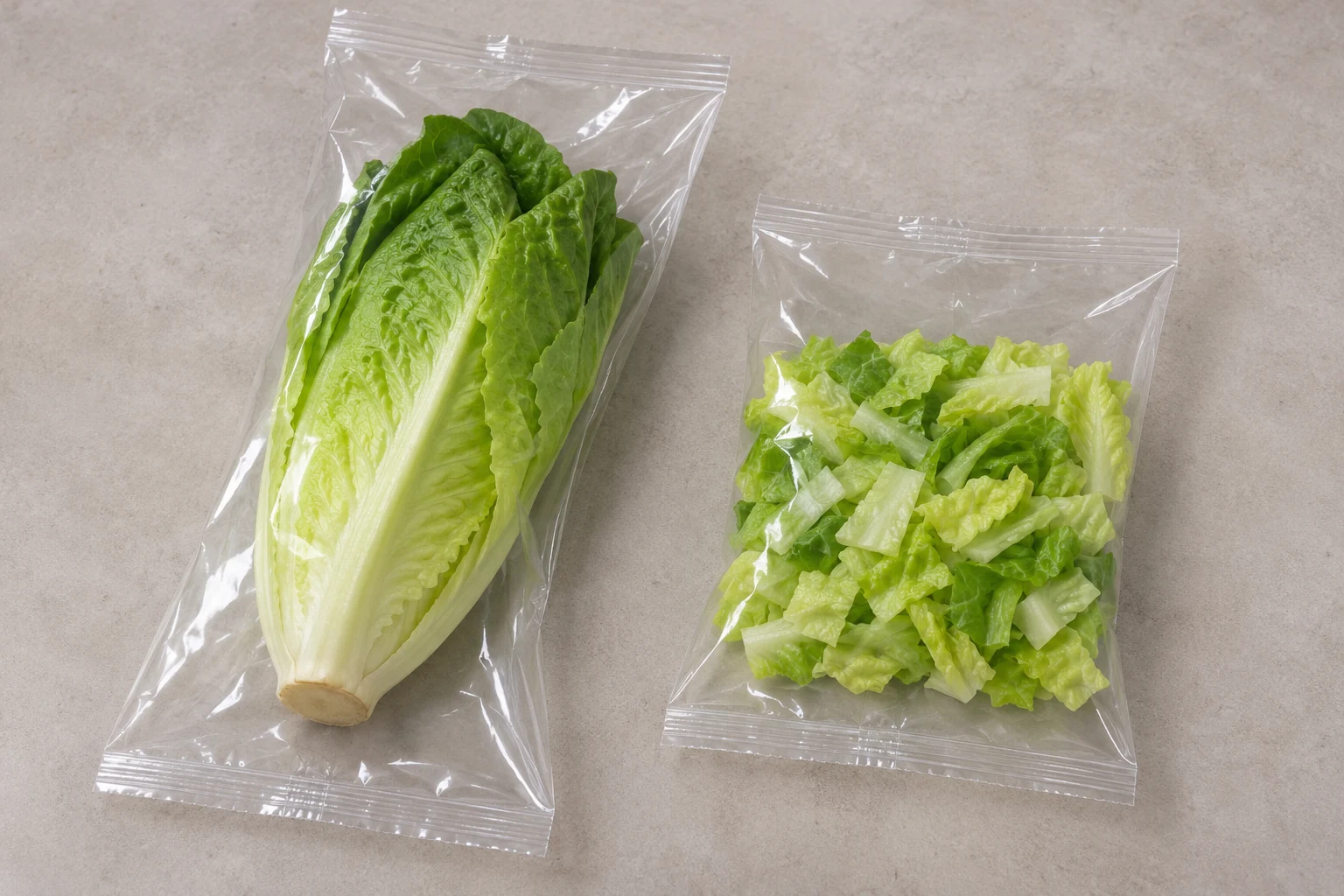
A lettuce head travels through the wrapper as one large, fragile piece. Chopped leaves travel as a loose weighed portion. For whole romaine, start by supporting the head and keeping the outer leaves inside the film path. For chopped lettuce, check how the portion settles and clears the jaws before committing to a bag width or speed.
Choose the machine by the form of lettuce at filling
Support the head through film entry to keep the outer leaves from folding into the end seals. For drained cut leaves, weighing and vertical bagging suit repeat portions. Use the fullest normal dose and check the first accepted bags after restart for wet leaf fragments in the seal area.
| Product and retail pack | Configuration to evaluate | Trial result that changes it |
|---|---|---|
| Whole head or heart in a loose pillow wrap | Orient the head on a supported infeed and use a horizontal flow wrapper with appropriate clearance. | Change guides, forming clearance or bag dimensions if leaves fold over, snag or enter the end seals. |
| Cut leaves in a bag sold by weight | Receive cut leaves after the agreed washing and draining process, then use a suitable weigher and controlled discharge into a vertical bagging machine. | If leaves bridge or a portion fills the seal zone, adjust feed, bag size or the settling step before speeding up. |
Test the widest head and the softest outside leaves
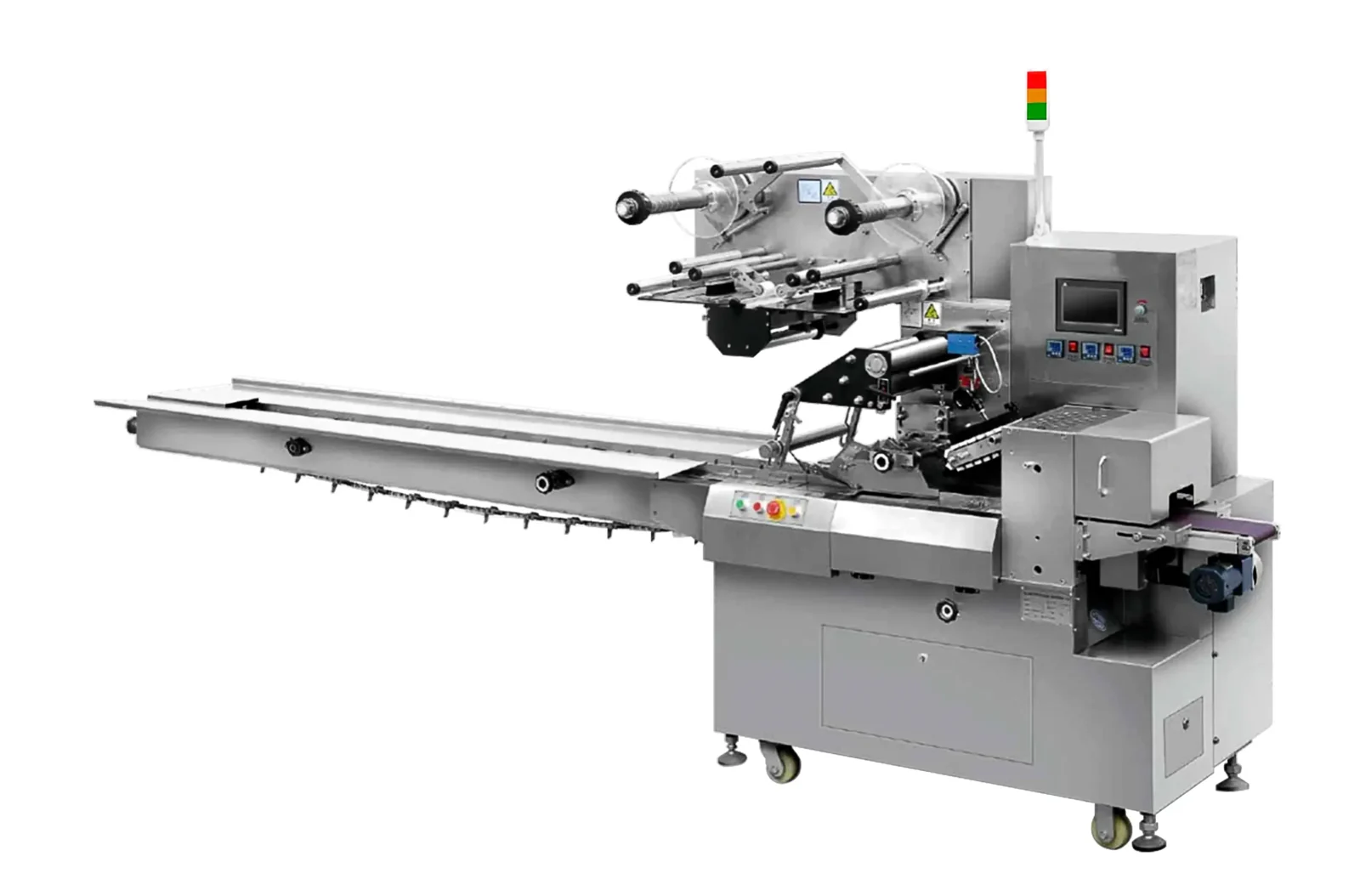
Measure the head where it rests on the belt. Width at the base alone can miss the span of loose outside leaves. Orient the stem consistently, keep the head supported across transfer gaps, and watch the tips as film comes around the product. The wrapper needs room for the whole silhouette at normal infeed variation. If staff keep nudging leaves out of the way, record the intervention and change the support before automating loading.
Use filled volume as well as net weight for chopped lettuce
Two portions at the same weight can occupy different volumes. Long cuts and loosely stacked leaves may fill the bag up into the seal zone. Run cut sizes from the edges of the normal range. See how much product stays at the hopper or chute after each discharge. If a leaf hangs near the jaws, find where it stopped before extending the seal delay. A larger film tube, better guidance or improved settling can be the right change depending on the trial.
Washing, cutting and draining are upstream steps; list them separately if they are part of the project. Use lettuce in its normal drained condition. Check where water and leaf fragments collect after a stop, whether contact parts are reachable for cleaning, and whether the first bags after restart pass the same seal and weight checks. Use the ventilation and film specification approved for the product and distribution route. The producer evaluates shelf life on the final pack.
Compare a quoted machine on the same lettuce and film
Head wrapping trial. Place and support → track stray leaves → inspect both end seals.
Loose leaf trial. Weigh → observe release and settling → inspect weight and clear seals after restart.
Compare each quoted model with the same lettuce, portion and film, including its feed and closure equipment. Ask whether the stated rate is empty cycles, filled packs or accepted packs. For cut leaves, include access for cleaning and the time needed to switch film and recipes. For whole heads, include the operators needed to orient and rework the pack.
Send a whole head or cut leaf sample description
Share photos, head or cut dimensions, target portion, closed pack and good packs per hour. Comwin can propose a support or dosing route and define the test film and product samples needed. Discuss your lettuce packing project.