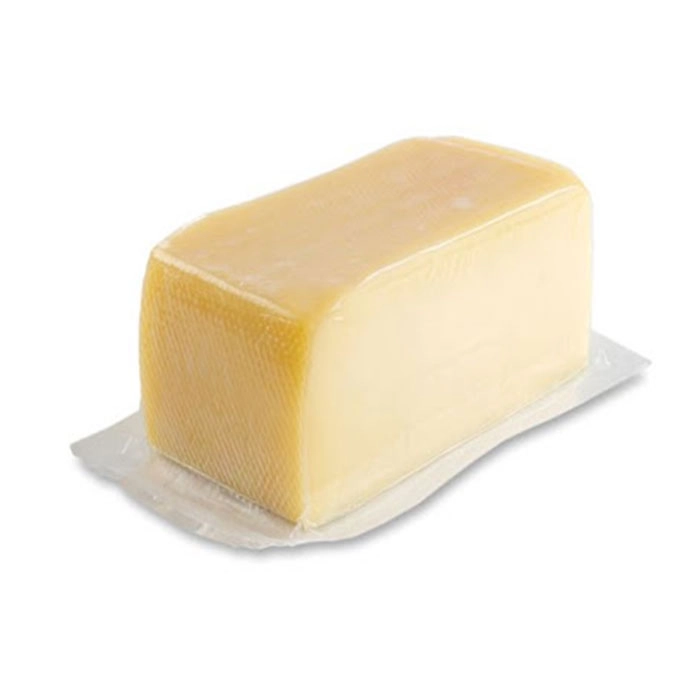
Use a supported horizontal flow wrapper for a stable cheese block when a film wrap meets the pack specification. For loose shreds in a rollstock bag, pair a compatible vertical bagger with a feed and weigher that releases the cheese cleanly. Specify vacuum, atmosphere or a formed slice pack where the product and retailer call for it.
Indicative prices are US$5,000–25,000 for a hand-fed flow wrapper and US$5,000–30,000 for the vertical bagger alone. Cheese feed, weighing and cleanable contact parts are separate. An operator-loaded vacuum sealer is US$3,000–15,000 and a defined thermoformer is US$30,000–120,000.
Match the product form to the finished pack

| Cheese at packing | Starting equipment route | What the choice depends on |
|---|---|---|
| Firm blocks or portions | A loaded vacuum pouch or a supported horizontal flow wrap. | Required pack finish, product deformation under the selected process and the available loading method. |
| Loose shredded or grated cheese | Product feeding and weighing above a suitable rollstock bagger. | Clumping, product release, dose size, drop path and clean sealing. |
| Aligned slices | A formed pocket with compatible top film, using product-specific tooling and loading. | Stack footprint, height, slice presentation and the opening required by the buyer. |
Cheese blocks: compare the loading and film finish
A chamber vacuum packing machine seals a supplied pouch after the operator or loading system places the cheese inside it. Keep the pouch neck flat and clear of oil or product. Check chamber space using the loaded bag, including the area needed at the seal.
A horizontal flow wrapper forms film around blocks delivered to its infeed. This route can suit repeated block formats when the product can be transferred without marking or dragging. The required atmosphere, barrier film and seal integrity remain part of the packaging specification.
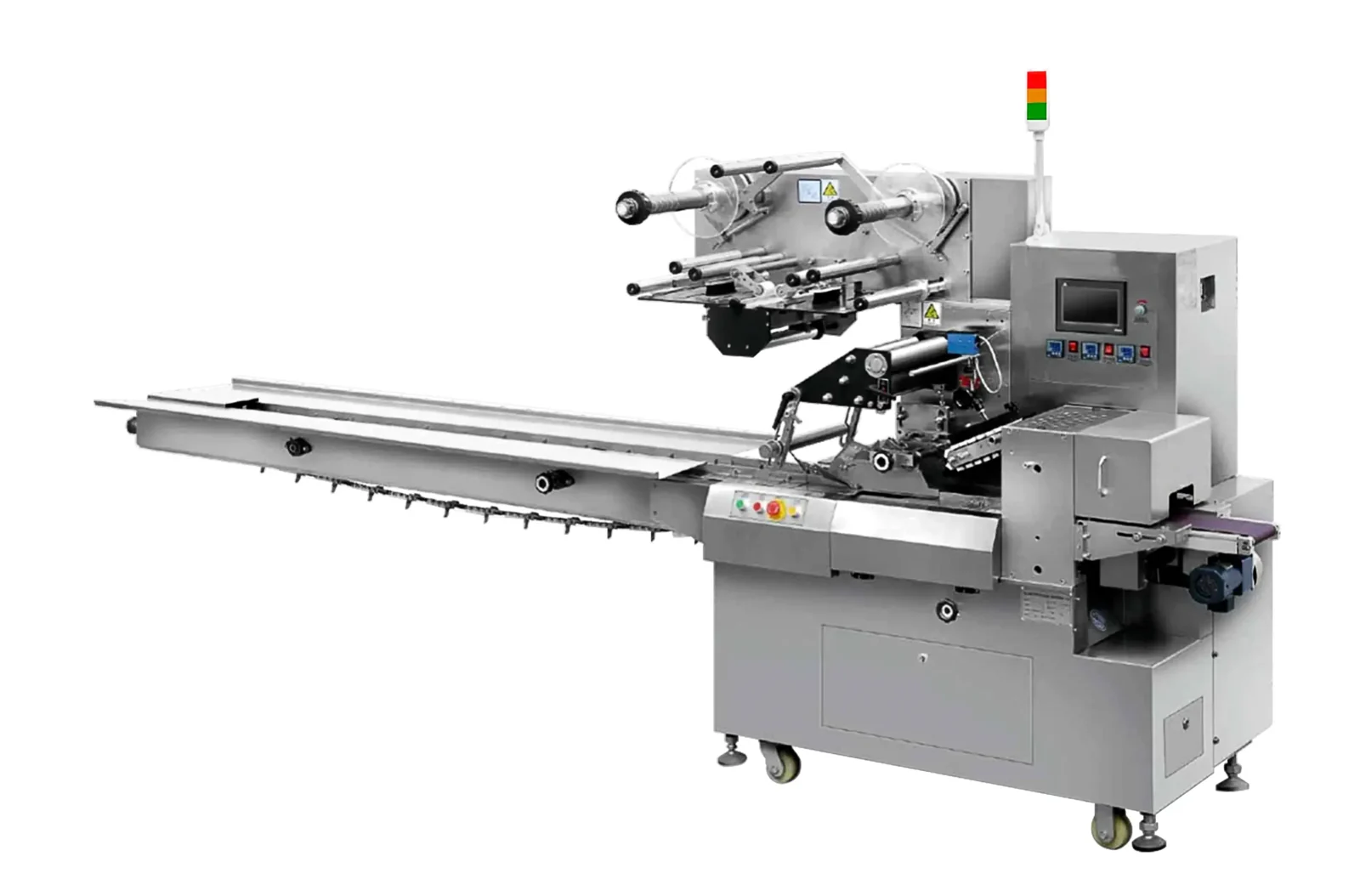
For a softer block, assess deformation during evacuation and return to atmospheric pressure before accepting the pack. A close film finish is useful only if the cheese retains the required shape and opening quality. Wet fresh cheeses may also need liquid handling or a different container task; they should not inherit a firm-block setting.
Sliced cheese: set the loading pattern before the tooling
A thermoforming packaging machine forms lower pockets from film, presents them for loading, then seals and separates the packs. Define the slice arrangement, pocket depth and space around the product before specifying the tooling. The slicing operation is a separate upstream task.
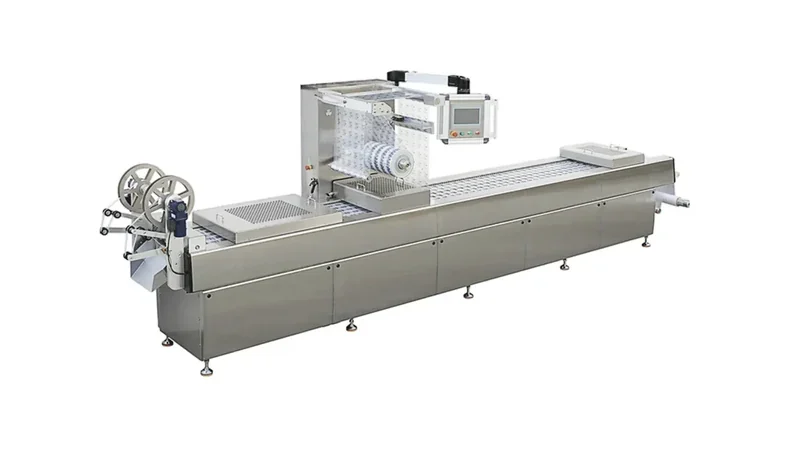
Trial how a stack enters the pocket and how the finished pack opens. If the customer needs individually separated slices or a resealable opening, include the actual separators and closure construction in the sample. Those features cannot be assumed from a clear lid or a formed pocket.
Shredded cheese: prove release through the dosing path
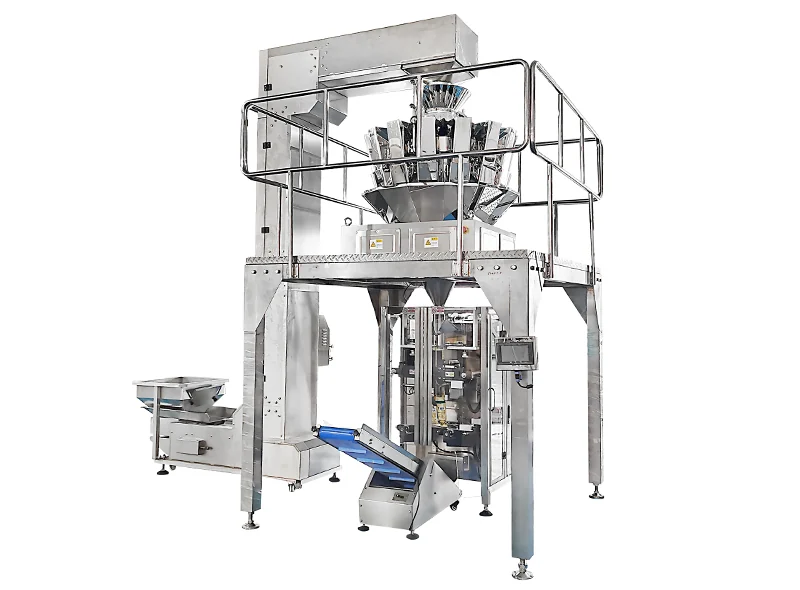
Shreds that separate freely in a small sample may clump after standing in a hopper. Trial the normal product through the feeder, weighing hoppers and discharge path. Look for retained product and delayed release, especially after a pause.
A vertical form fill seal bagger forms the bag from rollstock while the selected weighing system prepares each dose. Set the discharge timing so that cheese clears the sealing area before the jaws close. Select contact surfaces and cleaning access through a release and cleaning trial with the actual cheese.
Two production patterns worth comparing
Small runs of several block sizes
Prepare block → load a compatible pouch → position the neck → vacuum and seal.
Compare chamber space and bag loading at the largest format, then the change to the smallest. Manual loading can suit this work when the complete cycle meets demand.
One shredded-cheese retail pack
Keep feed consistent → weigh the portion → release into the formed bag → seal and discharge.
Evaluate the whole release path during a sustained run. Automating bagging brings little benefit if clumps repeatedly interrupt feeding or product stays in the hoppers.
Include loading and cleaning in the capacity check
For chamber machines, count acceptable packs over loading, evacuation, sealing and unloading. For thermoforming, include how every cavity is filled and what happens to an empty or misplaced portion. For shredded cheese, record replenishment, product retention and seal rejects alongside accepted output.
Demonstrate cleaning and reassembly around the actual product-contact path. State which parts are removable, which cleaning method is compatible and who resets the machine. Agree the requirements with the food-production team rather than assuming that a stainless-steel frame makes every cleaning process suitable.
Equipment budget references with defined boundaries
| Equipment scope | Indicative USD reference | Items to price separately |
|---|---|---|
| Compatible operator-loaded chamber vacuum sealer | US$3,000 to US$15,000 | Special atmosphere options, automatic bag loading and upstream product preparation. |
| Compatible manually loaded horizontal flow wrapper | US$5,000 to US$25,000 | Dedicated cheese transfer, special atmosphere equipment and additional formats. |
| Thermoforming packaging equipment | US$30,000 to US$120,000 | Automatic slice loading, special tooling or closing features beyond the agreed format. |
| Base vertical rollstock bagger | US$5,000 to US$30,000 | Suitable cheese feeding and weighing, plus the cleaning and contact-part configuration. |
These planning references assume compatible new equipment for a defined format. They exclude cheese production, slicing or grating, freight, taxes, overseas installation and production consumables. Compare the proposed stations and manual work before comparing totals.
Scope a shredded-cheese working cell
For a complete shredded-cheese cell, price product supply, a weighing system proven with the actual shreds, the VFFS bagger and supported discharge together. Comwin also defines the product-contact surfaces and cleaning access, plus any assistance needed to release the dose. The offer should state who replenishes the hopper and collects the finished bags.
Ask for a trial of your cheese, not a generic food run
- Use representative product at the agreed packing condition, including normal variation in softness, oil or clumping.
- Check block shape, slice alignment or shred release through the complete loading and sealing cycle.
- Inspect seals and open retained packs using the agreed package-integrity and product-quality methods.
- Record sustained accepted output, stops, changeover and cleaning tasks with the intended material.
Agree the required atmosphere and storage validation with the product owner. Neither a vacuum finish nor a gas-flush option alone establishes the storage life of a cheese product.
Send the cheese form and retail pack
For an initial recommendation, send product photos, block or slice dimensions or the loose-product dose, finished-pack samples and required accepted packs per hour. Describe stickiness, liquid release or handling damage that the current process causes. Comwin can then recommend the packing route and the trial needed to confirm it.
Comwin offers free sample testing, a two-year machine warranty and a three-year warranty for core components. Remote support responds within 24 hours. Training, installation and spare-part responsibilities are agreed in the proposal.