
Automatic Pouch Battery Assembly Line Project Summary
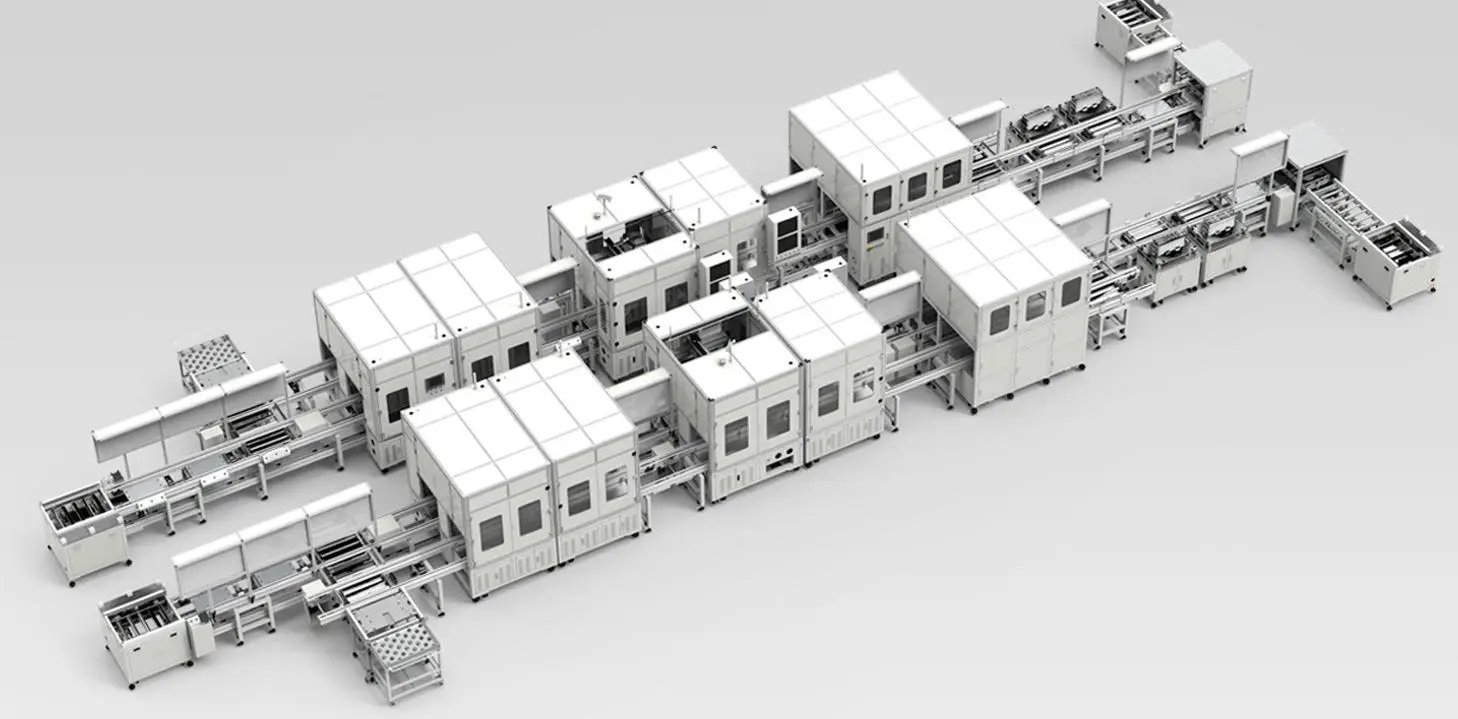
Our company is dedicated to designing a fully automated Pouch battery assembly line, with the goal of minimizing or eliminating human intervention. Every step of the process will be fully integrated with the client’s Manufacturing Execution System (MES) to ensure complete traceability and process control. This presentation outlines the current manual processes and our proposed automation solutions for each stage, along with key requirements such as:
- Automated loading/unloading
- Inline testing and inspection
- Vision systems and QR code reading
- Intelligent sorting and rejection
- End-of-line packaging and palletization
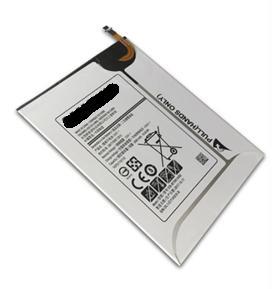
Automatic Pouch Battery Assembly Process Solutions
PROCESS 1 – OCV & IR TEST
Current Process:
Currently, battery cells are received in trays. An operator manually picks the cells from the tray and inserts them into the OCV and IR test equipment. Another operator reads the QR code (MFG PN) and compares the current cell % charge with the database from the supplier. If a cell is rejected, it is segregated into a designated tray for bad parts.
Our Automation Solution:
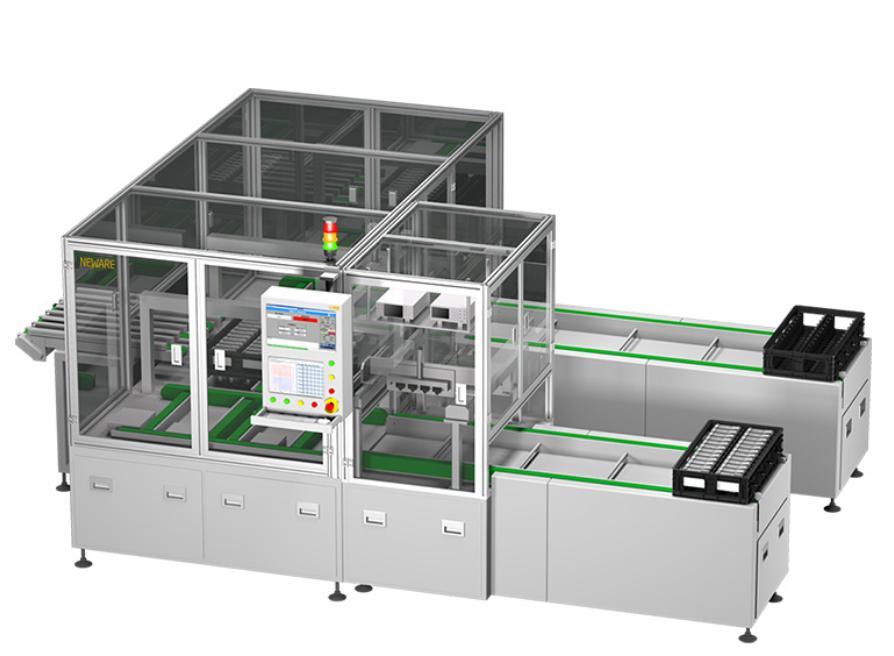
We propose introducing an automated system to pick the cells from the trays, perform OCV and IR testing, compare the results with the database, and sort the cells accordingly. This will include a rejection station for substandard parts and will automatically forward the good cells to the next process. Additionally, empty trays will be made available for the operator to retrieve. At the end of each process, a log will be sent to the system in accordance with the proper log structure for notification.
PROCESS 2 – PAD & QR CODE PRINTING
Current Process:
In the current workflow, the operator picks the cells from the tray, places them in a case, and transfers this case plus cell onto a rotary table for pad printing. A plasma cleaning nozzle is used to clean the cell before printing the logo and information. After printing, the operator removes the case and cell from the rotary table and positions the case on a table while placing the cell on a conveyor with a VideoJet 1620 printing machine to print the QR code, date, and lot number.
Our Automation Solution:
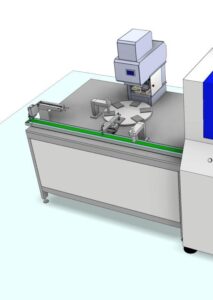
We aim to fully automate this process by receiving the cells from the OCV and IR testing and executing all steps without human intervention. After printing, there will be an automatic visual inspection system installed, requiring output conveyors for good and bad cells. A log will also be generated and sent to the system at the conclusion of each process in accordance with the appropriate log structure.
PROCESS 3 – CURING OVEN
Current Process:
Currently, the operator places the cells into a tray and stores them for 2 hours for curing.
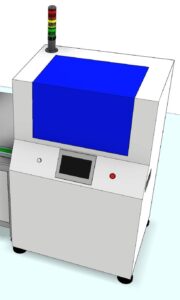
Our Automation Solution:
After process 2, the cells will be fed automatically into a curing oven and subsequently sent to the next step. At the end of the process, a log will be sent to the system according to the established log structure for notification purposes.
PROCESS 4 – CELL TAPE APPLICATION
Current Process:
Currently, the workflow involves multiple operators: Operator 1 picks the cell from a tray and places it on the line, while Operator 2 sticks tape on the poles. Operator 3 applies tape on the sides, and Operator 4 inspects and places the cell in a tray, which is then sent to the next process.
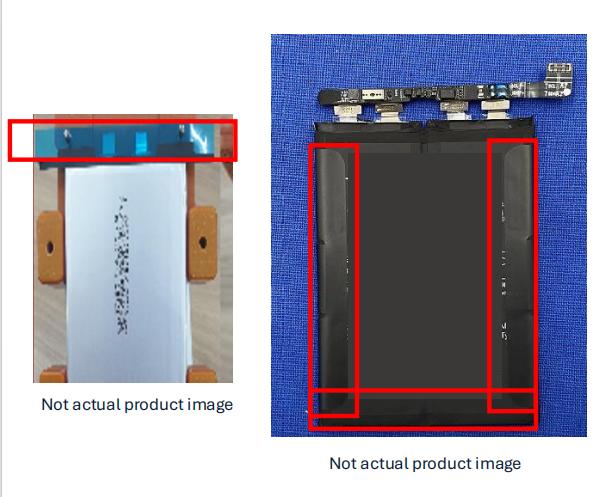
Our Automation Solution:
We will automate the entire process, receiving cells directly from the curing oven. Once completed, they will be transported to the next process via conveyor. A log will be sent to the system at the conclusion of each process according to proper log structures.
PROCESS 5 – TAB CUTTING
Current Process:
In the current setup, an operator manually places the cells on a rotary table to trim and align the tabs using ceramic blades.
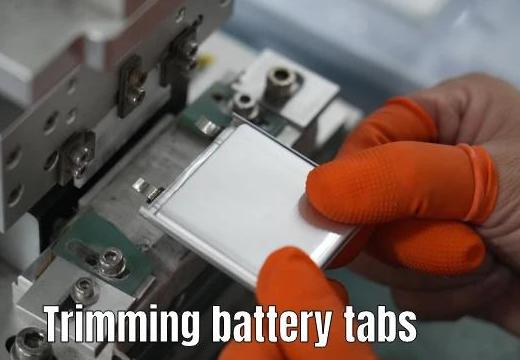
Our Automation Solution:
We propose an automated loading system after label application to align and trim the tabs with ceramic blades, inspect the sizes, and check for burrs before sending them to the next process. Rejected parts will be directed to a reject station. Every process will conclude with the generation and sending of a log to the system in accordance with set structures.
PROCESS 6 – LASER WELDING
Current Process:
Operators currently pick up the cell from a tray, place it in a fixture, and add a BMS (PCBA). The fixture is loaded into a laser welding machine for soldering. The operator inspects solder points for quality control thereafter.
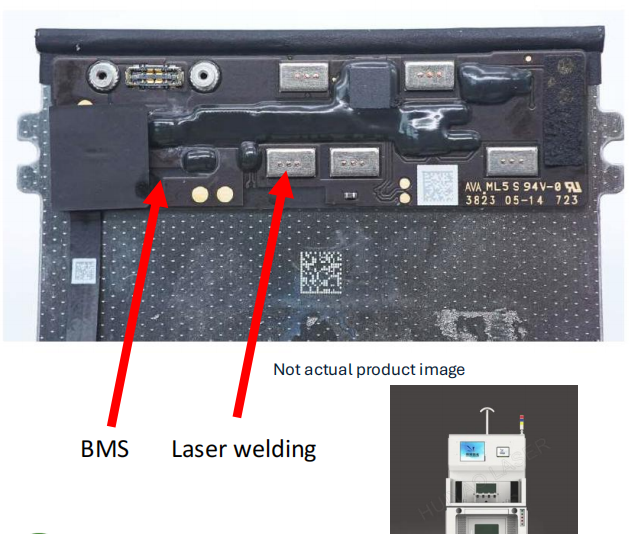
Our Automation Solution:
We will implement an automated system for loading post-tab cutting, automatically pick and place BMS, align, perform laser welding, conduct inspections, and read QR codes. The unqualified parts will be directed to the reject station. Additionally, a process log will be sent to the system as required.
PROCESS 7 – BATTERY TAPE APPLICATION
Current Process:
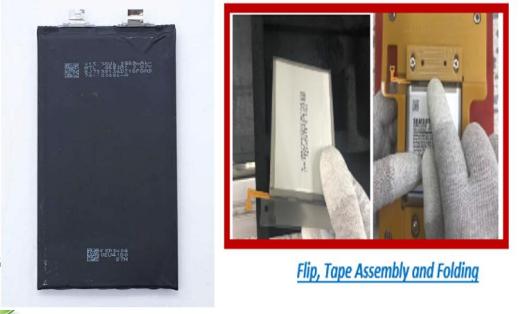
Operators currently manually apply MYLAR over BMS contacts, stick nomex tape, and perform multiple steps to ensure proper adhesion.
Our Automation Solution:
We will automate this entire process, including automatic loading and unloading. A log will be generated and sent to the system at the end of each stage to ensure documentation and tracking.
PROCESS 8 – ELECTRICAL TEST
Our Automation Solution:
This step will include receiving the battery from the previous process, auto-loading, and conducting electrical tests (voltage, resistance, impedance, etc.). Good batteries will proceed to the next process, while defective units will be sent to the reject station. A log will be forwarded to the system upon completion of testing.
PROCESS 9 – DIMENSION TEST
Our Automation Solution:
This stage will also be automated to perform dimension tests, with the batteries being auto-loaded and inspected. Good cells will transition to the next process, and bad ones will go to the reject station. All corresponding logs will be sent to the system accordingly.
PROCESS 10 – LEAKAGE TEST
Current Process:
Operators insert batteries into a gas leak measuring machine manually.
Our Automation Solution:
We will execute the same process with automated loading/unloading, along with rejection segregation. A log will be sent to our system at the end of the process in line with the required documentation structure.
PROCESS 11 – FINAL INSPECTION
Current Process:
Operators use microscopes for visual inspections to assess potential physical damage during handling.
Our Automation Solution:
We will introduce automatic loading and unloading for battery inspections, fostering automated visual assessments. Segregation for rejected parts will be implemented, with logs sent to the system accordingly.
PROCESS 12 – X-RAY ANALYSIS
Current Process:
Operators currently load batteries into X-ray machines for internal assessments to detect impacts or malformations.
Our Automation Solution:
We aim to automate this process, including automatic loading and unloading of batteries, with logs sent to the system following each phase as dictated by the proper log structure.
PROCESS 13 – PACKOUT
Current Process:
After X-ray inspection, approved batteries are manually placed in trays by the operator, who then scans QR codes, weighs the trays, and stacks them if approved.
Our Automation Solution:
We will implement a robotic arm to automatically place approved batteries into trays post-X-ray inspection. The trays will then be conveyed to a scanning point for QR code reading, followed by an automated weighing station. Compliant trays will be stacked by a robotic system, wrapped in ESD-safe bags, and placed into boxes using a robotic loader. Finally, an automated labeling system will affix a detailed informational label to each box before unloading. A log will be provided to the system as each process concludes.
PROCESS 14 – PALLETIZATION
Current Process:
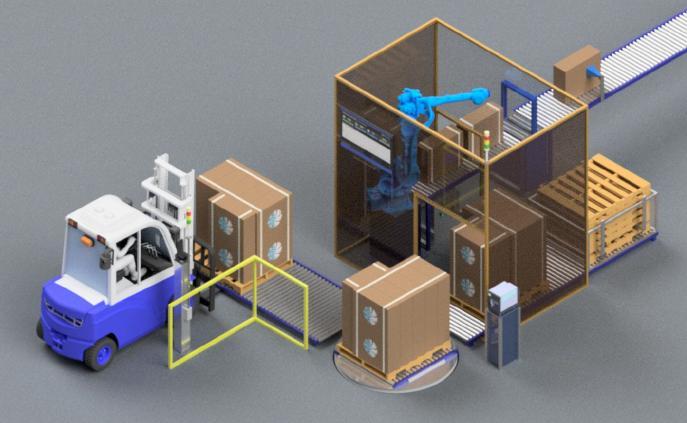
Operators currently manually handle the placement of boxes onto pallets.
Our Automation Solution:
We will deploy a 6-axis robot to pick boxes and place them onto pallets. Once palletization is complete, an automated labeling machine will print and apply a detailed label to the pallet. The entire setup will be wrapped and prepared for operator pickup. At the end of each process, a log will be sent to our system in accordance with the proper log structure for notification.
Tag:Automatic Pouch Battery Assembly Line