For repeat chip or crunchy-snack orders in film bags, start with a snack packaging machine combining gentle feeding, suitable weighing and vertical form-fill-seal packaging (VFFS). Use premade-pouch handling when the finished pack is a selected stand-up or zipper pouch. Short, changing runs can use operator-presented bags with weigh filling and independent sealing.
A gentle-weighing VFFS combination with a basic gas interface has an indicative equipment budget of USD 20,000 to 60,000. Premade snack pouch combinations are budgeted at USD 25,000 to 65,000; operator-presented weighing and sealing at USD 6,000 to 18,000. A USD 1,000 to 5,000 gas-assisted sealer closes already filled bags and does not include weighing, automatic bagging or a nitrogen generator.
Comwin matches the feeder, weighing volume, filling path and sealing process to your finished snack. Product fragility and loose volume can change the configuration even when two snacks have the same bag weight.
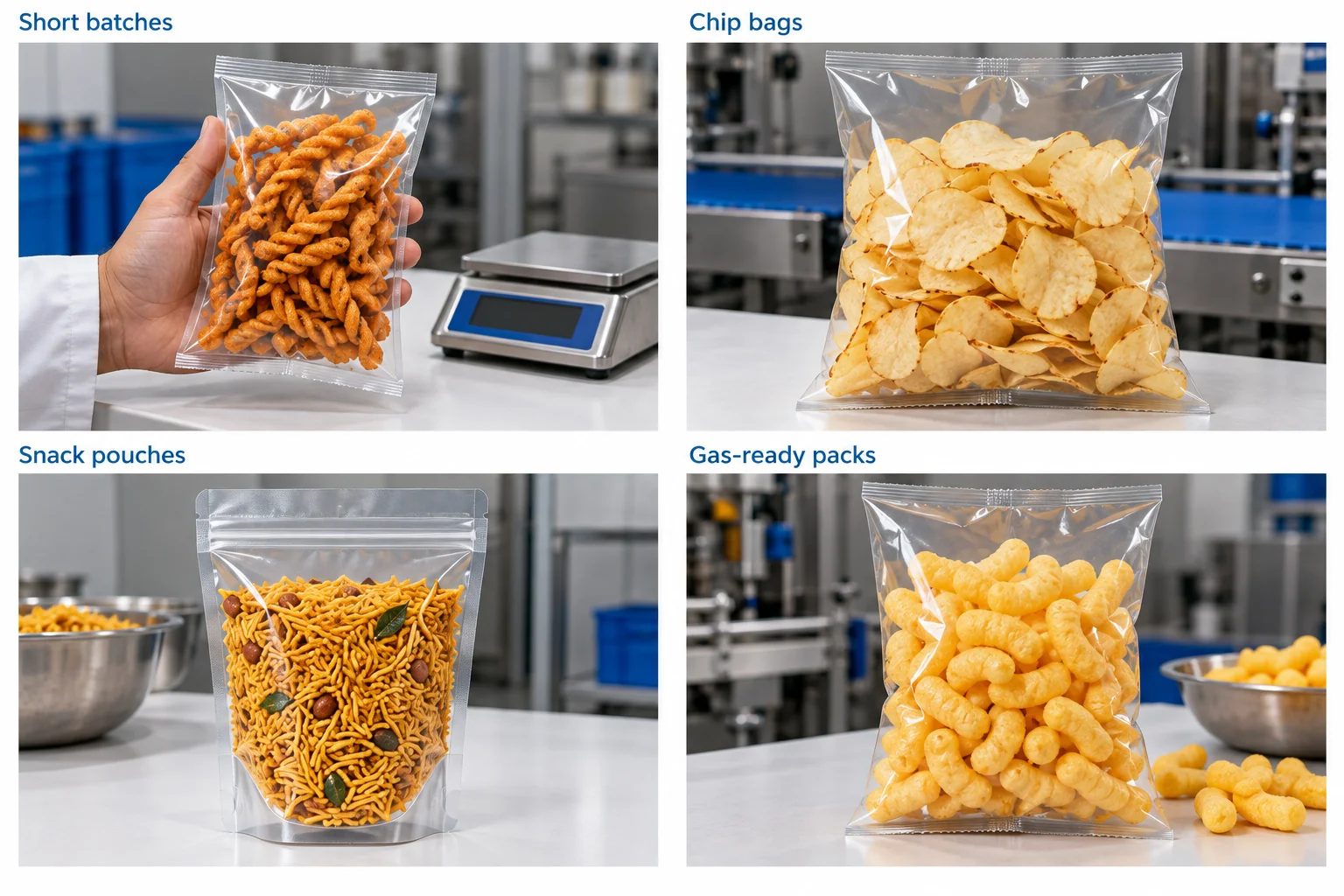
Choose the snack bagging route from the finished pouch
Gentle weighing and VFFS for repeated film-bag orders
The weighing system portions the snack, and the VFFS machine makes and closes the bag from roll film. For thin chips, select transfer points, hoppers and the filling path around product damage and volume. A hopper that handles the target mass may still be too small for a bulky snack. This route fits a retail format that can be made from roll film. Explore our vertical packing solutions.
Premade pouches for an established shelf format
A premade-pouch system opens the selected pouch, receives the portion and closes its top seal. It suits an existing stand-up or zipper design. Large chips need an opening and filling path that avoids snagging or breaking them. Compare roll-film and premade formats using the finished-pack presentation, material cost, accepted output and equipment budget.
Operator-presented weighing and sealing for short runs
A gentle weigher fills a bag presented by an operator, then a separate compatible sealer closes it. This allows varied short snack orders without committing to automatic bag presentation. Include bag opening, transfer and collection in the labor cycle. When manual presentation limits required good-bag output, we can assess automatic bagging with the same real products.
Nitrogen-enabled packing as part of the selected bag route
Gas flushing is a configured stage within filling and sealing. It needs a suitable film barrier, a clean seal and the agreed gas supply. We define the residual-oxygen measurement and its timing with your storage task, along with gas consumption and leak checks. Bag inflation alone cannot show whether the oxygen target or seal requirement has been met.
Reduce snack damage and sealing losses with specific equipment choices
| Observed problem and cause | Recommended route or configuration | Buyer acceptance check |
|---|---|---|
| Extra fragments from transfers, hopper contact or long drops | Gentle weighing with reduced-impact transfers and a suitable filling path | Compare incoming and packed product with the same agreed breakage method. |
| A low bag weight occupies a large volume | Volume-matched weighing hoppers, filling passage and bag dimensions on VFFS or premade-pouch equipment | Check actual filling, clean seal space and transport compression. |
| Gas-filled bags lose shape or oxygen rises | Matched gas injection, film barrier and sealing system; investigate each potential source | Measure residual oxygen at agreed times, gas consumption and seal leakage after handling. |
| Oil or snack powder enters the seal | Controlled end of filling, clean seal access and suitable film and jaws on the selected bagger | Check full-bag seals during sustained production, including accumulated contamination. |
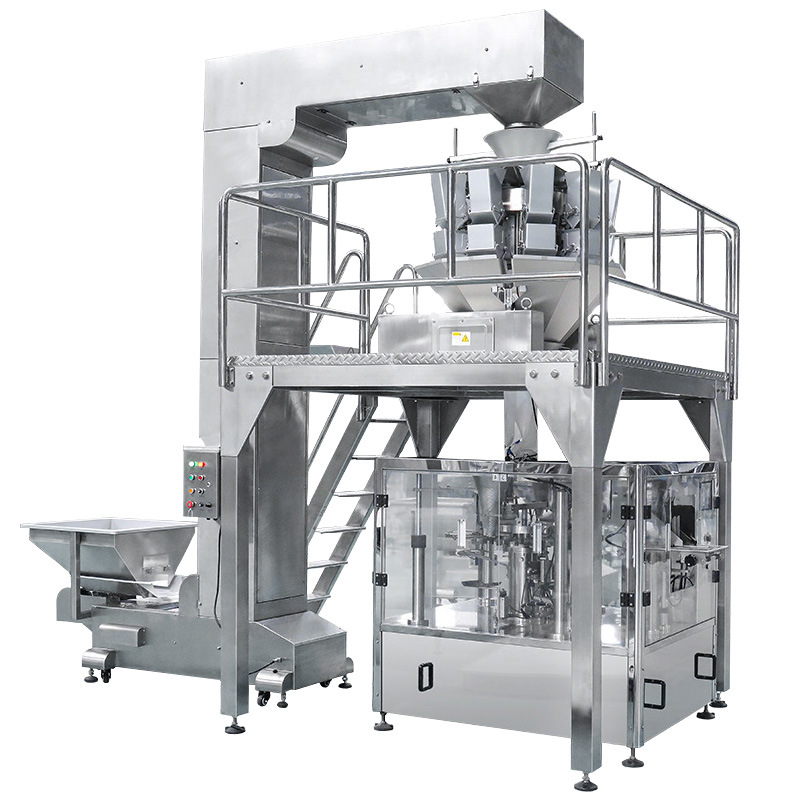
Match chips, crunchy sticks, namkeen and fryums to the setup
| Product and business condition | Finished pack | Starting equipment route | What changes the selection |
|---|---|---|---|
| Thin, fragile chips in repeat retail orders | 60 g roll-film bag | Gentle weighing and VFFS with gas flushing where specified | Chip size, loose volume and measured damage during transfers |
| Finished extruded crunchy sticks in regular orders | 100 g roll-film bag | Compatible weighing and VFFS | Hopper volume, stick bridging and seal contamination |
| Mixed namkeen in changing short batches | 200 g premade pouch | Operator-presented weigh filling or automatic premade-pouch packing | Ingredient ratio, manual cycle and bag opening |
| Unexpanded fryums or already fried expanded pieces | Selected sealed film bag | Weighing and bagging configured for that product state | Different density, shape and fragility need separate settings or parts |
| Large chips in a zipper shelf pack | Stand-up pouch with a factory top seal | Gentle weighing and premade-pouch handling | Pouch-mouth clearance and chips reaching the top sealing zone |
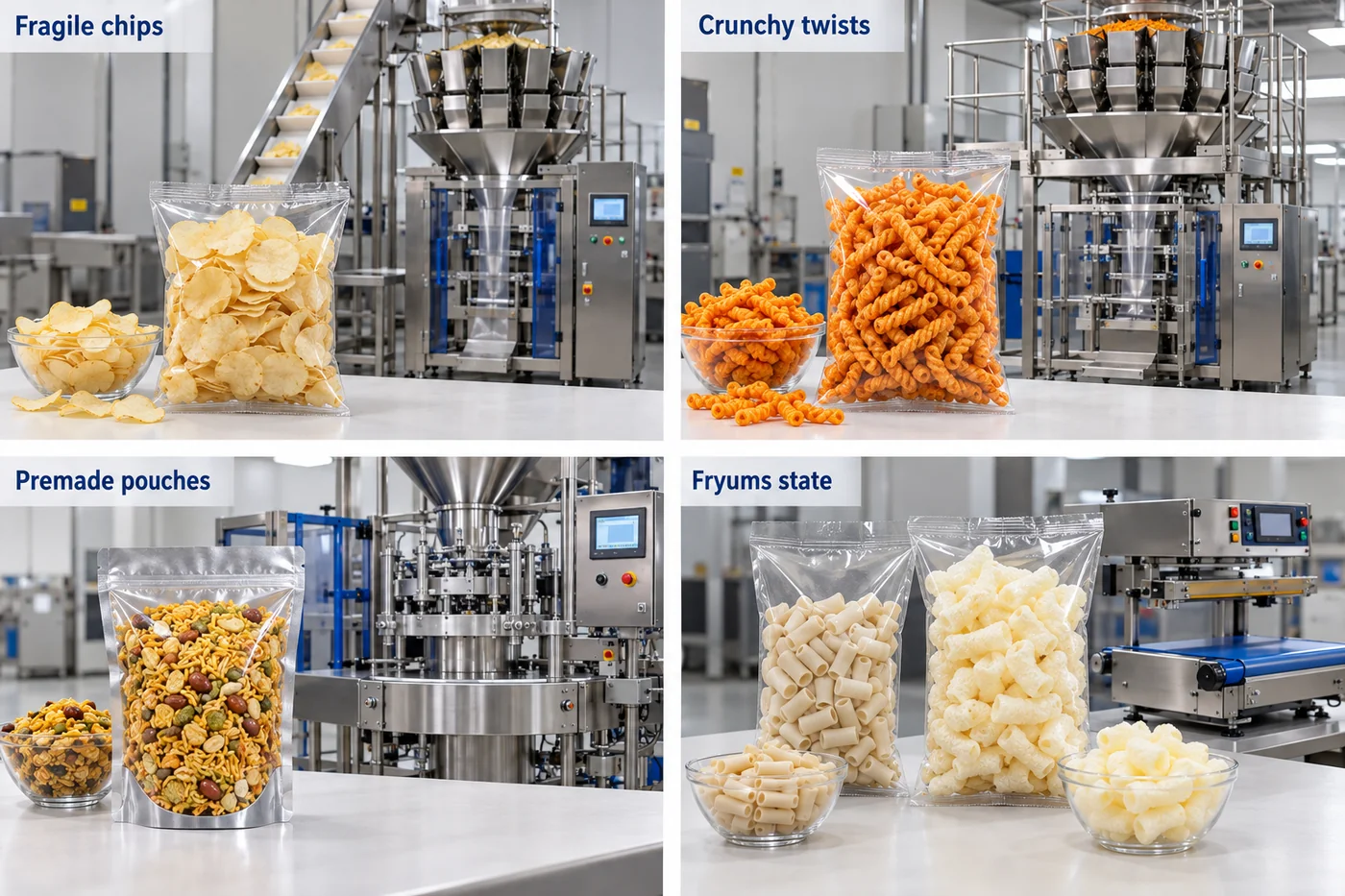
For an illustrative 60 g thin-chip order, we would start by evaluating a gentle weighing VFFS route. The trial compares fragments before and after transfers and checks whether the portion reaches the bag without contaminating the seal. If the bag is small in volume, speeding up the filler cannot solve the lack of space.
If damage increases between the weigher outlet and the bag, Comwin first revises that drop and the filling passage: reduce unsuitable impact, support the transfer and provide enough passage for the largest chip. If incoming chips are already broken, that upstream condition is recorded separately. Increasing seal speed addresses neither cause.
For a 200 g mixed namkeen pouch, a short-run weighing and sealing setup may be sufficient. A required ingredient ratio adds a separate dosing or mixing task: total net weight cannot confirm that ratio. Automatic pouch presentation becomes useful when the complete manual cycle is the limitation. These examples use assumed order requirements.
Size the bag by snack volume, then check the seal space
In a hypothetical calculation, 100 g of snack at a measured loose density of 60 g per liter occupies about 1.67 liters. The finished bag also needs the agreed headspace and a clean sealing area. The density is an illustrative input, not a specification for your snack. Measure the actual product and trial-fill the selected bag before fixing bag dimensions or hopper volume.
For Kurkure-style extruded snacks, specify the finished stick dimensions, loose density and oil or powder coating. A snack pouch packing machine handles the processed product; extrusion, frying or seasoning belongs to the upstream processing scope. Snack-making equipment requires a separate process scope and budget. A familiar chip brand name is not a product specification: supply representative chips and a target finished bag.
Snack packing machine prices and nitrogen supply scope
These indicative equipment budgets assume new China-export equipment for ordinary non-aseptic food packaging, one selected product and one bag specification. They exclude freight, tax, overseas installation, extra formats, upstream processing and building work. The selected configuration determines the quotation.
| Equipment scope | Indicative budget, USD | Included starting scope | Excluded or separate items |
|---|---|---|---|
| Operator-presented weighing and sealing | 6,000 to 18,000 | Basic compatible weighing and sealing for one bag | Automatic bag supply, nitrogen generator and advanced inspection |
| Gentle-weighing VFFS with basic gas interface | 20,000 to 60,000 | Basic feed and weighing, one selected chip bag, bag formation and gas-injection interface | Gas generator, dedicated residual-oxygen analyzer and complex high-output multi-SKU handling |
| Premade snack pouch combination | 25,000 to 65,000 | Compatible gentle filling, weighing and basic feed for one heat-sealable pouch | Special opening arrangements, extra formats, gas supply and inspection |
| Gas-assisted sealer for operator-presented filled bags | 1,000 to 5,000 | Suitable sealing unit and basic gas interface for already filled bags | Weigh filling, nitrogen generator and automatic bagging |
For the selected nitrogen-enabled route, Comwin separates three duties: the gas source supplying the required flow and purity; the injection interface working with filling and sealing; and the oxygen/leak checks used to assess the completed bag. An existing adequate gas source may be retained. An on-site generator is an option when the supply task calls for it, with its feed and utilities priced from the required gas duty. The basic bagger interface and a gas-assisted sealer are different scopes from gas production or an oxygen analyzer.
Define gas supply and measurement responsibilities once in the proposal. Residual oxygen is measured at the agreed times and holding/handling condition; seal leakage and gas consumption complete the checks. This keeps injection performance, film/seal behavior and supply capacity distinguishable when a pack loses its condition.
Estimate packaging material cost on a comparable basis
For an illustrative roll-film calculation, assume a 0.25 m bag repeat, 0.36 m full film-web width, 70 g/m² film and USD 4 per kg of film. Raw material cost is 0.25 × 0.36 × 70 ÷ 1,000 × 4 = USD 0.0252 per bag. These inputs are calculation assumptions. Trim, startup loss, printing plates and purchasing minimums are extra. A premade-pouch offer must use the same material structure, dimensions, print and order quantity for a meaningful comparison.
Compare manual bag handling with automatic snack packing
| Decision | Operator-presented bags | Automatic VFFS or pouch combination |
|---|---|---|
| Production mode | Short orders with changing products or bags | Repeat orders using a defined bag and incoming snack condition |
| Labor scope | Bag opening, presentation, transfer and collection; gas-assisted sealing where specified | Bag formation or presentation, filling and sealing; replenishment and collection follow the supplied layout |
| Changeover and cleaning | Adjust portion and sealer; remove oil, powder and mixed-product residue | Change forming or gripping parts and recipes; verify hopper and transfer-path access and cleaning time |
| Acceptance | Good bags with agreed staff, weight, damage and seals | Sustained good-bag output, breakage and gas or seal checks across replenishment, stops and restarts |
If the current arrangement meets the order pattern and labor plan, retain it. For an automatic snacks packing machine, target the measured restriction: feeding, bag presentation or collection may limit the system before sealing speed does.
Optional transport cases after sealed snack bags
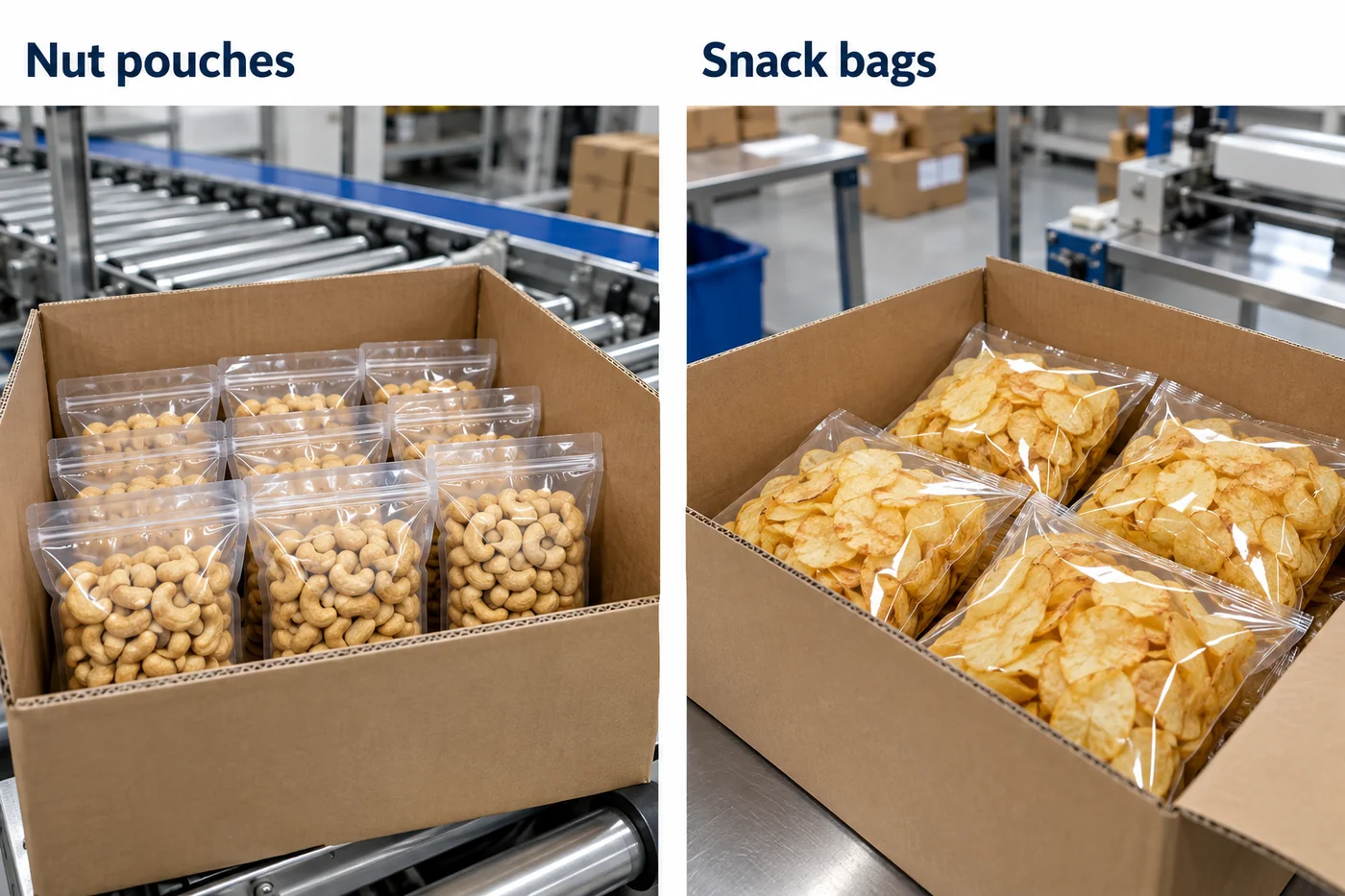
Where bag collection and case loading restrict production, we can coordinate grouping and transport-case handling after primary packing. Define the number of completed bags per corrugated case and the permissible compression for fragile snacks. This optional equipment is outside the budgets above. The bagged-product line scope can include the agreed downstream handling without making it compulsory for every project.
For an optional automatic case packer, the equipment-family budget reference is USD 25,000 to 80,000. Specify the finished bags and case pattern before quoting. Primary weighing and sealing are excluded; case erecting, case closing and palletizing are separate unless expressly included. The general budget exclusions also apply.
Compare snack suppliers using five measurable requirements
| Dimension | What to compare | Comwin recommendation |
|---|---|---|
| Budget and scope | Same snack and bag, with injection, gas source and inspection listed. | We select the bagging combination and separate any gas-generation or downstream equipment required by the project. |
| Output | Good bags with thin chips, actual volume and planned staffing. | We match hopper capacity and transfer handling, then balance feeding, filling and sealing at the requested output. |
| Adaptation | Drop damage, pouch opening, oil/powder contact and clean seals. | We revise the transfer where damage or contamination first arises; the package format determines the bag-handling machine. |
| Support | Sample trials, cleanout guidance, spares and response terms. | Free sample testing and the confirmed support terms below cover the agreed machine and cleaning tasks. |
| Delivery | Materials, gas duties, configuration and acceptance responsibilities. | We agree the pack checks and supply interfaces before fixing project milestones. |
Snack packing questions
Does nitrogen flushing guarantee shelf life?
For a storage target, agree the film/seal and oxygen checks with the product conditions. Validate the completed pack under the intended storage conditions.
Does a crunchy-stick packing machine also make the snack?
If you also need extrusion, frying or seasoning, list those upstream tasks separately. The bagging budget starts with the processed snack; we coordinate interfaces when a broader project requires them.
Can one setup pack chips and unexpanded fryums?
If both products fit the selected feed, hopper and bag range, a shared system may be possible with separate recipes or parts. Test both states. Expanded pieces and dense unexpanded pellets should not inherit the same volume and damage settings.
How do I compare printed snack pouch prices?
For comparable material prices, request the same bag format, dimensions, film structure, print and minimum order quantity. Use actual film weight and waste in the bag-cost calculation; the illustrative number above is not a supplier rate.
Sample testing and support from Comwin
Comwin offers free sample testing and visits to real factories to see machines running. Whole-machine warranty is two years; core components have a three-year warranty. We provide a remote response within 24 hours. Small equipment is supported with video tutorials and remote video calls.
Send your snack and bag samples for a configuration and quote
- Product: chips, extruded sticks, namkeen or fryums; actual processed state, particle size, density, oil, powder and fragments.
- Packaging: roll film or premade pouch; mouth opening, barrier structure, print and a finished bag.
- Filling: net weight, headspace, accepted fragments and weight distribution.
- Closure: heat sealing, gas flushing, residual-oxygen task, coding and inspection.
- Production: required good bags per shift, replenishment and collection, SKU changes and upstream rate.
- Factory: gas purity and supply, available flow, space, utilities and sales market.
Send your snack packing requirements. Comwin returns the proposed equipment, reasons for the route, included and optional scope, sample acceptance conditions and a configuration-based quotation. Arrange free sample testing using your most fragile and most coated snacks.