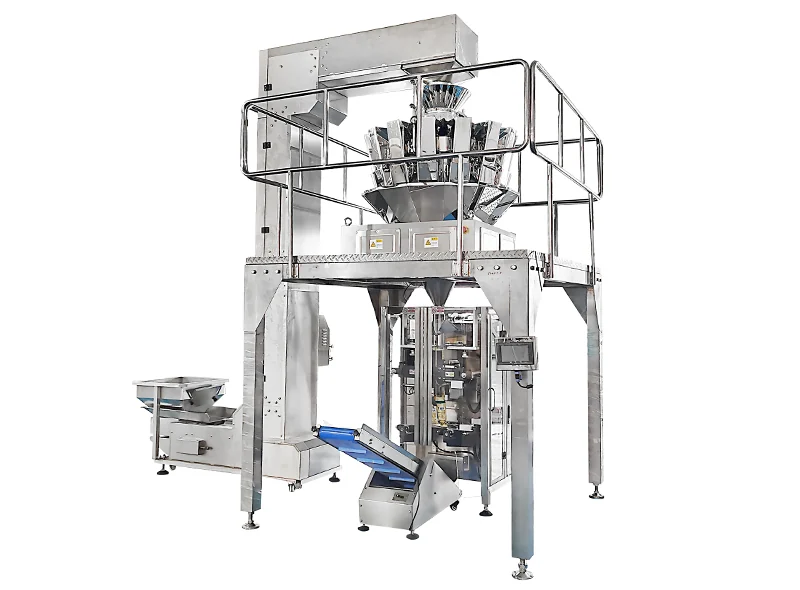
For long whole carrots sold as a fixed-count group, align the roots and guide them lengthwise into a horizontal flow wrapper. A one-root retail pack uses the same approach if the infeed holds the root steady. Use a weigher and a vertical bagger for loose baby carrots sold by weight.
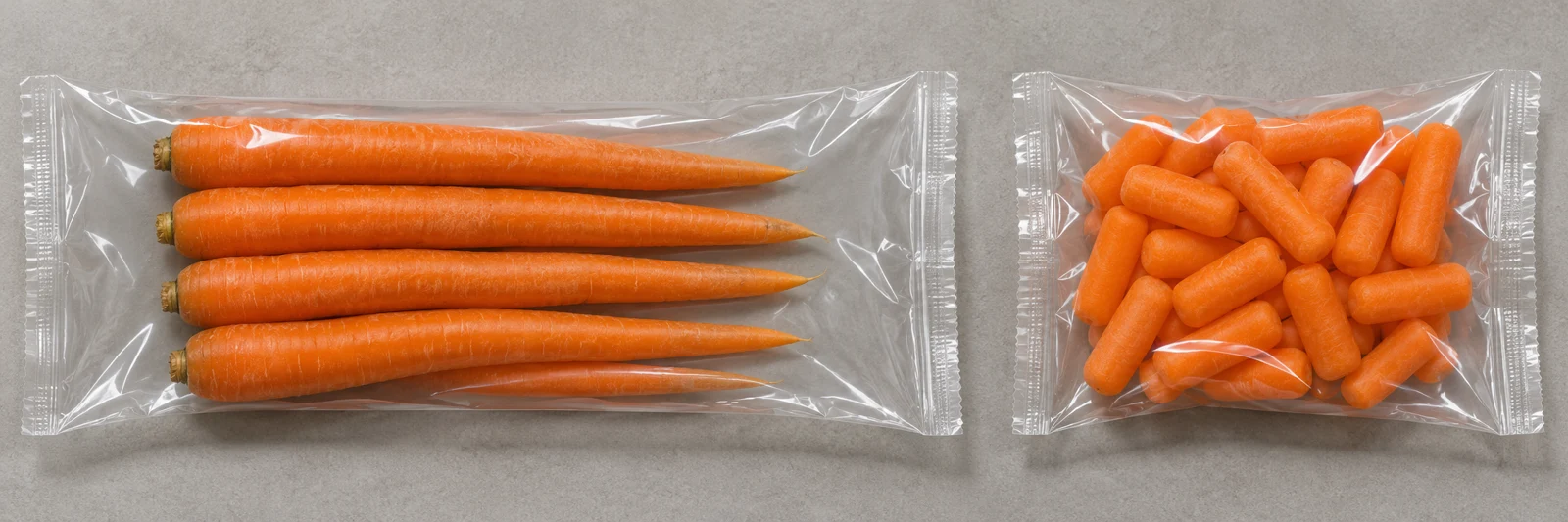
Choose the pack from the shape of the carrot
Check how the roots travel with the tips pointing along the belt. The widest shoulder and the curve of the longest carrot determine the clearance through the film former. For baby carrots, run the wettest normal batch and inspect the seal after a restart.
| Incoming product | Packaging route | Trial that decides it |
|---|---|---|
| Whole roots lined up in a group, or one whole root per retail pack | Supported feed into a horizontal flow wrapper. | Check clearance at both end seals and watch for rolling with a single root or shifting in a group. |
| Baby carrots or short cut pieces sold by weight | Gentle weigh feed above a vertical form-fill-seal bagger. | Check dose release with wet product, weight spread and the condition of both end seals. |
Support the roots through film entry
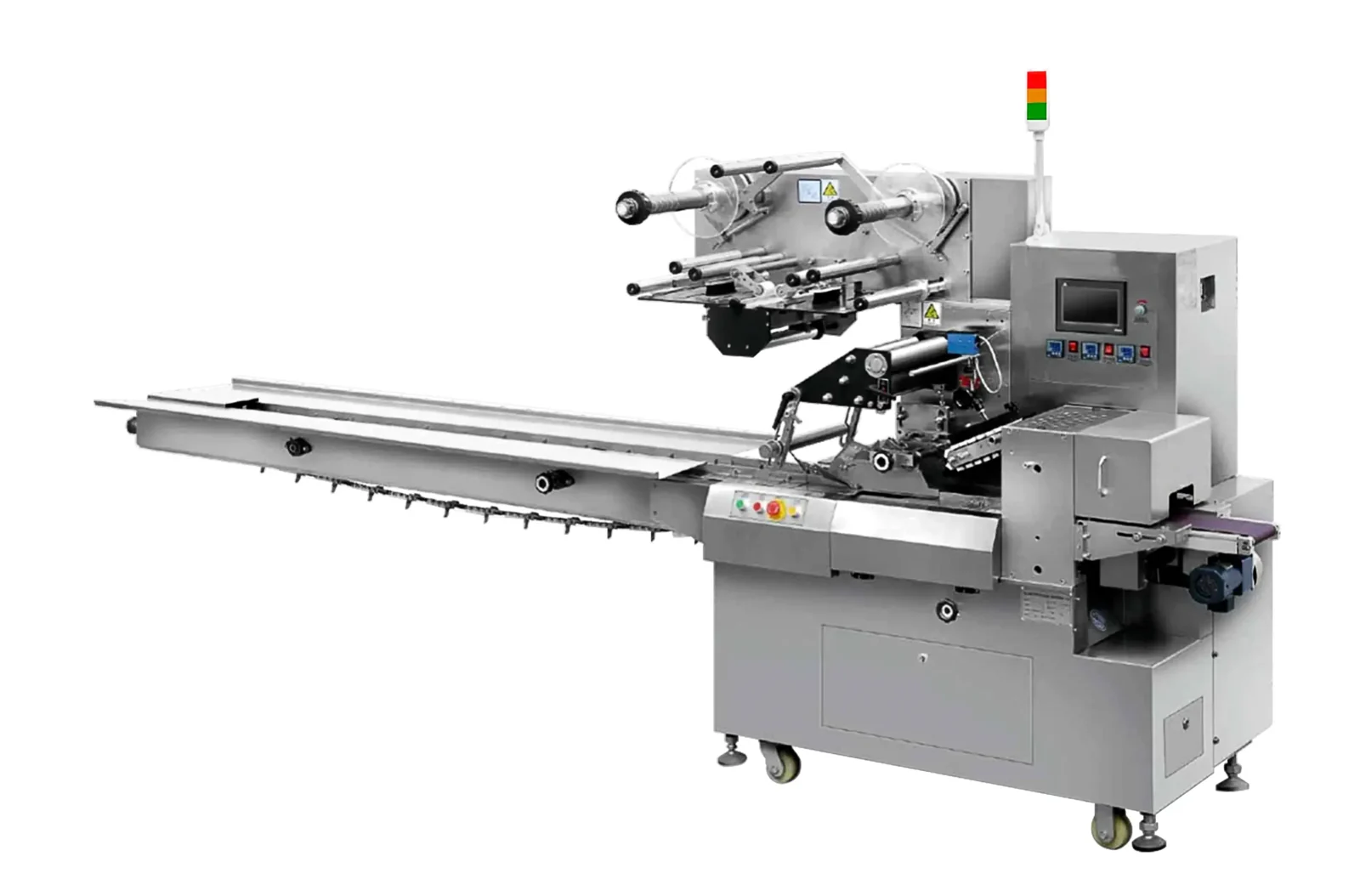
Lay the longest and most curved carrots on the infeed as they will run. On a group pack, measure the footprint with the roots side by side and check whether any tip slides toward the jaws at a stop. On a single-root pack, check that the curved sample stays centred from the guide to the film former. Leave space beyond the tip and shoulder for both end seals.
Hand placement can work when grade and count change frequently. For automatic feeding, trial how roots are separated and how the system handles a short group or a carrot spanning two positions. A guide should support the pack without squeezing the roots. When pack size changes, compare guide width, product pitch, bag length and film changes. Ask which adjustments or forming parts the quoted machine needs; keep the operator loading task in that comparison.
Watch wet baby carrots from the hopper to the seal
Run the product at its normal surface condition after draining. Pieces may stick in a chute, then fall together on the next cycle. Compare consecutive weights, look at the discharge after a planned pause, and check whether residue or a loose piece reaches the sealing zone. Move the trial upstream if repeated carry-over starts at the feeder rather than the forming tube. Ask how the parts contacting the carrot can be removed or reached for cleaning.
Whole roots. Align one root or a group → support through film entry → clear tips → seal.
Short pieces. Weigh portion → release fully → allow the product to settle → seal.
If the finished bags will ship in cases
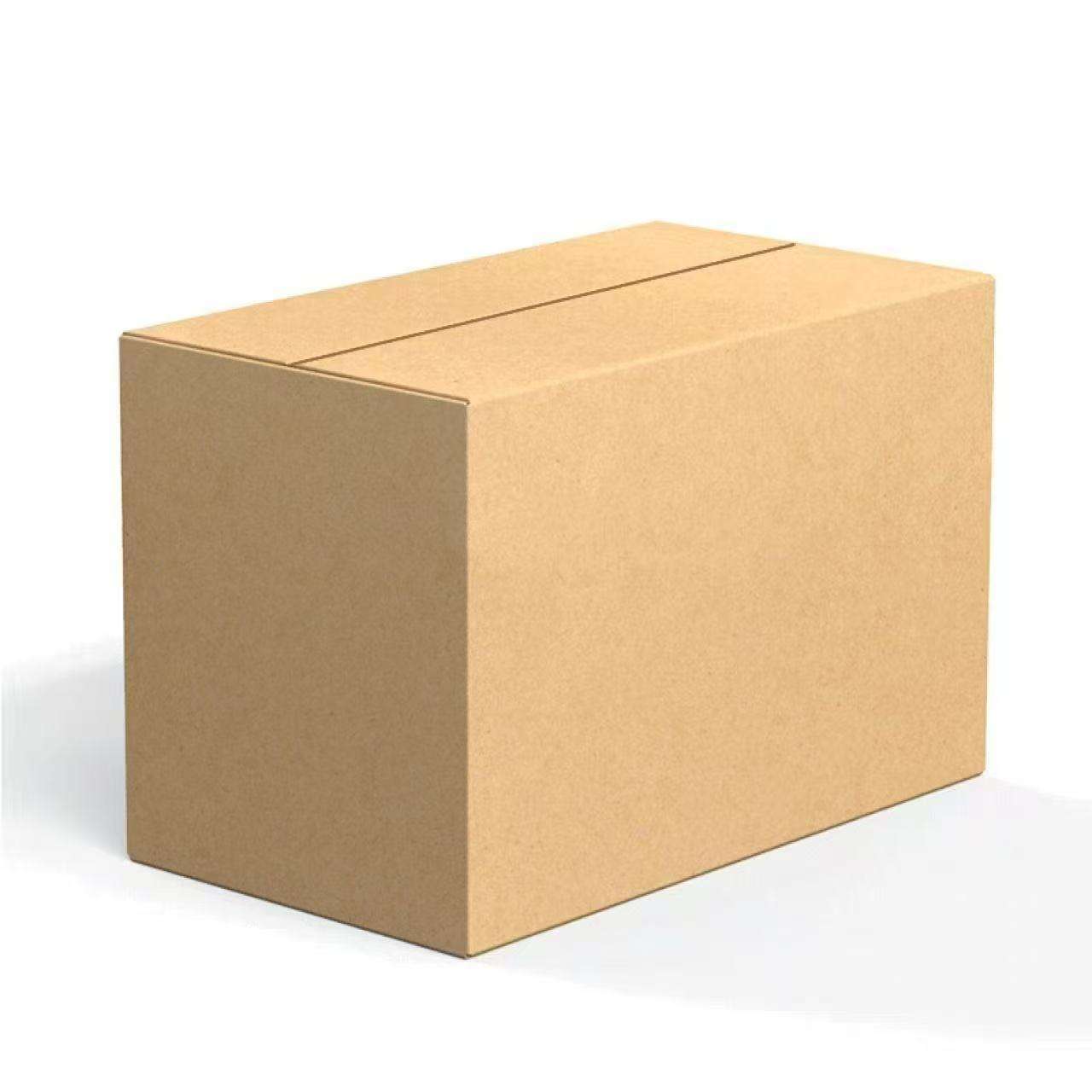
Once your chosen retail pack passes its trial, record its filled dimensions, discharge rate, case count and loading orientation. Use these to specify any downstream case loading separately from the carrot bagger.
Send your largest roots and your shortest pieces
Share product and package photos, dimensions, count or net weight and target good packs per hour. For cut carrots, include surface condition at filling. For whole roots, show the number per pack and how they should lie in the bag. Comwin can propose the supports and feed method and plan a trial with the real film and carrots. Discuss your carrot packing machine.