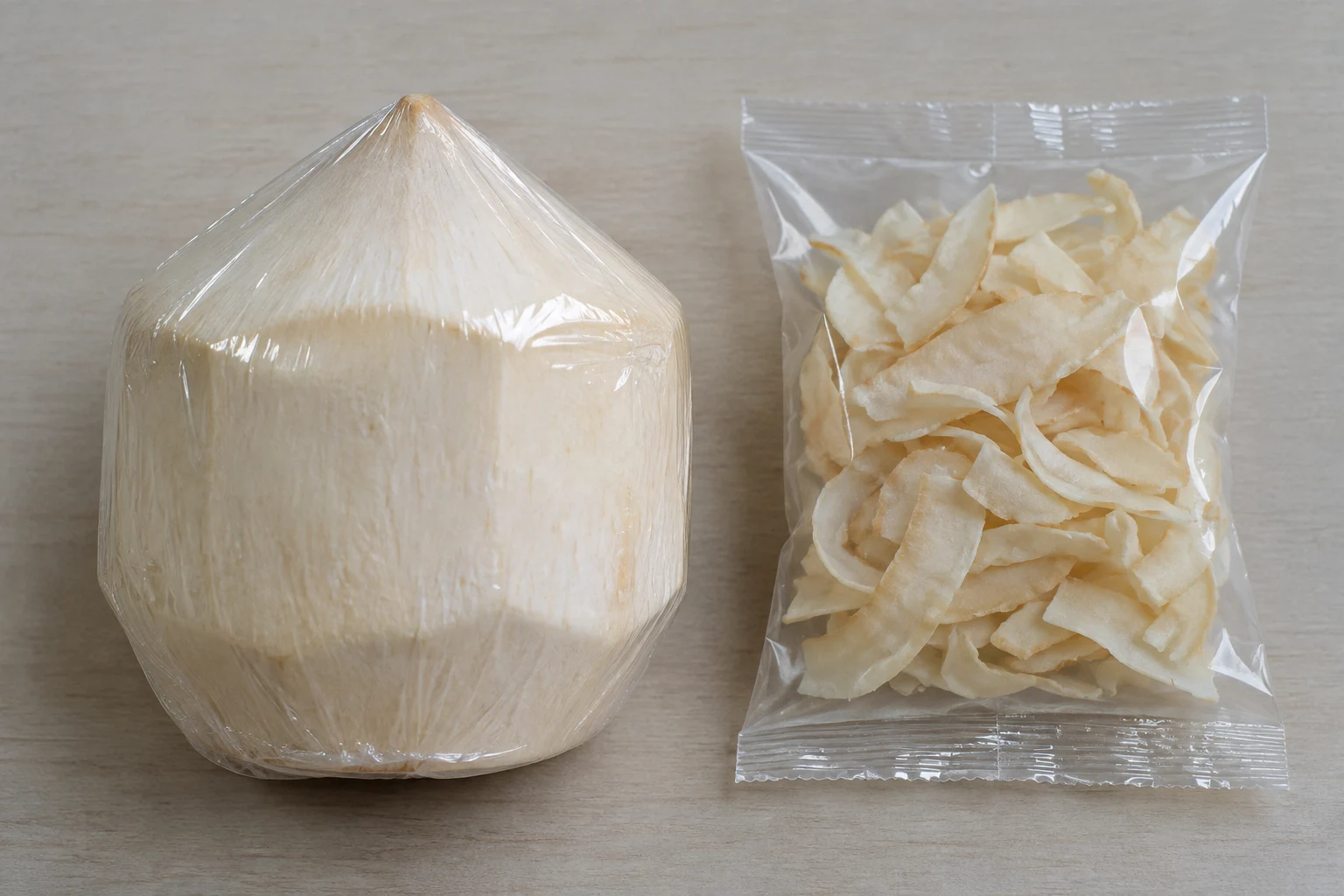
Use gentle feeding and weighing into a vertical pillow bag for dried coconut chips that can release without breaking. Test the short drop with the largest chips and the usual fines. For whole trimmed coconuts specified with close-fitting shrink film, support the fruit through sealing and shrinking and confirm the actual film and shape.
Choose from the coconut leaving preparation
| Product and finish | Equipment to assess | Decisive trial |
|---|---|---|
| Dried coconut chips in a retail pillow bag | Gentle product feed, weighing and vertical rollstock bagging. | Compare fines before and after transfer, release at the chute and product caught in end seals. |
| Trimmed whole young coconut with specified shrink film | Supported film presentation, sealing and a compatible shrink step. | Check tipping, film thinning or holes at corners, and the agreed heat exposure after cooling. |
Keep trimmed fruit stable from sealing through cooling
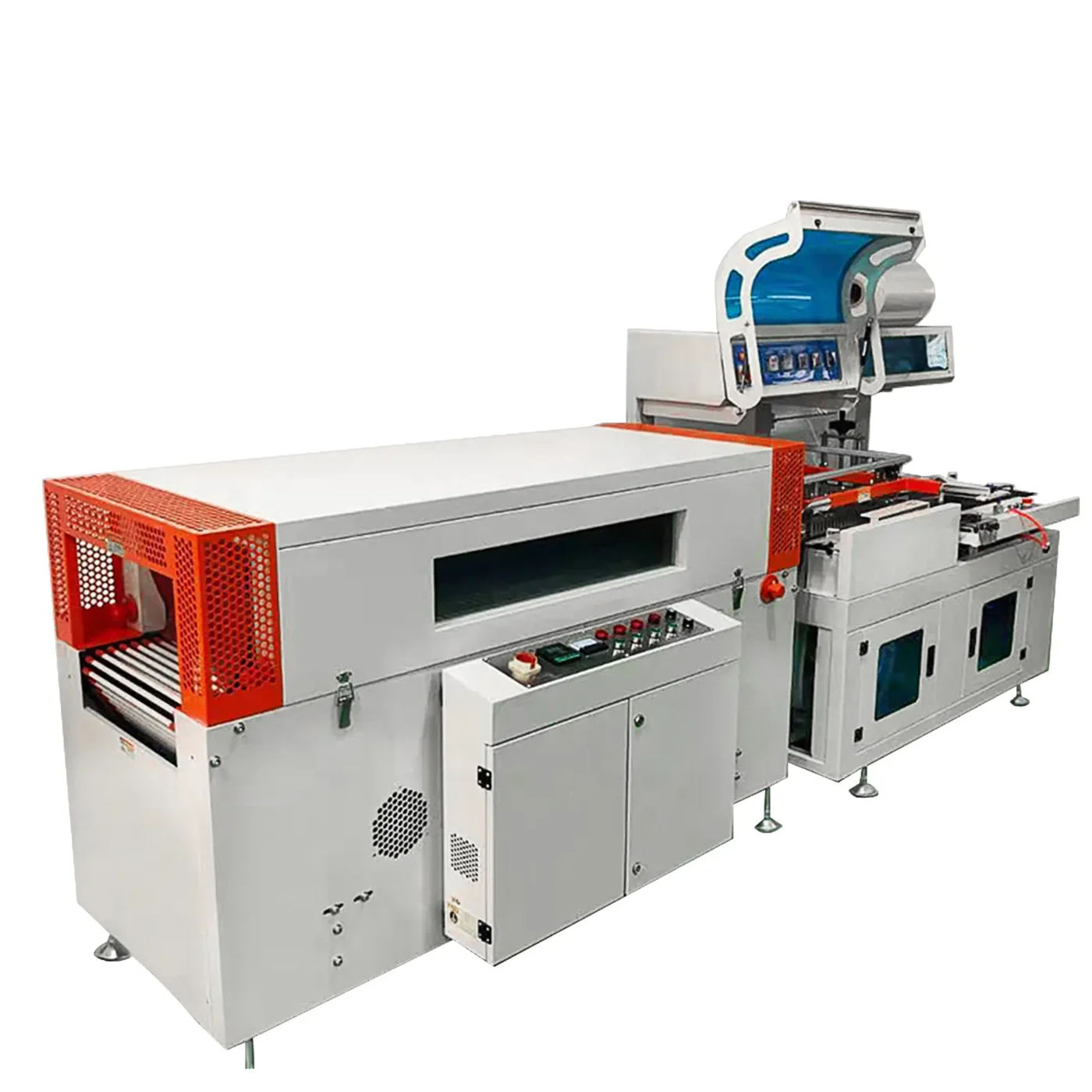
Confirm the film and closing method used for your intended pack. A close-fitting appearance alone does not identify the wrapping process. When shrink film is specified, assess sealing, the shrink step and cooling together. Stand or lay the coconuts as they will enter the machine and measure the base, crown and widest shoulder in that position. An uneven base can rock at the tunnel transfer; a sharp corner can pull against film that fits a rounder fruit. Test those shapes with the actual material.
On short runs an operator can position the fruit and the film before initiating the seal. For repetitive shapes, evaluate an indexed cradle or guided transfer. A seal-and-shrink setup should leave adequate room for cooling and inspection. Check how stopped packs are removed from the heated section. Use the produce team’s process and finished-pack requirements to judge suitability.
Measure chip breakage after feeding and weighing
Chips that look acceptable at hopper entry may break when they drop into a weigh bucket or strike the chute. Run a representative batch with its usual mix of large pieces and fines. Compare the size distribution at each transfer. A gentler feed or a shorter fall can be more useful than a tighter weight target when the finished pack must retain large slices. Leave enough room for light pieces to settle below the end seal.
Fine desiccated coconut may flow differently from curled chips. Run the actual particle size, moisture and bulk density through a dosing trial before selecting a feeder. Include access for cleaning contact parts if the station will switch between products.
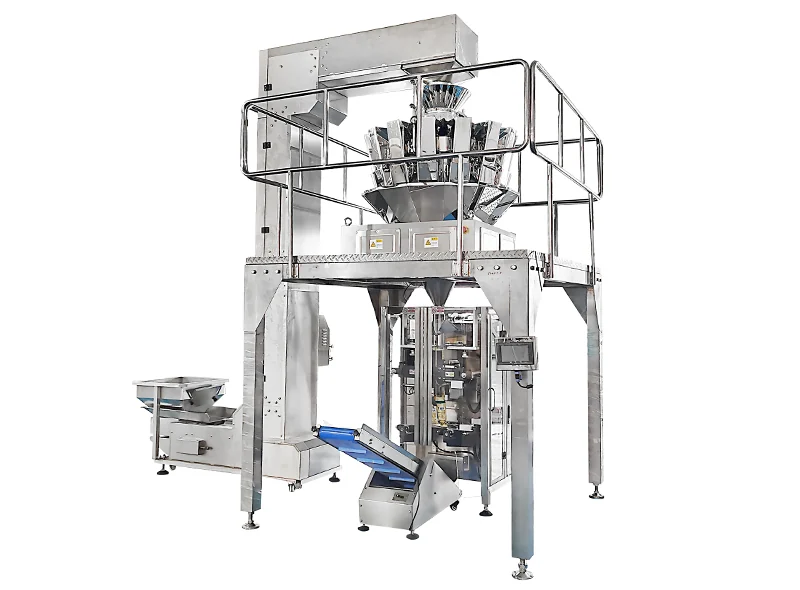
Define the station boundary before linking equipment
Wrapped whole fruit. Trimmed fruit arrives → support it → seal and shrink → cool and inspect.
Dry chips. Feed gently → weigh the portion → release into formed bag → seal and check weight.
If individually wrapped coconuts will ship in cases, check orientation and case support after wrapping. The case station needs the final wrapped dimensions and count. Coconut water is a separate liquid-filling project with its own process, dosing and closure. Its equipment scope starts after the beverage process is specified.
Send the coconut in the state it reaches the machine
Send product photos, the intended pack, size or weight range and accepted packs per hour. For trimmed fruit, show its normal shape variation. For chips, include the largest pieces and usual fines. Comwin can propose the feed and packing sequence and identify the samples needed for a trial. Discuss your coconut packing machine.