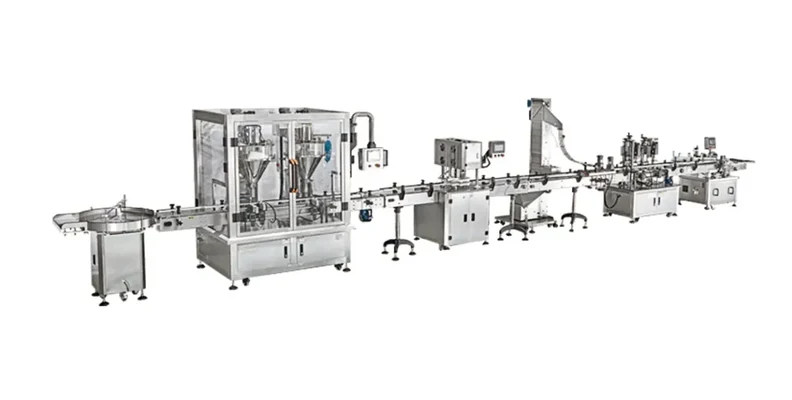
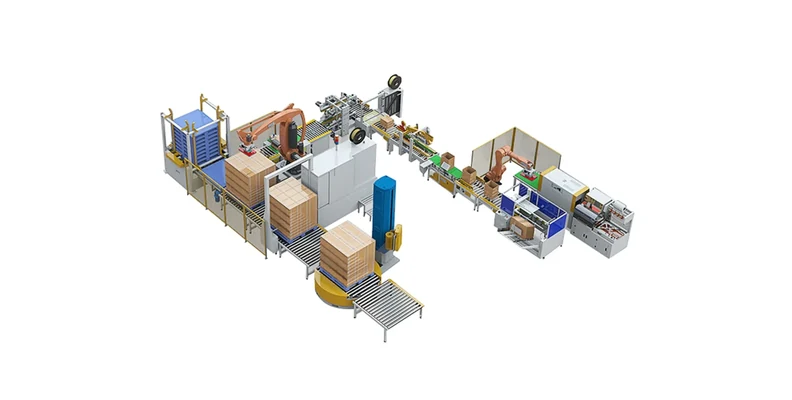
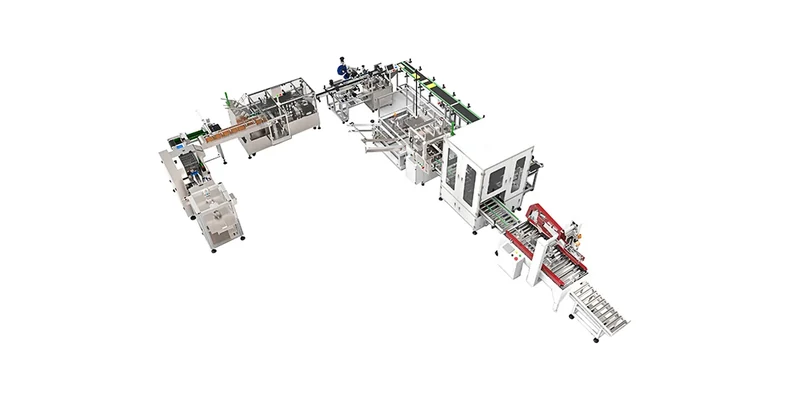
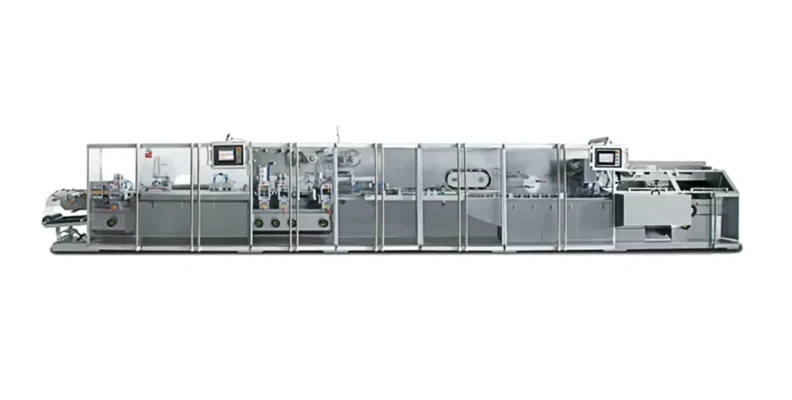
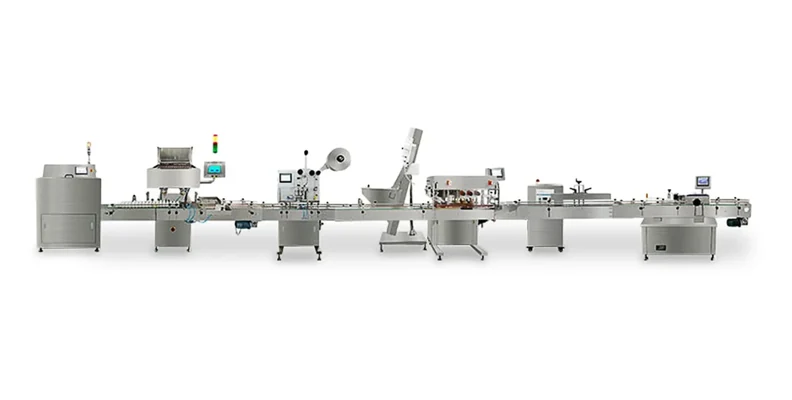
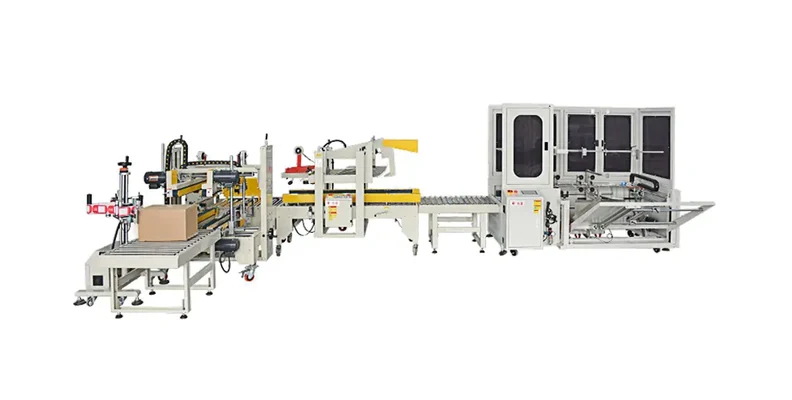
Custom Production Lines.
02 Free sample testing
03 Custom machine & line configurations
Your product and finished package determine the filling, forming and sealing process. Start with the format you need.
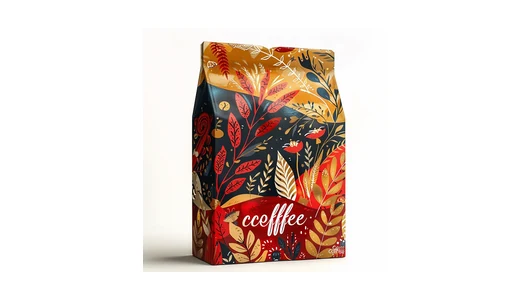
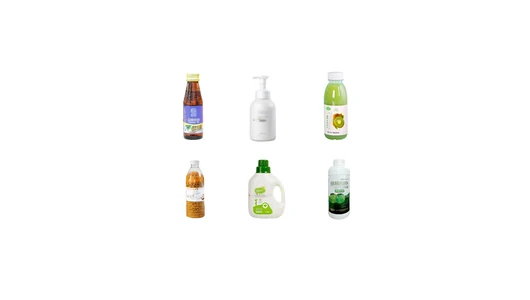
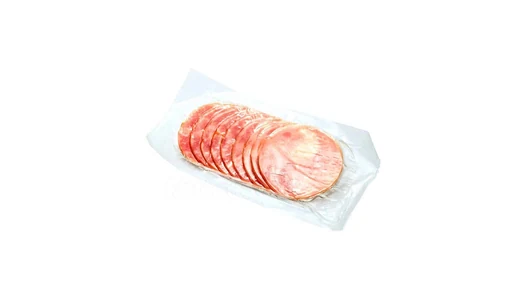
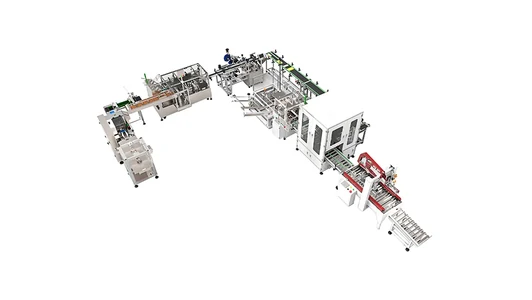
Explore packaging equipment by process. Each route can be assessed against your product, pack material and required output.
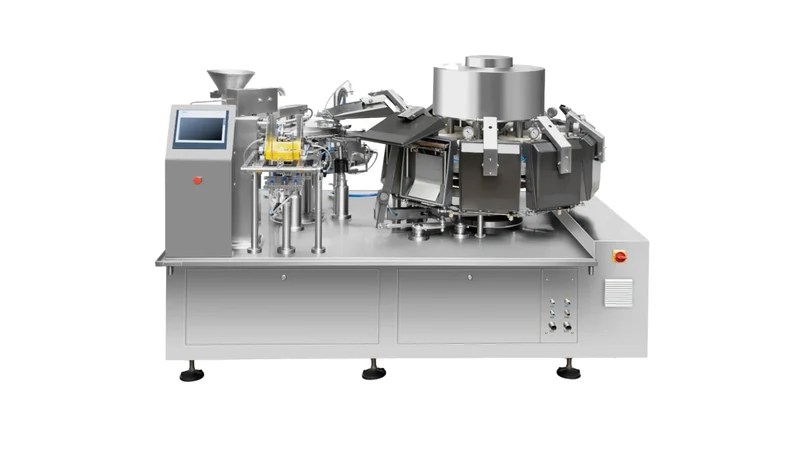
Consider for: Products supplied in ready-made pouches, with a vacuum stage when required.
Consider for: Products supplied in ready-made pouches, with a vacuum stage when required.
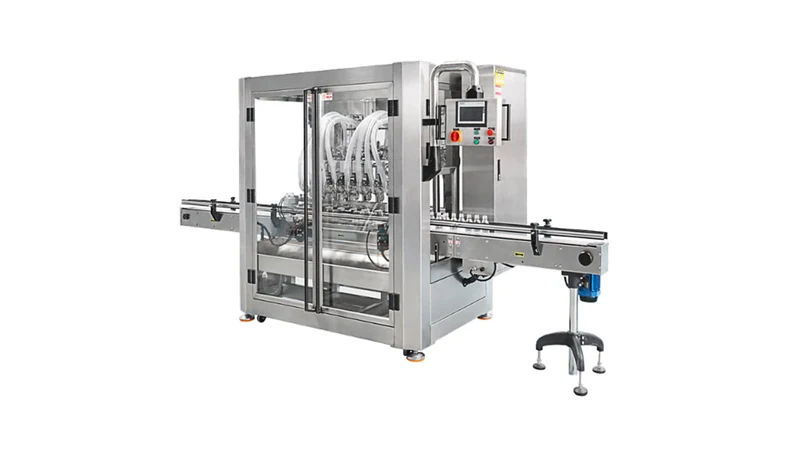
Consider for: Bottled liquids and sauces requiring controlled filling and a matched closure.
Consider for: Share viscosity, filling temperature and particle size, then match the dosing system, bottle opening and closure.
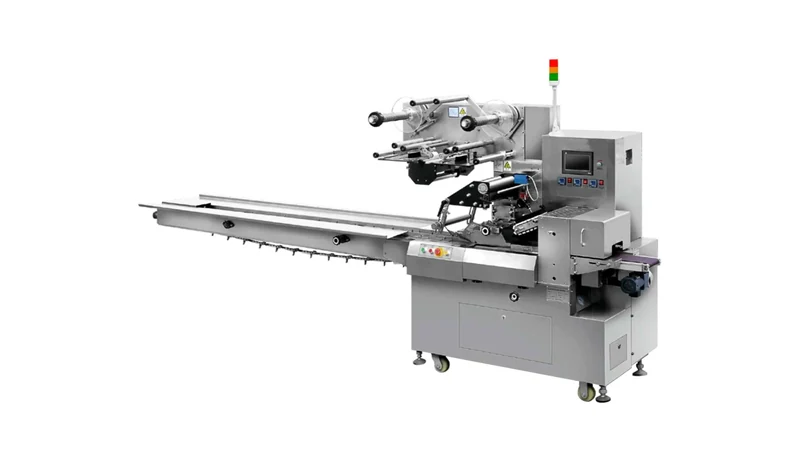
Consider for: Individual solid items such as biscuits or bars that can be presented consistently to the infeed.
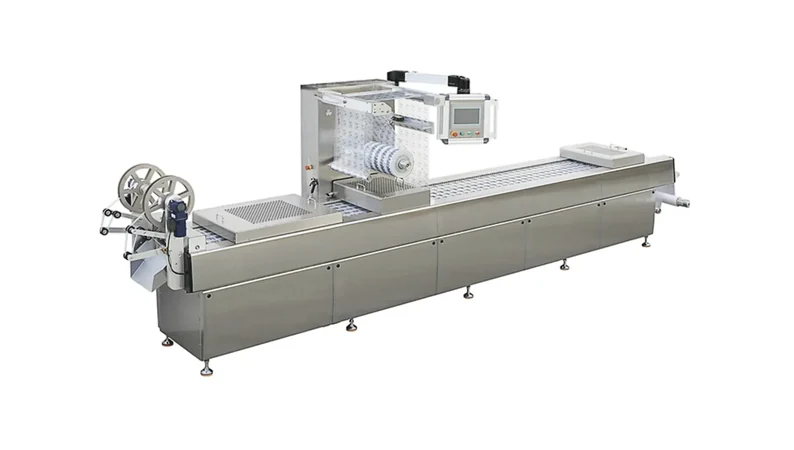
Consider for: Products needing formed film cavities and vacuum-sealed packs, such as sliced food portions.
Consider for: Match cavity depth and layout to the product, then assess loading, film compatibility and the finished seal.
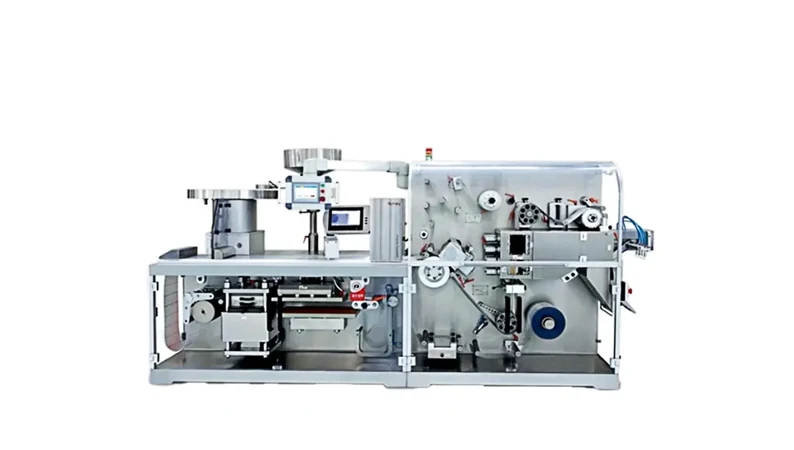
Consider for: Small products requiring individual formed cavities and a sealed backing.
Consider for: Confirm cavity layout, product loading and forming and lidding materials for the intended application.
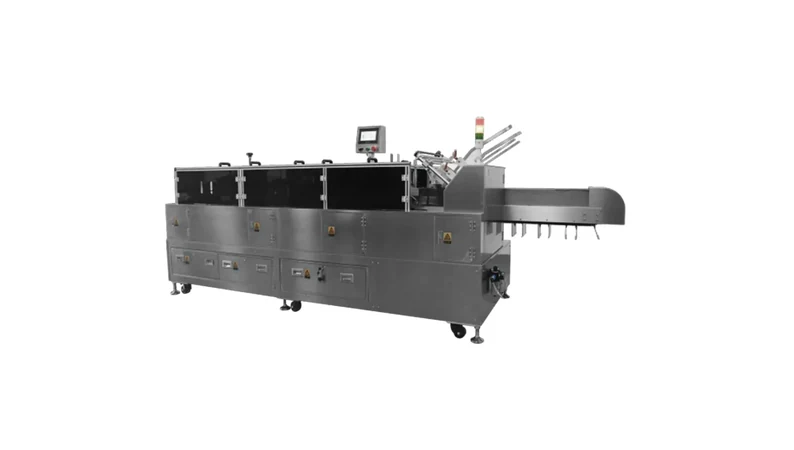
Consider for: Retail products or primary packs that need insertion into individual paperboard cartons.
Consider for: Provide carton style, product dimensions and insertion orientation; distinguish retail cartoning from shipping-case packing.
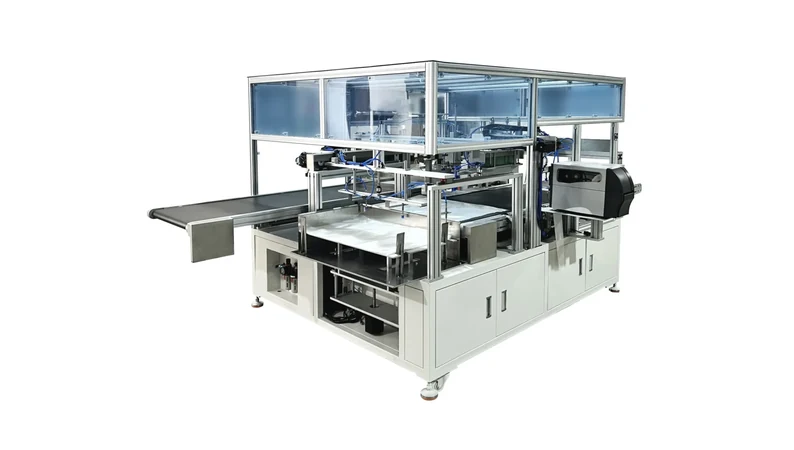
Consider for: Suitable products in vacuum-compatible bags or packs that need air removal before sealing.
Consider for: Confirm product condition, pack dimensions, required vacuum level and seal-area cleanliness.
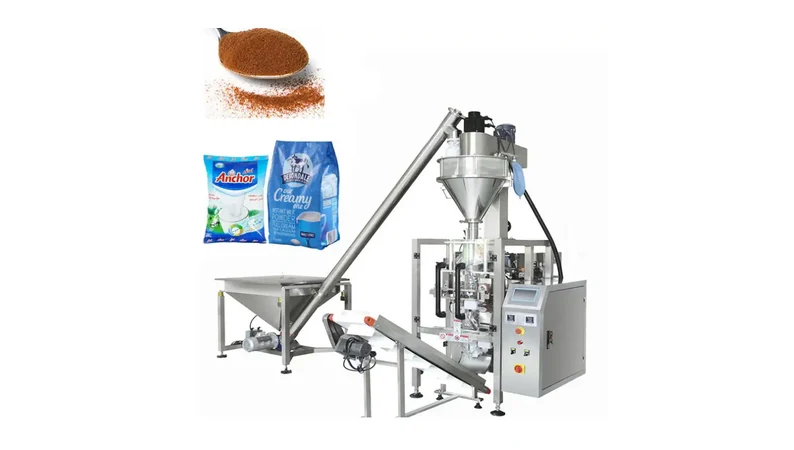
Consider for: Liquids, powders or granules packed into bags formed from rollstock.
Consider for: Match the dosing system, bag size, film and seal format to the product and target output.
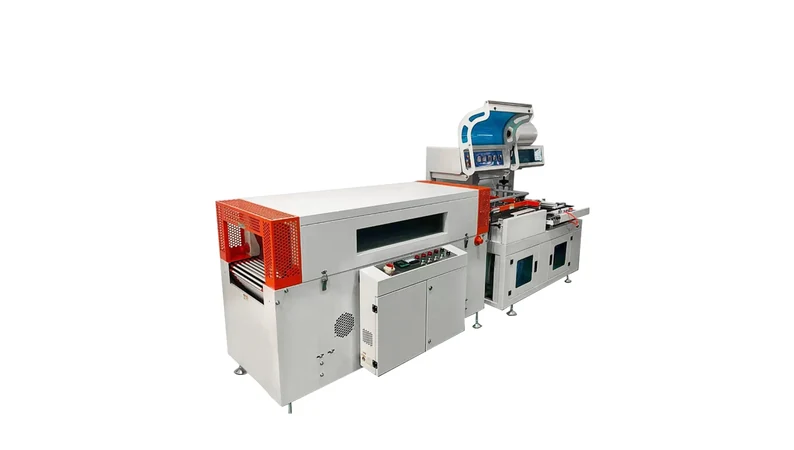
Consider for: Individual products, multipacks or grouped packs requiring a tight protective film overwrap.
Consider for: Confirm product dimensions, film type, sealing method, tunnel size and heat sensitivity before selecting the configuration.
Looking for VFFS, sachet packing or a stick packaging machine?
Compare product flow, dose, bag dimensions and seal format before selecting a configuration.
Plan transfers, line balance and changeovers together. The final equipment scope depends on your existing process and project requirements.
Choose dosing and secondary packaging equipment for your process. Supporting modules are selected individually; they are not assumed to be included with every machine.
For powders or mixed pieces, assess an auger filler or multihead weigher alongside the packaging machine. The suitable combination depends on product flow, target accuracy and speed.
Plan transfers, line balance and changeovers together. The final equipment scope depends on your existing process and project requirements.
Choose by viscosity, particles, filling temperature and container.
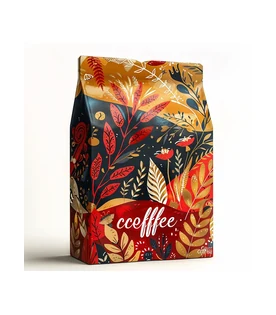
Match powder flow and dust behavior to dosing and bag format.
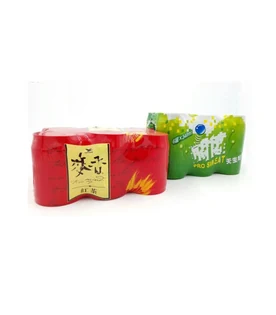
Compare volumetric, weighing and premade-pouch routes.
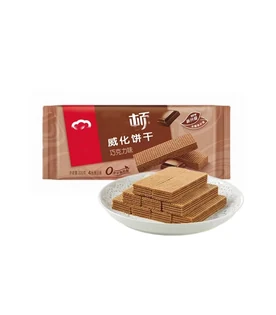
Consider feeding, spacing, fragility and film presentation.
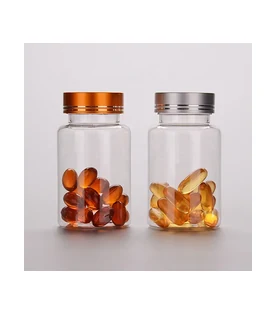
Match counting and handling to product size and shape.
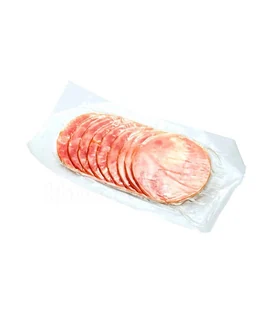
Choose among chamber sealing, premade vacuum pouches and thermoforming.
Choose your industry to compare suitable packaging processes, equipment routes and complete-line options for your product.
Biscuits, wafers, confectionery, produce, frozen and vacuum-packed foods.
Water, juice, soft drinks, milk, cultured dairy and powdered dairy products.
Thin liquids, viscous sauces, products with particles, pouches, jars and bottles.
Tablets, capsules, blister packs, bottles and secondary cartoning.
Screws, fasteners, fittings, scrubbers and other counted or grouped components.
Seeds, spices, fertilizer, compost and other powders or granules.
Soap, shampoo, cosmetics, creams and personal-care liquids or sachets.
Detergent powders, liquid cleaners and other controlled chemical filling applications.
Accessories, components, kits and products requiring counting, protection or cartoning.
Fresh, chilled and frozen products using vacuum, tray or protective packaging routes.
Dry kibble, powders, granules, treats and bulk feed products.
Compare suppliers by how well their proposed equipment fits your product and finished pack, the scope of line integration, customization options, sample testing and agreed acceptance criteria. Then review delivery and support for your project.
Start with four inputs to narrow the equipment options:
For frequent changeovers, ask how format parts, cleaning and setup affect usable production time.
Before comparing proposals: list the included stages and agree who supplies conveyors, buffering, inspection, rejects and line controls. Specify the target good-pack rate and operator tasks. The name “complete line” alone does not define the supply scope.
The main drivers are packaging process, dosing accuracy, target output, pack-size range and automation level. Feeding, coding, inspection and downstream modules can add to the project cost.
Choose the configuration that meets your production requirements; a lower base-machine price may exclude equipment you need.
Compare total operating cost: packaging material, scrap, labor, changeover time and usable output. Test your actual product and packaging for reliable feeding and clean seals.
Integration depends on the physical layout, capacity and control interfaces. Prepare:
Ask for a layout and interface list before purchase. Agree how the line starts, stops and handles rejects, plus the required acceptance test. Physically connecting machines does not by itself establish matched output.
Before the trial, agree what results and supporting records will be shared. Performance should be assessed for the product, packaging material and configuration actually tested.
Send us your requirements for a recommended machine or line configuration and a project-specific quotation.
Automation Machine One-stop Solution
Huide International Building, Fuyong Street, Bao’an District, Shenzhen
© 2026 All Rights Reserved.